

Table of Contents
The best amphibious aircraft ever built is the Consolidated PBY Catalina. About 3,300 Catalinas of all versions were built, and the type found the Bismarck, hunted submarines and pulled survivors out of the sea.
It is not the most capable. That title belongs to Japan’s ShinMaywa US-2, which is designed to land in waves up to 9.8 feet (3 m). But only nine have been built, and the Catalina changed far more of the world.
An amphibious aircraft can operate from both water and a runway, usually with retractable wheels. This list, current as of October 2026, ranks the 12 that did that job best, and it leaves out famous seaplanes that never had wheels.
| Rank | Aircraft | First flight | Number built | Status, October 2026 |
|---|---|---|---|---|
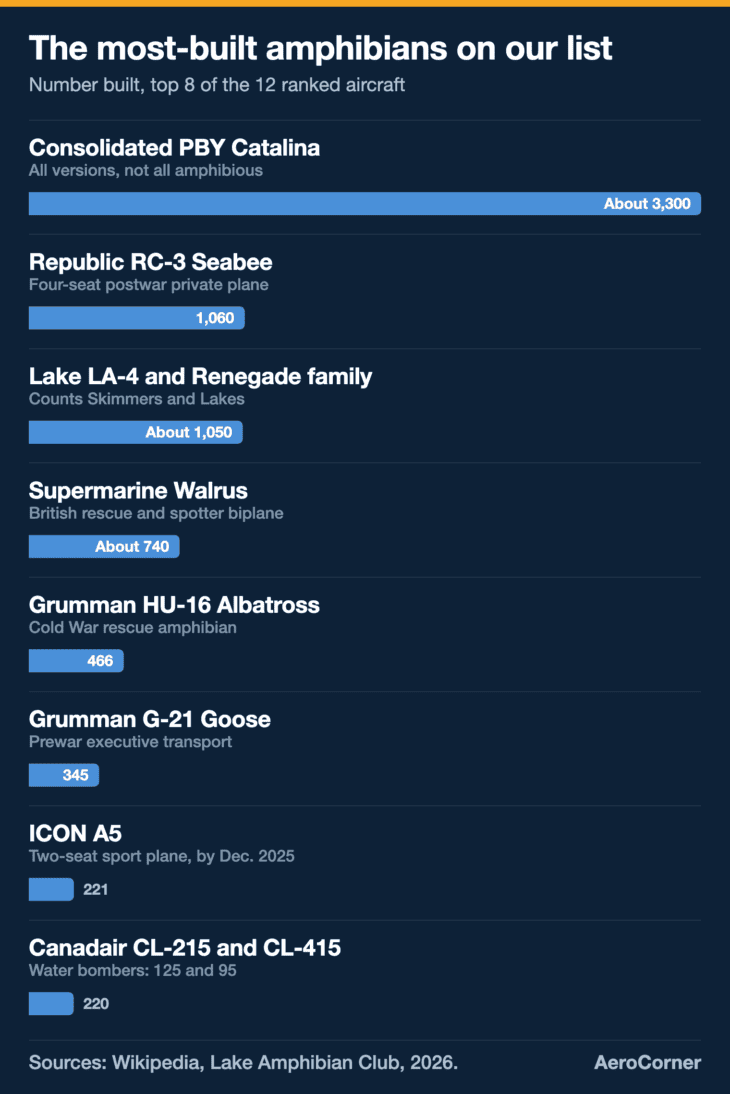
| 1 | Consolidated PBY Catalina | 1935 | About 3,300 | Retired from military service |
| 2 | Canadair CL-215 and CL-415 | 1967 | 220 | Firefighting, DHC-515 successor being built |
| 3 | ShinMaywa US-2 | 2003 | 9 | In service, Japan |
| 4 | Grumman HU-16 Albatross | 1947 | 466 | Limited private use |
| 5 | Grumman G-21 Goose | 1937 | 345 | About 30 airworthy |
| 6 | Supermarine Walrus | 1933 | About 740 | Retired |
| 7 | Beriev Be-200 | 1998 | 20 | In service and in production |
| 8 | Cessna Grand Caravan EX Amphibian | Not listed | No published count | Offered new |
| 9 | Lake LA-4 and Renegade family | 1948 | About 1,050 | Private use, last built 2006 |
| 10 | Republic RC-3 Seabee | 1945 | 1,060 | Production ended 1947 |
| 11 | Grumman G-73 Mallard | 1946 | 59 | Mainly private |
| 12 | ICON A5 | 2008 | 221 by December 2025 | In production |
How this ranking works
No single number can rank aircraft that run from a 2-seat sport plane to a 105,160 lb rescue machine. So the order is our judgment, on three tests: how well the aircraft works on water, what it actually did in service, and how much it shaped what came after. Every entry must have retractable or otherwise usable wheels for land. Aircraft still in development and water-only flying boats are covered separately at the end.
1. Consolidated PBY Catalina
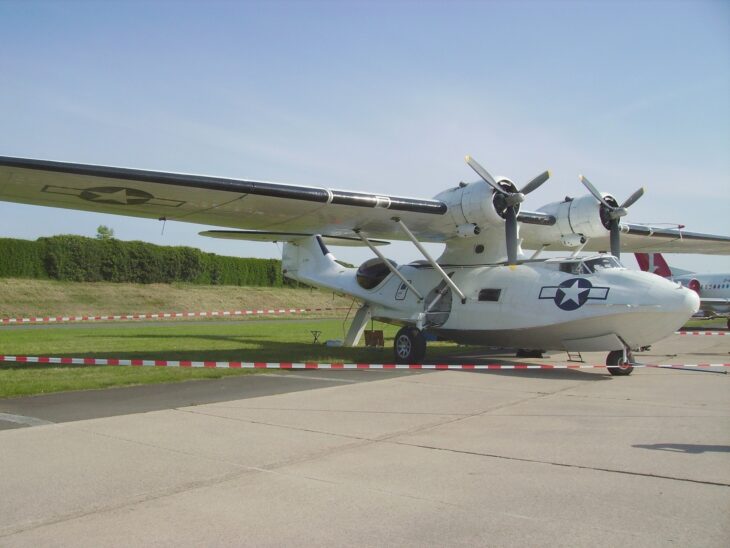

The PBY Catalina first flew in March 1935, and no other amphibian on this list matches its war record. On May 26, 1941, an RAF Coastal Command Catalina spotted the battleship Bismarck about 690 nautical miles northwest of Brest, which directly contributed to the ship’s destruction.
It won on endurance rather than speed. The PBY-5A cruised at just 125 mph (202 km/h) but could cover 2,520 miles (4,060 km), and its maximum takeoff weight was 35,400 lb (16,100 kg).
Not every Catalina was an amphibian
The first Catalinas were water-only flying boats. Wheels arrived on the XPBY-5A, a converted PBY-4 that flew in November 1939. Of about 3,300 Catalinas built, one count puts the PBY-5A at 802, with Canadian-built versions and the later PBY-6A adding to the amphibious total.
The design also lasted. The US Navy retired its last PBY-6A in January 1957, while Brazil’s air force flew Catalinas until 1982. A proposed turboprop successor, the Catalina II, drew a letter of intent for up to 46 aircraft in July 2026, though it is not yet flying.
2. Canadair CL-215 and CL-415
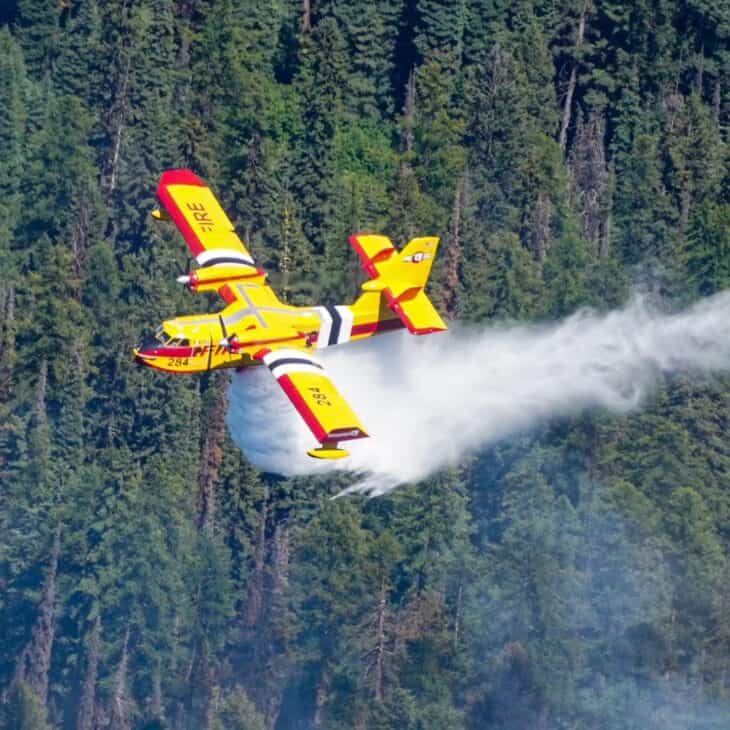

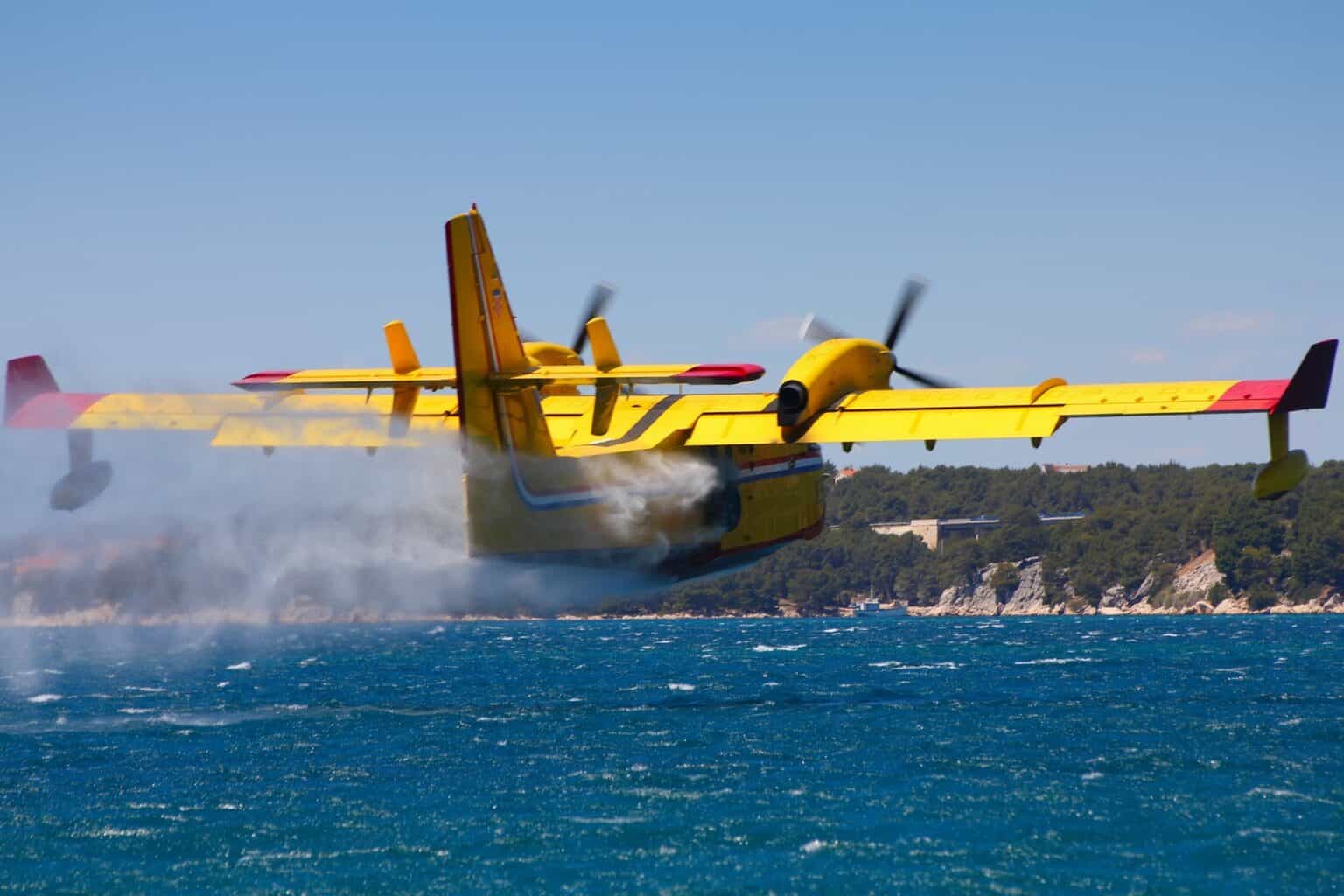
The Canadair family ranks second because it turned an amphibious hull into a firefighting system. The piston CL-215 first flew in October 1967 and was developed from the outset as a water bomber, with 125 built between 1969 and 1990.
The turboprop CL-415 followed in December 1993, and 95 were built before the line closed in 2015. It weighs up to 43,800 lb (19,900 kg) in firefighting configuration and has a ferry range of about 1,500 miles (2,400 km).
A full tank in about 12 seconds
The CL-415 scoops 1,621 US gallons (6,137 L) of water in about 12 seconds, skimming a 1,345-foot (410 m) stretch of lake or sea at 70 knots without stopping. Then it returns to the fire.
Demand is why the type is coming back. The firefighting aircraft operators of Europe and Canada have ordered the updated DHC-515, listed at up to 1,850 US gallons (7,000 L), with EU nations alone ordering 22 as of August 2024. First delivery is planned for 2028.
3. ShinMaywa US-2
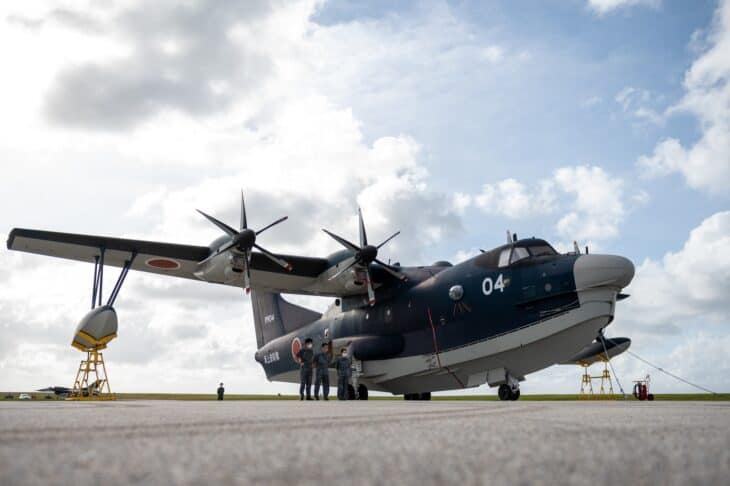

On pure water performance, the US-2 is the benchmark. ShinMaywa calls it the world’s highest-performance amphibian, a manufacturer’s claim, and the numbers support it: designed to land in waves up to 9.8 feet (3 m).
It needs about 920 feet (280 m) to take off from water and 1,080 feet (330 m) to land on it. A boundary layer control system, powered by a separate turboshaft engine, lets a machine weighing up to 105,160 lb (47,700 kg) on land fly that slowly.
Japan uses it for open-ocean rescue, with a range of 2,900 miles (4,700 km) and a top speed of 350 mph (560 km/h). It ranks third only because just nine have been built, and export talks with India had stalled over price by 2021.
4. Grumman HU-16 Albatross
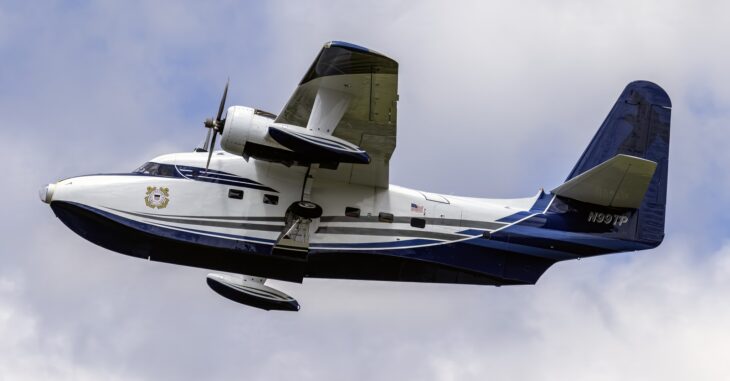

The HU-16 Albatross was America’s Cold War rescue amphibian, with 466 built after its first flight in October 1947. Its hull was designed for open-sea landings and optimized for 4-foot seas, while 8-to-10-foot seas or higher required rocket-assisted takeoff.
The US Air Force, Navy and Coast Guard all flew it, with the Coast Guard retiring its last in March 1983. It had a maximum takeoff weight of 37,500 lb (17,000 kg), a range of 2,850 miles (4,590 km) and a top speed of 236 mph (380 km/h).
It also set a record for twin-engine amphibians, reaching 32,883 feet in July 1973. A few still fly privately, and one, N44RD, circled the globe in 1997 with 38 stops in 21 countries.
5. Grumman G-21 Goose
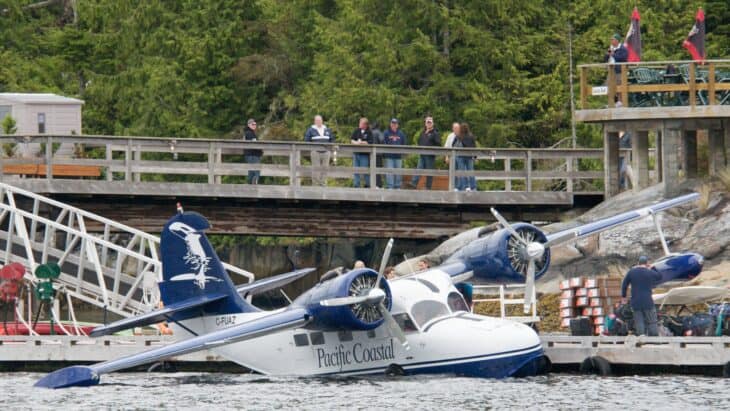

The G-21 Goose began as a commuter for the rich. A group of wealthy Long Island residents, including E. Roland Harriman, commissioned it for flights to New York City, and it first flew in May 1937.
It then went to war and to Alaska, where operators including Alaska Coastal Airlines and Reeve Aleutian flew it. A total of 345 were built, with a gross weight of 8,000 lb (3,650 kg), a top speed of 201 mph (324 km/h) and a range of 640 miles (1,040 km).
About 30 are known to be airworthy, and turboprop conversions extended the type’s working life. For an 89-year-old design, that is a strong record, and it beats the Walrus below because it kept earning a living after 1945.
6. Supermarine Walrus
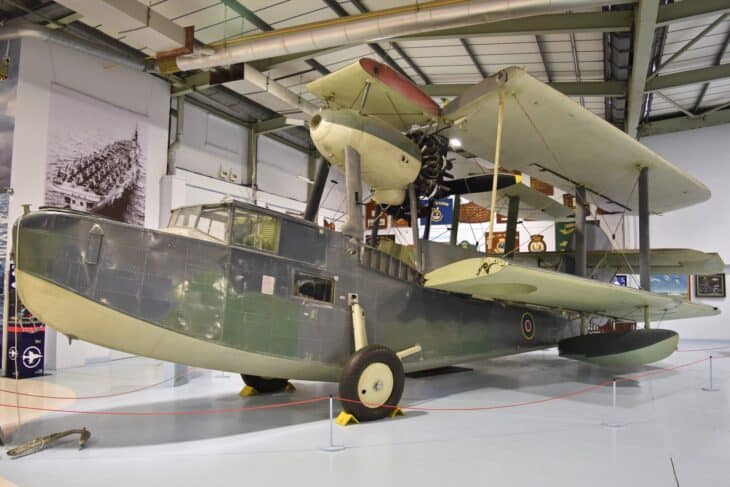

The Walrus looks like a relic, a single-engine biplane with a pusher propeller, top speed 135 mph (217 km/h). It came from a team led by R.J. Mitchell, the Supermarine chief designer also behind the Spitfire, and first flew in June 1933.
About 740 were built, with accounts ranging up to 746. It was designed as a catapult-launched fleet spotter and had a retractable undercarriage, unusual for a British service aircraft of its day.
Its real legacy is air-sea rescue. Walruses picked up more than 1,000 aircrew from the water during World War II, with No. 277 Squadron alone credited with 598.
7. Beriev Be-200
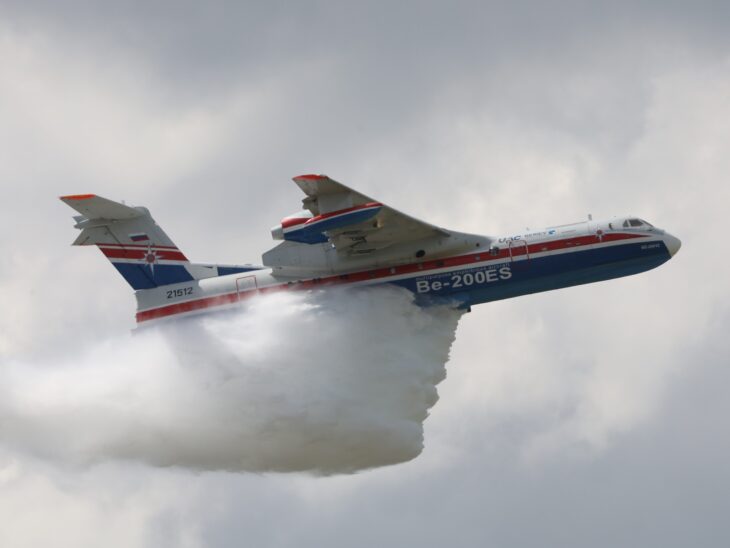

The Be-200 proves a jet can work as an amphibian. It first flew in September 1998, weighs up to 90,390 lb (41,000 kg) on land, cruises at about 348 mph (560 km/h) and can carry about 3,170 US gallons (12,000 L) of water, nearly twice a CL-415’s load.
Its limit is rough water, at 4.3 feet (1.3 m) of waves compared with the US-2’s 9.8 feet. Only 20 have been built, and a leased Be-200 crashed in Turkey on August 14, 2021, killing all eight aboard.
Engines have held it back. A plan to fit Western-linked SaM146 turbofans was shelved after the war in Ukraine cut off parts supply, and Russia’s prime minister has since urged the use of the domestic PD-8, which was certified on June 5, 2026.
8. Cessna Grand Caravan EX Amphibian
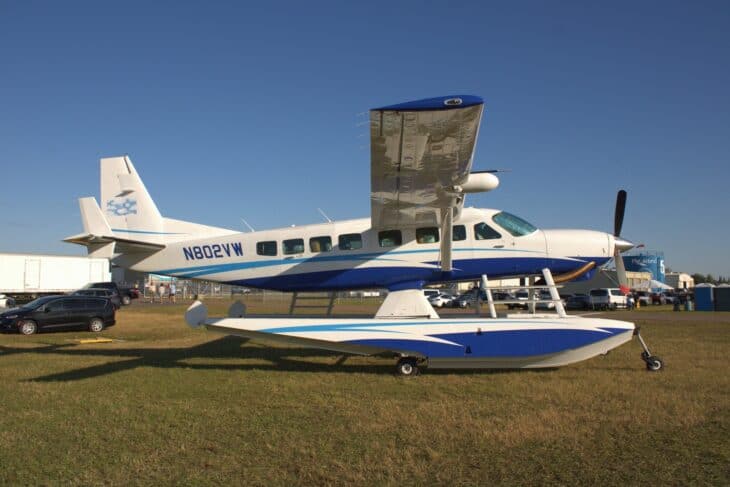

Not every amphibian has a boat hull. The Caravan Amphibian family is a landplane on floats with built-in wheels, which is how many working amphibians earn their money today.
Cessna lists the Grand Caravan EX Amphibian at a maximum takeoff weight of 9,062 lb (4,110 kg), a useful load of 3,122 lb (1,416 kg) and 10 to 14 passengers, depending on local rules. It cruises at up to 164 knots, with a maximum range of 810 nautical miles.
Its 2,000-foot (610 m) water run is more than twice the US-2’s, and it is no open-ocean machine. It ranks here because a business can actually buy one new and run it, which most aircraft above can’t offer.
9. Lake LA-4 and Renegade family
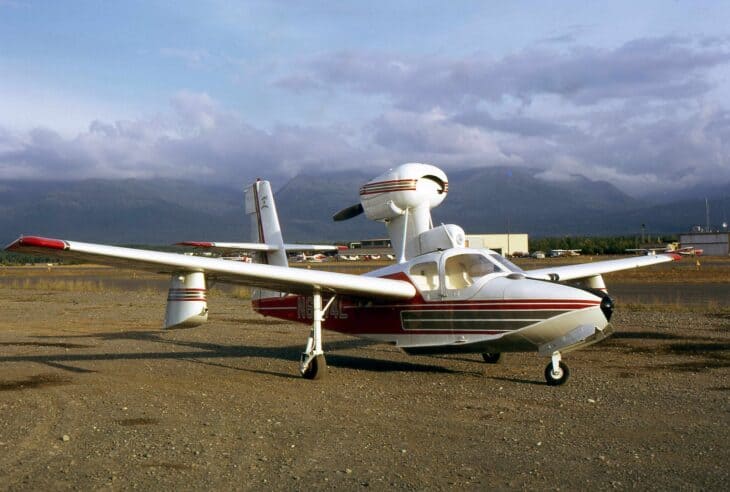

Lake amphibians are the private pilot’s flying boat. The line began with David Thurston’s Colonial Skimmer prototype in July 1948, and owners’ club records put the total at about 1,050 Skimmers and Lakes.
The four-seat LA-4-200 Buccaneer, built until 1981, has a 200 hp engine, a gross weight of 2,690 lb (1,220 kg) and a range of 825 miles (1,328 km). The stretched six-seat Renegade followed in the 1980s, with about 137 produced and the last built under contract in 2006.
10. Republic RC-3 Seabee
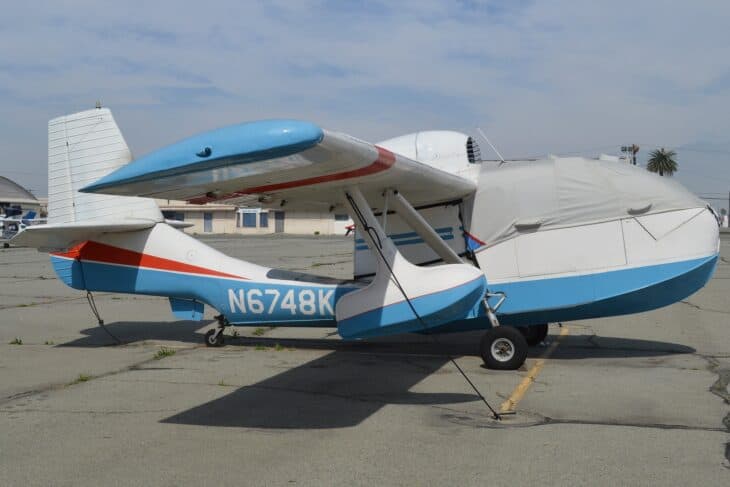
The RC-3 Seabee was a bet on a postwar boom in private flying. It first flew in December 1945 and went on sale at $3,500, though the price rose to $6,000 by November 1946.
Republic built 1,060 in about two years, second only to the Catalina on this list. But civilian demand fell well short of expectations, and production ended in 1947. The Seabee seated four, cruised at 103 mph (166 km/h) and could fly 560 miles (910 km).
11. Grumman G-73 Mallard
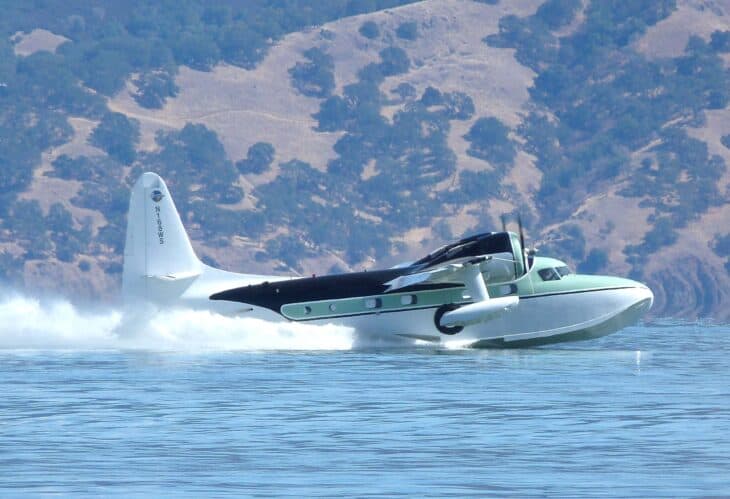

The Mallard, first flown in April 1946, was Grumman’s bigger follow-up to the Goose, with room for 10 passengers and two crew. Only 59 were built, with a gross weight of 12,750 lb (5,783 kg) and a top speed of 215 mph (346 km/h).
On December 19, 2005, a 58-year-old Chalk’s Ocean Airways Turbo Mallard lost its right wing after takeoff from Miami Harbor, killing all 20 aboard. The NTSB attributed the failure to undetected cracks or corrosion in the wing spar.
Passenger service on the type ended that day. Most survivors are now private, though three support Paspaley’s pearling operations in northern Australia.
12. ICON A5
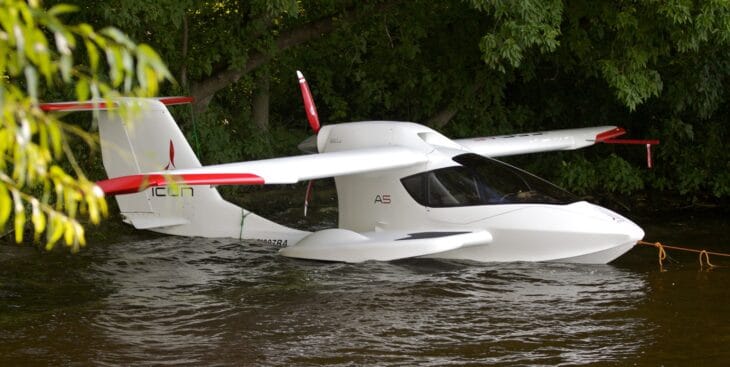

The A5 makes the list for rethinking who an amphibian is for. It is a two-seat light-sport aircraft with a 100 hp Rotax engine, folding wings and what ICON describes as a spin-resistant wing, with a range of 427 nautical miles.
Deliveries reached 221 by December 2025, after legal and financial problems slowed production. The base price was $269,000 in late 2017, up from a $139,000 estimate in 2008, so check with ICON for current pricing.
Useful load is modest at 490 lb on 2024 models. Two fatal 2017 accidents, including the crash that killed former MLB pitcher Roy Halladay, involved low-altitude flying, which the NTSB cited in both cases.
What about the Spruce Goose, the Martin Mars and the AG600?
The most famous seaplanes aren't amphibians
The Hughes H-4 Hercules, better known as the Spruce Goose, and the Martin JRM Mars were flying boats. The H-4 flew once, for about a mile, on November 2, 1947. The Mars lacked any landing gear, carried 7,200 US gallons of water as a firefighter, and had to be moved to its museum by road. Neither could use a runway, so neither qualifies.
The difference between these types trips up a lot of lists. A seaplane is any airplane that operates from water, a flying boat floats on its hull, and a floatplane sits on pontoons, as our guide to seaplanes vs floatplanes explains. An amphibian is any of those that can also use a runway.
China’s AVIC AG600 Kunlong could rewrite the top of this list. It first flew in December 2017, received its Chinese type certificate on April 20, 2025, and can carry 12 tons of water. Maximum weight is reported at between 53.5 and 60 tons depending on the source and configuration.
AVIC claims it is the world’s largest amphibious aircraft, but it needs a service record before it can rank, and we found no published delivery count. The prototype-only Beriev A-40 was heavier at 189,598 lb (86,000 kg), but never entered production. You can browse more types on our amphibious aircraft page.
FAQ
Sources and references used for research and fact-checking.
- Wikipedia, Consolidated PBY Catalina
- This Day in Aviation, Consolidated PBY-5A Catalina
- AeroCorner, A Modernized Catalina Flying Boat Just Landed Its First Customer
- Wikipedia, Canadair CL-215
- Wikipedia, Canadair CL-415
- ShinMaywa Industries, US-2 amphibian
- Wikipedia, ShinMaywa US-2
- Wikipedia, Grumman HU-16 Albatross
- Wikipedia, Grumman G-21 Goose
- Wikipedia, Supermarine Walrus
- Wikipedia, Beriev Be-200
- Cessna (Textron Aviation), One Aircraft. Every Environment: Cessna Grand Caravan EX Amphibian
- Lake Amphibian Club, Lake History
- Wikipedia, Lake Buccaneer
- Wikipedia, Republic RC-3 Seabee
- Wikipedia, Grumman G-73 Mallard
- Wikipedia, Icon A5
- AIN, Icon A5 Gross Weight Grows by 60 Pounds
- Wikipedia, Hughes H-4 Hercules
- Wikipedia, Martin JRM Mars
- The Aviationist, 78 Years Old Martin JRM Mars Retires To Museum
- Wikipedia, AVIC AG600
- AeroTime, China's huge AG600 seaplane granted type certificate
- Wikipedia, Beriev A-40
Get the Newsletter
The latest aviation news and stories sent to your inbox.
About the Author

Tim is the owner and lead editor of AeroCorner since 2019, overseeing aviation content covering aircraft, airlines, airports, and the broader aviation industry. Through years of researching, writing, editing, and publishing aviation-focused content, he has developed extensive practical knowledge of commercial aviation and air travel. Based in Asia and a frequent traveler himself, Tim also brings firsthand passenger experience to AeroCorner’s coverage. Outside of publishing, he has also explored aviation firsthand through hands-on flight training in New Zealand.