

Table of Contents
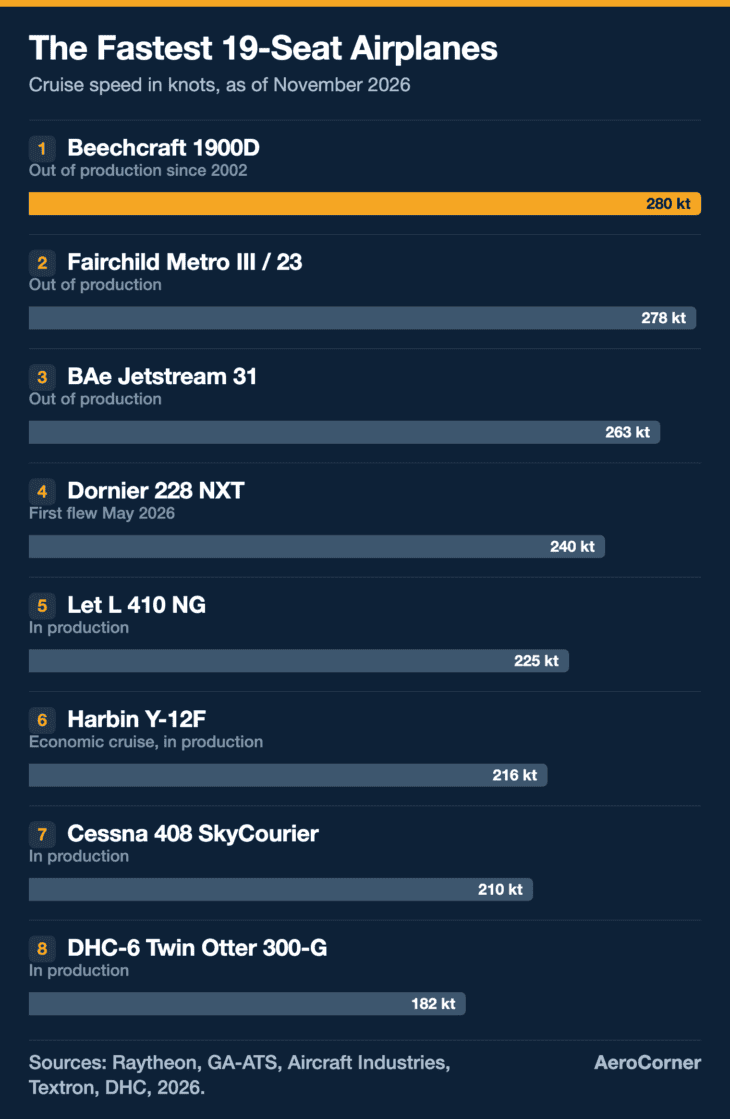
The fastest 19-seat airplane ever built is the Beechcraft 1900D, which cruises at 280 knots (322 mph). Two more retired designs, the Fairchild Metro and the BAe Jetstream 31, follow close behind. The fastest one still rolling off a production line is the new Dornier 228 NXT, at 240 knots (276 mph).
This list ranks every important 19-passenger airplane by cruise speed, as of November 2026. It also explains why so many small airliners stop at exactly 19 seats: two US rules meet there, one for certifying the airplane and one for crewing the cabin.
| Rank | Aircraft | Cruise speed | Max takeoff weight | Status (Nov. 2026) |
|---|---|---|---|---|
| 1 | Beechcraft 1900D | 280 kt (322 mph) | 17,120 lb | Out of production since 2002 |
| 2 | Fairchild Metro III / Metro 23 | 278 kt (320 mph) | 16,500 lb | Out of production |
| 3 | BAe Jetstream 31 | 263 kt (303 mph) | 14,550 lb | Out of production |
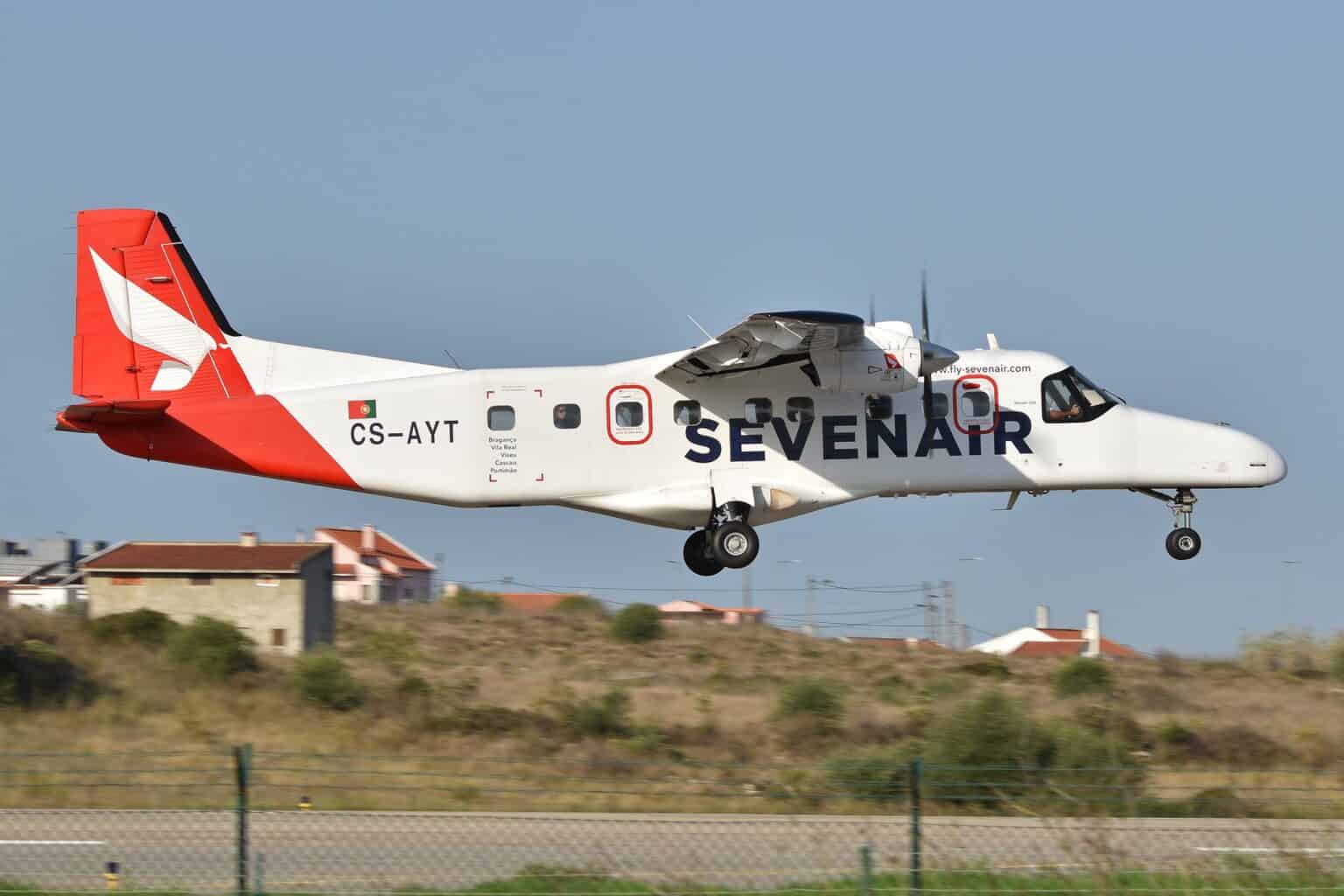
| 4 | Dornier 228 NXT | 240 kt (276 mph) | 14,110 lb | First flew May 2026 |
| 5 | Let L 410 NG | 225 kt (259 mph) | 15,432 lb | In production |
| 6 | Harbin Y-12F | 216 kt (249 mph)* | 18,520 lb | In production |
| 7 | Cessna 408 SkyCourier | 210 kt (242 mph) | 19,000 lb | In production |
| 8 | DHC-6 Twin Otter 300-G | 182 kt (209 mph) | 12,500 lb | In production |
| 9 | COMAC CE-25A (electric) | 162 kt (186 mph) | about 22,000 lb | Prototype |
How this ranking works
Every airplane here was built or certified to carry 19 passengers in its standard airline layout. We rank by the cruise speed its maker published, because speed is the figure that decided which of these designs airlines actually bought. Where a maker gives several cruise figures, we use the highest. Range is quoted in each entry but not ranked, because every maker measures it under different payload and reserve rules.
Why 19 seats is the magic number
The first reason is certification. Under 14 CFR 23.2005, the FAA’s small-airplane rules cover airplanes with 19 or fewer passenger seats and a maximum takeoff weight of 19,000 pounds (8,618 kg) or less. A 20th seat moves the design out of those rules and into the transport category, the rulebook written for airliners.
Before a 2017 rewrite, the same box had its own name: the commuter category, limited to multiengine airplanes with 19 or fewer seats excluding pilots. Today’s rules call it Level 4, for airplanes seating 10 to 19 passengers.
The second reason is the cabin crew. Under 14 CFR 121.391, an airline needs one flight attendant on an airplane with more than 19 seats, if its maximum payload is 7,500 pounds or less. Stop at 19 and the cabin can fly without one. Our guide to how many flight attendants are on a plane walks through the full ladder above that.
The flight attendant rule has a catch
The no-flight-attendant line is not simply 19 seats. Under 14 CFR 121.391, an airplane with a maximum payload of more than 7,500 pounds needs a flight attendant once it has more than 9 seats. The 19-seaters whose makers publish a maximum payload, from the Dornier 228 NXT at 4,564 pounds to the L 410 NG at 5,071 pounds, sit well under it.
1. Beechcraft 1900D: 280 knots
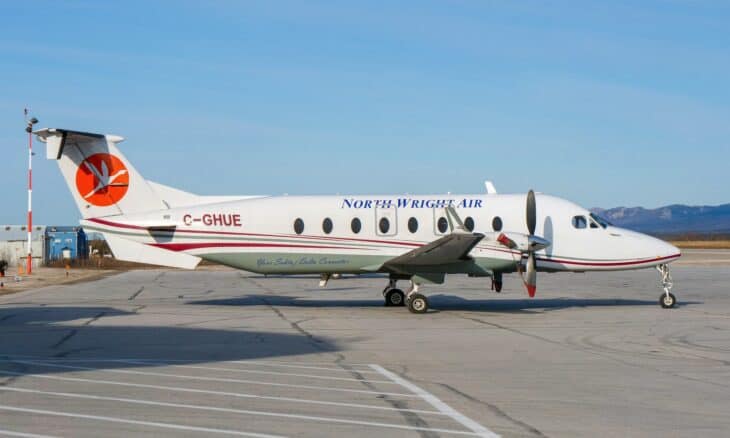

The Beechcraft 1900 is the fastest 19-seater ever built. Raytheon’s own specification sheet gives the 1900D a high-speed cruise of 280 knots (322 mph) at 20,000 feet, on two Pratt & Whitney Canada PT6A-67D engines of 1,279 shaft horsepower each.
Seating is listed as two crew plus 19 passengers, at a maximum takeoff weight of 17,120 pounds (7,764 kg). With all 19 seats filled, Raytheon quotes a range of 382 nautical miles (440 miles), including a reserve for a 100-nautical-mile diversion.
The family first flew on Sept. 3, 1982, and 695 were built, 439 of them the 1900D. Production ended in 2002, yet a 2018 airline census still counted 192 1900Ds and 114 older 1900Cs in service.
2. Fairchild Metro III and Metro 23: 278 knots
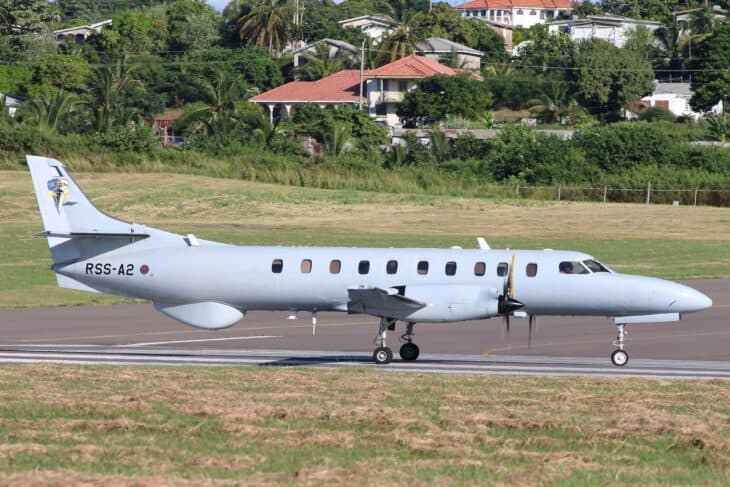
The Fairchild Swearingen Metroliner loses first place by just 2 knots. The Metro III cruises at up to 278 knots (320 mph) on two Garrett TPE331 turboprops.
The final version, the Metro 23, was approved in the new commuter category in 1990. Its FAA type certificate sets a maximum of 19 passengers and a maximum takeoff weight of 16,500 pounds (7,484 kg).
Counting the Metro, Expediter, Merlin IV and C-26 military versions, 703 were built after a first flight on Aug. 26, 1969. In 2019, 196 were still flying for airlines, many of them carrying cargo for operators such as Ameriflight.
3. BAe Jetstream 31: 263 knots
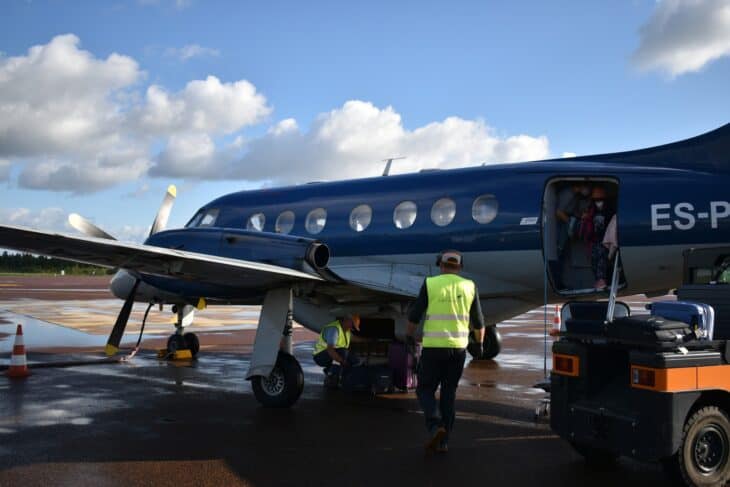

The British Jetstream 31 reaches a maximum cruise of 263 knots (303 mph), according to Jane’s 1988-89 data. It first flew on March 28, 1980, and its EASA type certificate sets a maximum of 21 people aboard including two pilots, which leaves 19 passenger seats.
The basic Jetstream 31 weighs up to 14,550 pounds (6,600 kg) at takeoff. The uprated Jetstream 32, or Super 31, raised that to 16,204 pounds (7,350 kg) with more powerful TPE331-12 engines.
About 386 Jetstream 31s and 32s were built, and 70 Jetstream 31s were still in airline service in 2019. Its stretched successor, the Jetstream 41, grew past the 19-seat line.
4. Dornier 228 NXT: 240 knots
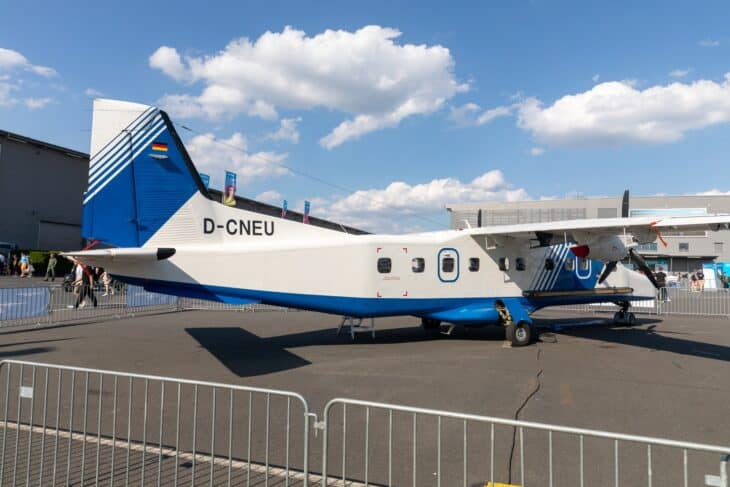

The Dornier 228 NXT is the fastest 19-seater being built today. General Atomics AeroTec Systems lists a maximum cruise of 240 knots (276 mph) on two Honeywell TPE331-10 engines turning five-blade composite propellers.
Its standard cabin holds 19 individual seats, and its maximum takeoff weight is 14,110 pounds (6,400 kg). With no payload it can fly 1,340 nautical miles (1,542 miles), but with a full 4,564-pound payload that drops to 160 nautical miles (184 miles).
The original Dornier 228 first flew in 1981, and roughly 245 were built in Germany, plus more than 125 built under licence by HAL in India by 2014. The NXT demonstrator flew on May 2, 2026, and the first delivery, to an unnamed humanitarian group, is planned for early 2027.
5. Let L 410 NG: 225 knots
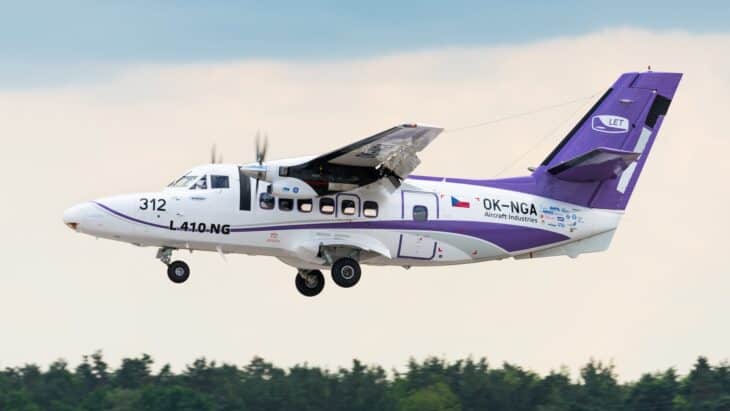

The Czech-built L 410 NG cruises at 225 knots (259 mph) and carries up to 19 passengers, according to its maker, Aircraft Industries. Its GE H85-200 engines make 850 shaft horsepower each.
Its maximum range is 1,134 nautical miles (1,305 miles) with tip tanks and a 45-minute reserve. Maximum takeoff weight is 15,432 pounds (7,000 kg), and serial production began in 2018.
The most-built 19-seater is not American
Aircraft Industries says more than 1,200 L 410s have been built since 1969, flown in more than 60 countries. That beats the Twin Otter’s 1,000 and the 1900’s 695. Aeroflot was once among its operators, and the newest L 410 NGs went to Kazakhstan, Thailand, Uzbekistan and Senegal in 2025.
6. Harbin Y-12F: 216 knots
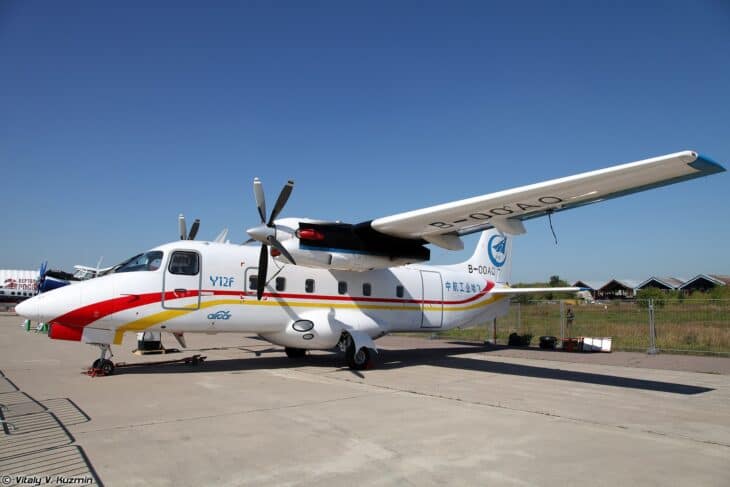

China’s Harbin Y-12F seats 19 passengers or carries three LD3 cargo containers. AVIC gives an economic cruise speed of 400 km/h, about 216 knots (249 mph), and a full-tank range of 2,255 km (1,401 miles).
Its maximum takeoff weight of 8,400 kg (18,520 lb) sits just under the 19,000-pound ceiling, second only to the SkyCourier on this list. The FAA certified it on Feb. 22, 2016, and EASA followed in July 2023.
Earlier Y-12 versions seated 17 or 18 passengers. Around 300 of all versions were delivered by 2023, many to air forces and island airlines such as Air Kiribati.
7. Cessna 408 SkyCourier: 210 knots
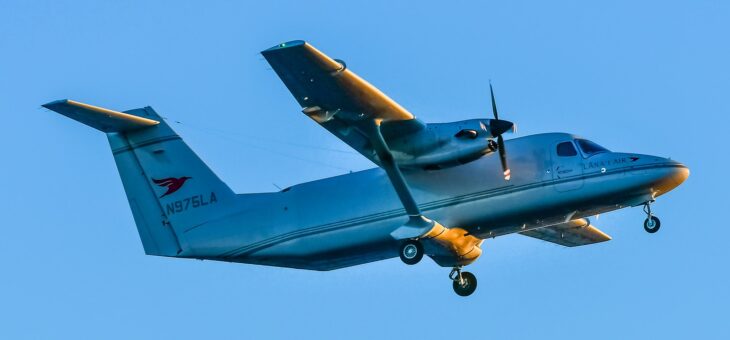
The Cessna SkyCourier is a clean-sheet design, not a rework of an older airframe. Textron lists a maximum cruise of 210 knots (242 mph), and a maximum takeoff weight of exactly 19,000 pounds (8,618 kg), built right to the edge of the rules.
Its maximum range is 920 nautical miles (1,059 miles) on a ferry flight, but with all 19 seats full the figure is 386 nautical miles (444 miles). It first flew on May 17, 2020, and earned its FAA type certificate in March 2022.
FedEx launched the program with an order for 50 freighters, and the first passenger version went to Hawaii’s Lāna’i Air in 2023. Textron markets it as single-pilot capable, which matters because most airplanes this size need two pilots.
8. DHC-6 Twin Otter 300-G: 182 knots
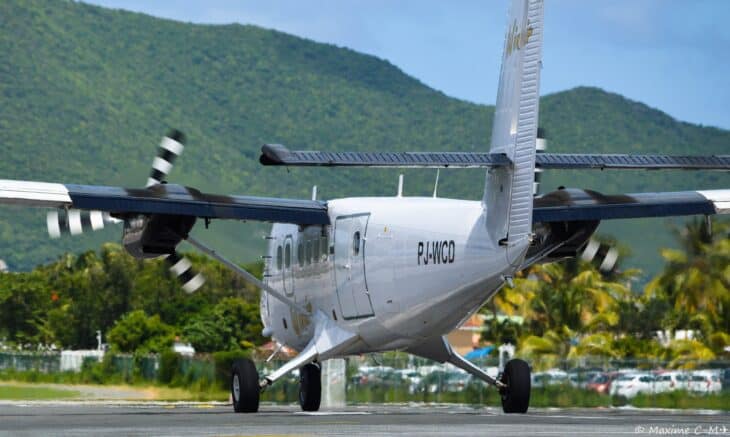

The Twin Otter is the slowest airplane in production here, and that is the point. De Havilland Canada gives the new Classic 300-G a cruise of 182 knots (209 mph) at 10,000 feet, but it was built for short, rough strips, and many fly on floats or skis.
It carries 19 passengers at a maximum takeoff weight of 12,500 pounds (5,670 kg). With 2,270 pounds of payload, its range is 803 nautical miles (924 miles).
The type first flew on May 20, 1965, and 1,000 had been built by March 2026. The first 300-G was delivered to Ethiopian Airlines in June 2026, and Trans Maldivian Airways had the largest fleet, 84 seaplanes, in 2020.
9. COMAC CE-25A: 162 knots, and battery-powered
The newest 19-seater is electric. China’s COMAC CE-25A electric airliner made its first piloted flight on Nov. 14, 2026, with two pilots and a flight test engineer aboard, after 19 uncrewed autonomous flights.
Xinhua reports a cruise of 300 km/h (186 mph), a range of 400 km (249 miles) and a cruising altitude of 2,400 m (7,900 feet). It flies on ten electric ducted fans, five on each wing.
Its maximum takeoff weight of 10 tonnes, about 22,000 pounds, is above the 19,000-pound limit of the small-airplane rules. Batteries are heavy, so an electric 19-seater does not fit the box that every turboprop above was designed around.
Near misses: what about the Bandeirante and the Heart ES-19?
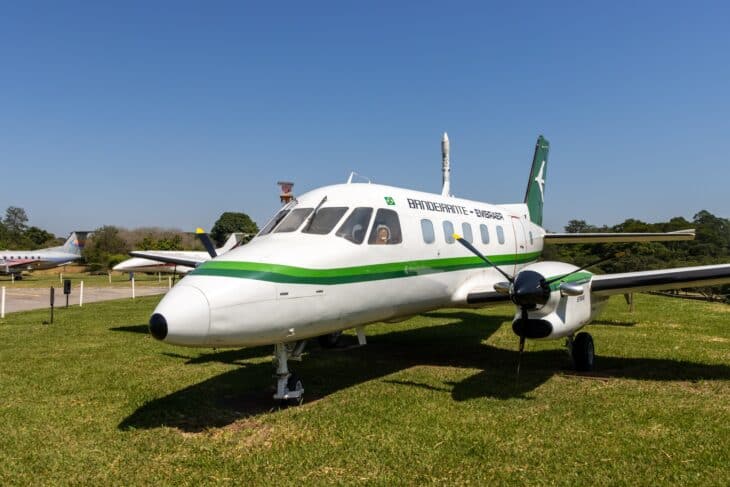

The Embraer EMB-110 Bandeirante is often called a 19-seater, but its versions seat anywhere from 15 to 21 passengers, and we could not find a primary source for a standard 19-seat layout. It would rank around sixth, with a maximum cruise of 222 knots in Jane’s data, and Embraer delivered 498 before production ended in 1990.
Sweden’s Heart Aerospace once planned an electric 19-seater, the ES-19, with orders from United. In 2022 it replaced that design with the 30-seat ES-30, and in September 2026 Air Data News reported a further switch to a 36-seat hybrid-electric ES-36.
Batteries are the reason: they make a 19-seat electric airplane too heavy for the small-airplane box, which leaves designers choosing between fewer seats and many more. Our look at why turboprops are still used explains why propellers still win on these short routes.
Who flies a 19-seater
In the US, a scheduled airline flying a 19-seat airplane operates under Part 121, the same rulebook as the major airlines. Scheduled service in airplanes with 10 to 30 passenger seats moved there from the lighter Part 135 rules on March 20, 1997.
Under Part 135, an aircraft with 10 or more passenger seats must carry a second pilot. That is why a 19-seat cabin almost always comes with two people up front, even when nobody is in the back serving drinks.
For speed beyond this class, our ranking of the fastest twin turboprop planes ranks the quickest twin turboprops of every size.
FAQ
Sources and references used for research and fact-checking.
- eCFR, 14 CFR 23.2005, Certification of normal category airplanes
- eCFR, 14 CFR 121.391, Flight attendants
- eCFR, 14 CFR 135.99, Composition of flight crew
- eCFR, 14 CFR 110.2, Definitions
- eCFR, 14 CFR 23.3 (2017 edition), Airplane categories
- Federal Register / GPO, Commuter Operations and General Certification and Operations Requirements, 62 FR (March 19, 1997)
- Raytheon Aircraft (archived), Beechcraft 1900D Passenger Specifications and Performance
- Wikipedia, Beechcraft 1900
- FAA (archived), Type Certificate Data Sheet A18SW (SA227-CC, SA227-DC)
- Wikipedia, Fairchild Swearingen Metroliner
- EASA, TCDS EASA.A.191 Jetstream 3100/3200
- Wikipedia, British Aerospace Jetstream
- General Atomics AeroTec Systems, Do228 NXT technical data
- General Atomics AeroTec Systems, Do228 NXT passenger transport layout
- AIN, GA-ATS Rolls Out Do228 NXT and Signs First Customer
- Australian Defence Magazine, General Atomics AeroTec Systems Do228 NXT flies
- Wikipedia, Dornier 228
- Aircraft Industries, L 410 NG
- Aircraft Industries, L 410 UVP-E20
- Wikipedia, Let L-410 Turbolet
- AVIC via Airframer, Y12F obtains FAA type certificate
- Wikipedia, Harbin Y-12
- Textron Aviation, Cessna SkyCourier (Passenger) product card
- Textron Aviation, Textron Aviation delivers first passenger unit of Cessna SkyCourier
- Wikipedia, Cessna 408 SkyCourier
- De Havilland Canada, Twin Otter Classic 300-G
- De Havilland Canada, De Havilland Canada delivers first Twin Otter Classic 300-G to Ethiopian Airlines
- Wikipedia, De Havilland Canada DHC-6 Twin Otter
- Xinhua, COMAC CE-25A completes first piloted flight
- AeroTime, China's COMAC completes first piloted flight of CE-25A electric aircraft
- Wikipedia, Embraer EMB 110 Bandeirante
- AVweb, EMB 110 Marks 50 Years In Operation
- Heart Aerospace, Heart Aerospace unveils new airplane design
- Air Data News, Startup Heart abandons ES-30 for larger 36-seat hybrid-electric aircraft
Get the Newsletter
The latest aviation news and stories sent to your inbox.
About the Author

Tim is the owner and lead editor of AeroCorner since 2019, overseeing aviation content covering aircraft, airlines, airports, and the broader aviation industry. Through years of researching, writing, editing, and publishing aviation-focused content, he has developed extensive practical knowledge of commercial aviation and air travel. Based in Asia and a frequent traveler himself, Tim also brings firsthand passenger experience to AeroCorner’s coverage. Outside of publishing, he has also explored aviation firsthand through hands-on flight training in New Zealand.