

Table of Contents
The jumbo jet was built with a parking spot for a spare engine. Qantas used it on a scheduled flight, and the people in the cabin found out at check-in.
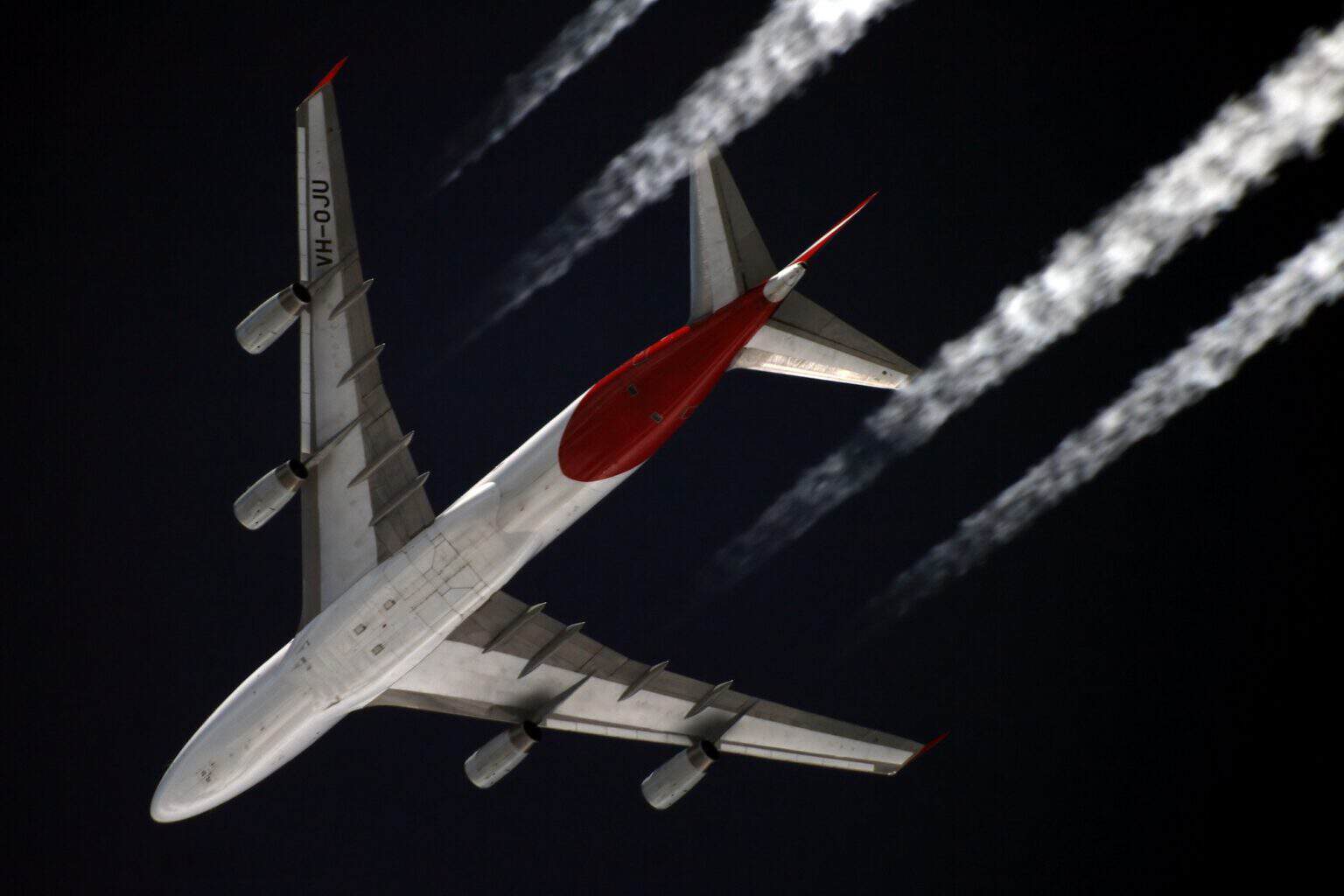
On January 6, 2016, Qantas Boeing 747-400 VH-OJS left Sydney with five engines. Four of them were running. The fifth, a spare Rolls-Royce engine, hung dead under the left wing, bound for Johannesburg, where sister ship VH-OJU sat grounded with a faulty engine.
The 747’s “fifth pod” is a set of anchor points under the left wing, inboard of the working engines. The flight was QF63, a regular passenger service, so the spare part rode roughly 7,200 miles (11,600 km) with paying passengers behind the windows.
Why a jumbo needed to carry its own spare engine
When the 747’s engines were developed in the 1960s, very few cargo aircraft could carry one, John Walton reported for The Points Guy. An airline whose jumbo lost an engine far from home could wait weeks for a replacement to arrive by ship.
The answer was to let the airplane carry the part itself. Boeing gave the 747 a latent provision for a large pylon under the wing, the “5th Pod” engine ferrying system, according to The War Zone.
The idea was older than the jumbo. Earlier jets, the Boeing 707 among them, could carry a podded spare under the wing, and Qantas says it pioneered the technique on its 707s at the dawn of the jet age, when engines were less reliable.
By 2016 the option was a rarity even at Qantas. Its approval covered only its Rolls-Royce-powered 747s, four aircraft registered VH-OJM, VH-OJS, VH-OJT and VH-OJU, and the airline had last flown a fifth engine in 2011.
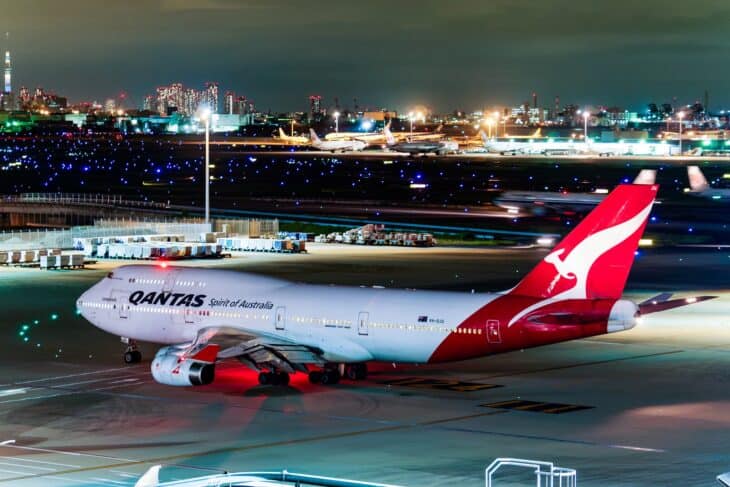

So when VH-OJU needed an engine in South Africa, Qantas weighed shipping one by sea or chartering a large freighter. It chose to bolt the spare onto a jet that was flying there anyway, judging the fifth pod the most efficient way to get VH-OJU back in service.
Six tonnes of dead engine and a detour through Perth
A spare engine cannot simply be hung in the wind. Qantas engineers removed its fan blades, fitted a fairing over the bare core and added a second fairing over the front of the cowling to cut the drag, Flightradar24 reported after talking to the airline.
The engine is winched up and bolted to the wing on its own strut. Installing the strut and engine takes about three hours, and taking them off again is quicker.
The package weighed about six tonnes, roughly 13,000 pounds (6,000 kg). To stay under the 747’s maximum takeoff weight, the crew had to carry less fuel, while the dead engine added drag that burned more of it.
That broke the nonstop. Sydney to Johannesburg is about 6,850 miles (11,000 km) on the great circle, so QF63 stopped in Perth to refuel first, adding a couple of hours for the passengers and stretching the trip to roughly 7,200 miles (11,600 km).
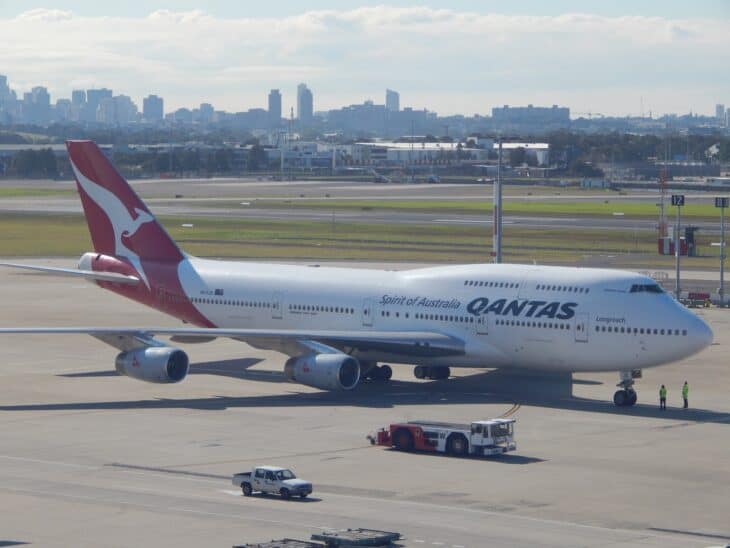

Qantas pilots told Flightradar24 that the jet flies much like a normal 747, with trim used to hold it straight and level against the lopsided load. The one firm penalty Qantas named was a slightly slower cruise speed.
Passengers were told about their unusual companion the night before or at check-in, and again on board. Aviation journalist John Walton happened to be airside at Perth Airport and filmed the five-engined jumbo taking off for Africa.
The trip home took the slow way
In Johannesburg, the spare came off the wing and went onto VH-OJU, which returned to service. The broken engine went home to Sydney by ship, AvWeb reported, the very journey the fifth pod existed to avoid in the first place.
That asymmetry is the whole economic case. A grounded widebody earns nothing, so the fast leg is the one that brings the airplane back into service, and the slow leg can carry the part nobody is waiting for.
It also explains why the flight made headlines at all. Logistics networks are far more robust than they were in the 1960s, airline support is more mature, and jet engines are more reliable. “So it all comes down to cost,” The War Zone concluded, and for most airlines the cost no longer favors bolting a spare to a wing.
The engines themselves kept growing too, as our ranking of the largest commercial aircraft engines shows.
The fifth-pod hardpoint later launched a rocket
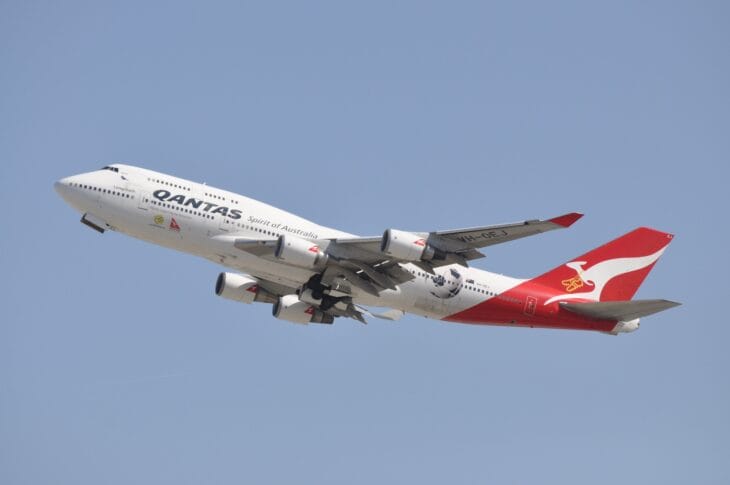
Qantas retired its last 747, VH-OEJ, on July 22, 2020, flying it out of Sydney as QF7474 bound for Los Angeles and the Mojave Desert. The COVID-19 pandemic brought the retirement forward, ending almost five decades in which the airline operated 65 747s.

The fifth pod’s strangest job came on a different 747-400. Virgin Orbit built the pylon for its rocket-launching jumbo, Cosmic Girl, on the jet’s latent fifth-pod provision, so it did not have to re-engineer the wing for a heavy-duty hardpoint, The War Zone reported in 2018.
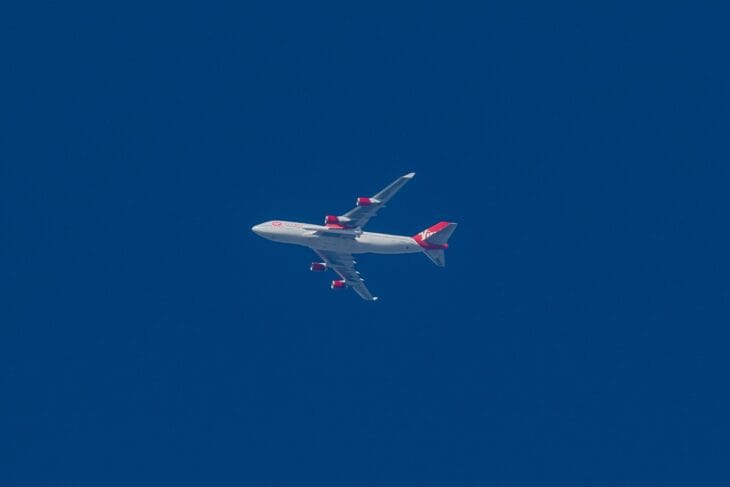

Cosmic Girl carried LauncherOne rockets under its left wing until Virgin Orbit shut down in May 2023. Stratolaunch won the jet and related equipment with a $17 million bid in the bankruptcy sale, Space.com reported.
The 747s still in service are mostly freighters now, as our count of how many 747s are still flying shows. The jumbo became a cargo plane, and cargo planes are how spare engines tend to travel now, as freight rather than as a fifth pod.
The 747 earned its place among the best four-engine passenger planes on four engines. For one day in January 2016, with a planeload of passengers in Perth, Qantas flew it on five.
Sources and references used for research and fact-checking.
- Flightradar24, How Qantas Ferried an Engine on the Wing of a 747
- The Points Guy, Watch a Qantas 747 Fly With Five Engines
- AvWeb, A Rare Five-Engine Flight For Qantas
- The War Zone, Virgin Orbit's Rocket Launching Jumbo Jet Reminds Us a 747 Can Lug a 5th Engine Under Its Wings
- AirlineGeeks, QF7474: The Final Qantas 747 Flight Takes Off
- Space.com, Virgin Orbit Shuts Down After Selling Key Assets to 3 Aerospace Companies
Get the Newsletter
The latest aviation news and stories sent to your inbox.
About the Author

Tim is the owner and lead editor of AeroCorner since 2019, overseeing aviation content covering aircraft, airlines, airports, and the broader aviation industry. Through years of researching, writing, editing, and publishing aviation-focused content, he has developed extensive practical knowledge of commercial aviation and air travel. Based in Asia and a frequent traveler himself, Tim also brings firsthand passenger experience to AeroCorner’s coverage. Outside of publishing, he has also explored aviation firsthand through hands-on flight training in New Zealand.