

Table of Contents
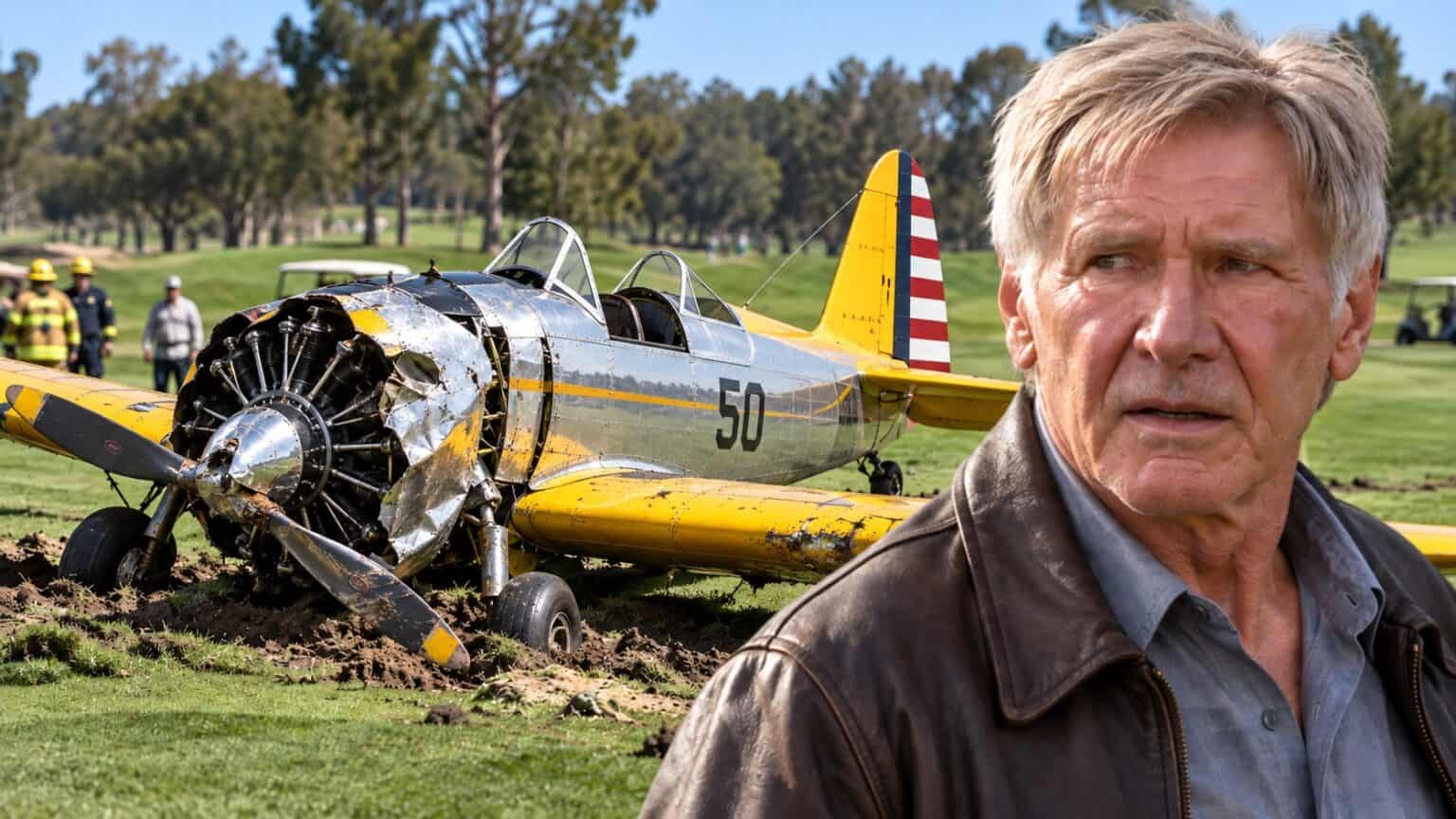
It was not pilot error. The NTSB traced the engine failure to a carburetor jet that had worked loose since a rebuild about 17 years earlier, and found that a homemade shoulder-harness mount made his injuries worse. Ford’s real mistakes are on his record too, but they are different events, and none of them cost him his pilot certificate.
This article is built from the NTSB’s final reports on accidents WPR15FA121 and LAX00LA024 and from the FAA’s airmen registry, October 2026 release. Where a fact comes from anywhere else, the source is named.
1965
Four lessons, then out of money. He takes his first flying lessons as a student at Ripon College in Wisconsin and quits after four, according to a 2008 AOPA Pilot profile.
1996
Private pilot checkride. Having trained with the captain of his Gulfstream II, he passes it in a Cessna T206 Stationair.
Oct. 23, 1999
Helicopter hard landing. A practice autorotation in a Bell 206L-4 ends in a rollover. Ford and his instructor are unhurt. NTSB LAX00LA024.
June 18, 2000
Bonanza blown off the runway. A wind gust pushes his Beechcraft Bonanza onto the grass on landing at Lincoln, Nebraska. Nobody is hurt, and there is no NTSB record.
2004 to 2009
Young Eagles chairman. He chairs EAA’s program of free first flights for young people.
March 5, 2015
Engine failure at Santa Monica. His 1942 Ryan PT-22 loses power after takeoff and comes down on a golf course. He is seriously injured. NTSB WPR15FA121.
June 26, 2015
The FAA changes its approach. Order 8000.373 sets out its Compliance Philosophy, the policy behind how it later handles his mistakes.
Feb. 13, 2017
Taxiway landing at John Wayne. He lands his Aviat Husky on Taxiway C, passing over an American Airlines 737. The FAA closes the case in April with no enforcement action.
April 24, 2020
Runway incursion at Hawthorne. He crosses the runway after mishearing a hold-short instruction. The FAA requires a remedial course, then closes the case.
May 2025
Medical renewed at 82. The FAA registry shows a third-class medical valid until May 2027.
What the FAA registry shows
The FAA’s airmen registry lists Harrison Ford as a private pilot. His ratings cover single-engine and multi-engine airplanes on land and on water, instrument flying in airplanes, and helicopters.
He also holds two jet type ratings, CE-525 and CE-680. Federal rules require a type rating to act as pilot in command of any turbojet airplane, and those two cover the Cessna Citation 525 family, which includes the Citation CJ3, and the Citation Sovereign.
The jets themselves are covered in our article on Harrison Ford’s private jet. What matters here is the certificate level: a private pilot may not carry passengers or cargo for compensation or hire. Ford’s jet ratings sit on an owner’s certificate, not a professional one.
His medical is current. The registry shows a third-class medical issued in May 2025, when he was 82, and valid until May 2027. For a private pilot over 40, that class lasts 24 calendar months.
The hours are real, too. In October 1999, three years after his checkride, he reported about 994 hours, 332 of them in helicopters. By 2015 the NTSB recorded an estimated 5,000 hours, and he had reported 5,200 on his latest medical application.
One caveat on method. The public registry file lists names, cities and certificate data but no birth dates, so the match rests on the details: it is the only Harrison Ford in Los Angeles in the file, with the ratings the NTSB listed for him in 2015 and the two Citation type ratings he named to investigators.
What the NTSB found about the 2015 crash
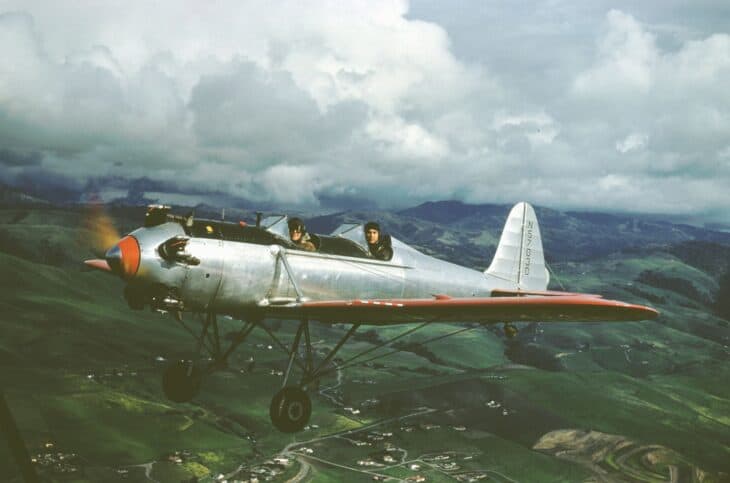
The airplane was a Ryan ST3KR, registration N53178, built in 1942 and better known by its military name, the PT-22 Recruit. It is a two-seat tailwheel trainer with a 160-horsepower Kinner R-55 engine, flown solo from the rear seat.
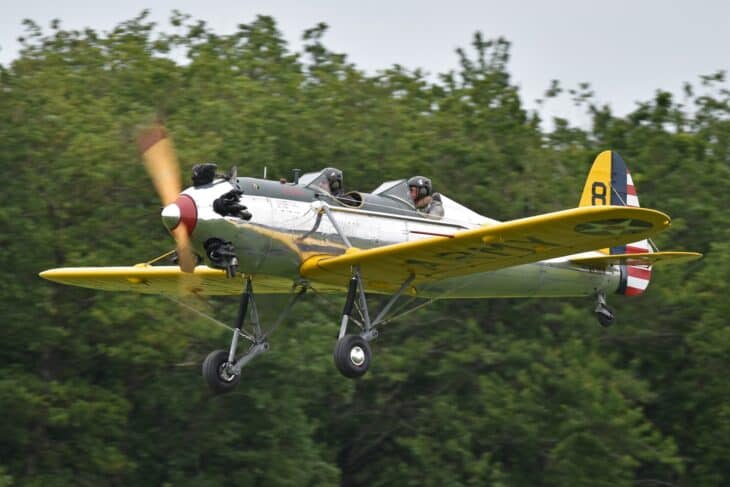
Ford asked for a departure from runway 21 for a lap of the traffic pattern. About a minute after takeoff, at about 1,100 feet above sea level, he radioed an engine failure and asked to return. He told investigators he did not try a restart, held 85 mph and turned left, back toward the airport.
He realized he could not reach the runway, whose approach end sits on a plateau about 75 feet above the golf course. The airplane struck the top of a tree about 65 feet tall and came to rest upright beside the 8th tee, about 800 feet short of runway 03.
Ford remembers nothing after the turn. His written statement to the NTSB says the engine “failed without any prior indication of any problem.”
The probable cause, in the Board’s words, was “a total loss of engine power during initial climb when the carburetor main metering jet became unseated, which led to an extremely rich fuel-to-air ratio.” The Board named “the lack of adequate carburetor maintenance instructions” as a contributing factor.
.jpg)
On teardown, the jet was unscrewed from its seat and rotated 90 degrees, with no thread-locking compound and no gasket. The carburetor had been rebuilt during the airplane’s restoration about 17 years before, and the carburetor’s maintenance manual gave no instructions for installing the jets.
The report’s own conclusion is blunt: “There was no record of maintenance personnel inspecting the carburetor jets during the previous 17 years nor was there a requirement to do so.”
The Board also found that “the improperly installed shoulder harness” contributed to the severity of his injuries. The PT-22 left the factory with no shoulder harnesses, and this one was bolted to a thin aluminum seatback with no reinforcement, so the bolt pulled through on impact.
The report neither criticizes nor endorses his decision to turn back. It does not appear in the findings at all.
The 1999 helicopter crash and the 2000 Bonanza
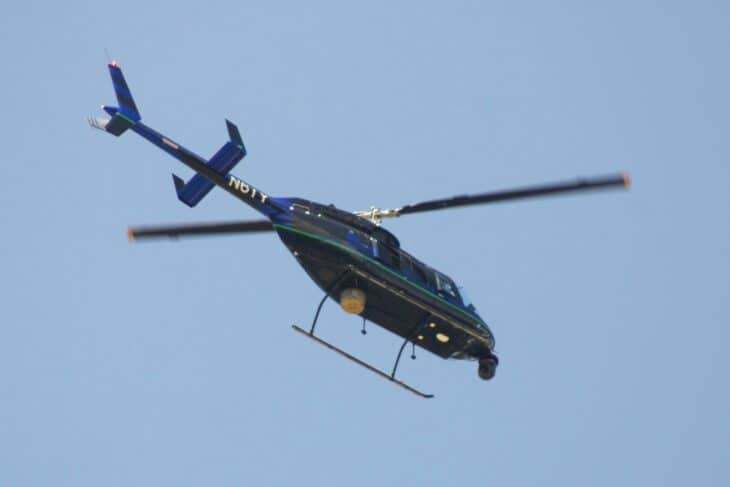
Ford’s only accident record with pilot error in the cause is a training flight. On October 23, 1999, he and a flight instructor took a Bell 206L-4, the stretched LongRanger version of the Bell 206 JetRanger, from Van Nuys to practice autorotations over the Lake Piru riverbed.
_(6-10-2025).jpg)
On the second practice run, entered at about 600 feet above the ground, the engine did not respond as quickly as he expected when he added power. The helicopter landed hard on the heels of its skids, the left skid caught a 12-inch log buried in the sand, and it rolled onto its side. Neither man was hurt.
The NTSB’s probable cause in LAX00LA024 names both pilots: “The pilot’s delay in adding power during a power-on recovery from an autorotation, which resulted in a hard landing and rollover. The flight instructor’s inadequate supervision of the flight was also causal.” The engine later passed a test-cell run.
The Bonanza event usually counted as his second crash has no NTSB record at all. On June 18, 2000, landing at Lincoln, Nebraska, “the possibility of a wind gust blew the aircraft off the runway,” an FAA spokesman told CBS. “It ended up on the grass and went back on the runway.” Ford and a passenger were unhurt.
That absence has a reason. Under federal rules an aircraft accident requires a death, a serious injury or substantial damage, and the definition specifically excludes damage limited to items such as landing gear, tires and wingtips.
What most accounts get wrong
Harrison Ford has not crashed three planes through his own mistakes. The NTSB holds two accident records with him at the controls: a 1999 training hard landing it blamed on him and his instructor together, and the 2015 crash it blamed on a loose carburetor jet. The 2000 Bonanza event never became an NTSB accident, and the 2017 and 2020 events were not crashes at all.
The taxiway landing and the runway incursion
Ford’s other two mistakes came after the crash, both in his Aviat Husky, and both were radio-and-runway mistakes rather than handling failures.
On February 13, 2017, John Wayne Airport cleared Husky N89HU to land on runway 20L and warned him of wake turbulence from an Airbus A320 landing on the parallel 20R. He landed on Taxiway C instead, passing over American Airlines Flight 1456, a Boeing 737 holding short with 110 passengers and six crew aboard.

On frequency, Ford asked: “Was that airliner airplane supposed to be underneath me?” His famous line, “I’m the schmuck that landed on the taxiway,” came later, on the telephone to the tower, where he said he had been distracted by the airliner and by the wake turbulence.
The “100 feet” in most retellings is not an FAA measurement. The FAA said at the time that it did not know how close the aircraft came. The figure traces to a tower controller’s estimate, relayed to the airline captain by phone, of “less than 100 feet, in his perspective.”
The FAA closed the case in April 2017. Ford’s lawyer, Stephen Hofer, said the agency “determined that no administrative or enforcement action was warranted” and that Ford “retains his pilot’s certificate without restriction.” Hofer told AIN the FAA required airman counseling.
On April 24, 2020, at Hawthorne Municipal Airport, the controller asked: “Can you hold short on runway? Traffic on runway.” Ford crossed the airport’s only runway anyway, while an aircraft flying touch-and-goes was taking off about 3,600 feet away, according to an FAA official quoted by CBS Los Angeles.
His representative said he misheard the instruction, and on the tower audio he told the controller he was “terribly sorry.” The FAA’s statement on the outcome was short: “The FAA required the pilot to take a remedial runway incursion training course. When the pilot successfully completed the course, the FAA closed the case with no additional action.”
Why the FAA retrained him instead of grounding him
The answer is a policy, not a celebrity pass. On June 26, 2015, three months after the golf course crash, the FAA adopted Order 8000.373, its Compliance Philosophy, since renamed the Compliance Program.
The current version says “some deviations arise from factors such as flawed procedures, simple mistakes, lack of understanding, or diminished skills,” and that these are best corrected “through root cause analysis and training, education, or other appropriate improvements.”
Strong enforcement is reserved for “intentional or reckless deviations” and for deviations that present “an unacceptable risk to safety.” Reluctance to fix a problem, or repeating it, can still end in enforcement.
The reasoning sits in the same order. The FAA’s safety system is “largely based on, and dependent upon, voluntary compliance,” and on pilots and operators sharing safety data openly. Punishing every honest error works against both.
Ford’s two events fit the training lane closely. Each was a single misread, a wrong surface or a misheard call, and each time he acknowledged the mistake on frequency straight away.
The 2017 case closed with what his lawyer described as counseling, and the 2020 case with a formal remedial course. Neither touched his certificate.
What changed
The 2015 report ends with the NTSB “working with the pilot community” on two lessons: “the security of the carburetor’s main metering jet and the security of the shoulder harness are both critical aspects of aviation safety.” Both apply to every restored vintage airplane with an old carburetor and a retrofitted harness.
No regulation changed because of Harrison Ford, and nothing on his record suggests it should have. What changed was his own paperwork: one formal training course, one round of counseling, and a certificate that stayed active through all of it.
He kept flying. His representative described the 2020 Hawthorne flight as one “to maintain currency and proficiency in the aircraft,” and the registry’s October 2026 release shows a private certificate and a medical valid until May 2027, two months before his 85th birthday.
FAQ
Sources and references used for research and fact-checking.
- National Transportation Safety Board, Aviation Accident Final Report WPR15FA121, Ryan ST3KR N53178, Santa Monica, CA, March 5, 2015
- National Transportation Safety Board, Public docket WPR15FA121
- National Transportation Safety Board, Aviation Accident Final Report LAX00LA024, Bell 206-L4 N36R, Santa Clarita, CA, October 23, 1999
- Federal Aviation Administration, Airmen Certification Releasable Database, October 2026
- Federal Aviation Administration, FAA Order 8000.373B, Federal Aviation Administration Compliance Program
- Federal Aviation Administration, FAA Order 8000.373, Federal Aviation Administration Compliance Philosophy
- eCFR, 14 CFR 61.31, 61.113 and 61.23
- eCFR, 49 CFR 830.2, Definitions
- AIN, FAA Opts Out of Punishment for Harrison Ford Taxiway Landing
- AVweb, FAA Forgives Ford's Landing Mistake
- CBS News, Harrison Ford's plane involved in airliner mishap
- CBS Los Angeles, FAA investigating Harrison Ford after Hawthorne runway incursion
- AVweb, Harrison Ford Cleared To Keep Flying
- CBS News, A Piloting Close Call For Han Solo
- AOPA Pilot, This man is having too much fun
- EAA, 2 Millionth Young Eagle Flies Thursday, July 28
Get the Newsletter
The latest aviation news and stories sent to your inbox.
About the Author

Tim is the owner and lead editor of AeroCorner since 2019, overseeing aviation content covering aircraft, airlines, airports, and the broader aviation industry. Through years of researching, writing, editing, and publishing aviation-focused content, he has developed extensive practical knowledge of commercial aviation and air travel. Based in Asia and a frequent traveler himself, Tim also brings firsthand passenger experience to AeroCorner’s coverage. Outside of publishing, he has also explored aviation firsthand through hands-on flight training in New Zealand.