

Table of Contents
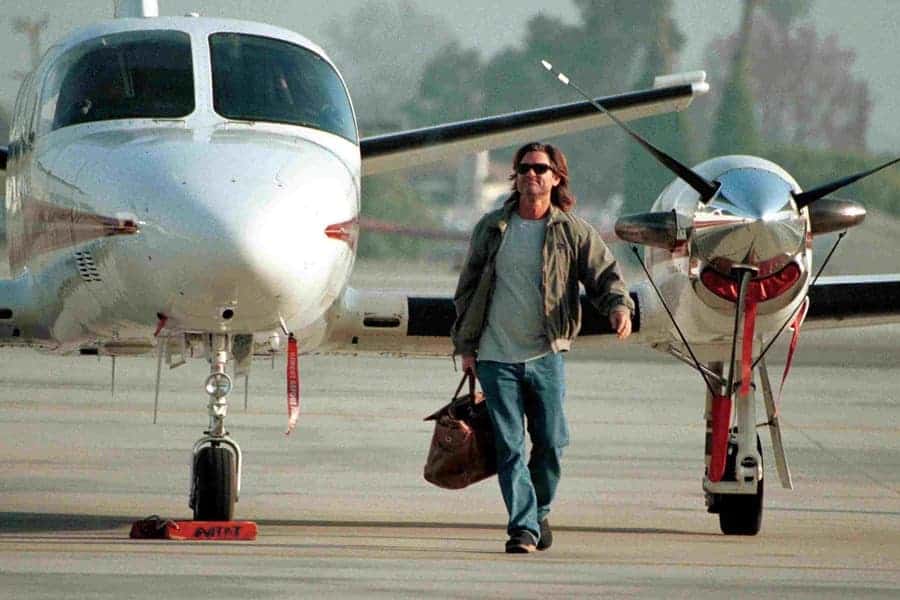
The Kurt Russell private jet story starts with an important correction: there is no reliable public record tying him to a specific current business jet, tail number, or Gulfstream-style fleet. That makes him different from celebrity owners whose aircraft registrations are tracked by enthusiasts and climate accounts. Russell’s aviation story is quieter, harder to reduce to a spec sheet, and in some ways more interesting.
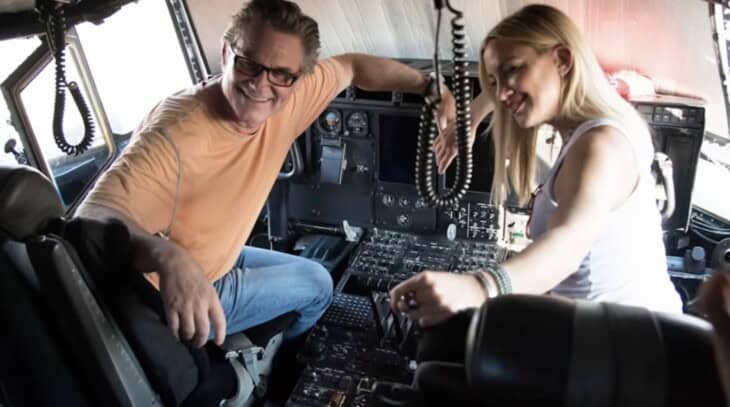
Russell is not just a celebrity passenger. He is a licensed pilot publicly described as holding single-engine, multi-engine, and instrument airplane ratings. In a 2016 GQ profile, he said he began flying at 34, trained with unusual intensity, went on to aerobatic instruction in a Pitts S-2B, and at times worked specifically to fund flying and buy airplanes. That is not the language of someone who simply rents a cabin with catering.
This guide separates the confirmed facts from the rumors: what is known about Kurt Russell’s private aircraft history, why no current private jet can be verified from public sources, the Pitts S-2B aerobatic training that shaped his flying philosophy, the Bell 206 connection from The Thing, and how Russell compares with confirmed celebrity pilot-owners like Harrison Ford, John Travolta, Morgan Freeman, and Angelina Jolie.
Quick facts about Kurt Russell’s private aviation story
Kurt Russell’s Private Jet Fleet: What Can Actually Be Confirmed?
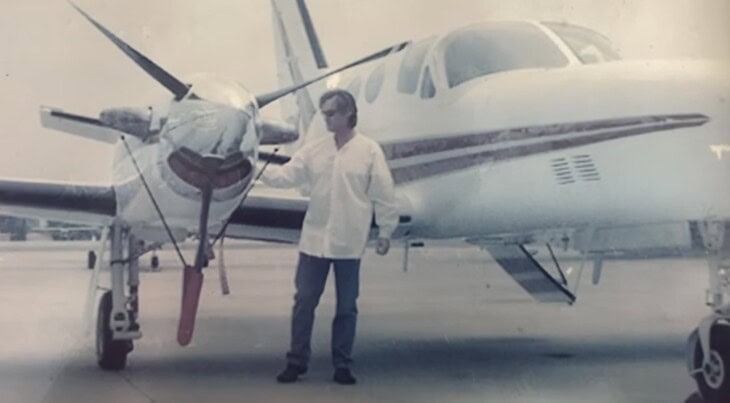
Publicly, the answer is simple: no confirmed current private jet fleet can be tied to Kurt Russell with a reliable tail number. Unlike Harrison Ford’s Cessna Citation Sovereign N6GU or Morgan Freeman’s former SyberJet SJ30-2 N30GZ, Russell’s aviation footprint does not show a widely documented flagship jet. The strongest public evidence supports him as a serious private pilot and airplane owner at different points, not as the public operator of a named jet fleet.
That matters because celebrity private aviation is easy to overstate. A star may charter a jet, fly on a studio aircraft, travel on a partner’s aircraft, own through an LLC, or own smaller piston aircraft that never become tabloid material. For Russell, public sources support the last two ideas only cautiously: he has said he worked to buy airplanes, but the specific makes, models, registrations, and current ownership status have not been reliably published.

The Origin Story: From Family Aviation to the Cockpit
Russell’s aviation story is rooted in family memory rather than luxury branding. In interviews, he has traced his interest to his grandfather Buddy, an early aviator whose pilot certificate, according to Russell, carried an extremely low number and a signature connected to the Wright era. Whether every detail of that family lore can be independently checked is less important than the effect it had on him: flying became a standard for seriousness.
Early family lore
Grandfather Buddy becomes the model. Russell has described his grandfather as an early pilot whose aviation discipline shaped his idea of competence and directness.
1969-1975
California Air National Guard years. Russell serves in the California Air National Guard with the 146th Tactical Airlift Wing, then associated with Van Nuys. This does not make him a military pilot, but it places aviation around his early adult life.
Age 34
Flight training begins. Russell decides he wants to fly and approaches ground school with a level of intensity that, by his own account, frustrated instructors who wanted to keep moving through the material.
After ~200 hours
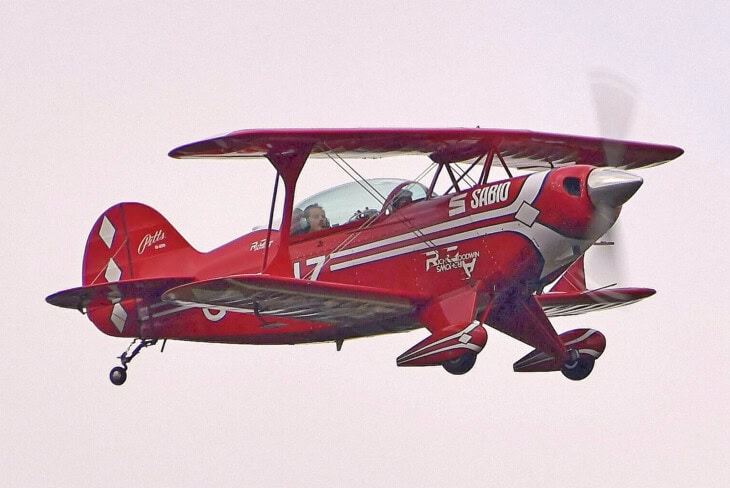
Pitts S-2B aerobatic training. Russell advances to unusual-attitude and aerobatic work in a Pitts S-2B, a two-seat aerobatic biplane that demands precise control and punishes sloppy inputs.
1982
The Thing puts flying on screen. Russell plays helicopter pilot R.J. MacReady in John Carpenter’s The Thing. Aviation film references note that he actually flew the Bell 206 used for some scenes.
2009
Aviation Mentor Award. Living Legends of Aviation records list Russell as the 2009 Aviation Mentor Award winner, placing him among celebrity pilots recognized by the aviation community.
2016
The GQ flying profile. Russell explains that flying became important rather than merely fun, and says he sometimes worked to fly and to buy airplanes.
Inside the Pitts S-2B: The Aircraft That Explains Russell Best
If there is one aircraft that captures the confirmed Kurt Russell aviation story, it is not a private jet. It is the Pitts S-2B, the two-seat aerobatic biplane he specifically discussed in connection with his early flying education. The Pitts is not transportation in the luxury sense. It is a compact, high-performance aerobatic aircraft built to roll, loop, recover, and reveal whether the pilot really knows what the airplane is doing.
The S-2B is powered by a 260-horsepower Lycoming AEIO-540-D4A5 engine and carries two people in tandem seats. Its published figures are modest if you compare them with jets: roughly 277 nautical miles of range and about 152 knots of maximum cruise speed. But that misses the point. The Pitts exists to teach energy, attitude, coordination, and humility. For a pilot who later described flying as a way to strip away posturing, it is exactly the right aircraft to remember.
Performance
Airframe
Powerplant
Why the Pitts matters more than a missing jet
A Gulfstream tail number would tell you how Russell travels. The Pitts S-2B tells you how he learned. Aerobatic training is about unusual attitudes, energy management, and honest control inputs, which matches the way Russell talks about flying.
The phrase “unusual attitude” sounds dramatic to non-pilots, but in aviation it has a precise meaning: the aircraft is not where the pilot expects it to be in pitch, bank, or both. Recovering safely requires recognition, discipline, and the right control sequence. It is one reason aerobatic training has value even for pilots who never intend to compete. Russell’s story is not about buying the biggest cabin. It is about learning what an aircraft will and will not do.
What About Kurt Russell’s Actual Airplanes?
The most tantalizing line in the public record is Russell’s own statement to GQ that in the past he sometimes worked to fly and “to buy airplanes.” That confirms airplane ownership in broad terms, but it does not identify the aircraft. No dependable public source found for this article ties him to a specific current N-number, serial number, purchase date, or aircraft-owning LLC.
For readers expecting a normal celebrity private jet article, that is the key distinction. A private pilot can own aircraft without having a public-facing fleet. A Hollywood actor can charter jets without owning them. An aircraft can be registered to an entity that is not obviously connected to the owner. And smaller piston aircraft often attract little attention compared with Gulfstreams, Falcons, Challengers, and Boeing business jets.
The responsible answer
Kurt Russell appears to have owned airplanes and is a recognized private pilot, but no publicly verifiable source confirms a current private jet model or tail number. Any article claiming a specific Russell jet should show the registration evidence.
The Bell 206 Moment in The Thing
Russell’s best-known aviation image may be fictional: R.J. MacReady, the helicopter pilot in John Carpenter’s The Thing. The aircraft type associated with the film is the Bell 206 JetRanger, a light turbine helicopter widely used for news, police, utility, and film work. Aviation film references note that Russell actually flew the Bell 206 for some scenes, which gave the performance an authenticity that would have been hard to fake.
The Bell 206 is a very different machine from the Pitts. A JetRanger typically carries a pilot and up to four passengers, cruises around 110 knots, and uses a single Allison or Rolls-Royce 250-series turboshaft engine. It is not a private jet and there is no evidence Russell owned the helicopter from the film. But as a cultural aviation moment, it matters: Russell was already believable as a pilot on screen before most audiences knew he was serious about flying off screen.
Does Kurt Russell Have a Private Jet Carbon Controversy?
No major private jet carbon controversy is publicly attached to Russell in the way that emissions trackers have scrutinized Taylor Swift, Kylie Jenner, Elon Musk, Drake, or other high-profile frequent flyers. The reason is straightforward: there is no public Russell jet registration with a flight history that can be audited in the same way.
That does not mean Russell has never flown privately. It means the available evidence does not support a quantified emissions claim. Without a confirmed aircraft, tail number, and flight log, any carbon total would be guesswork. The more defensible point is that Russell’s public aviation identity is pilot-centered rather than fleet-centered.
Kurt Russell’s Most Famous Aviation Moments
The GQ flying story
The 2016 GQ profile is the richest public source on Russell’s flying philosophy. In it, he frames aviation as a discipline that changed how he thinks, because an airplane does not care about image, charm, fame, or excuses. The profile also places his decision to fly at age 34 and describes his move into Pitts S-2B unusual-attitude training after roughly 200 hours.
The Thing and the Bell 206
As MacReady in The Thing, Russell played one of cinema’s most memorable helicopter pilots. The production used Bell 206 helicopters, and aviation film references report that Russell flew the aircraft for some scenes. That detail gives the opening and base sequences a texture most actor-pilot performances do not have.
The Aviation Mentor Award
Living Legends of Aviation lists Russell as the 2009 recipient of its Aviation Mentor Award. The organization describes its honorees as including pilots who became celebrities and celebrities who became pilots. Russell fits the second category: an actor whose aviation seriousness became part of his public identity without turning into a constant publicity campaign.
Wings of Hope and humanitarian aviation
Russell has also been linked to Wings of Hope, a humanitarian aviation nonprofit based near St. Louis. The organization uses aircraft to connect patients and remote communities with medical and development resources. That association places him in the same broad orbit as other actor-pilots who have used aviation visibility to support public-benefit flying.
How Russell Compares to Other Celebrity Pilot-Owners
Russell belongs in the celebrity pilot conversation, but not in exactly the same lane as the stars with confirmed public fleets. Harrison Ford owns a Cessna Citation Sovereign and a broad collection of vintage and utility aircraft. John Travolta has owned airliners and business jets and holds multiple type ratings. Morgan Freeman owned a SyberJet SJ30-2 and previously operated a Citation 501 SP and Cessna 414. Angelina Jolie chose a Cirrus SR22 rather than a conventional private jet.
Russell’s known profile is less transparent. He has the pilot credentials, the aviation-community recognition, and a first-person account of airplane ownership, but not the publicly documented fleet. That makes him a poor subject for a “inside his $70 million jet” treatment and a good subject for a more careful question: what does private aviation look like when the celebrity in question cares more about flying than being seen flying?
At a glance
Kurt Russell has no confirmed public private jet tail number, but he has a real pilot story: private pilot credentials, aerobatic training in a Pitts S-2B, aviation recognition, and a public statement that he once worked to buy airplanes.
FAQ
Sources and references used for research and fact-checking.
Get the Newsletter
The latest aviation news and stories sent to your inbox.
About the Author

Tim is the owner and lead editor of AeroCorner since 2019, overseeing aviation content covering aircraft, airlines, airports, and the broader aviation industry. Through years of researching, writing, editing, and publishing aviation-focused content, he has developed extensive practical knowledge of commercial aviation and air travel. Based in Asia and a frequent traveler himself, Tim also brings firsthand passenger experience to AeroCorner’s coverage. Outside of publishing, he has also explored aviation firsthand through hands-on flight training in New Zealand.