

Table of Contents
Most celebrities own a private jet. Harrison Ford flies his. The man who played Han Solo and Indiana Jones holds real fixed-wing and helicopter ratings, has logged thousands of hours in the left seat, and once dead-sticked a 1942 military trainer onto a golf course after its engine quit at 800 feet. The Harrison Ford private jet story is unlike any other in Hollywood, because the jet is almost the least interesting aircraft he owns.
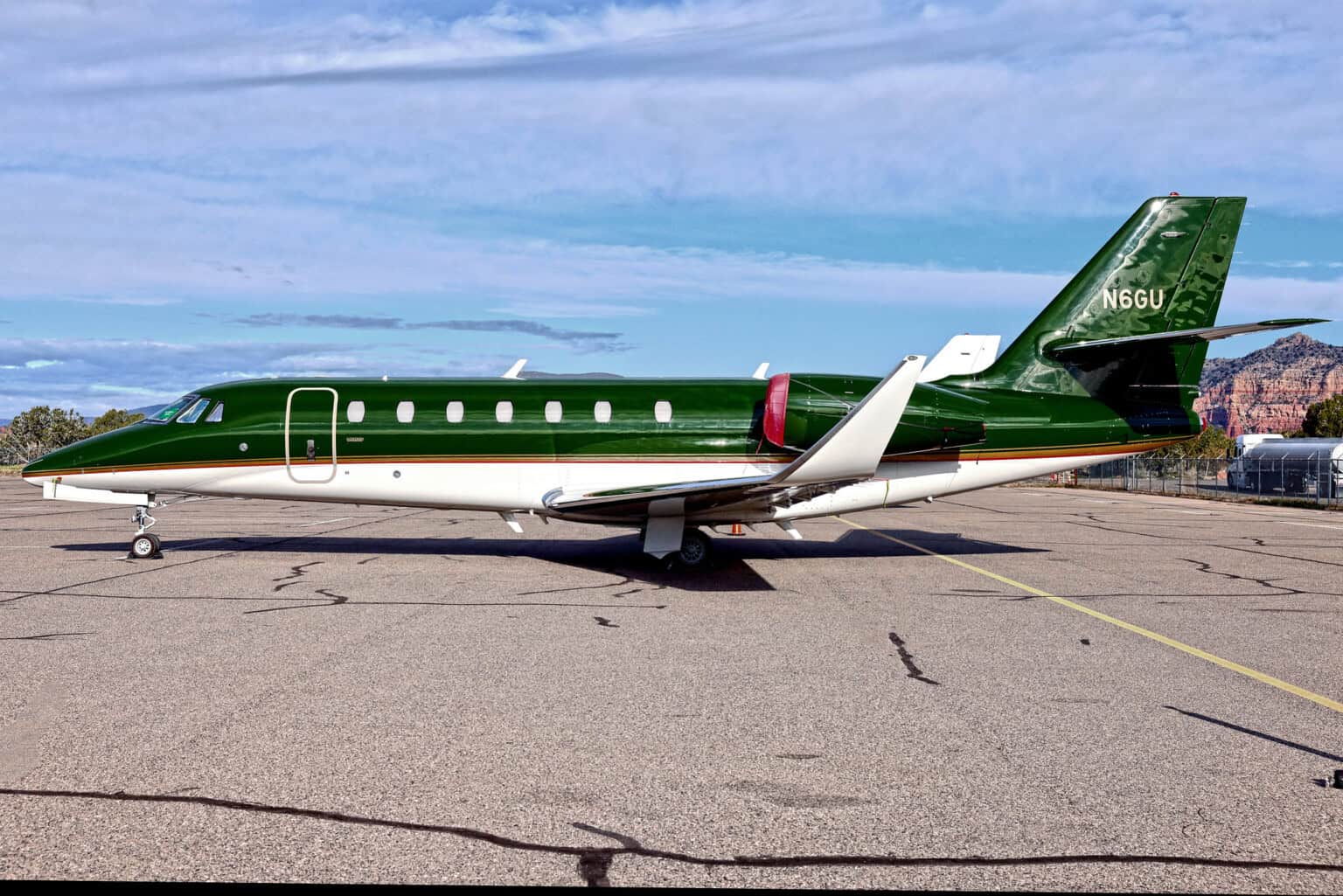
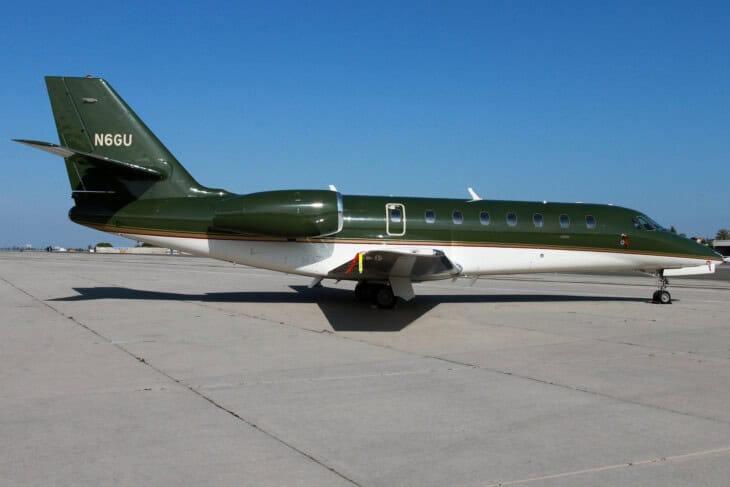
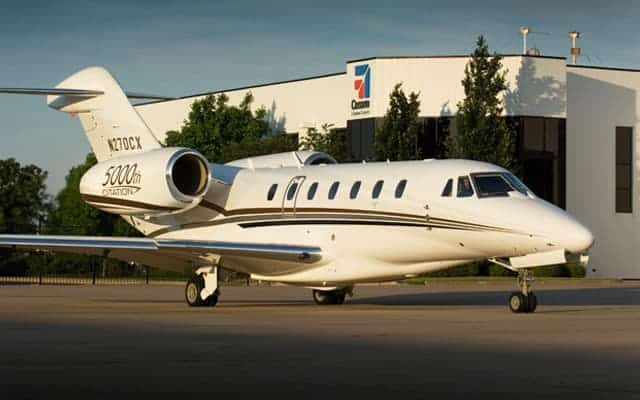
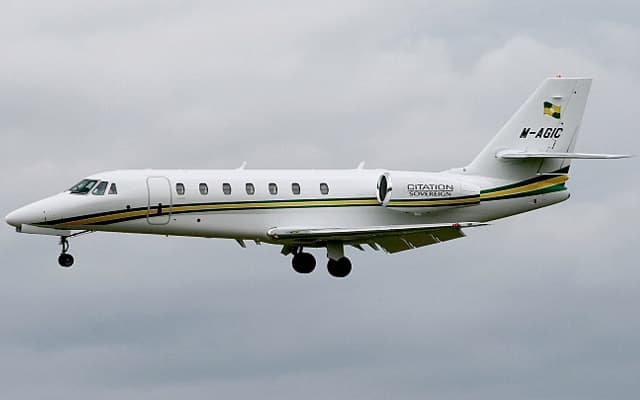
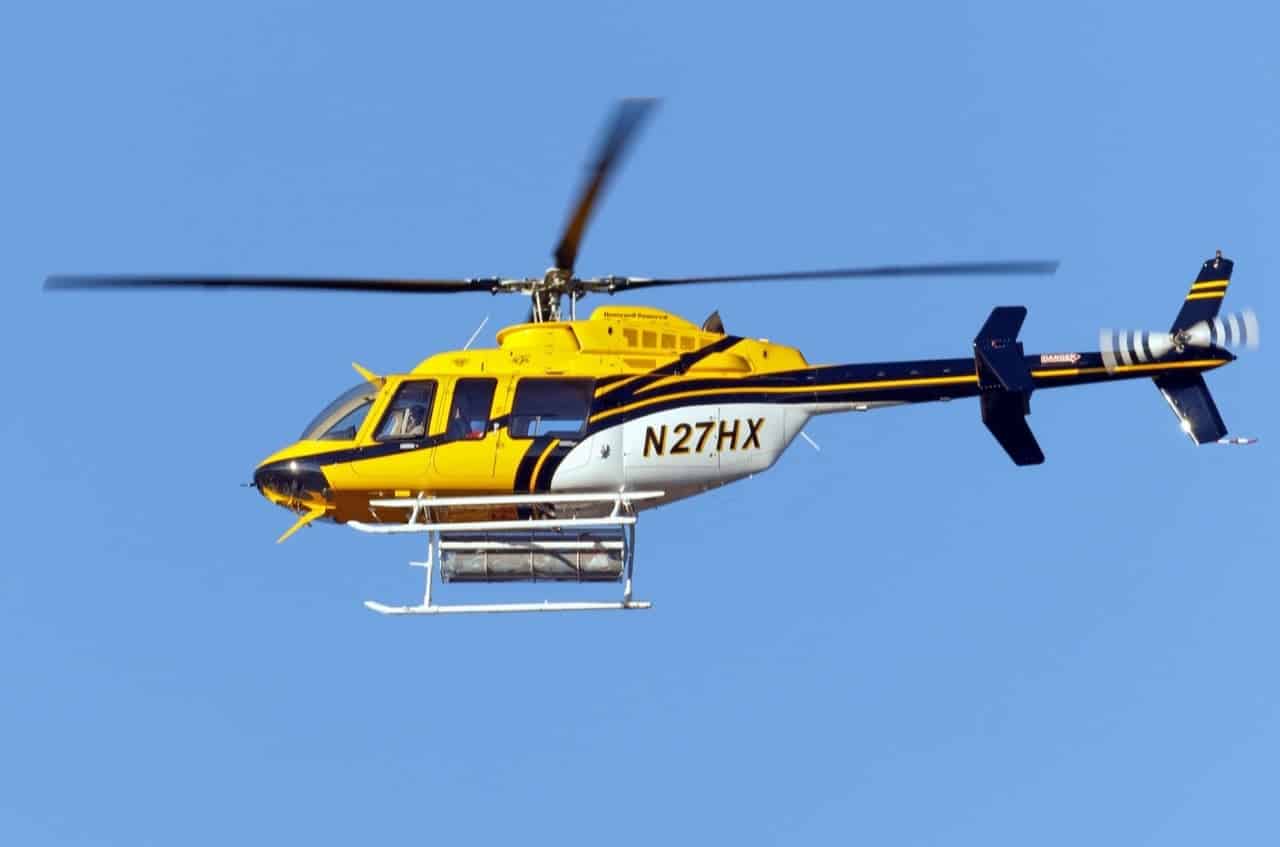
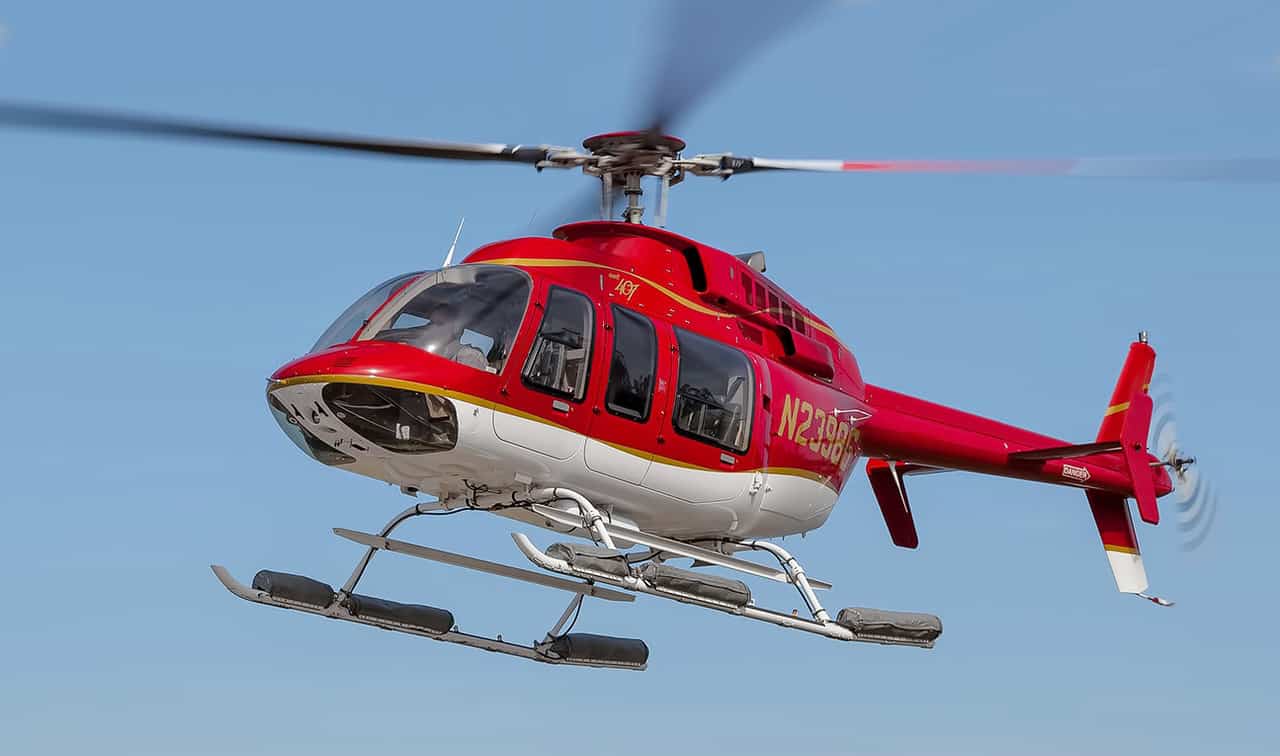
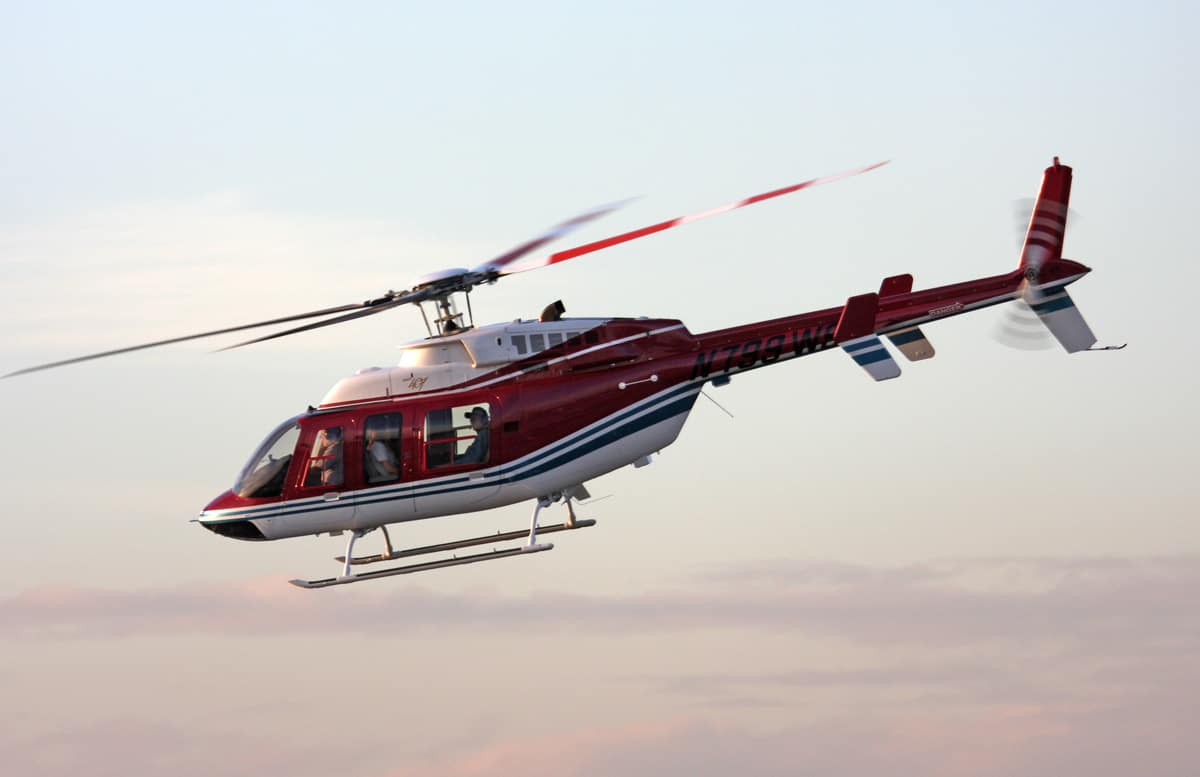
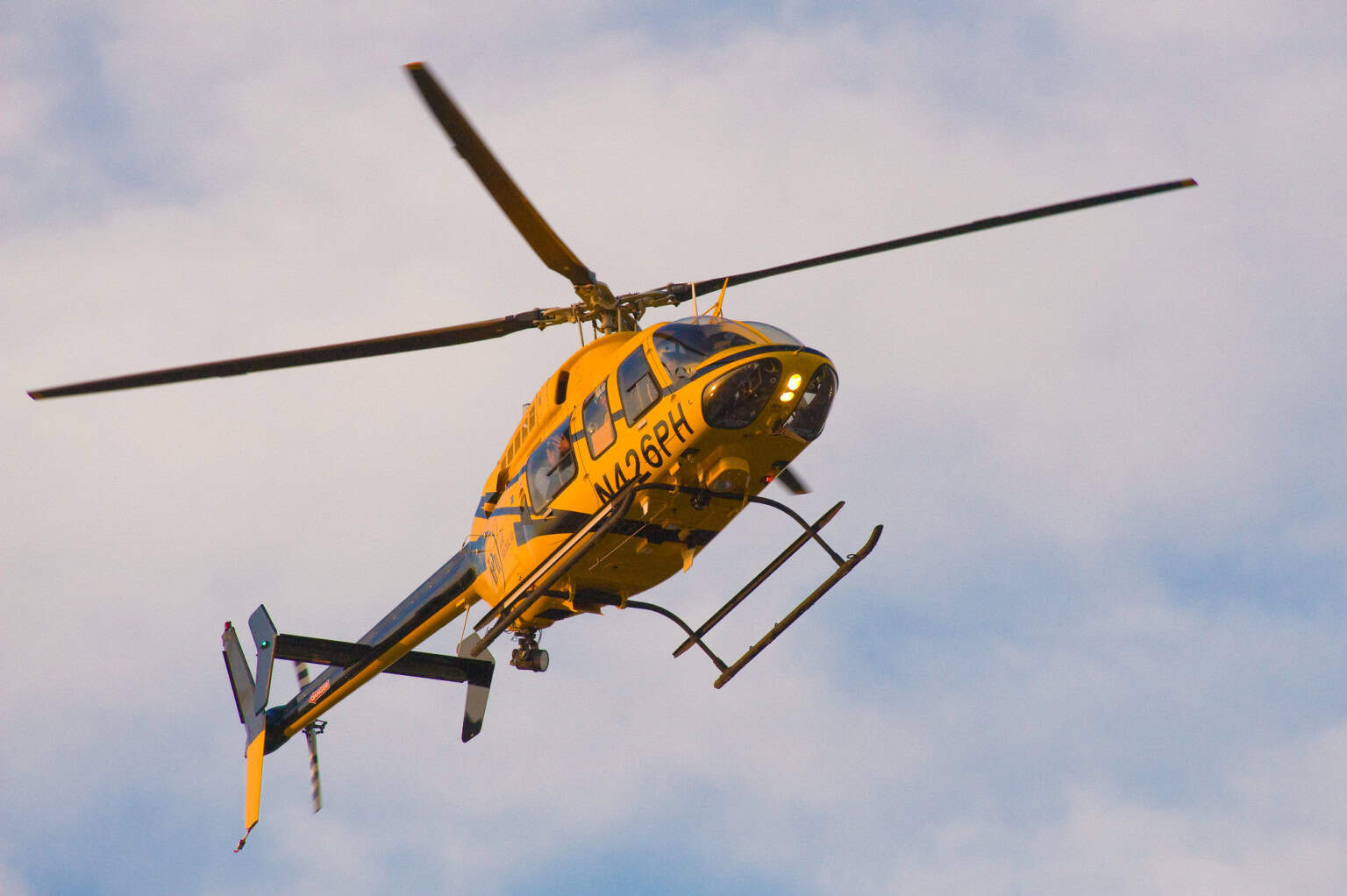
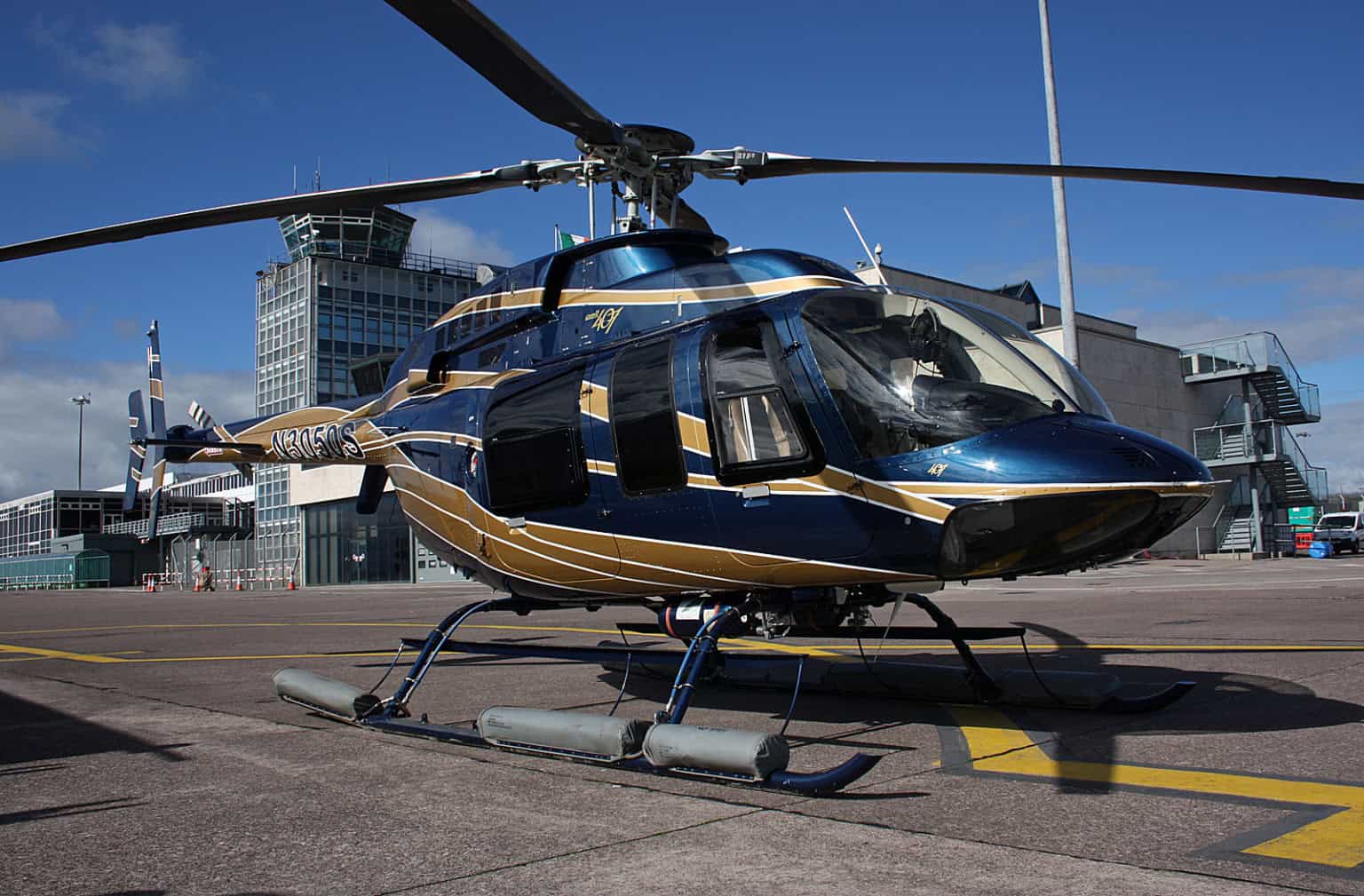
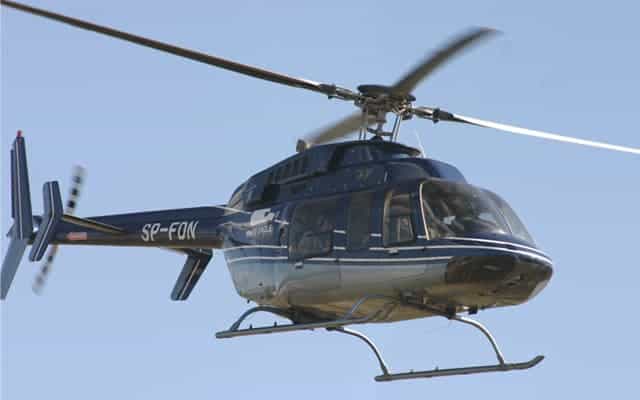
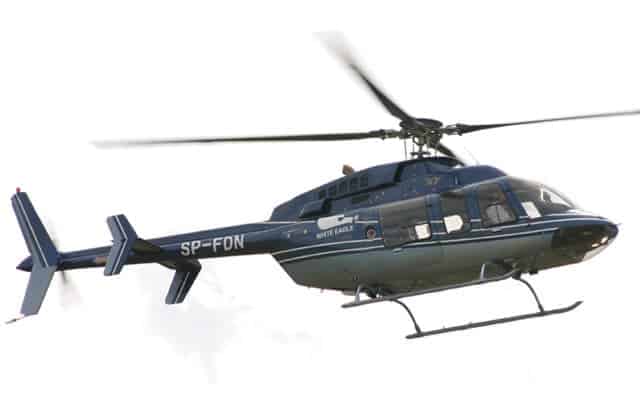
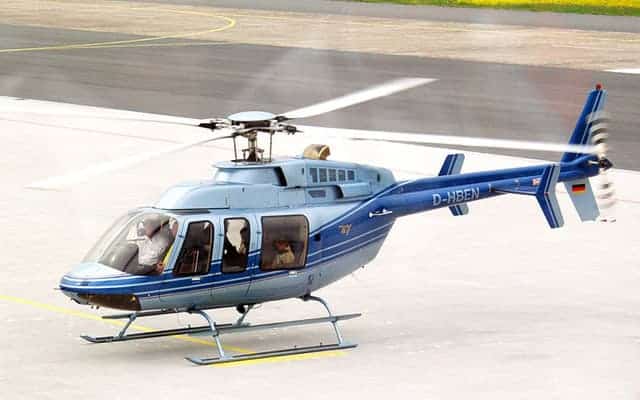
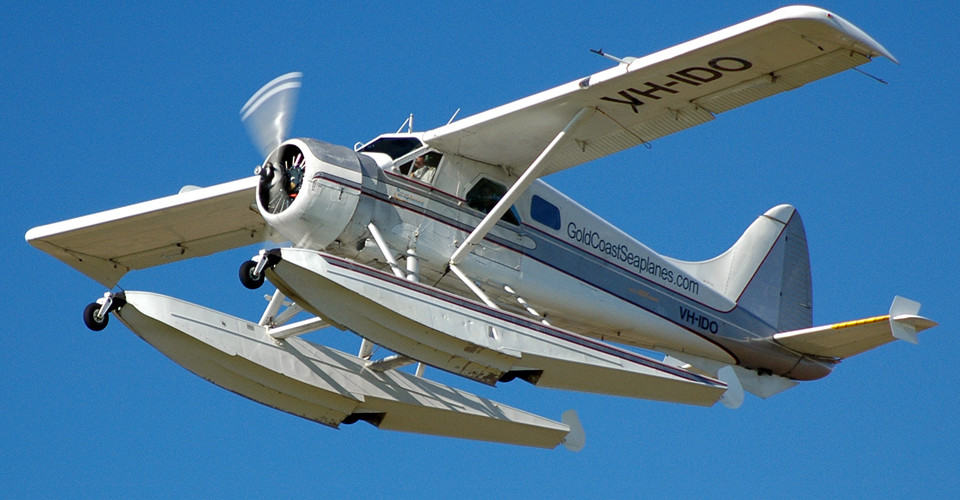
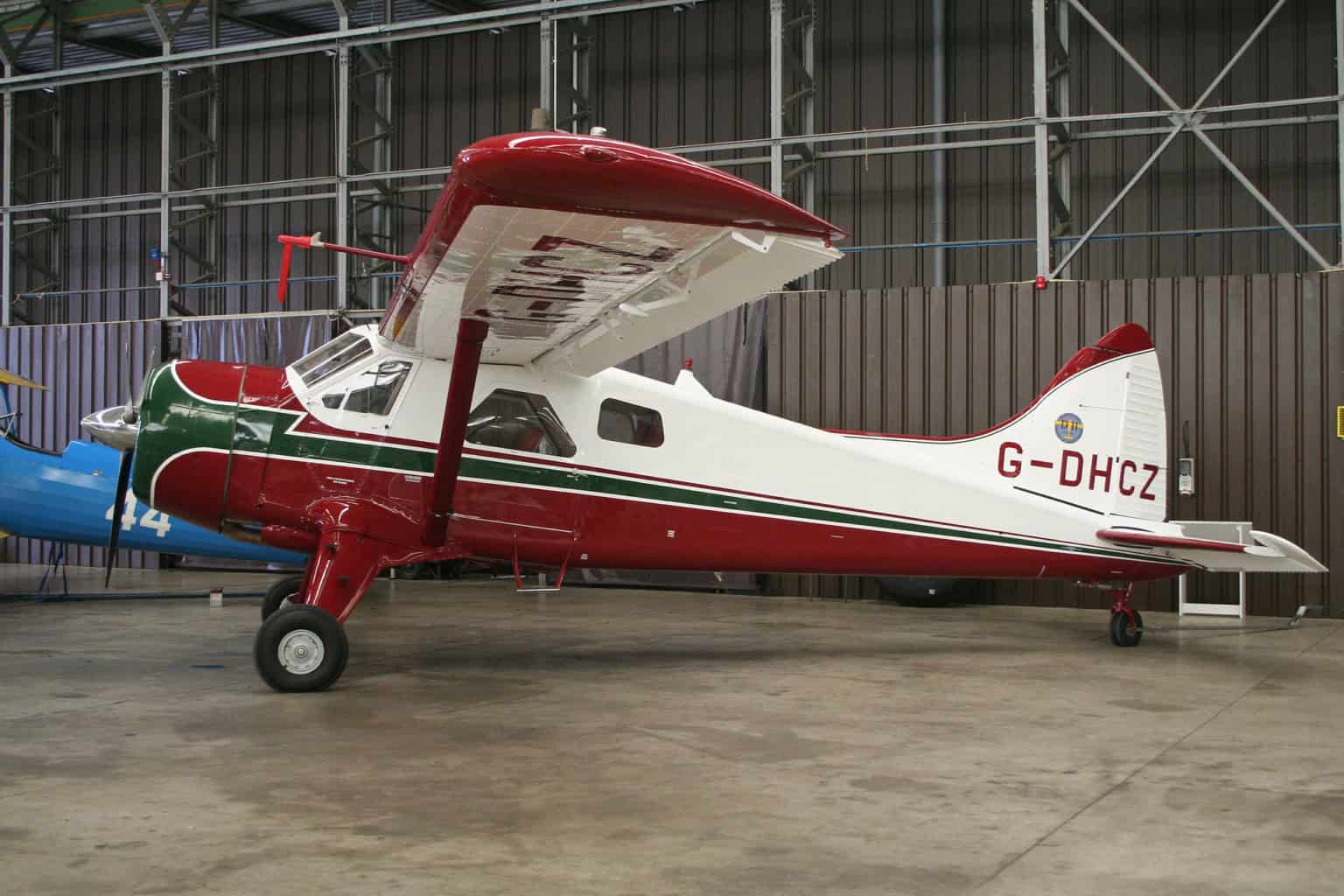
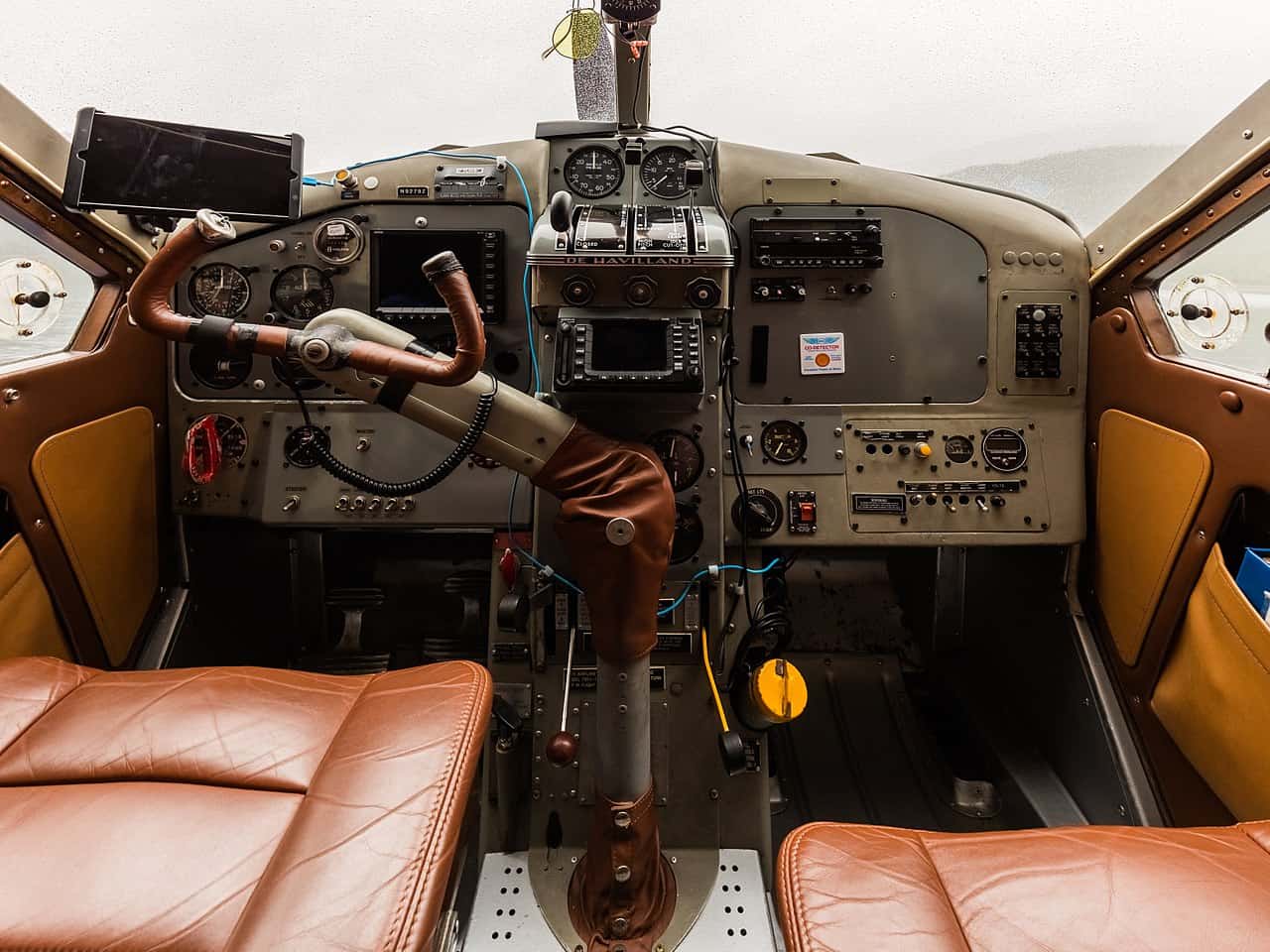
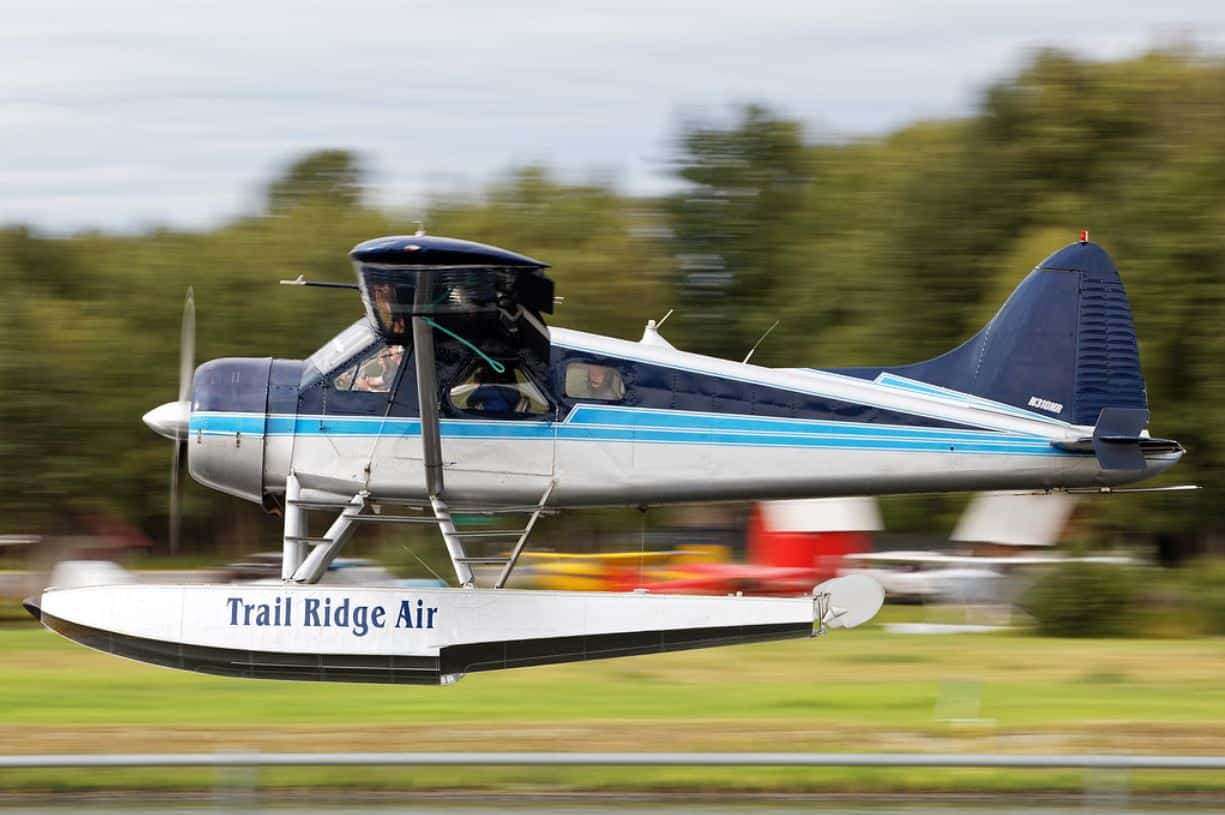
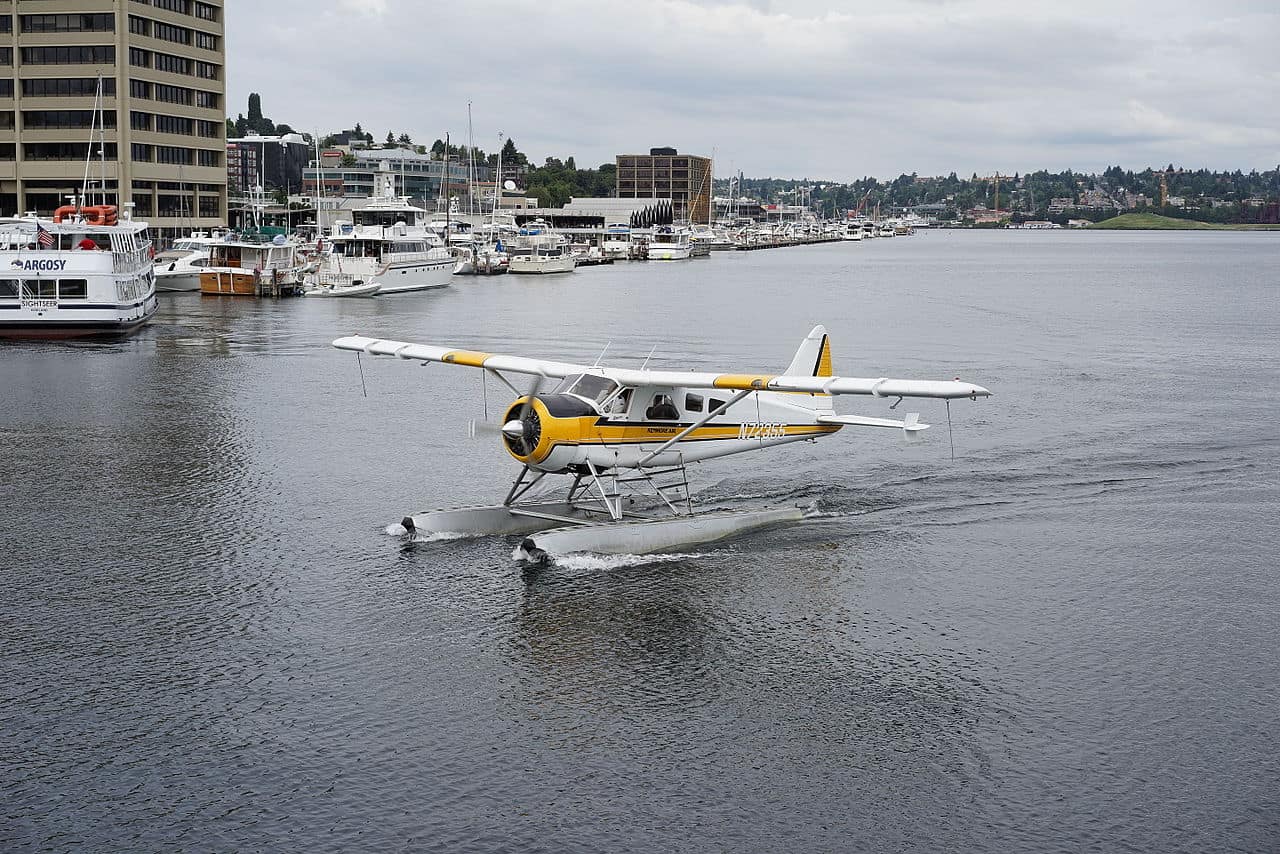
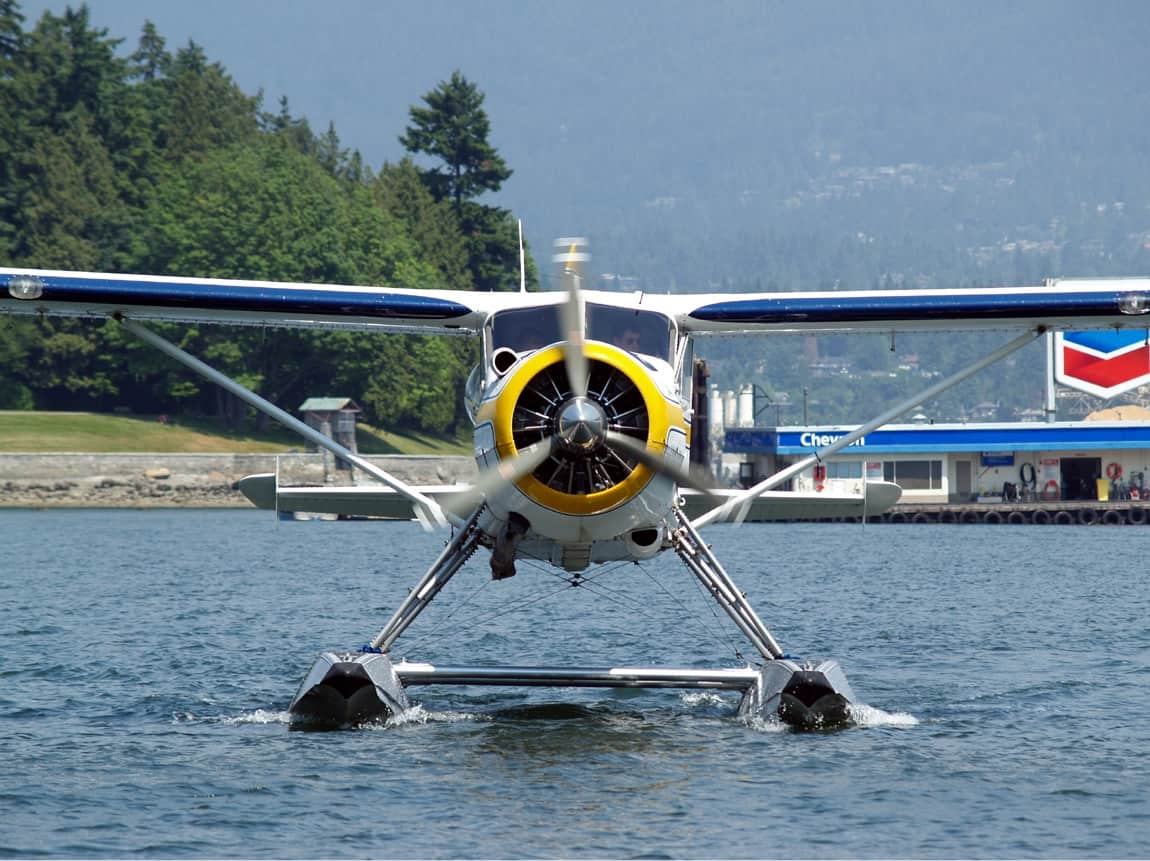
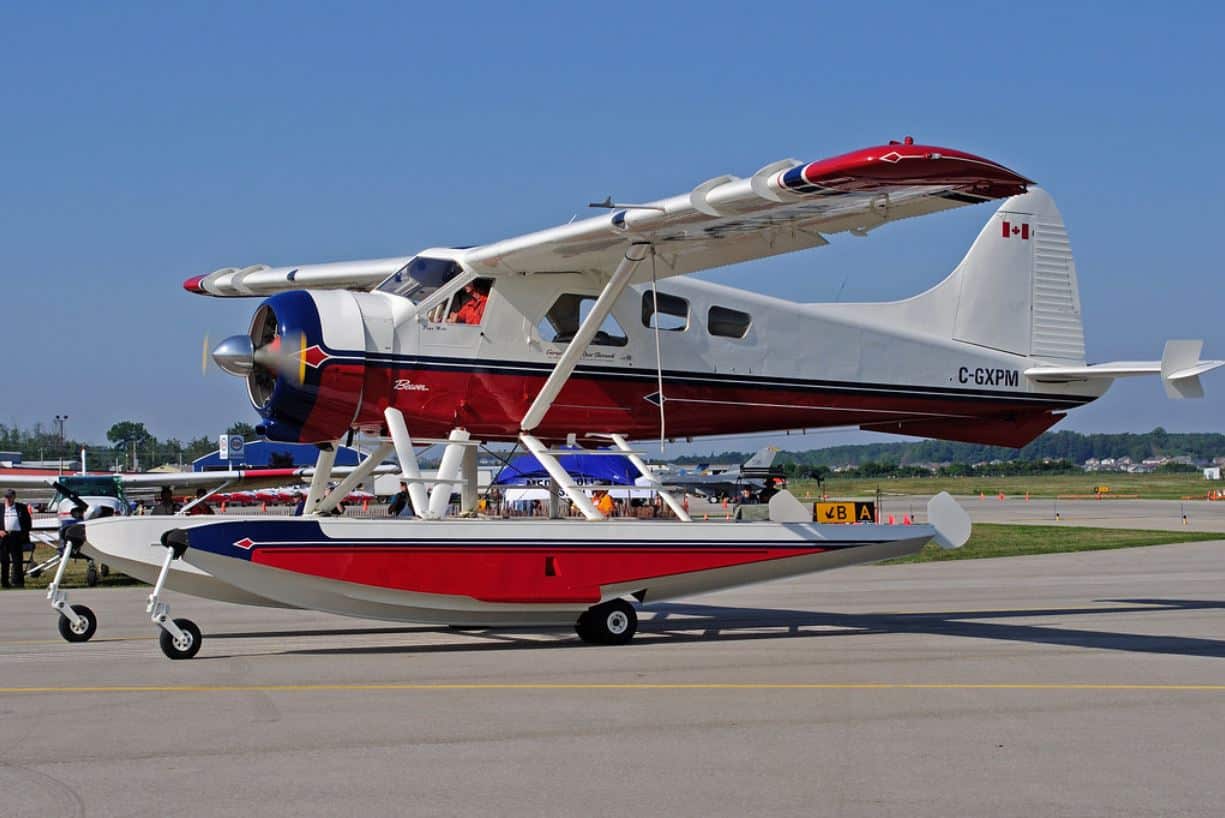
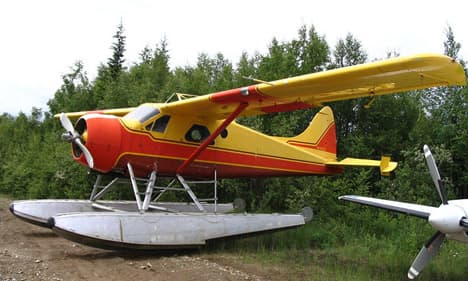
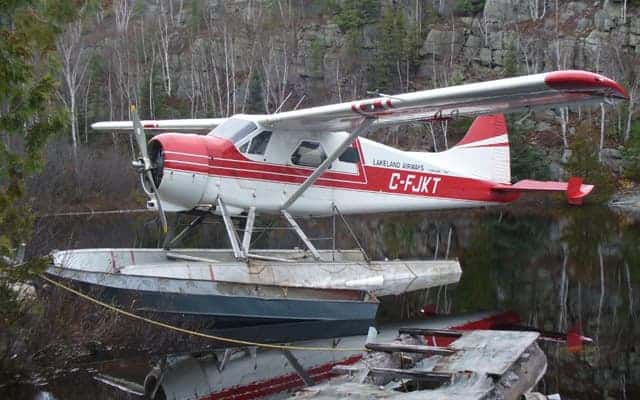
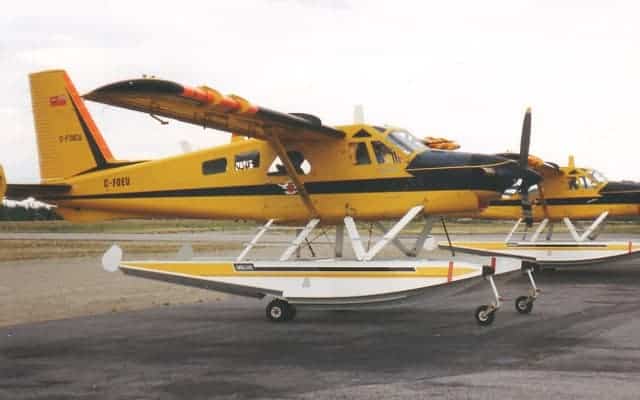
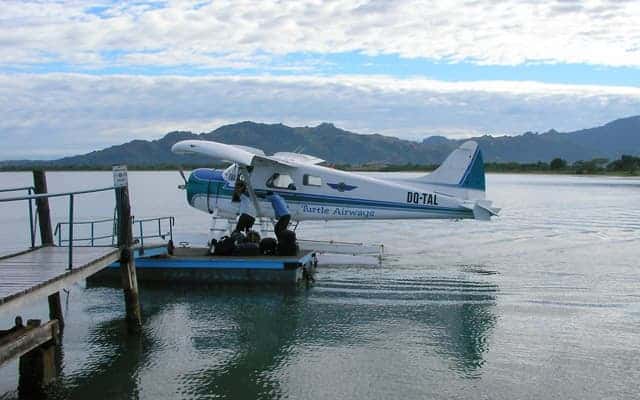
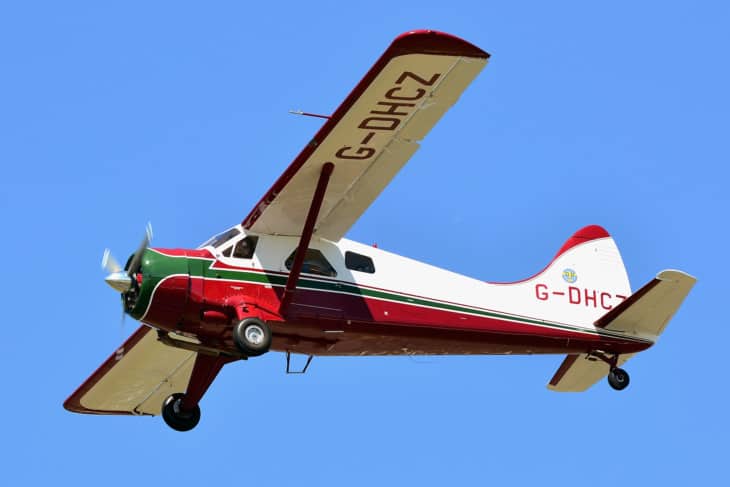
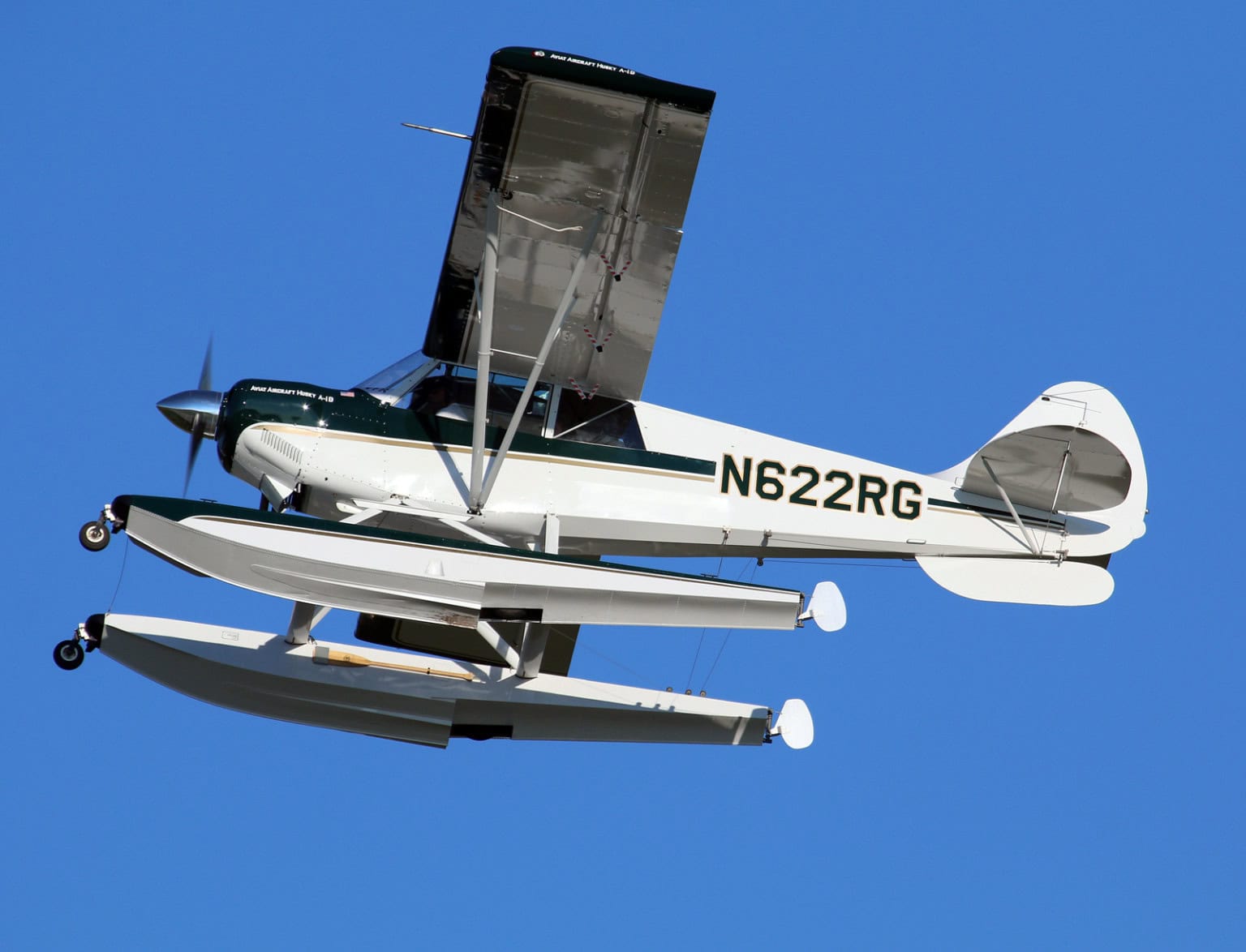
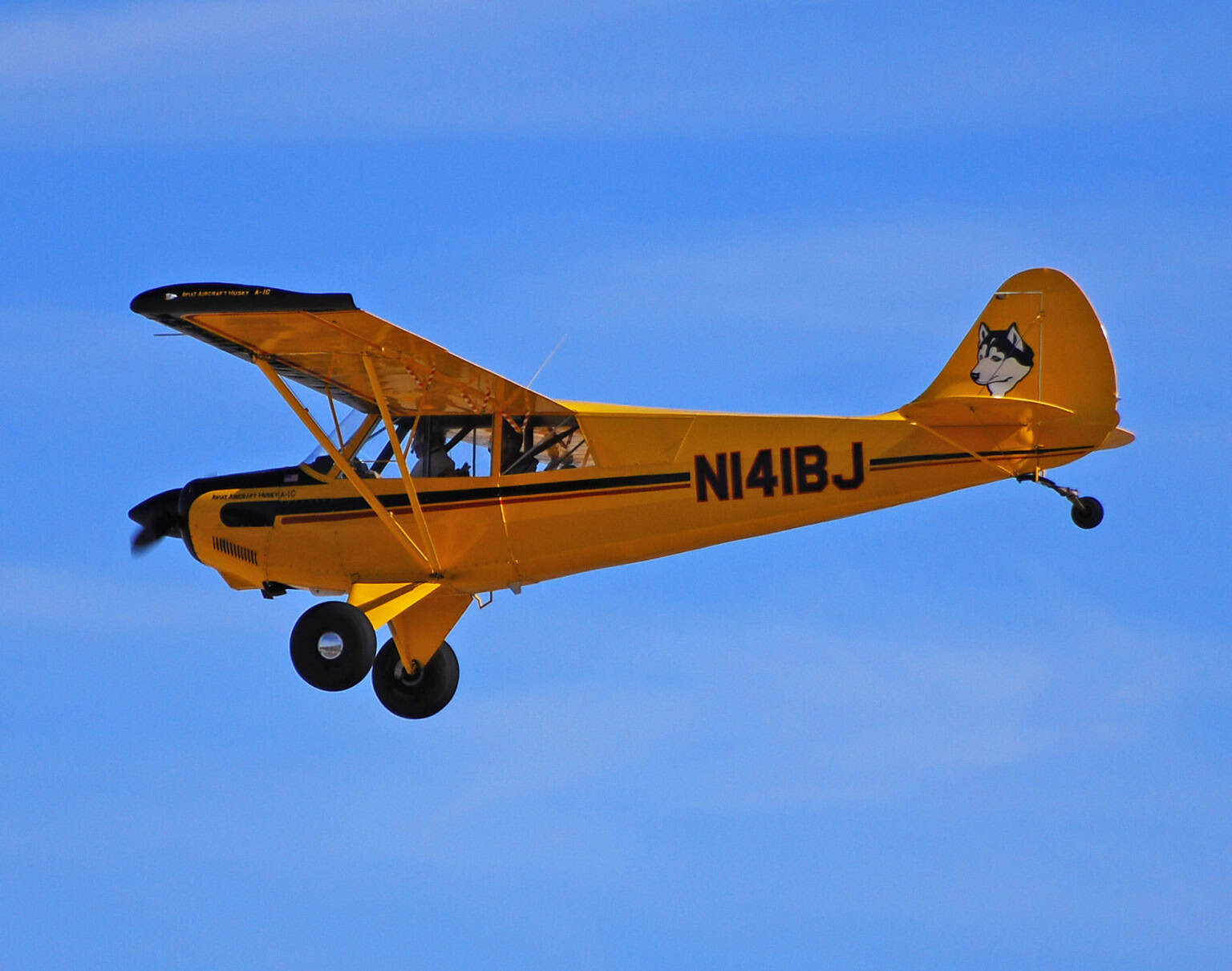
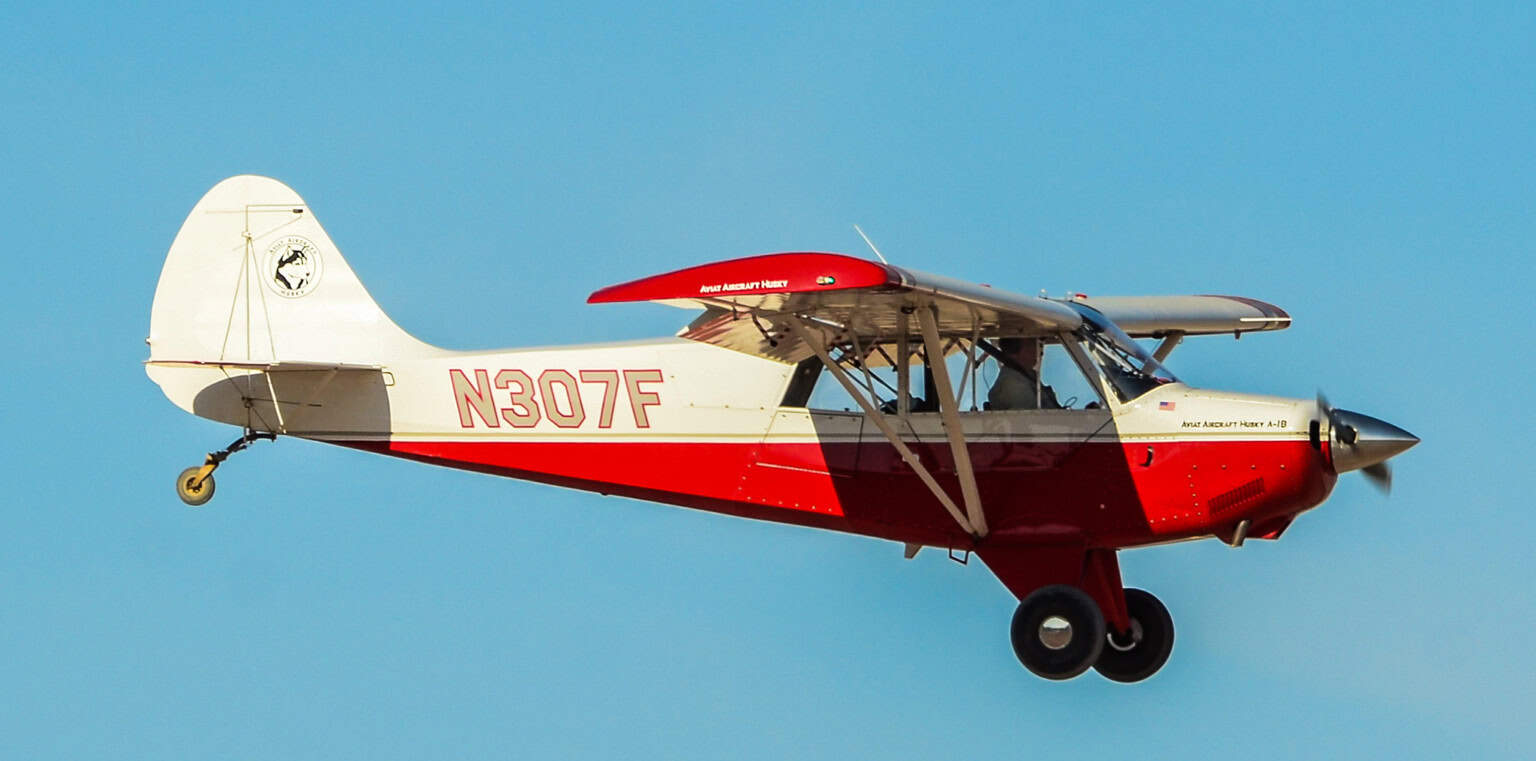
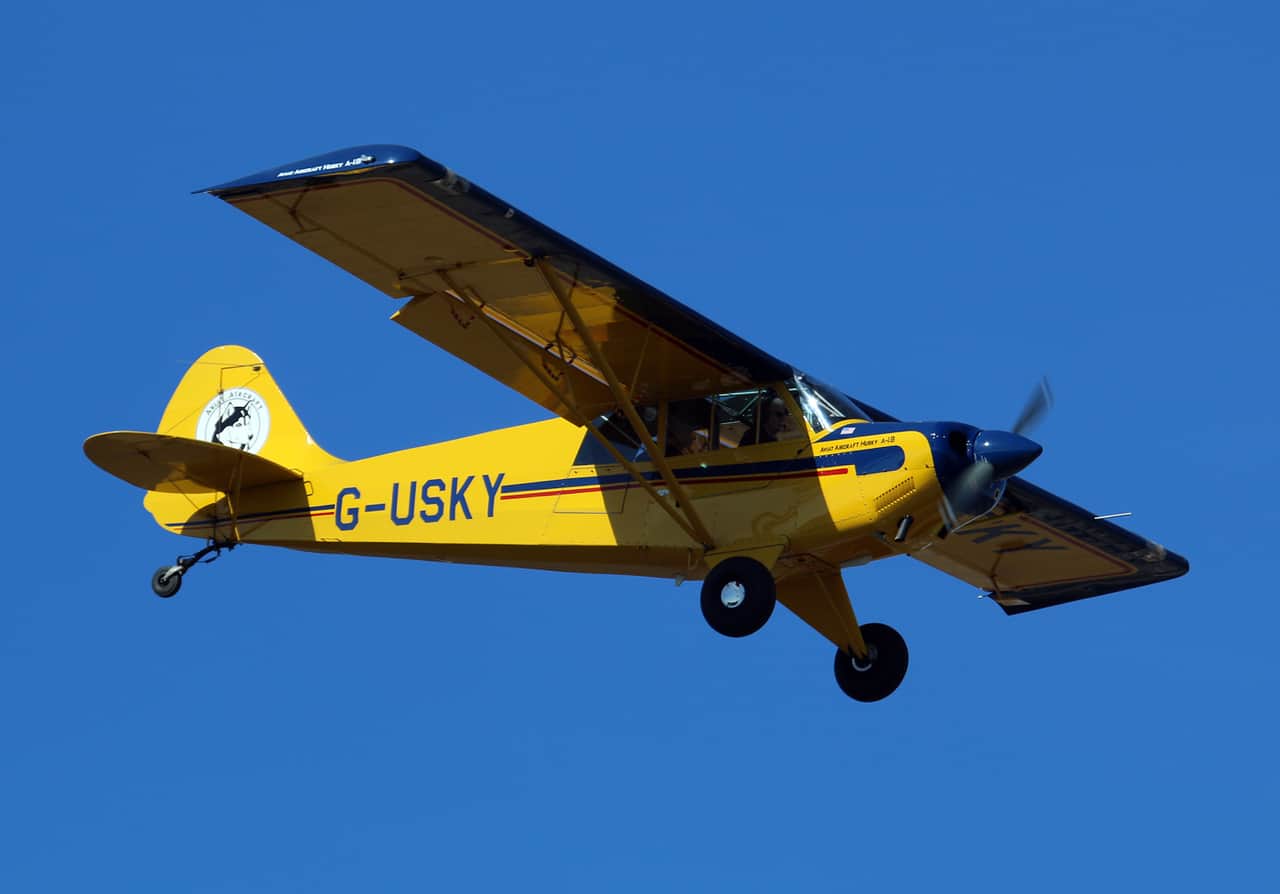
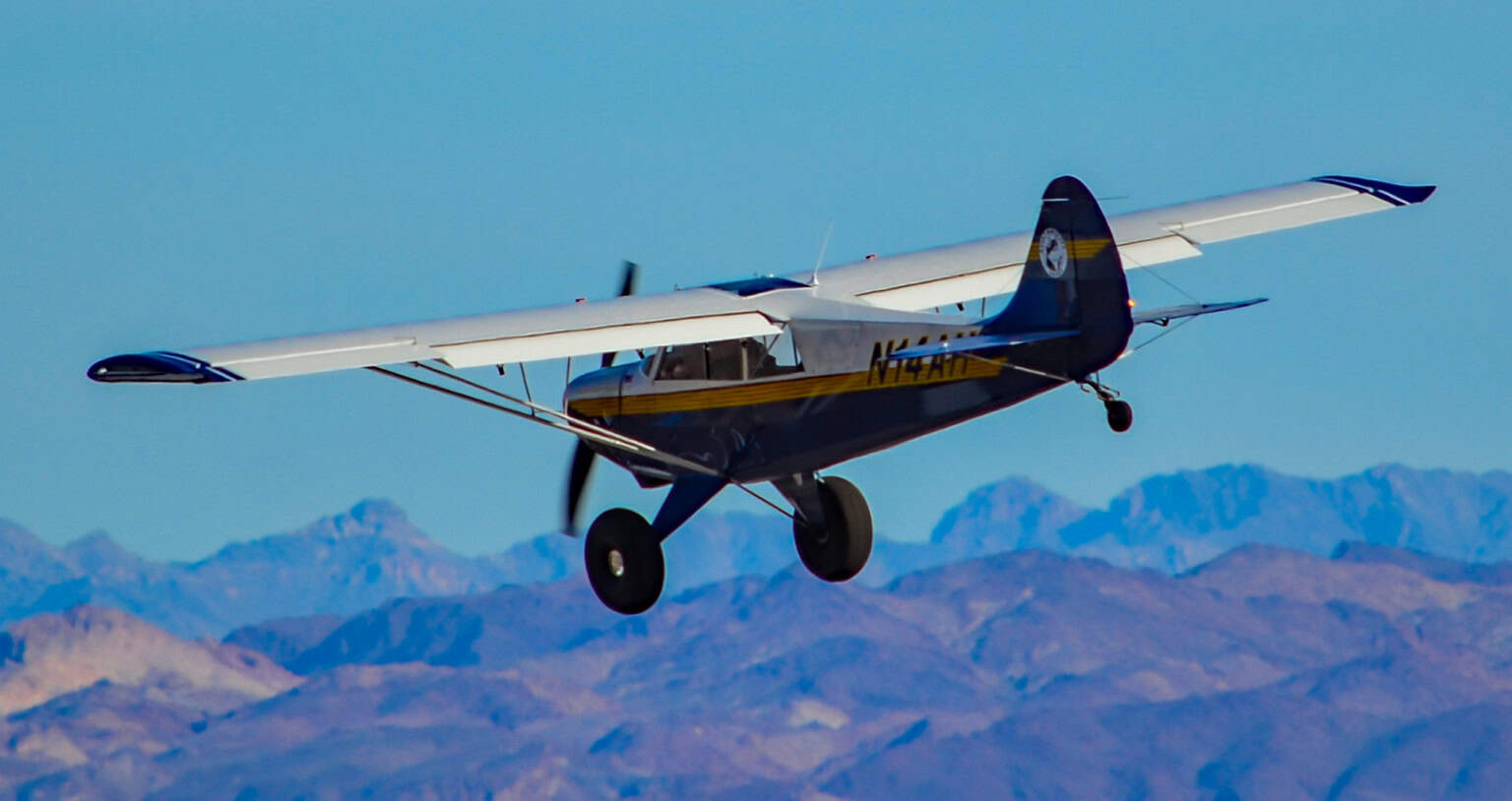
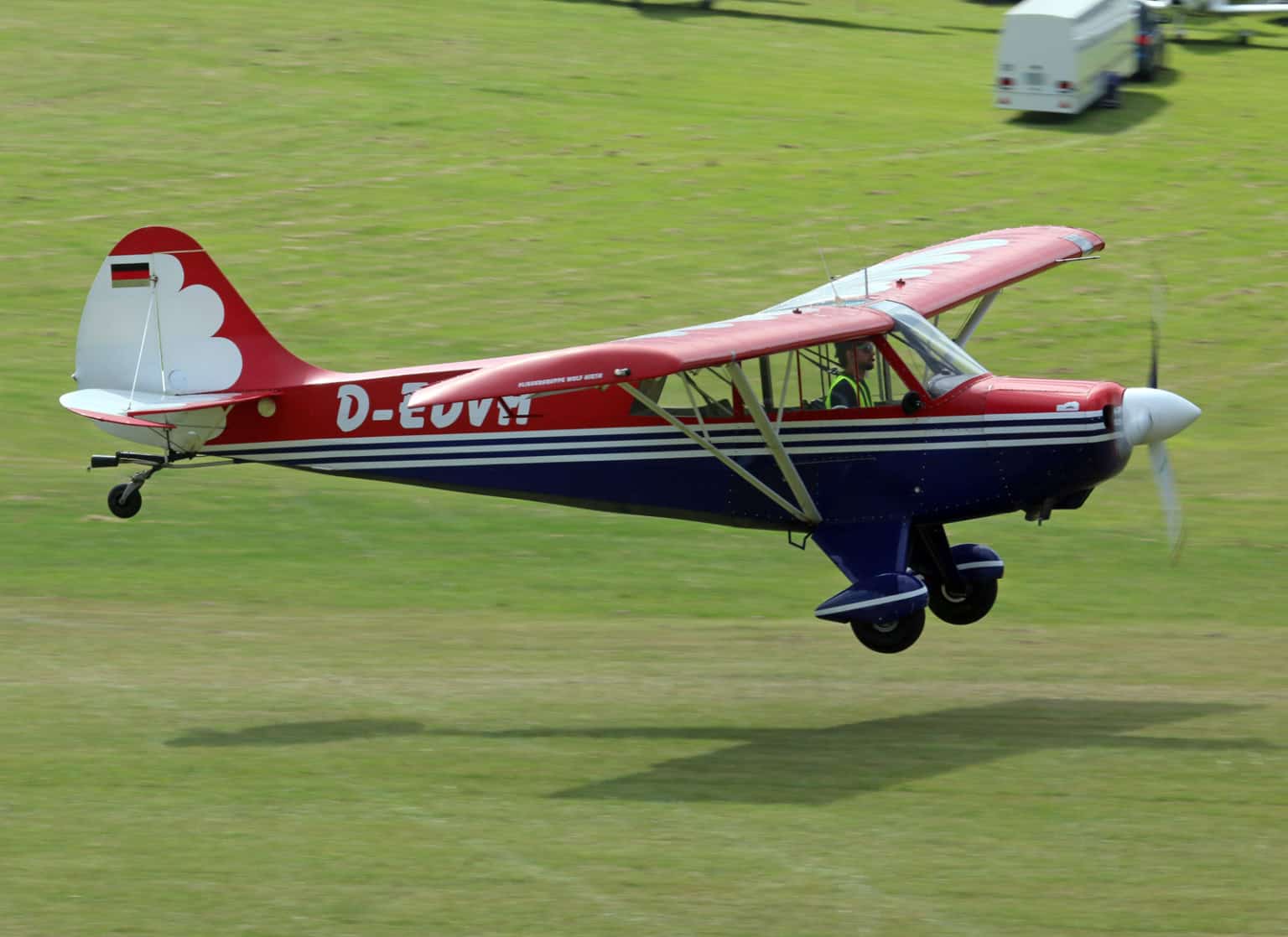
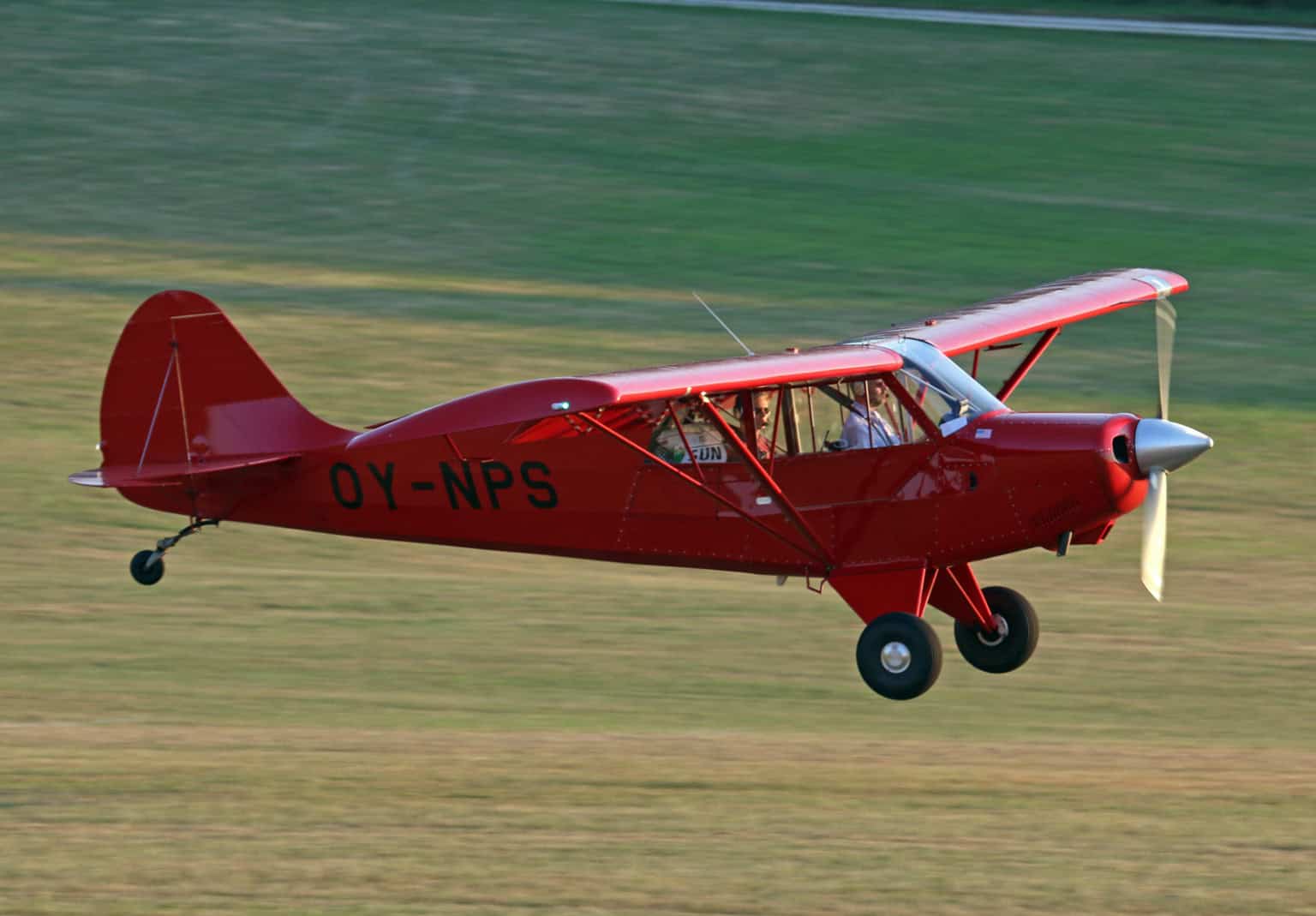
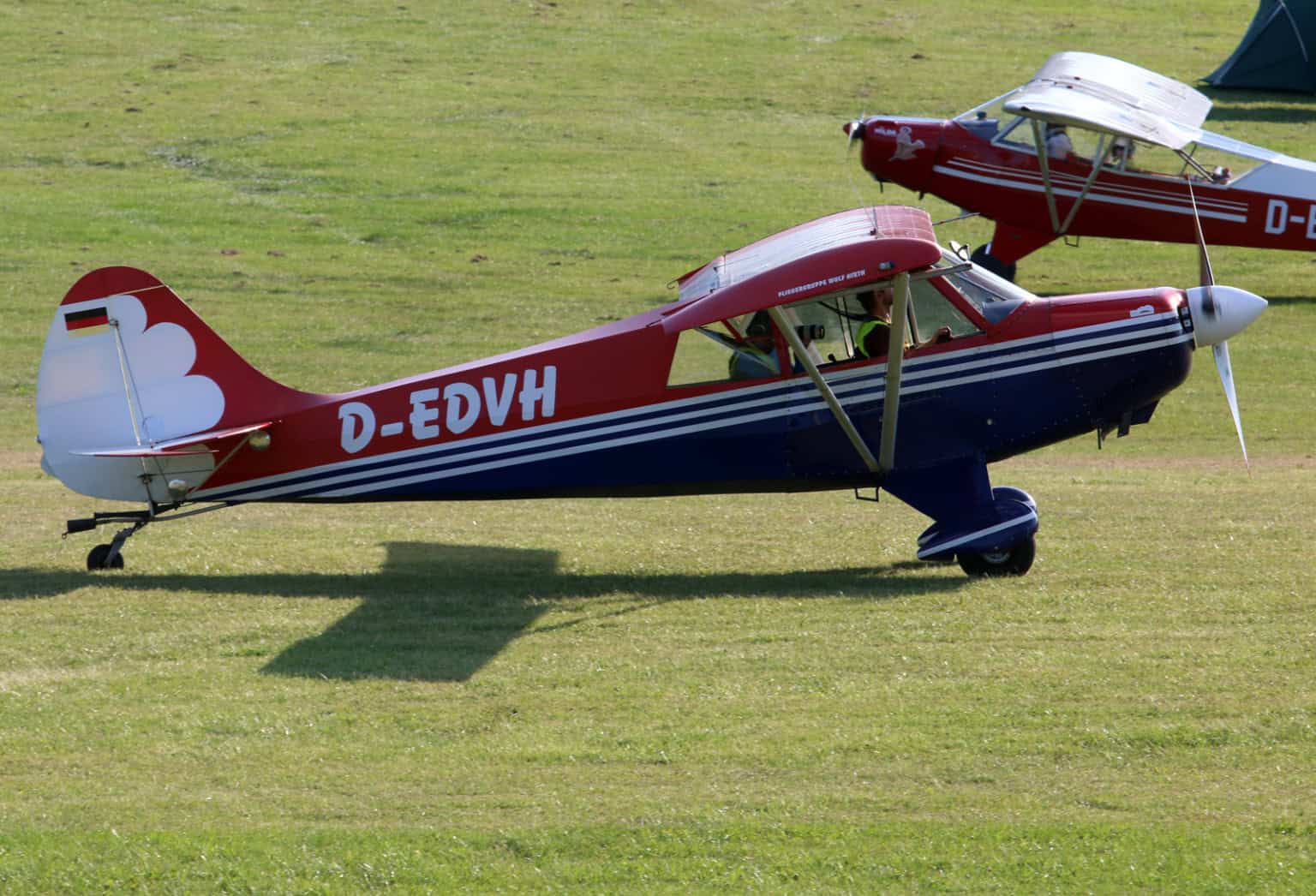
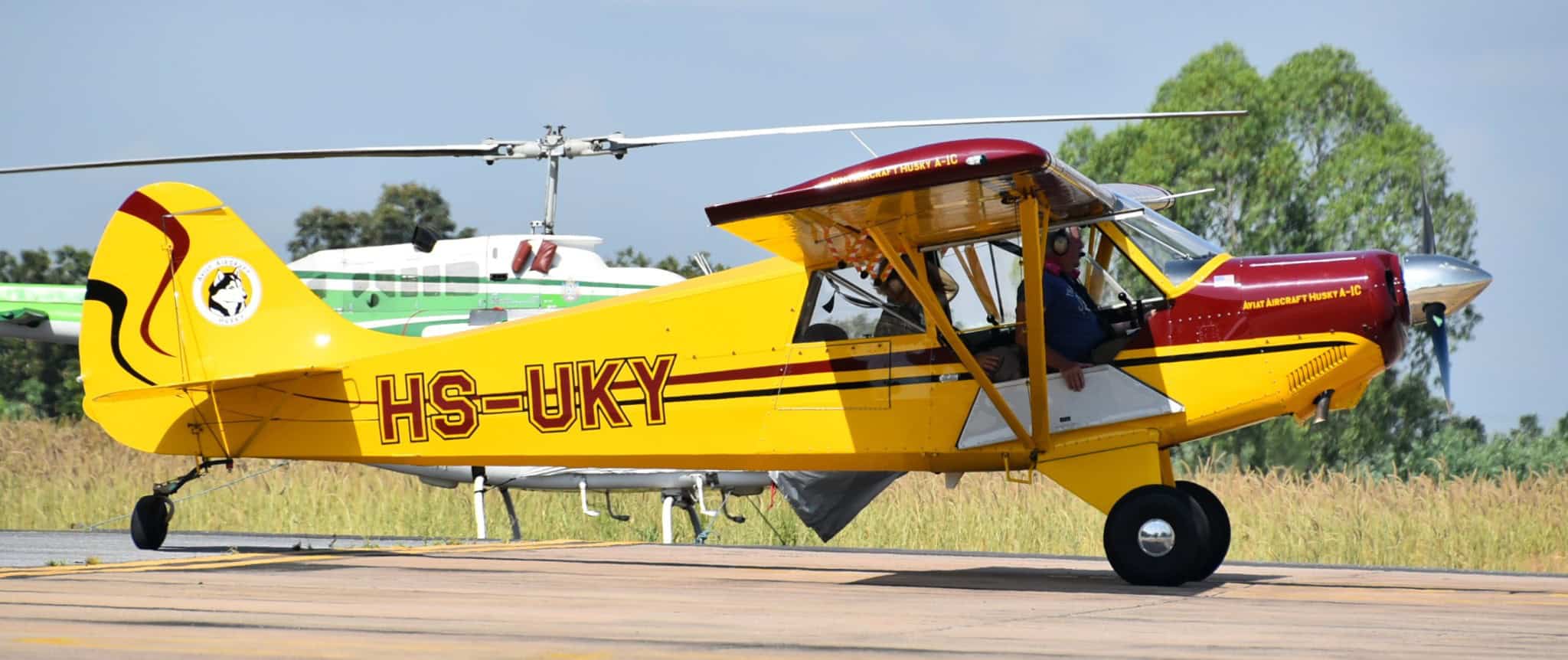
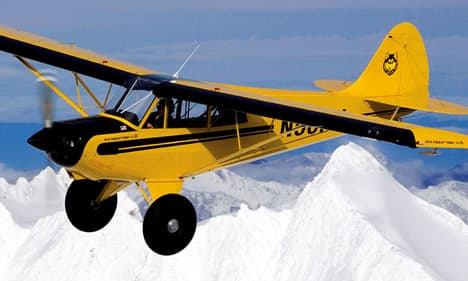
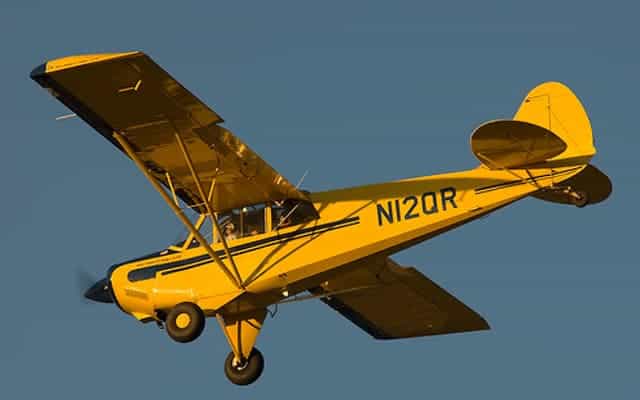
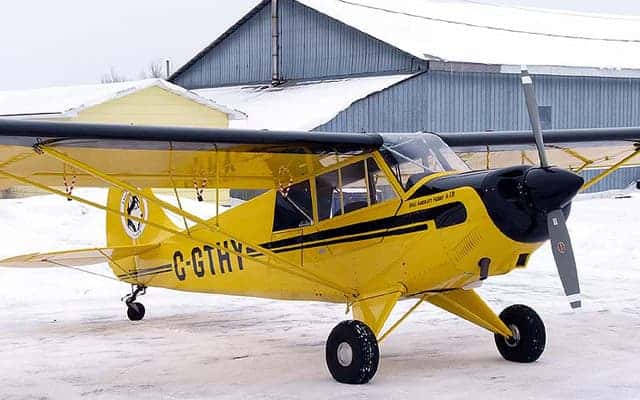
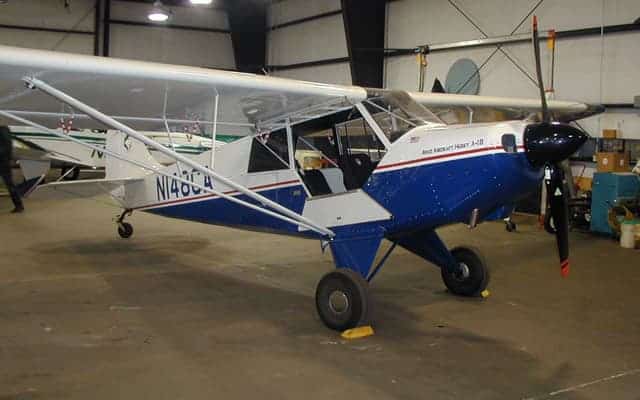
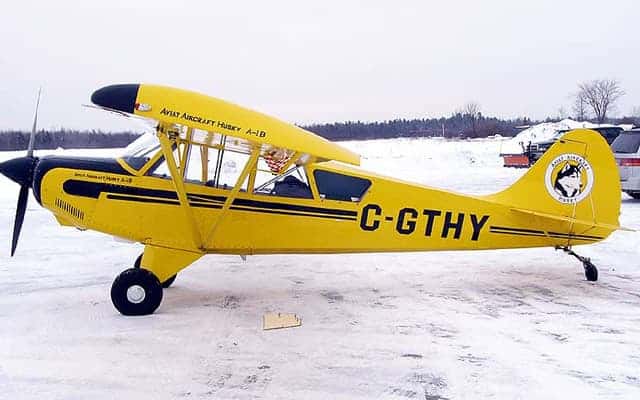
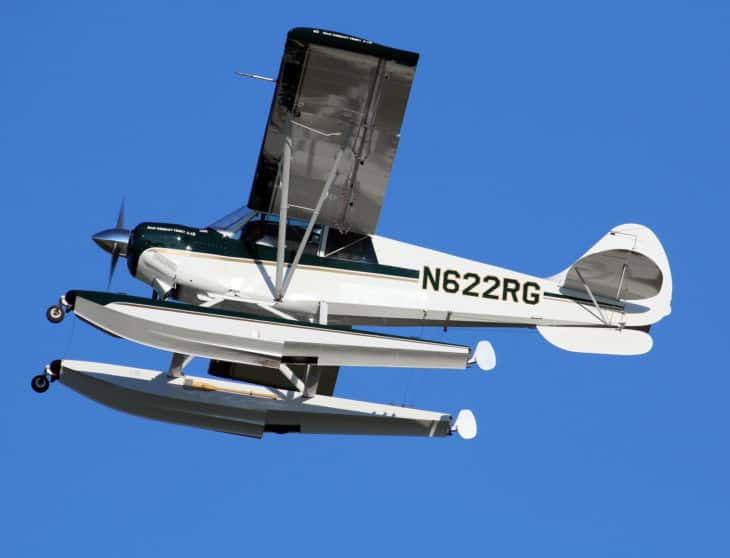
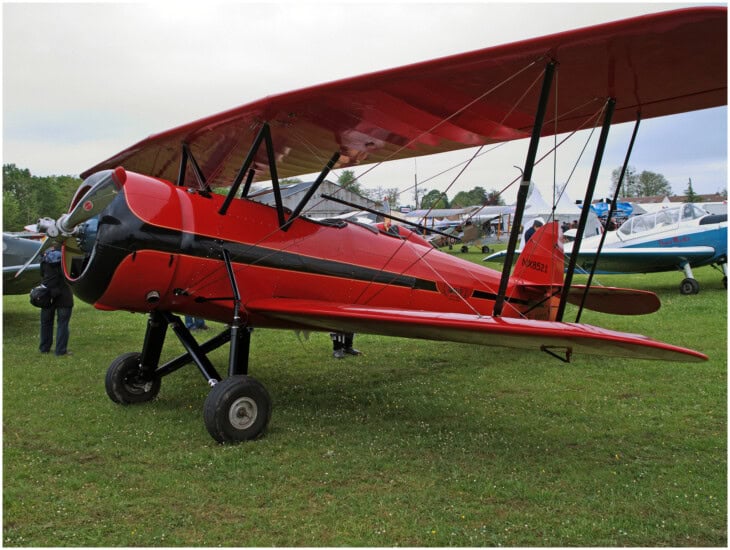
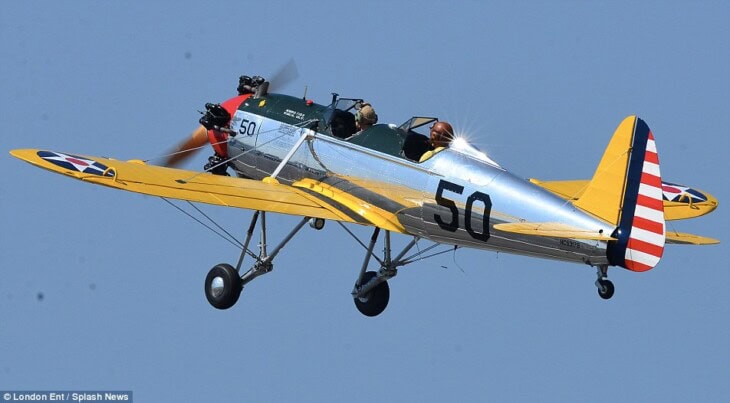
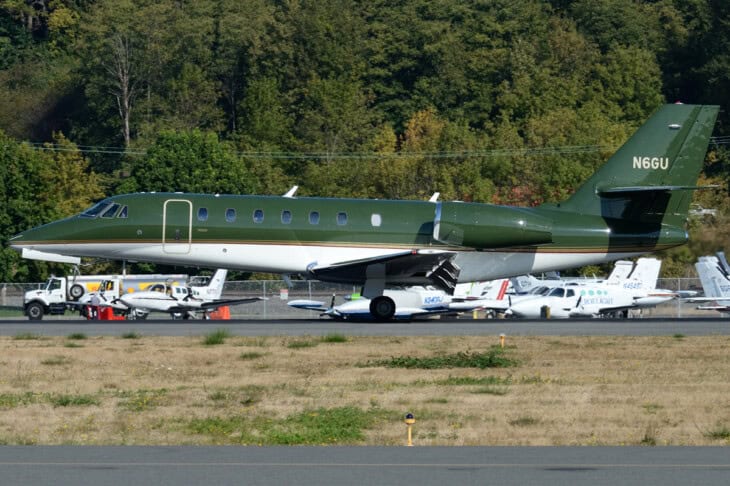
Ford’s flagship is a Cessna Citation Sovereign, registered N6GU, an $18.5 million super-midsize jet painted in his signature dark green and gold livery. Around it sits one of the most eclectic private fleets in entertainment: a de Havilland Beaver bush plane, a 1929-design Waco Taperwing biplane, a World War II Ryan trainer, an Aviat Husky taildragger, and a Bell 407GX helicopter he has personally used to pull stranded hikers off mountains in Wyoming.
This guide covers the complete Harrison Ford aircraft collection: the Citation Sovereign’s full specs and tail number, how a $150-a-week stagehand became one of aviation’s most visible advocates, the crashes and incidents that tested him, and how his flying compares to the rest of the celebrity jet set.
Quick facts about Harrison Ford’s private jet
Harrison Ford’s Complete Private Jet Fleet
Ford’s collection has been reported at anywhere from six to ten aircraft over the years. These are the machines consistently tied to him, from the Citation Sovereign down to the open-cockpit biplane.



















The Origin Story: From $150 a Week to a Citation Sovereign
Ford’s path to jet ownership took thirty years longer than his path to stardom. He first touched a control yoke in the 1960s and could not afford to keep going. The fleet came much later, and so did the scars.
1960s
u0026lt;strongu0026gt;First lessons, abandoned.u0026lt;/strongu0026gt; A young Ford takes flying lessons in a Piper PA-22 Tri-Pacer at Wild Rose Idlewild Airport in Wisconsin, then quits because the hourly rate is too steep for his budget.
1990s
u0026lt;strongu0026gt;Back in the cockpit.u0026lt;/strongu0026gt; Now one of the biggest stars on the planet, Ford buys a used Gulfstream II and asks one of his corporate pilots to teach him to fly. He builds real proficiency in a Cessna 182 and solos in a Cessna 206 in his mid-fifties.
1999
u0026lt;strongu0026gt;Helicopter training accident.u0026lt;/strongu0026gt; Practicing autorotations in a Bell 206L4 LongRanger over the Lake Piru riverbed in California, Ford and his instructor land hard and the helicopter flips onto its side. Neither is injured. Ford keeps flying helicopters.
2000-2001
u0026lt;strongu0026gt;The rescues.u0026lt;/strongu0026gt; Flying his own helicopter as a volunteer for Teton County Search and Rescue, Ford lifts a dehydrated hiker off Table Mountain in July 2000, then finds a missing 13-year-old Boy Scout near Yellowstone a year later.
2004
u0026lt;strongu0026gt;Young Eagles chairman.u0026lt;/strongu0026gt; Ford becomes volunteer chairman of the EAA Young Eagles program, a role he holds until 2009. He personally flies more than 300 young people on their first flights.
2009
u0026lt;strongu0026gt;The Sovereign arrives.u0026lt;/strongu0026gt; Ford steps up from his Citation CJ3 to a new Cessna Citation Sovereign, serial 680-0268, registered N6GU and painted in his dark green and gold scheme.
March 2015
u0026lt;strongu0026gt;Engine failure over Santa Monica.u0026lt;/strongu0026gt; The vintage Ryan PT-22’s carburetor fails on climb-out. Ford turns back, cannot make the runway, and puts it down on Penmar Golf Course. He survives with a broken pelvis, broken back, and a shattered ankle.
2016
u0026lt;strongu0026gt;The 2 millionth Young Eagle.u0026lt;/strongu0026gt; Recovered and flying again, Ford pilots the program’s 2 millionth first flight for a 16-year-old at EAA AirVenture Oshkosh.
February 2017
u0026lt;strongu0026gt;The taxiway mistake.u0026lt;/strongu0026gt; Ford lands his Aviat Husky on a taxiway instead of the runway at John Wayne Airport, passing about 100 feet above a fully loaded American Airlines 737. The FAA investigates and issues no penalty.
2020
u0026lt;strongu0026gt;One more incursion, then back to the sky.u0026lt;/strongu0026gt; After a runway crossing error at Hawthorne Municipal Airport, Ford completes a runway incursion training course and returns to regular flying, well into his late seventies.


Inside the Citation Sovereign: Harrison Ford’s Current Private Jet
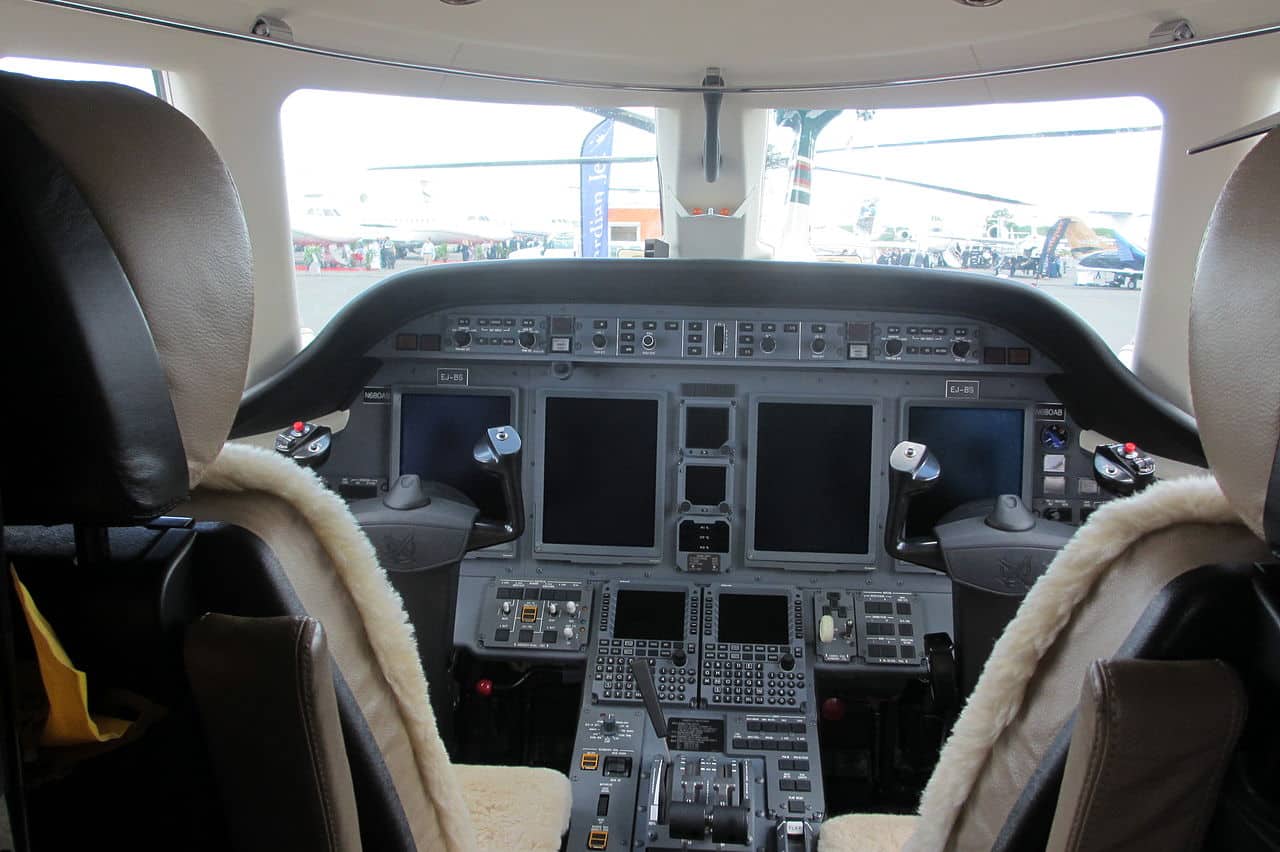
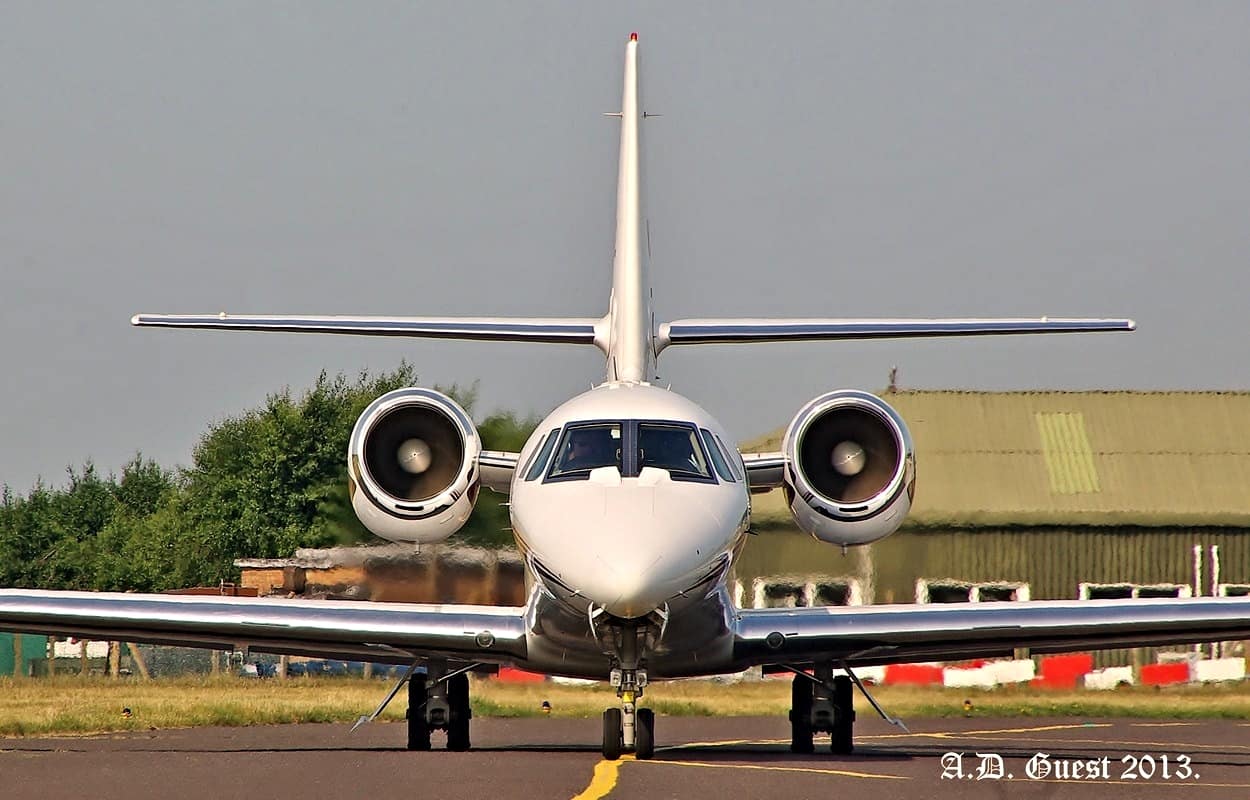
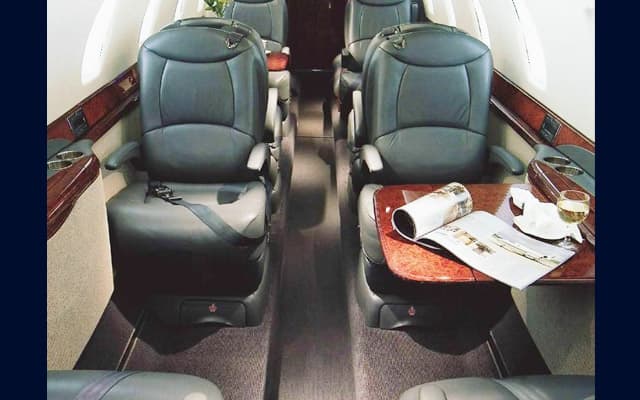
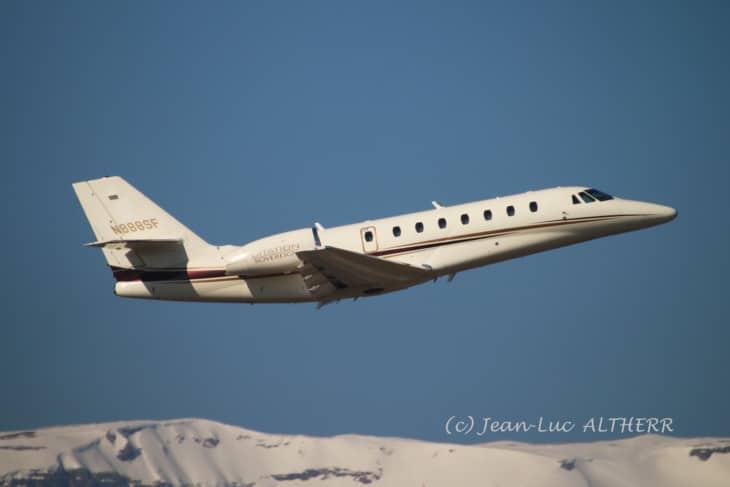
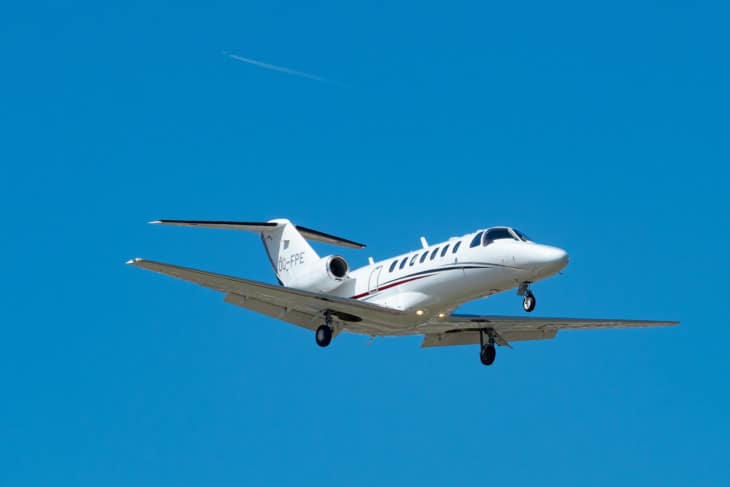
The Cessna Citation Sovereign 680 is the workhorse of Ford’s fleet and the only aircraft he owns that needs a second pilot. Built in 2009, N6GU carries up to 12 passengers, cruises near Mach 0.80, and covers 2,847 nautical miles, enough to fly Los Angeles to Hawaii or coast to coast without stopping. Cessna built just 349 Sovereigns before production wound down, and Ford’s is among the most recognizable thanks to its livery: deep green over the top half of the fuselage, engines, and tail, white below, with a thick gold cheatline dividing the two.
Performance
Cabin
Identity
The Sovereign is a telling choice. At $18.5 million new, it cost roughly a tenth of the Gulfstream G650ERs favored by the top tier of the celebrity jet set. Ford did not buy the biggest jet he could afford. He bought a jet known among pilots for forgiving handling and short-field performance, the kind of machine an owner who actually sits up front would pick.
Why N6GU matters
Most celebrity jets hide behind anonymous LLC registrations and blocked tail numbers. N6GU has been publicly linked to Ford for over a decade, and trackers have followed it from Santa Monica to Jackson Hole, the two poles of his flying life.
The Jets That Came Before: Gulfstream II and Citation CJ3
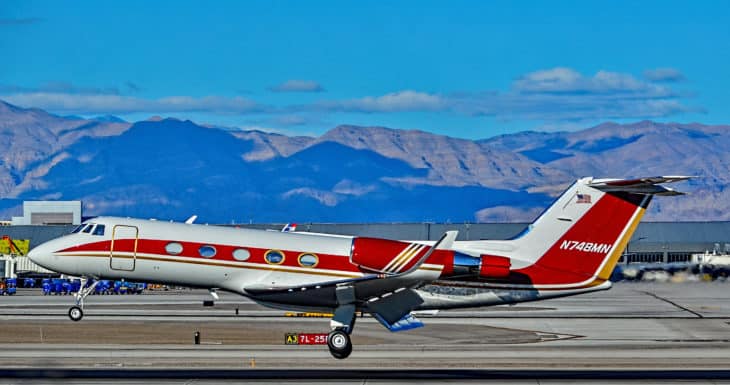
Ford’s first jet was, improbably, a secondhand Gulfstream II. He bought the big twin-engine intercontinental jet in the 1990s before he could fly anything at all, then asked one of the pilots he employed to teach him. Learning the fundamentals in a Cessna 182 while owning a Gulfstream is the aviation equivalent of buying a Formula 1 car and then booking driving school, and it tells you how committed he was to the destination.


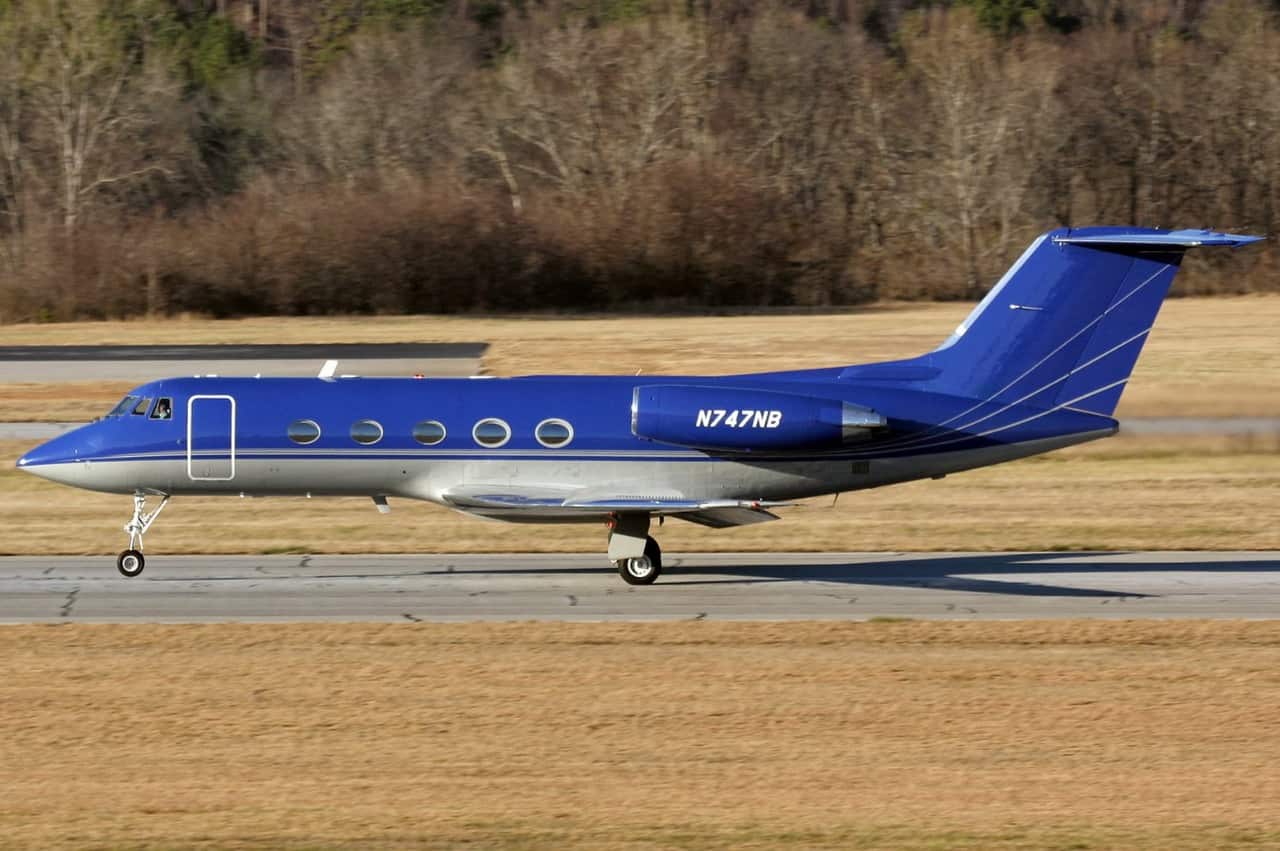
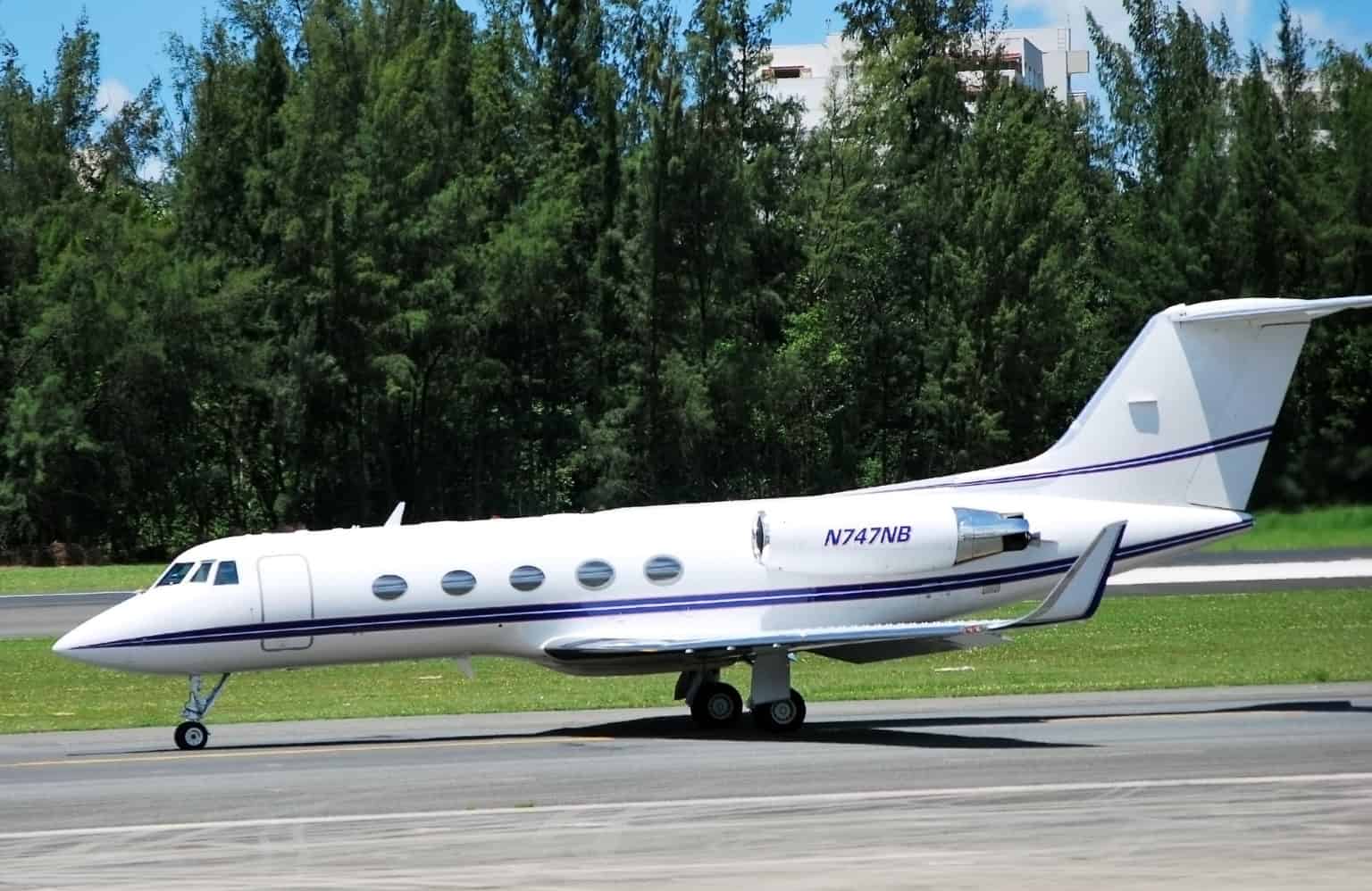


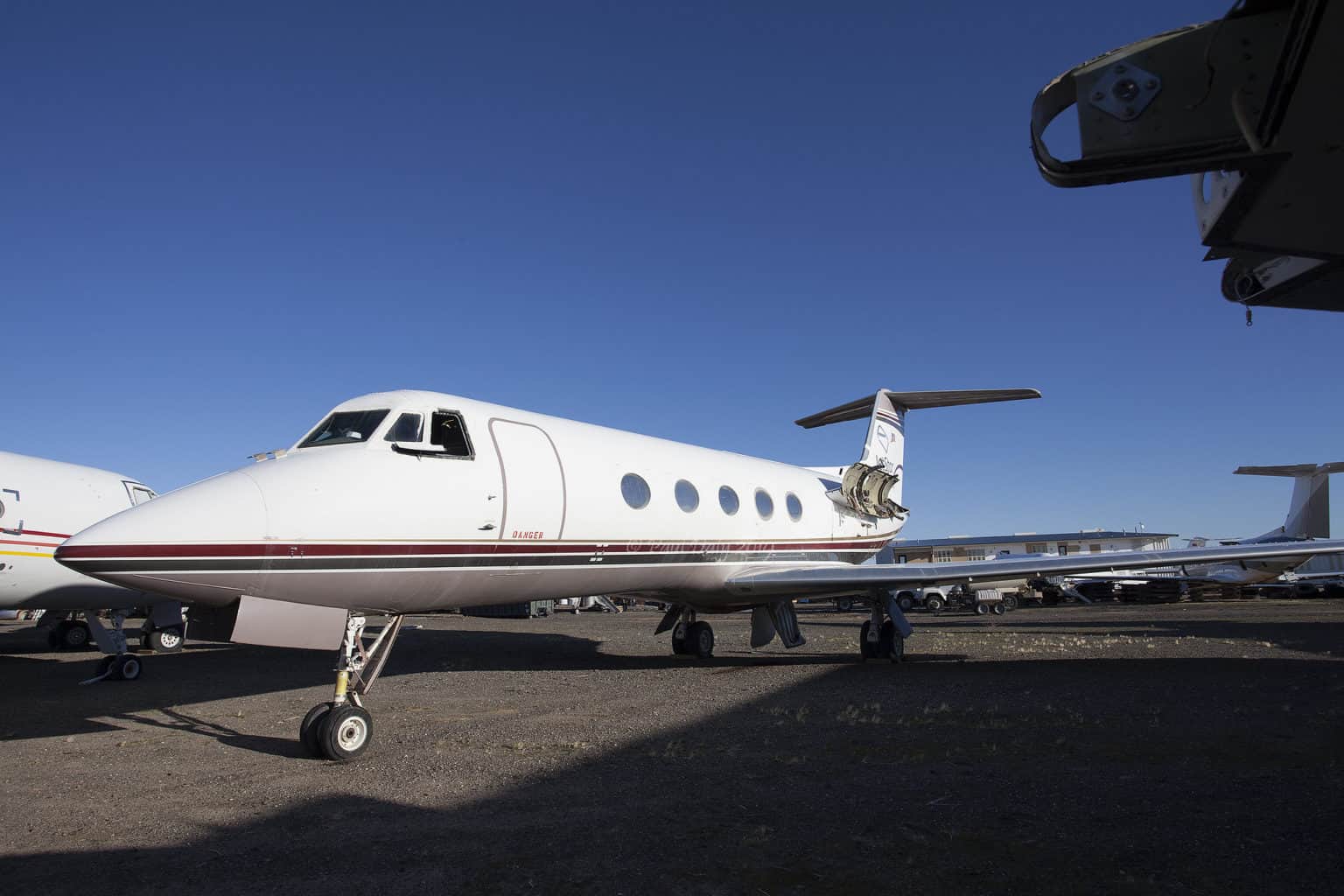


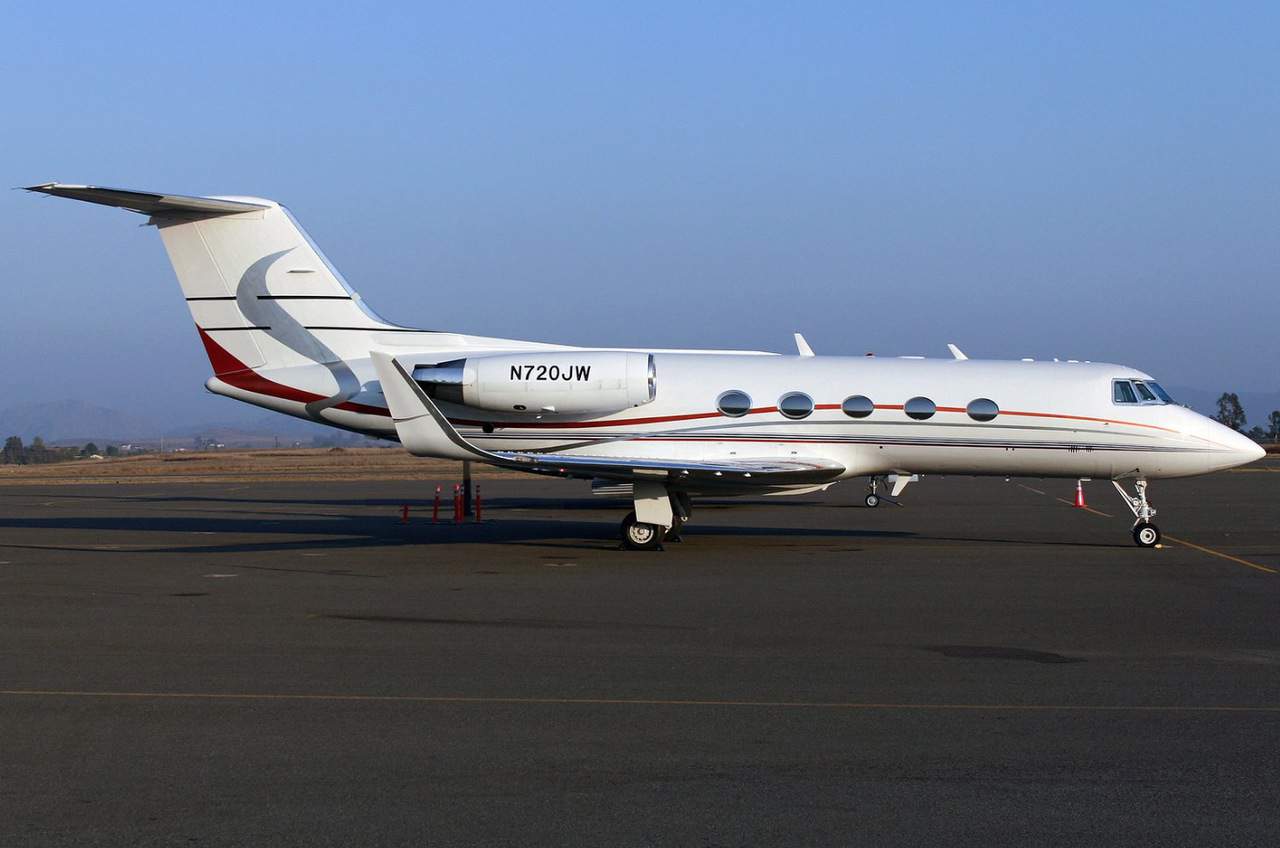
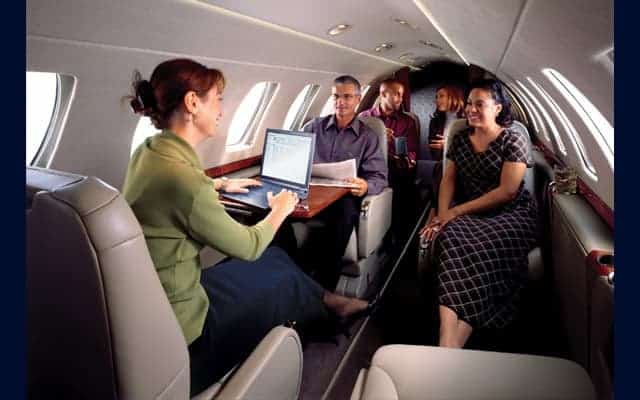
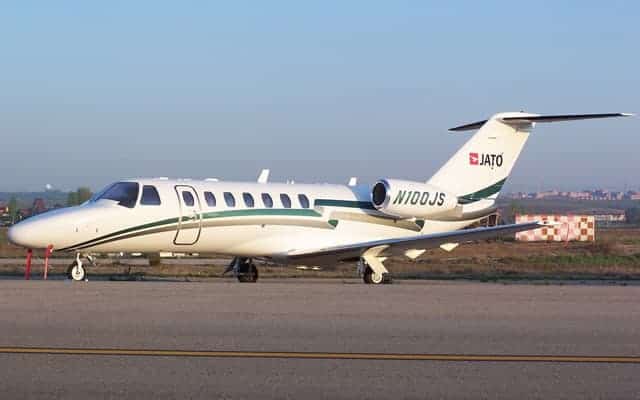
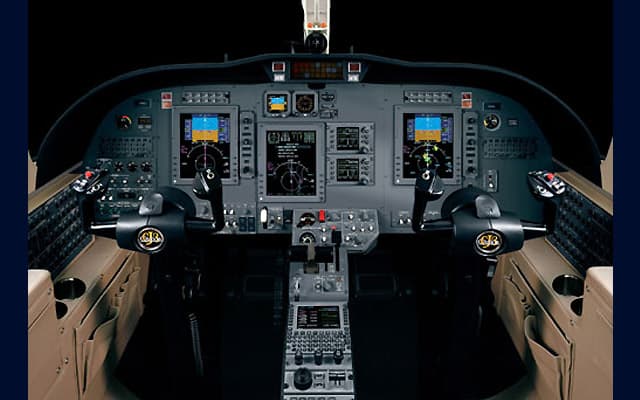
Between the Gulfstream and the Sovereign, Ford owned a Cessna Citation CJ3, a light jet he could fly single-pilot. He spoke about it warmly in interviews with the Aircraft Owners and Pilots Association before stepping up to the larger Sovereign around 2009. The CJ3’s exact fate is not publicly documented, but it disappeared from his fleet as N6GU arrived.


The Cheeseburger Problem: Ford’s Carbon Controversy
Ford is a vocal climate advocate. He sits on the board of Conservation International and delivered a blistering speech on deforestation at the 2019 UN Climate Action Summit. He is also a man who owns a fleet of aircraft and once told an interviewer, in a quote that has chased him ever since: “I’m so passionate about flying I often fly up the coast for a cheeseburger.”
The quote that would not die
The cheeseburger line dates to 2010, but it resurfaced at the 2019 UN climate summit in Madrid, where a critic confronted Ford about it on camera. His reply: u0022I’m a vegetarian now, thank you.u0022
Critics have called the combination hypocritical, and outlets tallying his fleet alongside his climate speeches have made him a recurring target. Ford’s defense has been characteristically blunt: he has argued that the problem is systemic rather than personal, and he has noted that much of his flying is in small piston aircraft that burn less fuel in an hour than an SUV does in a week of commuting. The Citation Sovereign is the genuine emitter in the fleet, and unlike the heaviest celebrity flyers, N6GU’s movements suggest transportation rather than constant short-hop convenience flying.
Harrison Ford’s Most Famous Flying Moments
The golf course landing, March 2015
Moments after taking off from Santa Monica Airport in his Ryan PT-22, the 1942 trainer’s engine quit. Ford, then 72, attempted to turn back, realized he would not make the field, and executed a forced landing on Penmar Golf Course, clipping a tree on the way in. The NTSB traced the failure to a carburetor main metering jet that had backed out of position, a part untouched since the airplane’s restoration 17 years earlier. Investigators noted Ford could not have caught it preflight. Pilots widely credited the outcome, a survivable crash with no one hurt on the ground, to textbook energy management. Ford spent weeks recovering from a broken pelvis, broken back, and shattered ankle, then went back to flying.
The Boy Scout rescue, 2001
When 13-year-old Cody Clawson went missing from a scout camp near Yellowstone, Ford joined the search in his own helicopter as a Teton County Search and Rescue volunteer. After two hours of flying he and a spotter found the boy, cold and wet after a night in the open, about 10 miles from camp. Clawson got a helicopter ride home from Indiana Jones and a hug he later said he would never forget. A year earlier, Ford had flown a severely dehydrated hiker off Table Mountain to a hospital in Driggs, Idaho. She threw up in his cowboy hat and had no idea who had rescued her.
The 2 millionth Young Eagle, 2016
At EAA AirVenture Oshkosh in 2016, Ford flew 16-year-old Jodie Gawthrop on the Young Eagles program’s 2 millionth free first flight for a young person. As the program’s volunteer chairman from 2004 to 2009, Ford personally flew more than 300 kids and helped drive a volunteer effort that has introduced well over half a million young people to aviation.
The taxiway incident, February 2017
Cleared to land on runway 20L at John Wayne Airport, Ford lined up on the parallel taxiway instead and overflew an American Airlines Boeing 737 holding short with 110 people aboard, clearing it by roughly 100 feet. He owned the mistake immediately on frequency, asking the tower if he had just landed on the taxiway. The FAA closed its investigation without a fine or mandatory retraining, citing his cooperation and long record.
How Ford Compares to Other Celebrity Jet Owners
Measured in dollars, Ford’s fleet barely registers against the top of the celebrity market. Kim Kardashian’s Gulfstream G650ER cost around $150 million with its custom cabin, and Elon Musk’s Gulfstream fleet logs more flight hours in a busy month than N6GU does in a season. The $18.5 million Sovereign is, by A-list standards, restrained.
Measured in airmanship, the comparison flips. Only a handful of celebrities hold serious pilot credentials: John Travolta, qualified on the Boeing 707 he long owned, and Tom Cruise, with his P-51 Mustang, are the usual names. Ford stands apart even from them in breadth. He flies jets, taildraggers, floatplane-capable bush aircraft, open-cockpit biplanes, and helicopters, and he is the only one on the list with documented search and rescue missions. Most celebrity jet stories are about consumption. Ford’s is about a license he spent sixty years earning the right to hold.
At a glance
One jet, one helicopter, four vintage or utility aircraft. Two crashes survived, two hikers rescued, more than 300 kids flown for free. There is no other fleet in Hollywood like it.
FAQ
Get the Newsletter
The latest aviation news and stories sent to your inbox.
About the Author

Tim is the owner and lead editor of AeroCorner since 2019, overseeing aviation content covering aircraft, airlines, airports, and the broader aviation industry. Through years of researching, writing, editing, and publishing aviation-focused content, he has developed extensive practical knowledge of commercial aviation and air travel. Based in Asia and a frequent traveler himself, Tim also brings firsthand passenger experience to AeroCorner’s coverage. Outside of publishing, he has also explored aviation firsthand through hands-on flight training in New Zealand.