


Table of Contents
Most celebrities board a private jet the same way they board a commercial one: someone else has done all the work before they arrived. Morgan Freeman is different. The Oscar-winning actor earned his private pilot’s license at 65, acquired one of the fastest light jets ever built, and began flying himself to film locations from his Mississippi home. The man who has played God, a president, and Nelson Mandela on screen turned out to have a genuine calling for the sky.
Aviation wasn’t something Freeman discovered late in life so much as something he finally got access to. He joined the US Air Force in 1955 with dreams of flying F-86 Sabre fighters, only to spend four years maintaining Automated Tracking Radar equipment. The military never put him in a cockpit. Decades passed before a business partner took him over the Mississippi River in a Piper Seneca and handed him the controls. Freeman enrolled with a flight instructor that same month, July 2002, and earned his private pilot’s certificate with multi-engine and instrument ratings in just three months. He was 65 years old.
This article covers Freeman’s full fleet: the Cessna 414 and Citation 501 SP that built his early hours, the SyberJet SJ30-2 registered as N30GZ that he flew as brand ambassador for more than a decade, and the two next-generation SJ30 variants he ordered as launch customer in 2021. It also covers the December 2015 emergency landing at Tunica Municipal Airport, his most famous international flights, and how his efficiency-first approach to private aviation puts him in a different conversation from the jet-owning celebrity mainstream.
Quick facts about Morgan Freeman’s private jet
Morgan Freeman’s Private Jet Fleet
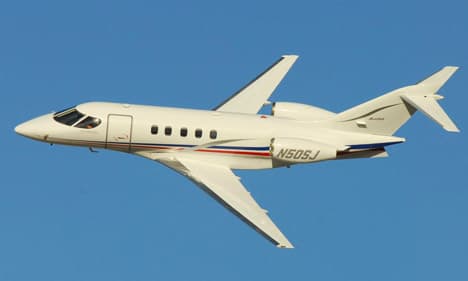
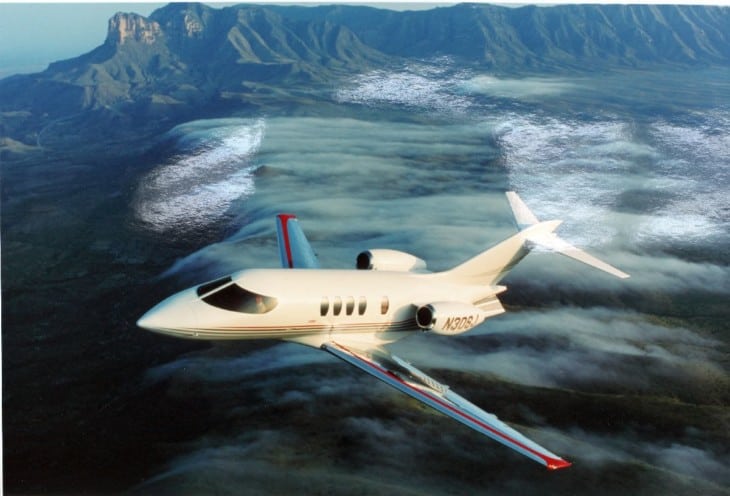
Freeman has owned at least three aircraft over his flying career, each representing a step up in performance and capability. The progression is that of a serious pilot who knew exactly where he was going: a pressurized twin piston, then an entry-level business jet, then one of the most range-capable light jets ever certified.






From Radar Mechanic to Rated Pilot: The Origin Story
Freeman’s path to the cockpit spans five decades and two very different chapters with aviation. The first chapter kept him on the ground. The second put him in command.
1937
Born in Memphis, Tennessee. Morgan Portman Freeman is born on June 1, growing up with an early fascination with flight and, by his own account, daydreams of flying fighter jets from his school desk.
1955
Enlists in the US Air Force, assigned to radar maintenance. Freeman enlists hoping to fly F-86 Sabre fighters. The Air Force assigns him to Automated Tracking Radar equipment instead. He spends four years as a ground-based electronics technician and never once enters a cockpit.
1959
Discharged from service, commits to acting. Freeman leaves the Air Force and begins building a stage and screen career that will eventually span six decades, including an Academy Award for Best Actor in 2005 for Million Dollar Baby.
2002
Earns a private pilot’s license at 65, in three months. A business partner takes Freeman over the Mississippi River in a Piper Seneca and lets him hold the controls. Freeman enrolls with a flight instructor in July. By October he holds a private pilot’s certificate with single-engine, multi-engine, and instrument land ratings. The process takes roughly three months.
Early 2000s
Builds a two-aircraft fleet from Mississippi. Freeman acquires a Cessna 414 twin-engine piston and a Cessna Citation 501 SP business jet, using both for travel from his home in Charleston, Mississippi. The 414 gives him piston twin hours; the Citation 501 SP gives him his first jet experience.
2009
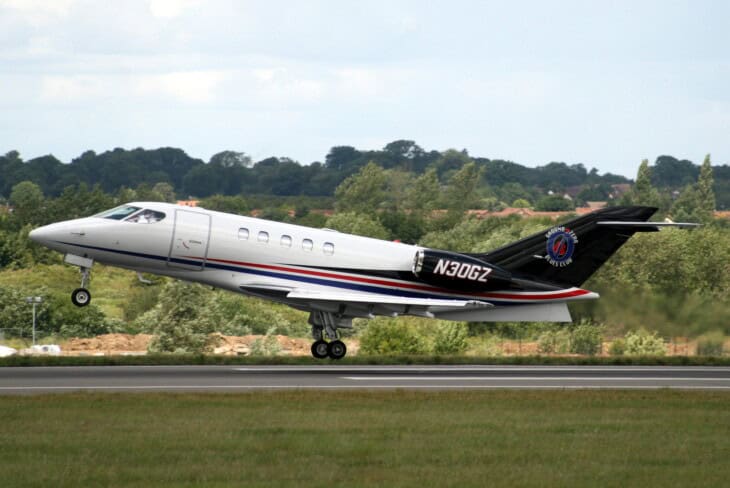
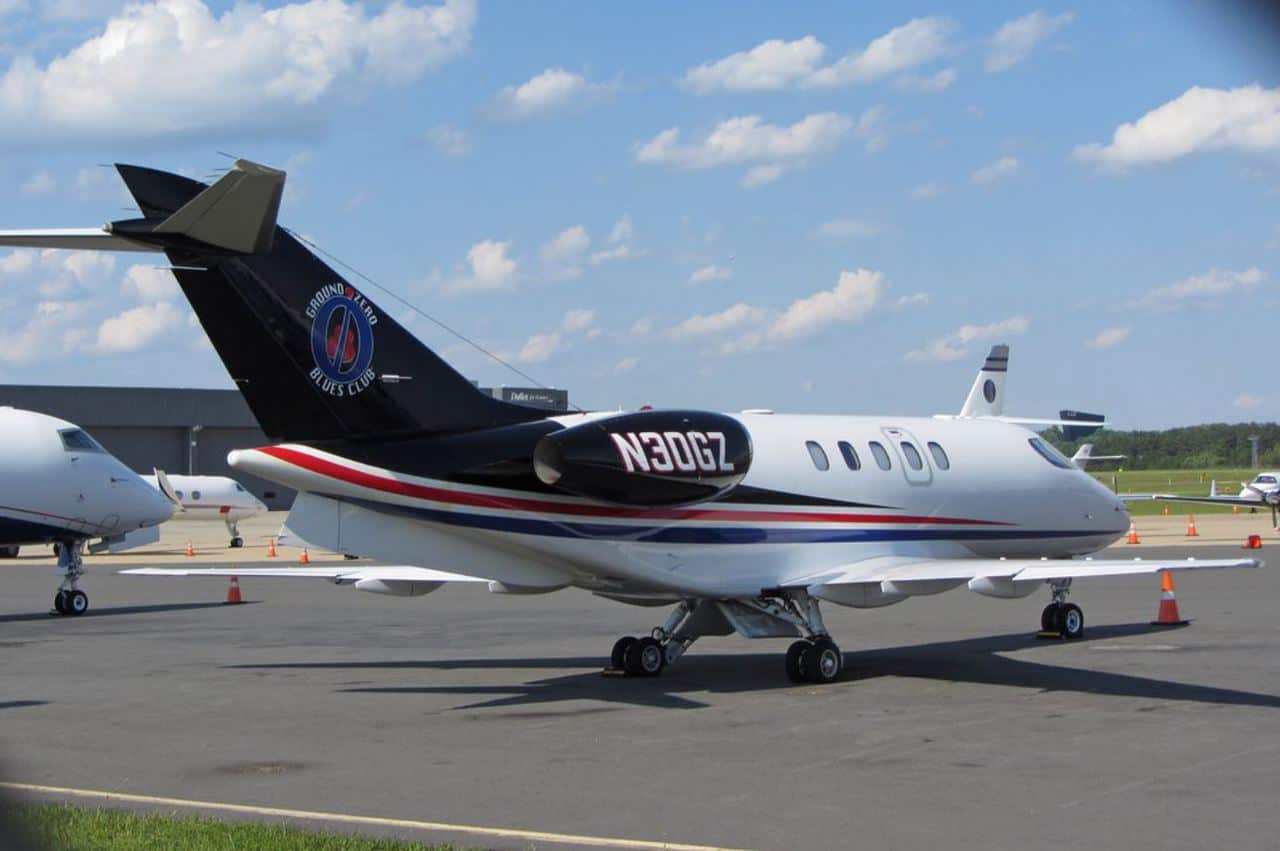
Takes delivery of SyberJet SJ30-2, tail N30GZ (serial 010). Freeman purchases his flagship jet from Emivest Aerospace in Dubai, becoming one of the first celebrity owner-operators of the type. He registers it as N30GZ with a Ground Zero Blues Club logo on the tail, referencing his Clarksdale, Mississippi blues venue. He becomes a brand ambassador for the SJ30 programme.
Dec 2015
Emergency landing at Tunica Municipal Airport, Mississippi. N30GZ suffers a blown tire on takeoff while en route to Sugar Land, Texas. The burst triggers a hydraulic system failure. Pilot Jimmy Hobson declares an emergency, diverts to Tunica, and puts the aircraft down without injuries to either occupant. The FAA investigates. Freeman later praises Hobson publicly for the safe outcome.
2021
Named launch customer for SyberJet SJ30i and SJ30x. Freeman trades in his SJ30-2 and places orders for one each of SyberJet’s two next-generation variants, participating in the groundbreaking ceremony for the company’s new completion centre at Cedar City Regional Airport in Utah.

Inside the SyberJet SJ30-2: Freeman’s Aircraft of Choice
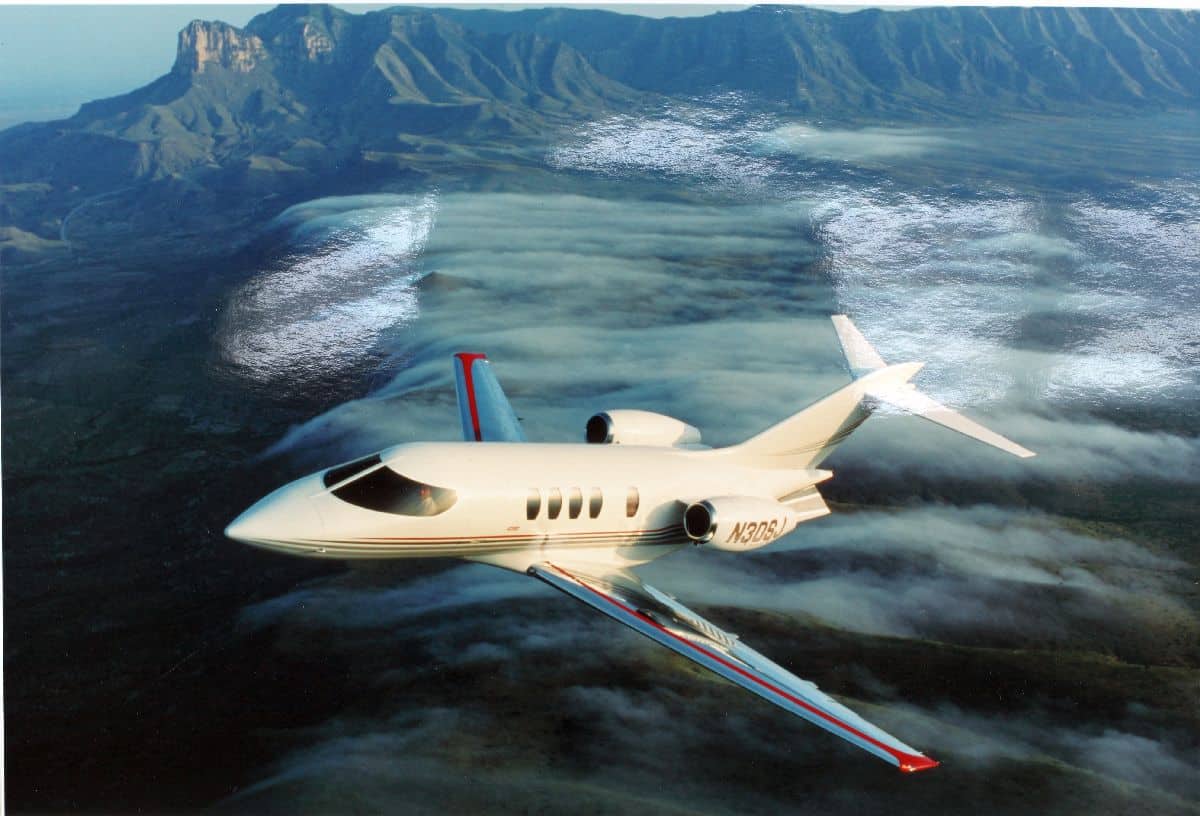
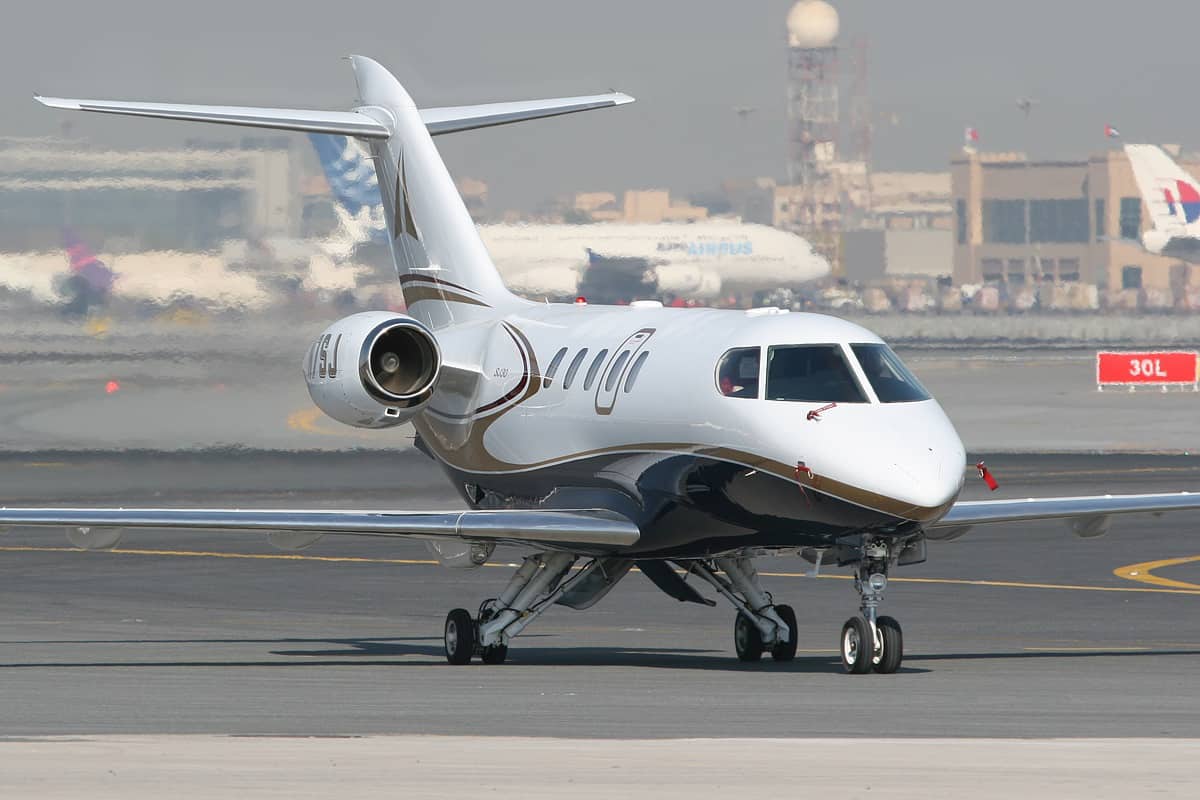
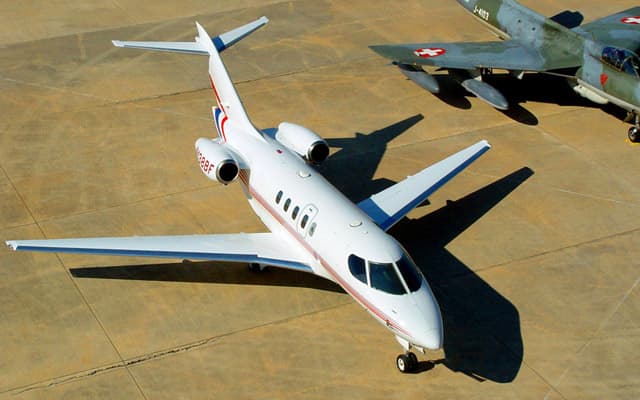
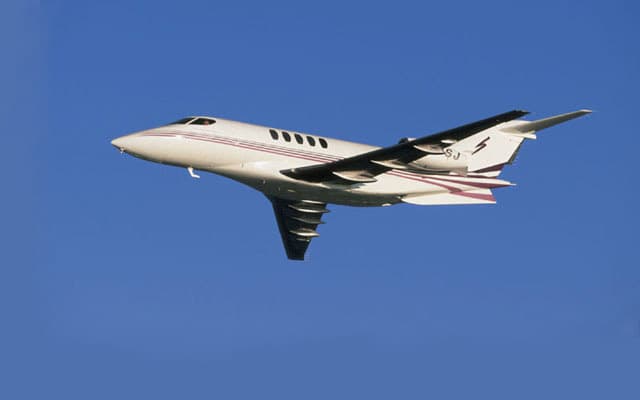
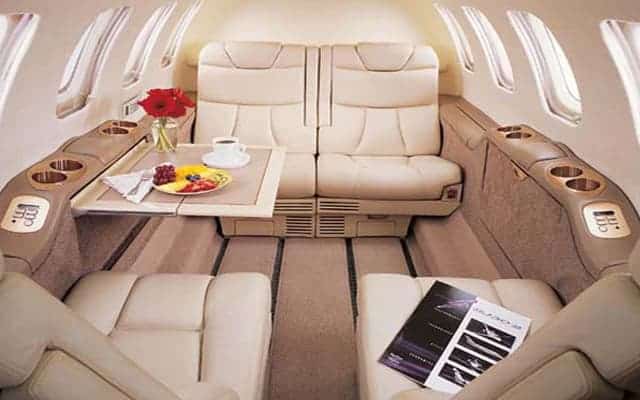
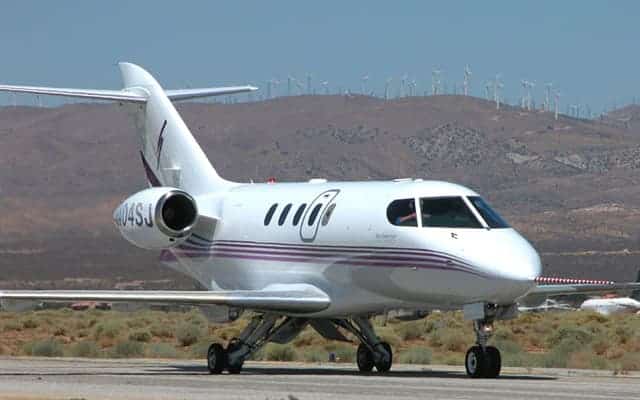
Freeman’s choice of the SJ30-2 said something about his priorities. He wasn’t buying for status: there are flashier jets, bigger cabins, and more recognizable nameplates in the light jet category. He chose the SJ30-2 because it matched what he’d told interviewers he wanted: coast-to-coast range at high speed, fuel efficiency, and a cabin that left him feeling fresh on arrival. “It could go coast-to-coast nonstop, it has a 550-mile-per-hour speed,” he explained. “The SJ30 is quite a bit faster and you can go quite a bit farther in it. It sips fuel and has sea-level cabin pressure to 41,000 feet, so you are a lot fresher.”
When he took delivery of serial number 010 in 2009 after purchasing from Emivest, the Dubai-based manufacturer then producing the SJ30, Freeman registered the aircraft as N30GZ. The tail carries the logo of his Ground Zero Blues Club in Clarksdale, Mississippi, of which he is a co-owner. The aircraft is based in Mississippi and served as Freeman’s primary long-range transport for over a decade.
Performance
Aircraft
Details
The cabin pressure advantage
Most business jets maintain a cabin altitude equivalent of 6,000 to 8,000 feet at cruise, causing mild hypoxia and fatigue. The SJ30-2 holds sea-level cabin pressure up to 41,000 feet, an unusually high specification for a light jet and one Freeman cited repeatedly as a key reason he chose the aircraft.
The SJ30-2 is powered by two Williams International FJ44-2C turbofan engines, each producing approximately 2,300 pounds of thrust. The aircraft is certified to 49,000 feet, which allows it to cruise above most weather and above the altitude ceiling of many larger jets. Its published range of 2,500 nautical miles means it can fly non-stop from Los Angeles to the US East Coast with passengers and still have reserves, which was precisely the mission Freeman described wanting from a private jet.
In 2021 Freeman became the launch customer for both the SyberJet SJ30i and the SJ30x, the two updated variants of the type. He traded in N30GZ as part of the arrangement. The specific configuration and delivery dates for his new aircraft have not been publicly confirmed, but his commitment to the programme underscored that his choice of the SJ30-2 was not a one-time purchase: it was a long-term conviction about what the right private jet looks like.
Before the SJ30: The Aircraft That Shaped a Pilot
Freeman did not walk into aviation and buy an $8 million light jet. He built his way there, working through two aircraft that gave him the hours and instrument proficiency to handle a high-performance jet as a solo operator.
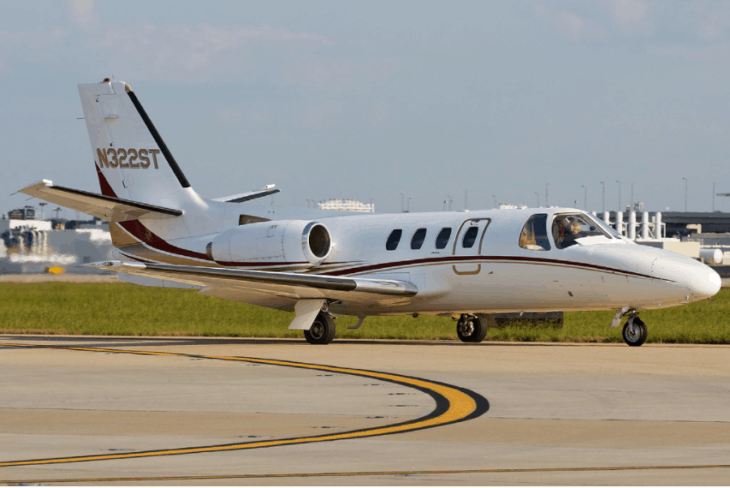
Cessna Citation 501 SP: The First Jet
The Cessna Citation 501 SP was Freeman’s gateway to jet aviation. The single-pilot certified variant of Cessna’s original Citation I, the 501 SP carries up to six passengers over roughly 1,100 nautical miles at 350 knots, powered by two Pratt and Whitney JT15D-4 engines. It is an economical, practical machine, the kind of aircraft that builds instrument scan and jet handling habits without overwhelming a pilot stepping up from pistons. Pre-owned prices hover around $400,000, making it one of the most accessible paths into jet ownership for a pilot building toward something faster.
Single-pilot certified
The Citation 501 SP is one of the few jets certificated for single-pilot operation under FAR Part 91. This meant Freeman could legally fly it himself without a co-pilot, building valuable solo jet time that would eventually qualify him to operate more capable aircraft.
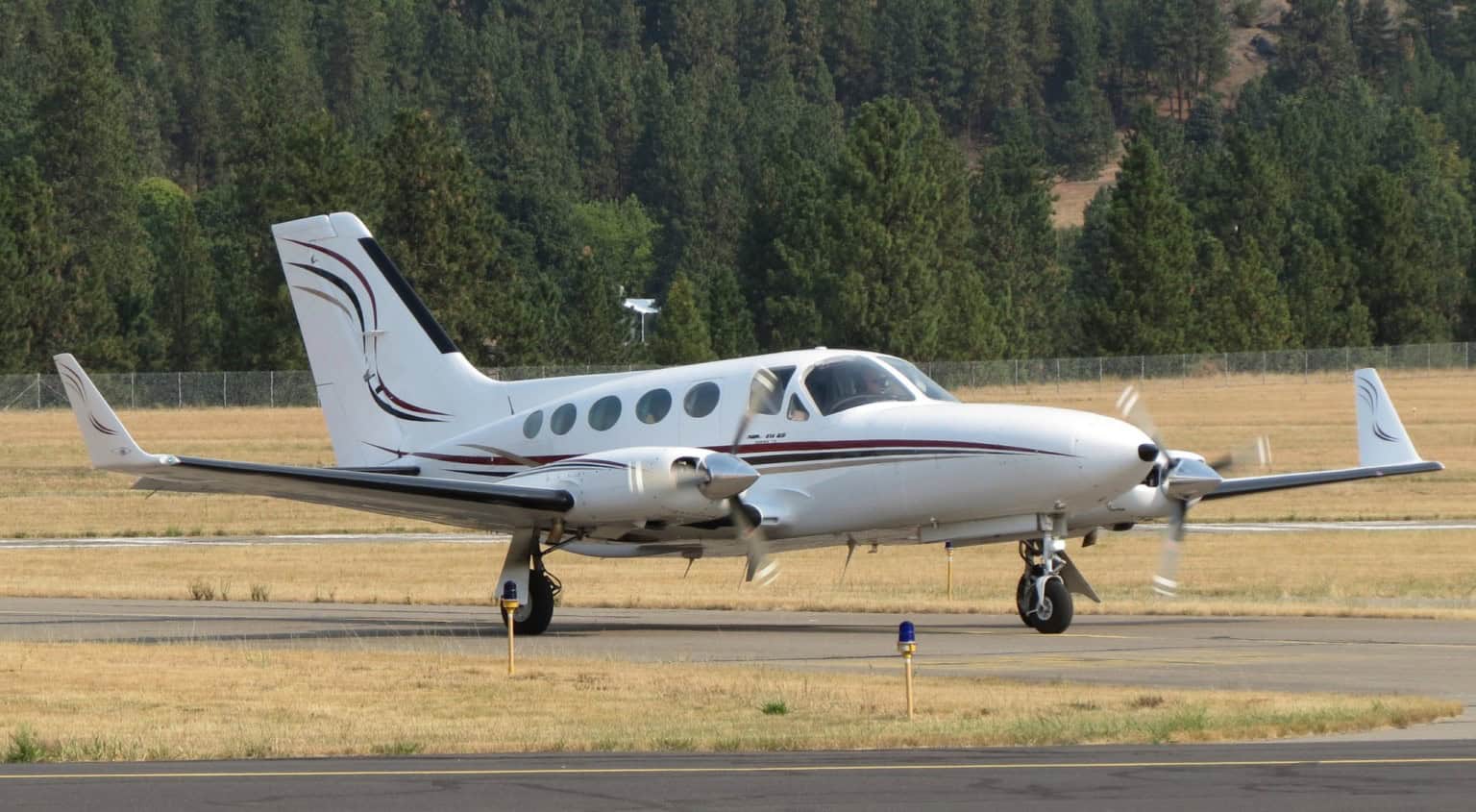
Cessna 414: The Piston Foundation
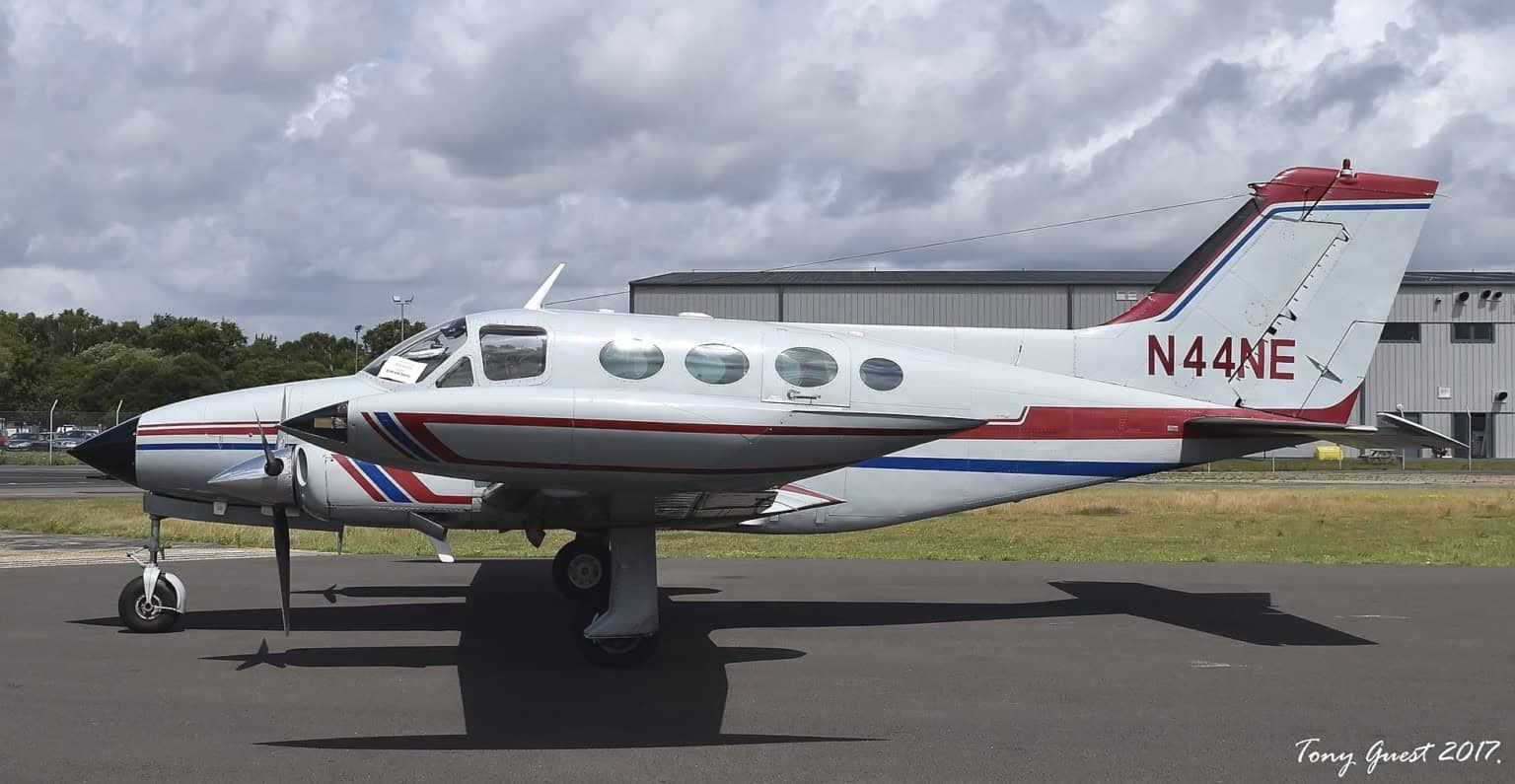
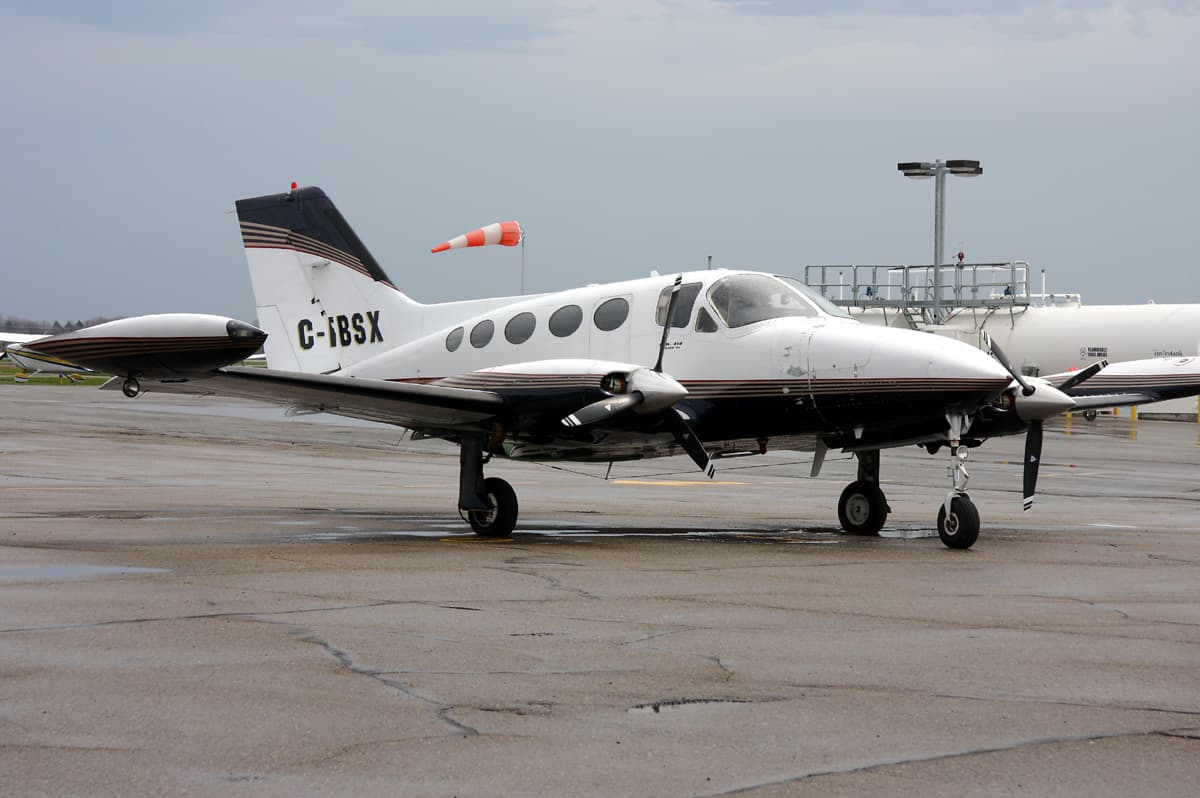
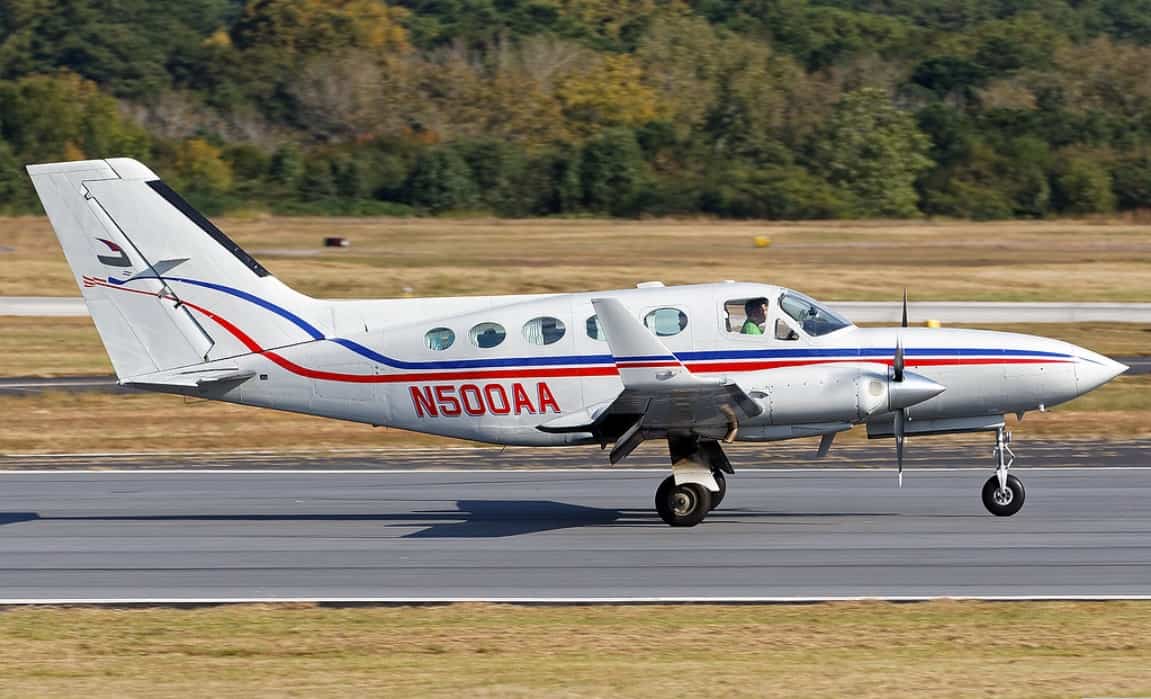
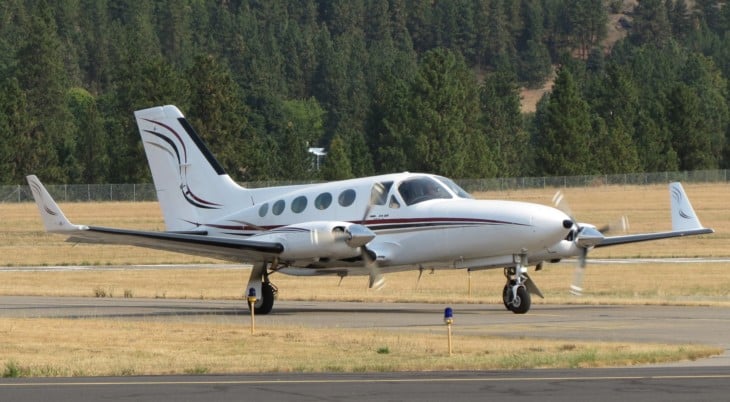
Freeman’s first aircraft was the Cessna 414, a pressurized twin-engine piston with a cabin capable of carrying up to five passengers over around 1,000 nautical miles. Two Continental TSIO-520-N engines make 310 horsepower each. The 414 has a maximum altitude of 25,000 feet and a cruise speed of around 200 knots, which puts it firmly in the regional runabout category. For a pilot based in Mississippi and regularly traveling to the Southeast and Midwest for work, it was practical and capable. Freeman’s choice to start with a twin rather than a single-engine aircraft reflects the instrument-focused path he was on from the beginning.
Morgan Freeman’s Most Memorable Flights
Los Angeles to South Africa (and the Angola Fuel Problem)
Shortly after taking delivery of N30GZ in 2009, Freeman flew from Los Angeles to South Africa in his new SJ30-2. The trip became a story he recounted with evident relish. A planned fuel stop in Angola turned problematic when local authorities refused to provide fuel. “We stopped in Angola, I’d never been there, they wouldn’t let us have fuel,” Freeman later recalled. The adventure, inconvenient as it was at 30,000 feet over West Africa, became a reminder that even a 2,500-nautical-mile jet does not insulate its owner from the realities of international general aviation routing and permit bureaucracy.
Flying to the UAE to Meet His Manufacturer
Among Freeman’s earliest long-range journeys in the SJ30-2 was a trip to the United Arab Emirates to meet Emivest Aerospace, the Dubai-based company that had built his aircraft. The visit was documented in the regional aviation press, which noted the unusual nature of a Hollywood actor arriving in the Gulf on a jet built by an Emirati manufacturer. Freeman’s subsequent role as a brand ambassador for the SJ30 programme began in earnest around this period, combining his genuine enthusiasm for the aircraft with a public-facing role for a company trying to establish itself in a competitive market segment.
Tunica, December 5, 2015: The Emergency Landing
The most scrutinized flight in Freeman’s log is a forced landing at Tunica Municipal Airport in Mississippi. N30GZ departed for Sugar Land Regional Airport near Houston, where Freeman was due to film a segment for his National Geographic series “The Story of God with Morgan Freeman,” when the aircraft suffered a blown tire on takeoff. The burst tire caused a hydraulic system failure.
Pilot Jimmy Hobson declared an emergency, diverted immediately to the nearest available airport, and brought the aircraft down at Tunica. The SJ30-2 ran off the runway end, consistent with landing on a compromised main gear and degraded hydraulic braking. Neither Freeman nor Hobson was injured. Freeman issued a statement shortly afterward: “Sometimes things don’t go as planned and a tire blew on takeoff, which caused other problems. Thanks to my excellent pilot Jimmy Hobson we landed safely without a scratch.”
The FAA filed an accident and incident report. N30GZ was subsequently repaired and returned to service. The incident drew unusually wide coverage for a general aviation excursion because Freeman was aboard, but the response from both occupants, and the outcome, illustrated exactly what a properly trained professional crew is supposed to do when equipment fails.
Flying “The Story of God”
Freeman used N30GZ heavily during the production of “The Story of God with Morgan Freeman,” the National Geographic series that premiered in 2016 and documented his visits to religious sites across multiple continents. While the most distant international legs required commercial connections, Freeman flew himself between US departure points and regional destinations throughout the production period. It was, in practical terms, the fullest expression of the mission he had described when he got his license: using an aircraft to get where he needed to be, on his own terms, without clearing a security checkpoint.
How Freeman’s Fleet Compares
The comparison with other celebrity jet owners is almost unfair in Freeman’s favor. Taylor Swift’s fleet of Dassault Falcons logged more than 170 individual flights in a single year, including multiple hops under 20 minutes, generating an estimated 8,000-plus tonnes of carbon dioxide and drawing a sustained public backlash. Drake operates a Boeing 767 converted airliner as a personal aircraft. Jay-Z and Beyoncé together own multiple large-cabin jets. These are aircraft designed for maximum comfort at maximum scale, and their owners have faced criticism proportional to the size of what they fly.
Freeman’s SJ30-2 burns a fraction of what any of those aircraft burn per hour. The Williams FJ44-2C engines are among the most fuel-efficient powerplants in business aviation, and the SJ30-2’s aerodynamic design was built around efficiency from the start. His fleet never grew beyond three aircraft, two of which were modest by any standard, and he used them for working travel rather than leisure shuttles.
The more instructive comparison is with the other celebrity pilots who actually fly their own aircraft. Harrison Ford holds ratings across piston, turboprop, and rotorcraft categories and has survived multiple aviation incidents including a crash on a golf course and a runway incursion at John Wayne Airport. John Travolta owns a Boeing 707, a Gulfstream, and several other jets, holds a Boeing 707 type rating, and has been flying seriously since the 1970s. Bruce Dickinson of Iron Maiden flew the band’s chartered Boeing 757 himself for years while also serving as an airline first officer with a commercial license.
In that company, Freeman’s approach stands out for being practical rather than spectacular. He chose the SJ30-2 for its performance data, used it for professional travel, and attracted attention only when the FAA issued an incident report. His decision to become launch customer for the next two SyberJet variants in 2021, trading in a decade-old aircraft for two new ones from a manufacturer still proving its programme, suggests that his commitment to the platform went beyond celebrity endorsement and into genuine conviction about the aircraft.
A rare kind of celebrity owner
Freeman holds multi-engine and instrument land ratings, qualifying him to operate aircraft like the SJ30-2 as pilot-in-command under instrument flight rules. Most celebrity jet owners hold no pilot’s license at all. Freeman is among a small group who both own and are legally qualified to fly their own jets.
FAQ
Get the Newsletter
The latest aviation news and stories sent to your inbox.
About the Author

Tim is the owner and lead editor of AeroCorner since 2019, overseeing aviation content covering aircraft, airlines, airports, and the broader aviation industry. Through years of researching, writing, editing, and publishing aviation-focused content, he has developed extensive practical knowledge of commercial aviation and air travel. Based in Asia and a frequent traveler himself, Tim also brings firsthand passenger experience to AeroCorner’s coverage. Outside of publishing, he has also explored aviation firsthand through hands-on flight training in New Zealand.