

Table of Contents
N844AA’s owner expected it to land in Johannesburg the next morning, flown by a crew he had hired. Someone flew it out of Luanda first, and the FBI closed the case two years later without an answer.
On May 25, 2003, shortly before sunset, a Boeing 727-223 registered N844AA began to taxi at Quatro de Fevereiro Airport in Luanda, Angola, without a word to the control tower. It turned onto a runway without clearance and took off to the southwest, out over the Atlantic Ocean.
Its lights were off and its transponder was not transmitting. Controllers called it and got no reply. Neither the jet nor the two men believed to be aboard has been seen since.
Those two men were Ben Charles Padilla, an American flight engineer and mechanic who held only a private pilot’s license, and John Mikel Mutantu, a helper from the Republic of the Congo who was not a pilot at all. A 727 normally needs three trained crew.
How a Retired American Airlines Jet Ended Up Stranded in Luanda
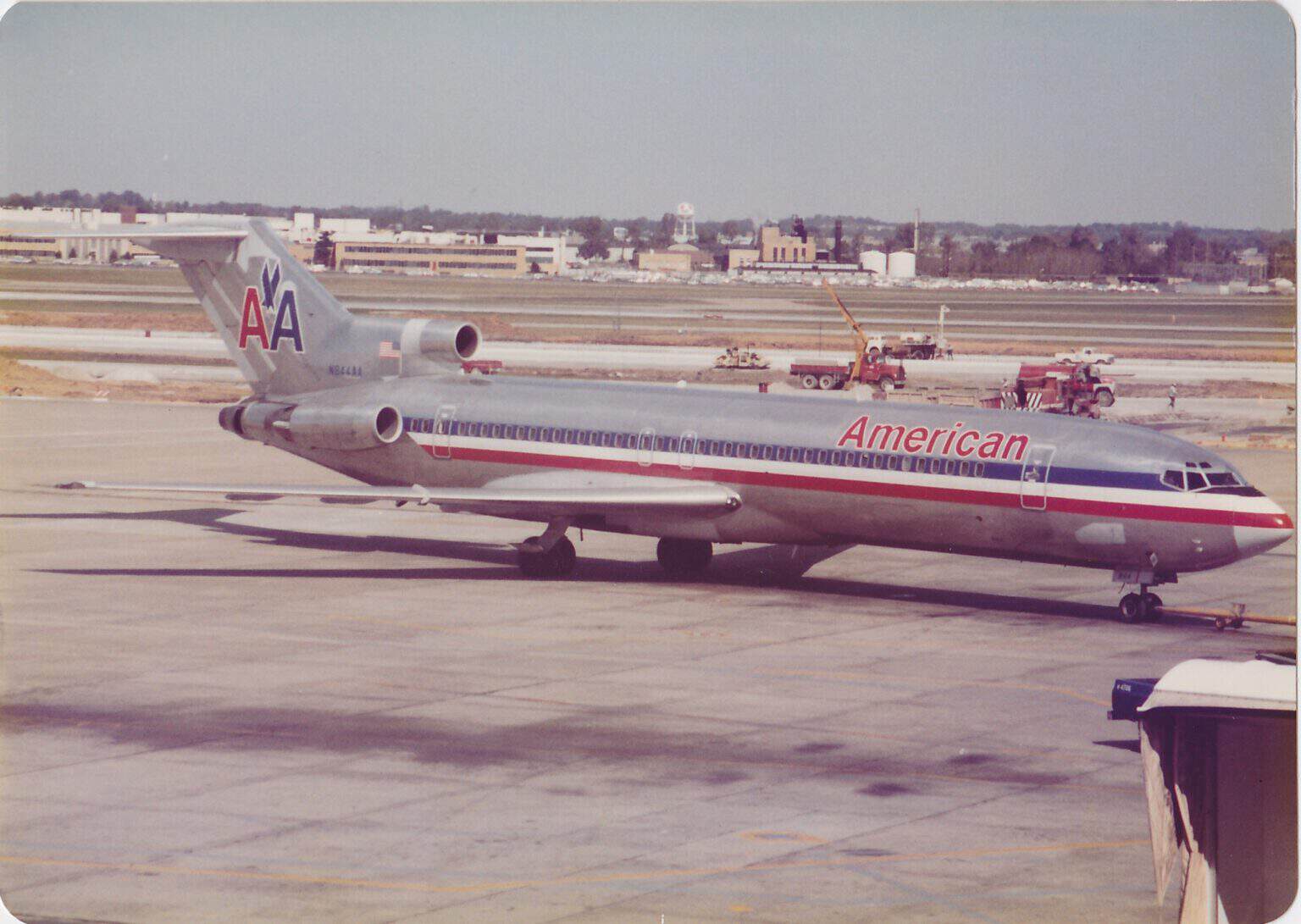
N844AA was built in 1975 and flew passengers for American Airlines for about a quarter of a century. FAA records show it registered to Aerospace Sales and Leasing, a Miami company run by Maury Joseph, in January 2002.
Joseph says he then sold it, for a little over $1 million, to a venture fronted by South African entrepreneur Keith Irwin. The venture had a contract to haul diesel to diamond mines in Angola, where civil war had made the roads nearly useless, so most of the passenger seats came out and ten 500-gallon fuel tanks went in.
The jet left Miami on February 28, 2002, still wearing American’s livery with a fading AA logo on the tail, and reached Luanda on March 14. Joseph says he received a $125,000 down payment, and the venture made only two payments before it defaulted.

The deal soured fast. The client did not pay on arrival, the American crews had to go to the U.S. Embassy to get their passports back, and by the end of April 2002 most of them had gone home. The 727 stayed behind, running up airport fees.
In spring 2003, Joseph sent Padilla, a freelancer who had worked two earlier jobs for him, to pay the fines and get the airplane flying again. Padilla worked with mechanics from Air Gemini, a Luanda airline with a repair station, and hired a pilot and copilot from the same company to ferry the jet to Johannesburg.
Its owner expected it in Johannesburg the next morning
According to owner Maury Joseph, he and a buyer were waiting in Johannesburg for N844AA to land late on the morning of May 26, 2003. The call that came instead was from an Air Gemini employee, demanding to know why another crew had flown the airplane out of Luanda.
N844AA by the Numbers: 14 Months Parked, One Private Pilot’s License
By the night it vanished, the 727 had sat at Luanda for 14 months. Angola’s civil aviation director told The Sydney Morning Herald in August 2003 that Padilla was allowed to work on the plane on the promise that about $50,000 in fees would be paid.
That day it took on about 14,000 gallons (53,000 liters) of jet fuel, enough for a range of roughly 1,500 miles (2,400 km), the Herald reported. Airport officials said two men boarded before the refueling and the three engines were started at about 5 p.m.
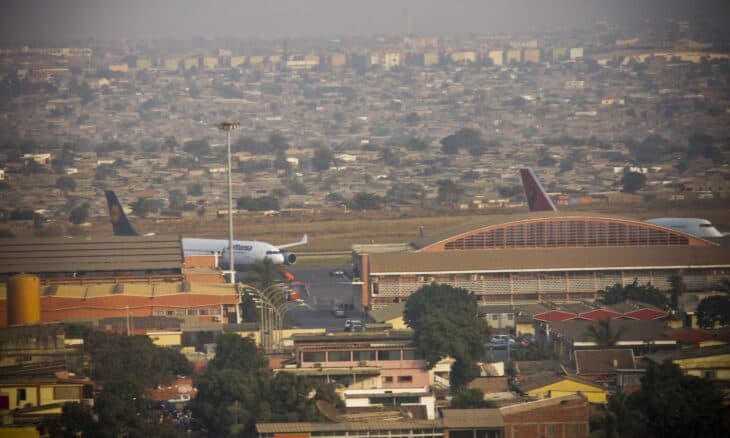

The FBI’s notice, signed by Director Robert Mueller, put the takeoff at about 6 p.m. local time, “with neither clearance nor a flight plan.” It described the jet as unpainted silver with a blue and white stripe, passenger seats removed and “outfitted to carry diesel fuel.”
Radar would not have helped. “Basically, once you go north of South Africa there is no air-traffic control until you reach the Mediterranean coast,” Richard Cornwell of South Africa’s Institute for Security Studies told the Herald.
Early reports had the jet calling the Seychelles for landing permission, more than 2,000 miles (3,200 km) from Luanda. Seychelles officials denied ever hearing from it, and the distance was well beyond the fuel it carried.
Why Washington Hunted a Junk Cargo Jet Like a Flying Bomb
The theft came less than two years after 9/11, and the 727 had been converted into an airborne fuel tanker. The State Department told every U.S. embassy in Africa to alert aviation officials and call every airport with a runway long enough for a 727.
U.S. spy satellites photographed remote airstrips across the continent, the BBC reported in June 2003. Retired Marine General Mastin Robeson, then commanding U.S. forces in the Horn of Africa, told Air & Space that Central Command considered moving fighters to Djibouti.
Robeson said there was speculation of insurance fraud, of a sale to “unsavory characters,” and of a terrorist plot, and none was ever settled. Joseph volunteered to take a lie-detector test, and Padilla’s brother Joe told the Herald the trip was “a legitimate mission” to repossess the plane.
It is the other great 727 mystery, alongside the D.B. Cooper hijacking of 1971. The difference is that Cooper left the airplane behind.
The Guinea Sighting That Did Not Hold Up
The most repeated twist in the story is that the jet was found. In July 2003, The Guardian reported that a Canadian pilot, Bob Strother, had seen it in Conakry, Guinea, on June 28, resprayed and carrying the Guinean registration 3XGOM. AVweb ran the item under the headline “Missing Jet Found In New Colors”.
It was never confirmed. The jet was not seen in Guinea again, and in August 2003 the State Department said it was treating the report “with caution.” Spokesman Philip Reeker told the Herald: “Our position is that this aircraft remains unaccounted for.”
A newer claim, repeated on some websites, says the wreckage turned up in Ethiopia in August 2003. It appears in no official record. The FBI kept its case open until 2005, and every part of Ethiopia lies more than 1,700 miles from Luanda, beyond the jet’s estimated range of about 1,500 miles.
In 2010, Air & Space called N844AA the largest aircraft ever to disappear without a trace. Malaysia Airlines Flight 370, a far bigger Boeing 777, vanished in 2014, but its right flaperon washed up on Réunion in July 2015. No piece of N844AA has ever been confirmed anywhere.
What the FAA Register Says About N844AA Today
The FBI closed its case in 2005. Seven years after the theft, Padilla’s sister, Benita Padilla-Kirkland, was still trying to persuade the bureau to reopen it with a new sighting, one of many reported over the years.
The FAA’s own file closed more quietly. Its deregistered-aircraft database still lists N844AA, serial number 20985, under Aerospace Sales and Leasing in Miami, with the registration cancelled on January 26, 2018, almost 15 years after the jet was last seen.
The tail number itself has moved on. In September 2025, an Oklahoma aviation consultancy reserved N844AA, according to the FAA’s reserved-numbers file, and that reservation expired in July 2026.
The people closest to the jet still disagree about where it went. Joseph’s former employee Mike Gabriel believes it crashed in the Atlantic soon after takeoff, one fuel-delivery crewman thinks Angola’s air force shot it down, and others place it near Kinshasa or broken for parts in Bujumbura, Burundi.
None of those theories has a document behind it. Twenty-three years on, the FBI’s notice is still the most accurate summary on record: a 727 that left Luanda without clearance “and has not been seen since.”
Sources and references used for research and fact-checking.
- Air & Space/Smithsonian, The 727 That Vanished
- Federal Bureau of Investigation, FBI Seeking Information: Ben Charles Padilla
- The Sydney Morning Herald, Into thin air
- The Guardian, Plane in terrorism scare turns up sporting a respray
- AVweb, Missing Jet Found In New Colors
- BBC News, African hunt for stolen Boeing
- Federal Aviation Administration, Aircraft Registration Releasable Aircraft Database
- Wikipedia, 2003 Angola Boeing 727 disappearance
- Wikipedia, Malaysia Airlines Flight 370
Get the Newsletter
The latest aviation news and stories sent to your inbox.
About the Author

Tim is the owner and lead editor of AeroCorner since 2019, overseeing aviation content covering aircraft, airlines, airports, and the broader aviation industry. Through years of researching, writing, editing, and publishing aviation-focused content, he has developed extensive practical knowledge of commercial aviation and air travel. Based in Asia and a frequent traveler himself, Tim also brings firsthand passenger experience to AeroCorner’s coverage. Outside of publishing, he has also explored aviation firsthand through hands-on flight training in New Zealand.