

Table of Contents
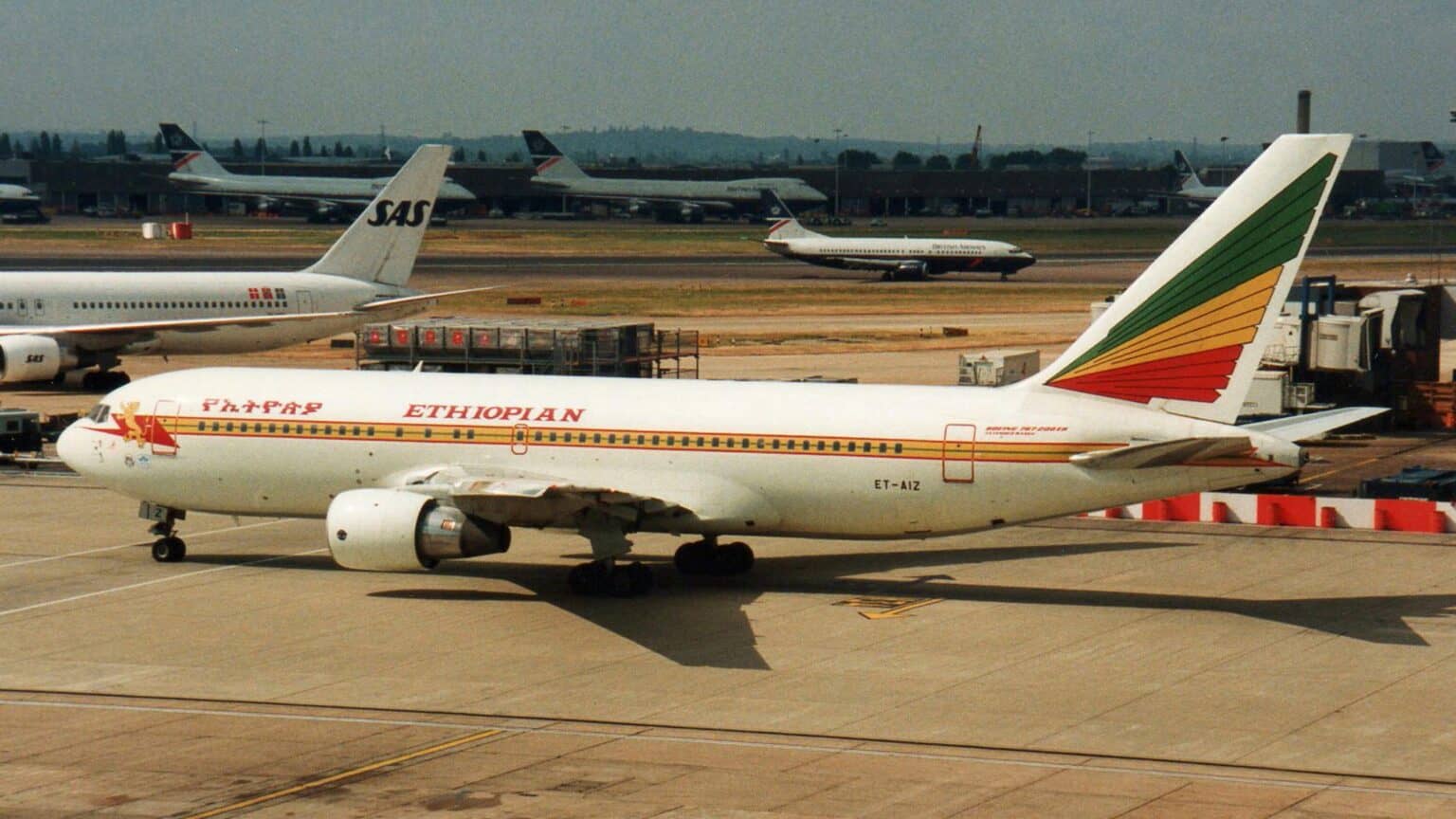
Ethiopian Airlines Flight 961 was hijacked 20 minutes after leaving Addis Ababa on November 23, 1996. Three men forced the Boeing 767-200ER, registration ET-AIZ, to fly south over the Indian Ocean until both engines ran dry. It came down in shallow water off Grande Comore, and 125 of the 175 people on board died.
The investigators asked for four changes: a recorder power backup, a fire axe stored out of passengers’ reach, real hijack and emergency training, and a fix for a wrongly fitted data unit. Recorder backup power later became a binding US rule, and reinforced cockpit doors followed September 11, but neither traces back to this report.
The Ethiopian Civil Aviation Authority’s final report, AI-3/96, dated May 4, 1998, also complicates the story most people know. The hijackers had no bomb, and the report never blames the famous inflated life vests for the deaths.
Nov 23, 1996, 08:09 UTC
Departure. Flight 961 leaves Addis Ababa for Abidjan, with stops planned at Nairobi, Brazzaville and Lagos. On board are 163 passengers and 12 crew.
About 08:29 UTC
The hijack. Three passengers storm the cockpit claiming a bomb, force the first officer out and order the captain to fly to Australia.
About 09:00 UTC
The warning. Nairobi controllers tell the hijackers, over the radio, that with about two hours of fuel they will end up in the ocean, and urge a stop at Mombasa. They refuse.
About 11:41 UTC
Right engine stops. Circling south of the Comoros, the 767 loses its right engine to fuel exhaustion. The captain tells the cabin to expect a crash landing.
About 11:54 UTC
Left engine stops. The aircraft is at 20,900 feet. About two minutes later, with no engine power, both flight recorders stop.
12:20 UTC
On the water. Flown by both pilots on standby instruments, the 767 touches the water off Galawa Beach, Grande Comore, and breaks apart on a reef. 50 people survive.
May 4, 1998
Final report. The Ethiopian CAA issues report AI-3/96 with four safety recommendations.
2002 to 2010
Later rules. The US requires reinforced cockpit doors on foreign airliners from April 2003, and a 10-minute independent power source for voice recorders on aircraft built from 2010.
How a four-leg trip to Abidjan became a hijacking over the Indian Ocean
Flight 961 was a scheduled service from Addis Ababa to Abidjan, Ivory Coast. The first leg, to Nairobi, was planned at 1 hour 55 minutes. Nothing about the fuel on board was meant for a crossing of the Indian Ocean.

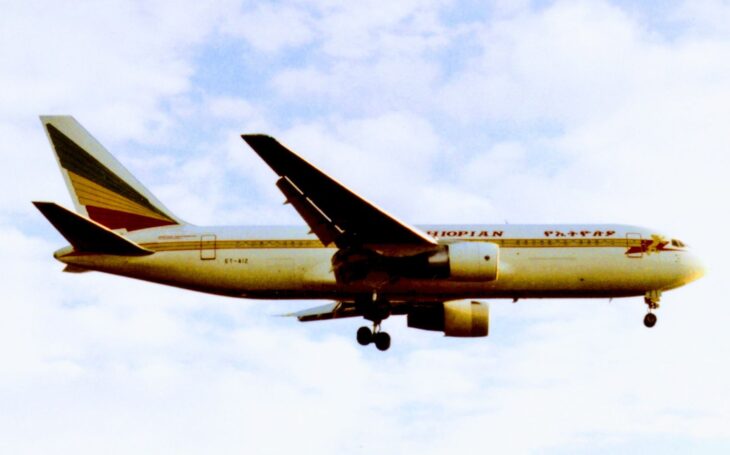
The aircraft was a Boeing 767-200ER built in 1987 with Pratt & Whitney engines. The report found it airworthy, correctly loaded and maintained to an approved program. The captain, Leul Abate, had about 11,525 flight hours.

About 20 minutes after takeoff, three men ran up the aisle, shouted that they had a bomb, and forced their way into the cockpit. They beat the first officer, Yonas Mekuria, and pushed him into the cabin. Then they took the cockpit’s fire axe and fire extinguisher as weapons.
Their demand was Australia. The captain said he had fuel for Nairobi, or Mombasa at most, and pointed to the fuel gauges. The hijackers answered that Ethiopian’s in-flight magazine said the 767 could fly 11 hours without refueling.
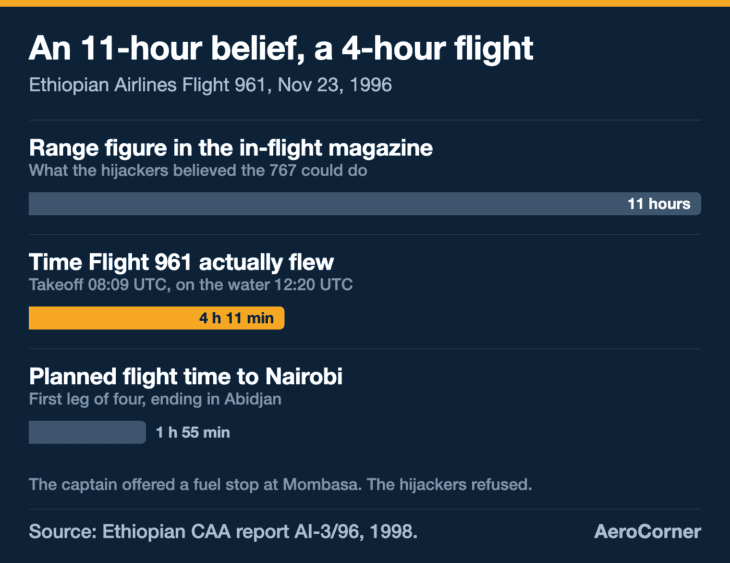
The captain managed one radio call to Addis Ababa before he was cut off. Later, ordered to relay a message to Australia, he made sure the hijackers could hear Nairobi’s reply. Nairobi told them that with about two hours of fuel they would probably ditch in the ocean, and that the best solution was to land at Mombasa.
The hijackers refused and took the captain’s headset. The jet passed Mombasa, Zanzibar and Dar es Salaam heading south. Ordered to turn away from the coast toward Australia, the captain instead turned toward the Comoros, where Moroni’s airport offered a runway.
The final minutes, from the first engine to the reef
Over the Comoros, the captain circled 15 to 20 nautical miles south of Moroni and the low-fuel caution lit. The hijackers insisted he hold 39,000 feet (11,900 m). At about 11:41 UTC the right engine wound down to windmilling.


When the hijacker in the right seat stepped out, the captain took the microphone. He told the passengers the aircraft had run out of fuel, to expect a crash landing, and asked them to “react” to the hijackers. The report says he had realized they were not armed, but the English-only plea was not understood.
The hijacker came back, knocked the microphone away and grabbed at the controls. The autopilot dropped out and the flight path turned erratic, with airspeed swinging between 216 and 336 knots. About 12 minutes after the right engine, the left engine stopped at 20,900 feet (6,400 m).
With no engines, only the ram air turbine and the standby instruments were left. In the cabin, the first officer and cabin crew found passengers in their life vests, some already inflated, and helped them deflate the vests and showed them how to brace.
Less than two minutes before the end, the first officer forced his way back into the cockpit to help with the heavy controls. The pilots turned left to land parallel to the waves. The 767 touched the water left wing low, struck a reef and broke into four sections, which came to rest about 1,640 feet (500 m) off Galawa Beach.
Hotel staff, boat crews and villagers began the rescue before the airport fire service arrived. Of the 175 on board, 125 died, six crew and 119 passengers. A tourist on the beach filmed the final approach, and that video is why the flight is known around the world.
What the Ethiopian CAA investigation found
The Comoros, as the state of occurrence, delegated the whole investigation to Ethiopia under Annex 13 of the Chicago Convention, with Comorian investigators taking part. Britain’s Air Accidents Investigation Branch read the flight recorders.
The cause, in the report’s words: “unlawful interference by the hijackers which resulted in loss of engines thrust due to fuel exhaustion.”
It cleared the crew and the airplane. It called the captain’s performance during the entire flight “timely and correct,” and the accident “would not have occurred” had the hijackers accepted a fuel stop. Airport security at Addis Ababa was judged adequate: the weapons came from on board.
The findings still named gaps. Cabin crew recurrent emergency training had not been given annually as Ethiopian rules required, and the cabin attendants’ last emergency seminar dated from 1990. Hijack training existed only as self-study material.
The report also weighed sky marshals. It acknowledged that armed officers can themselves endanger an aircraft, but concluded that in a case this extreme they “might have played a role in saving more lives.” It stopped short of recommending them.
The report also found that the airline’s manuals held no procedure for ditching with both engines out, and no vertical speed cue for one. The recorders also stopped two minutes after the second engine, so the last part of the descent was never recorded.
What most accounts get wrong
Most retellings say the passengers who drowned were trapped because they inflated their life vests inside the cabin, and that the hijackers carried a bomb. The final report supports neither as written. It records that the first officer and cabin crew helped passengers deflate early-inflated vests, attributes the injuries mainly to impact as the fuselage broke up, notes some deaths by drowning, and says no post-mortem examinations were done. It makes no finding that inflated vests caused deaths. As for the bomb, the report says the captain realized the hijackers were not armed: their weapons were the cockpit fire axe, a fire extinguisher and whisky bottles.
Why a 767 with no engines is so hard to put down on water
A planned ditching is a rehearsed procedure. The crew works through the ditching checklist in the Quick Reference Handbook and holds a gentle descent, which Ethiopian’s procedure put at 200 to 300 feet per minute.
Flight 961 had none of that. With both engines dead, the 767 ran on its ram air turbine, so the pilots flew on standby instruments that gave no vertical speed at all. The flaps were still up and the gear retracted, and the report notes the hijackers were still struggling with the controls until the final two minutes.
Thirteen years later, US Airways Flight 1549 showed what a dual-engine ditching needs: a crew free to fly, time to prepare the cabin, and calm water. How long an airliner then stays up is its own question, covered in whether airplanes float on water.
The four recommendations from Flight 961, and what became of them
The data acquisition unit. Ethiopian’s 767s carried a flight data unit meant for General Electric-powered aircraft, fitted under a Boeing service bulletin that Boeing said it should not have released to the airline.
On Pratt & Whitney engines the unit recorded in the 757 format, and parts of the data were lost. Boeing started corrective work at the committee’s request.
Backup power for the recorders. The report asked for a power source to keep both recorders running after the aircraft loses electrical power. The FAA made this binding in a 2008 rule requiring an independent source that keeps the voice recorder running about 10 minutes, on aircraft built from 2010. That rule was not a response to this report, but it closes the same gap.
The fire axe. The report recommended stowing it so non-flight crew could not reach it. We found no later rule that cites this recommendation.
The fix that mattered came after September 11, 2001: a 2002 FAA rule barred foreign carriers from flying airliners into or over the US after April 9, 2003, unless the cockpit door resisted forced entry. The story of how that door came about is told in United 93 and the new cockpit door.
Training. The report asked that flight and cabin crew be trained for emergencies and hijacking as Ethiopian rules already required. That was an enforcement point, not a new rule. The report made no recommendation on ditching procedures or on life vests.
What changed because of this accident
Recorder backup power: recommended in 1998, binding in the US for new aircraft from 2010 (FAA rule, 2008), arrived at through other investigations. Fire axe stowage: recommended, no later rule found. Reinforced cockpit doors: binding for foreign airliners serving the US from April 2003, a response to September 11. Crew emergency and hijack training: an existing Ethiopian requirement the report said was not being met. Data acquisition unit: a fleet fix Boeing began during the investigation.
Flight 961 is an unusual entry among the flights that changed aviation. Its lessons were sound, but the binding changes arrived later, through other events.
Like United Airlines Flight 173, it ended with a sound airliner out of fuel within reach of a runway. The difference is that this crew knew exactly what was left and was not allowed to act on it.
FAQ
Sources and references used for research and fact-checking.
- Ethiopian Civil Aviation Authority, Flight Safety Department, Aircraft Accident Investigation Report AI-3/96: Ethiopian Airlines B767 (ET-AIZ) Aircraft Accident in the Federal Islamic Republic of the Comoros, in the Indian Ocean on November 23, 1996
- AVweb, Revisions to Cockpit Voice Recorder and Digital Flight Data Recorder Regulations (2008 rule coverage)
- Federal Register, Security Considerations for the Flightdeck on Foreign Operated Transport Category Airplanes (final rule, June 21, 2002)
- Wikipedia, Ethiopian Airlines Flight 961
- epguides, Mayday episode guide
Get the Newsletter
The latest aviation news and stories sent to your inbox.
About the Author

Tim is the owner and lead editor of AeroCorner since 2019, overseeing aviation content covering aircraft, airlines, airports, and the broader aviation industry. Through years of researching, writing, editing, and publishing aviation-focused content, he has developed extensive practical knowledge of commercial aviation and air travel. Based in Asia and a frequent traveler himself, Tim also brings firsthand passenger experience to AeroCorner’s coverage. Outside of publishing, he has also explored aviation firsthand through hands-on flight training in New Zealand.