

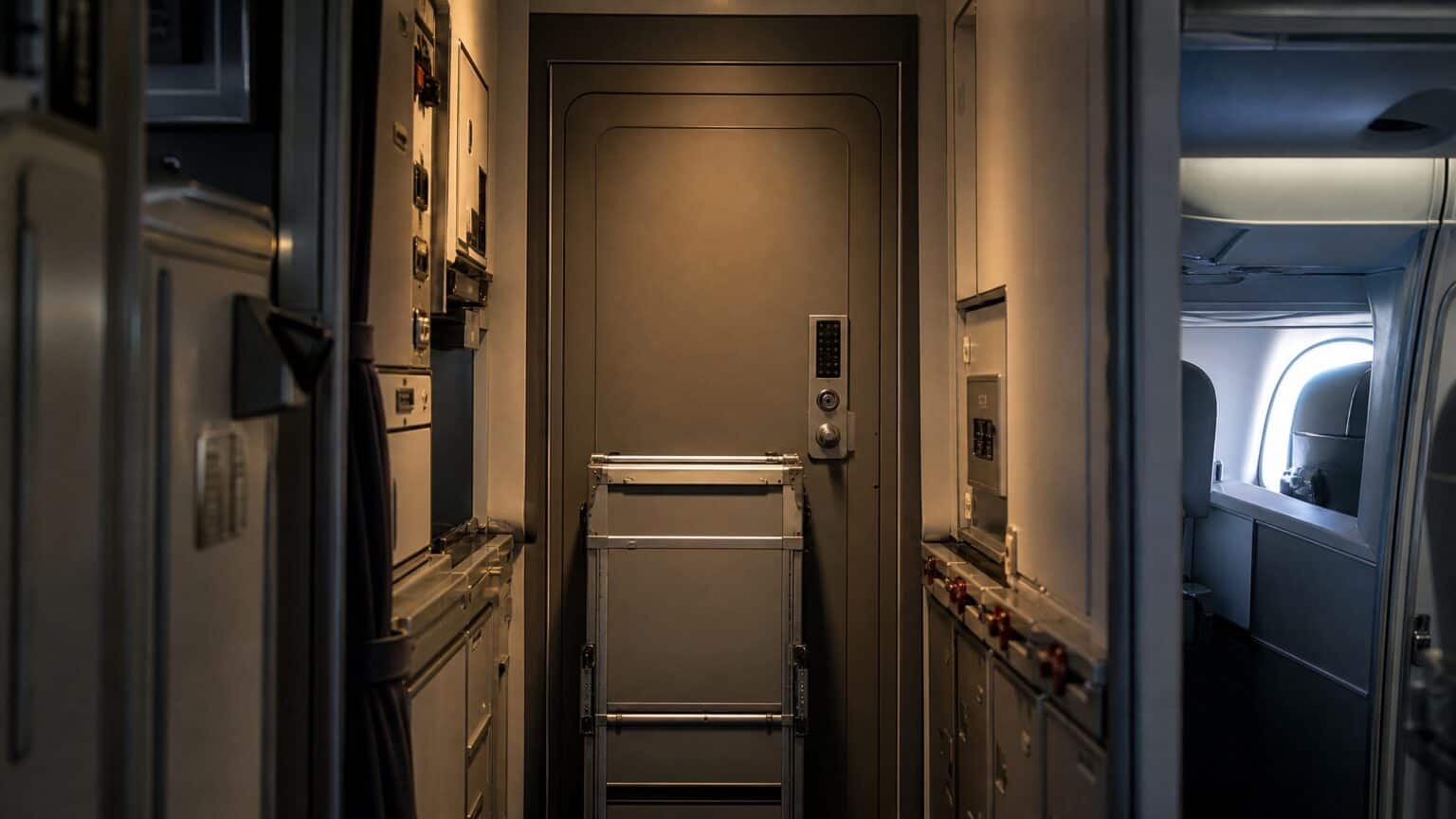
Three of the four aircraft hijacked on September 11, 2001 reached the targets chosen for them. The fourth did not, and the reason it did not is why the flight deck of every US airliner was rebuilt inside two years.
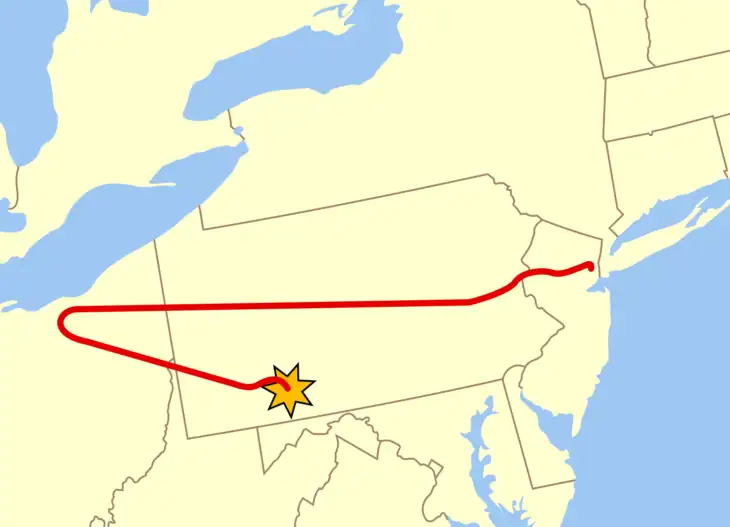
United Airlines Flight 93 left Newark for San Francisco roughly 40 minutes behind schedule, airborne at 8:42 a.m. Eastern. That delay is the reason the people on board knew what was happening.
Four hijackers took the cockpit at 9:28 a.m., which was 42 minutes after the first World Trade Center tower was struck and 25 minutes after the second. At least 35 airphone calls and two cell phone calls were placed from the cabin, and about a dozen connected.
The aircraft came down in a field in Stonycreek Township, Pennsylvania at 10:03 a.m., roughly 20 minutes of flying time short of Washington. Thirty-three passengers and seven crew were killed.
The hijacking rulebook was written for a completely different crime
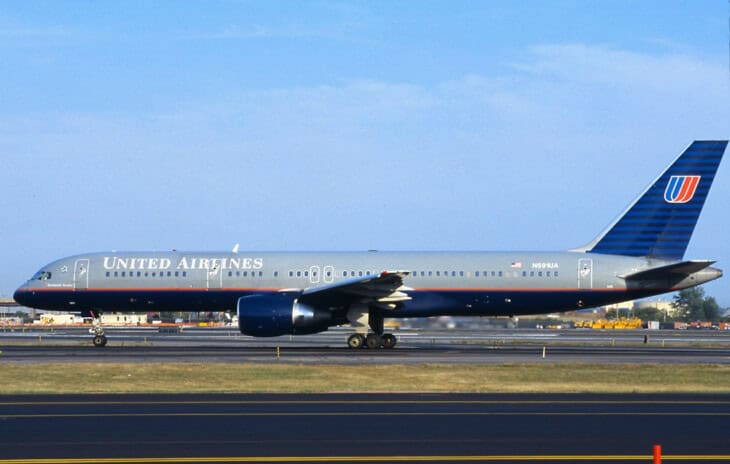
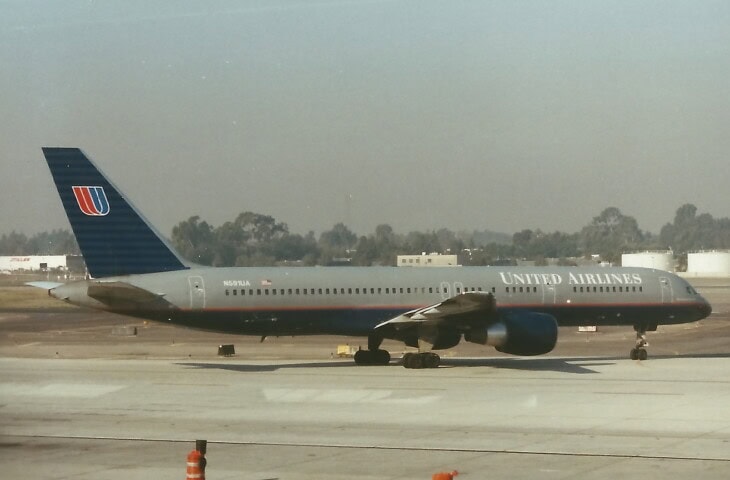
Flight 93 was a Boeing 757-200, registration N591UA, a standard transcontinental narrow-body of its era. Its cockpit door was a light latched panel, and it was never meant to be anything else.
That was deliberate. For three decades the FAA and the airlines trained crews on what was known as the Common Strategy: do not confront the hijacker, keep the situation calm, get the airplane on the ground, and let negotiators handle the rest.
The strategy worked because it matched the crime. Hijackers of the 1960s and 1970s wanted a destination, a ransom or an audience, and all three required landing the aircraft with everyone alive.
The doctrine on 9/11 was compliance, not resistance
Under the FAA and industry “Common Strategy” in place that morning, flight crews were trained to cooperate with hijackers rather than confront them. A reinforced door would have contradicted the doctrine: the assumption was that the aircraft would land and be negotiated for, not flown into a building.
The 9/11 Commission recorded the moment the assumption broke. At 9:19 a.m., United dispatcher Ed Ballinger began sending warnings to his transcontinental flights reading, in part, “Beware any cockpit intrusion.”
Flight 93 received it at 9:24. The hijackers moved four minutes later.
Passengers and crew began their counterattack at 9:57, and the aircraft was down six minutes after that. The 9/11 Commission concluded the intended target was the US Capitol.
Nineteen months, 6,000 airplanes, and a door that costs as much as a car
Congress moved first. The Aviation and Transportation Security Act, signed on November 19, 2001, created the Transportation Security Administration, federalized passenger screening, expanded the Federal Air Marshal Service and directed the FAA to strengthen cockpit doors.
The FAA issued a Special Federal Aviation Regulation requiring temporary internal locking devices on cockpit doors within 45 days. That was the stopgap while the real door was designed.
The final rule landed on January 11, 2002, amending 14 CFR 25.795 and 121.313. Operators of more than 6,000 airplanes had until April 9, 2003 to fit reinforced doors.
The new standard was not a better lock. The door had to resist forcible intrusion by a person, and it had to limit penetration by shrapnel from small arms fire or a fragmentation device.
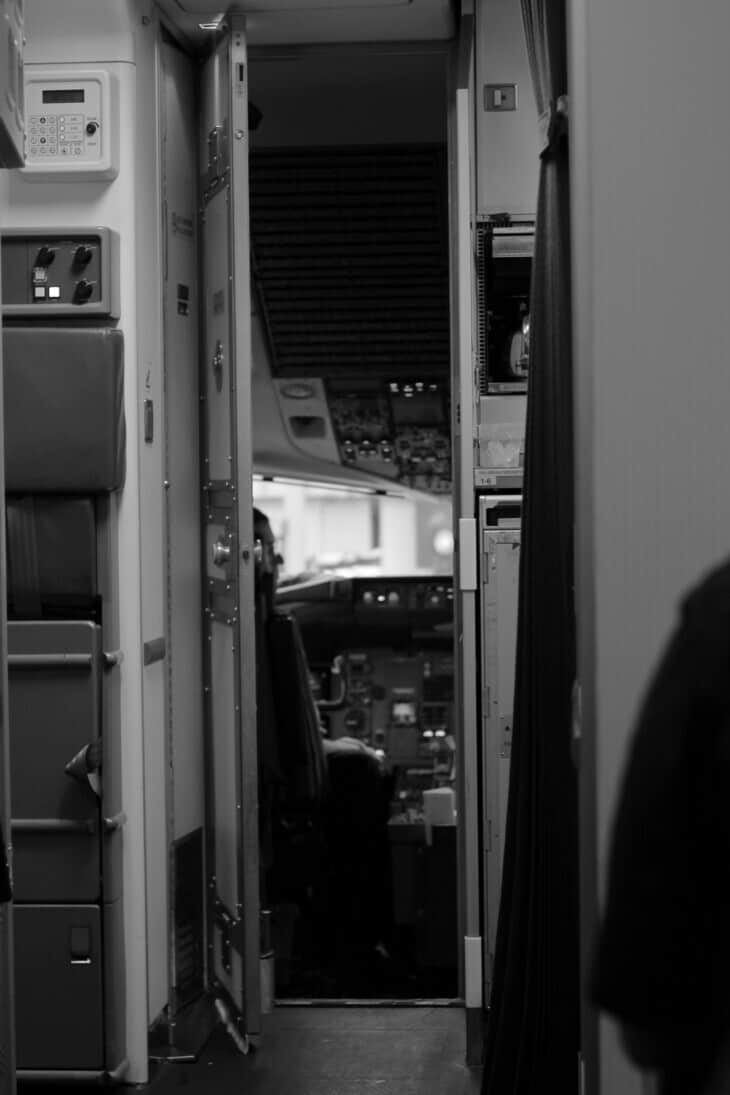
The FAA put purchase and installation at $12,000 to $17,000 per door in 2002 dollars. Across the fleet it estimated $92.3 million to $120.7 million over ten years, a figure that included the extra fuel burned carrying heavier doors for the life of each airframe.
From the attack to the compliance deadline was 19 months. For a regulator that normally measures rulemaking in years, that is close to the fastest the system has ever moved on an airworthiness requirement.
The door was the smaller half of the change
The Common Strategy died on the morning of September 11, and nothing replaced it in writing on that scale. What replaced it was an expectation.
Flight 93 was the first cabin in aviation history where the passengers had enough information to conclude that compliance was not survivable. Every hijacking response since has assumed the same thing.
The pattern showed up almost immediately. Richard Reid was restrained by passengers and cabin crew aboard American 63 in December 2001, and Umar Farouk Abdulmutallab was restrained the same way aboard Northwest 253 in December 2009.
Neither incident waited for a negotiation. In both cases the response came from the seats within seconds.
The flight deck also stopped being part of the airplane in any practical sense. It is now a sealed compartment for the duration of the flight, and guarding the door during the few moments it opens is a briefed duty for the cabin crew working that section.
The gap the FAA is still closing in 2026
A reinforced door only works while it is shut, and it cannot stay shut forever. Crew meals, lavatory breaks and shift changes all mean the door has to open in flight, and every opening is the one moment the barrier does not exist.
Airlines improvised around it for twenty years. The galley cart parked across the aisle and the flight attendant standing in front of the door are procedures, not equipment, and no rule required anything more.
That changed in June 2023, when the FAA issued a final rule requiring an installed physical secondary barrier: a lightweight gate that blocks the forward galley whenever the flight deck door is opened. The rule took effect on August 25, 2023.
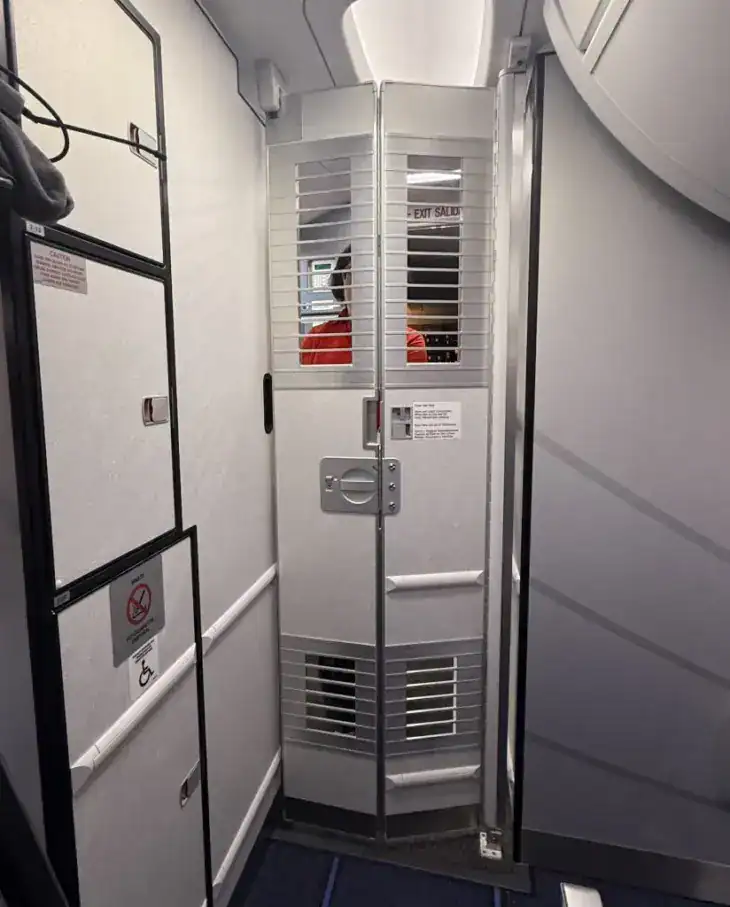
It applies to passenger transport-category airplanes in Part 121 service manufactured after August 25, 2025. Every airliner delivered to a US carrier from that date carries the second barrier from the factory.
The existing fleet is not covered, which is the open argument. The Air Line Pilots Association has continued to press the FAA to extend the requirement to aircraft already flying, and thousands of airframes will otherwise reach retirement with the 2003 door and nothing behind it.
Twenty-five years of hardware and doctrine sit downstream of four aircraft, and of the one that did not arrive.
Sources and references used for research and fact-checking.
- National Commission on Terrorist Attacks Upon the United States, The 9/11 Commission Report
- National Park Service, Flight 93 National Memorial, Flight Path Study: United Airlines Flight 93
- Federal Aviation Administration via GovInfo, Security Considerations for Flightdeck Doors, final rule (Federal Register, January 15, 2002)
- Electronic Code of Federal Regulations, 14 CFR 121.313 Miscellaneous equipment
- Federal Register, Installation and Operation of Flightdeck Installed Physical Secondary Barriers, final rule
- US Congress via GovInfo, Aviation and Transportation Security Act (Public Law 107-71)
Get the Newsletter
The latest aviation news and stories sent to your inbox.
About the Author

Tim is the owner and lead editor of AeroCorner since 2019, overseeing aviation content covering aircraft, airlines, airports, and the broader aviation industry. Through years of researching, writing, editing, and publishing aviation-focused content, he has developed extensive practical knowledge of commercial aviation and air travel. Based in Asia and a frequent traveler himself, Tim also brings firsthand passenger experience to AeroCorner’s coverage. Outside of publishing, he has also explored aviation firsthand through hands-on flight training in New Zealand.