

Table of Contents
A day after a Learjet 60 came down along Military Trail near Greenacres, Florida, on November 1, 2026, the road was still closed, about 600 residents were still out of their homes, and the wreckage sat behind a perimeter. Local station WPTV reported that the site was being treated as a crime scene.
That phrase lands hard after a crash that killed all nine people aboard. Yet no official statement in our coverage of the N722BD crash alleged a crime, and the NTSB said it would not determine a cause at the scene.
So why do crash sites get the tape, the guarded perimeter and the logged access of a crime scene? The answer is in federal law, and it has more to do with evidence than with suspicion.
Why Is a Plane Crash Site Treated as a Crime Scene?
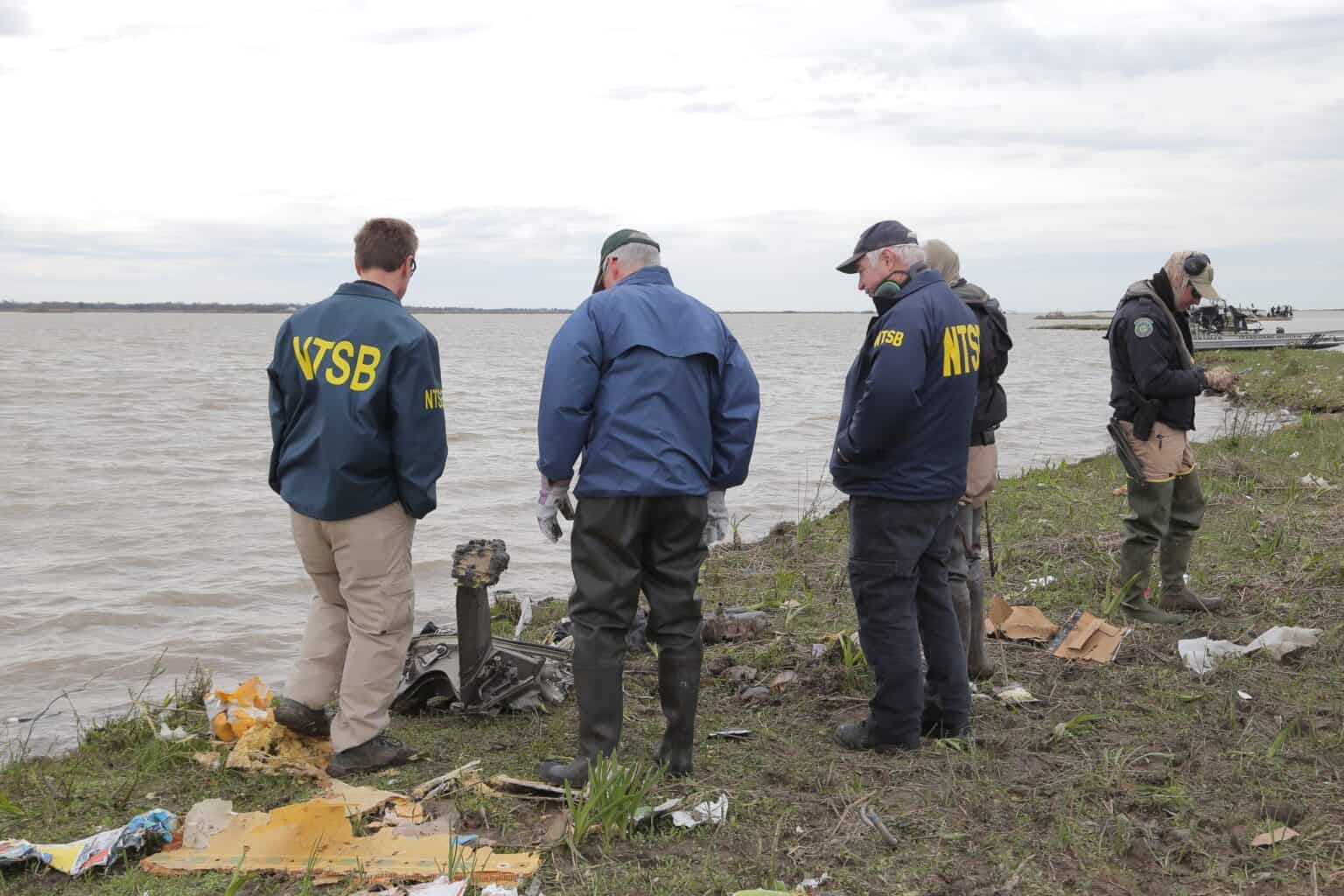
Because the wreckage is evidence, and federal rules require it to be preserved exactly as it fell until investigators release it. The tools for doing that, a sealed perimeter, a list of who may enter, everything documented before it moves, are the same ones police use at a crime scene.
The legal starting point is the opposite of what the phrase suggests. An NTSB training presentation for medical examiners puts it in one line: “Aviation crashes are assumed to be accidents.” The National Transportation Safety Board leads the investigation, and law enforcement takes the lead only if evidence points to an intentional criminal act.
The answer at a glance
Crash sites are secured like crime scenes to protect evidence, not because a crime is suspected. The NTSB controls the wreckage and leads the investigation, local police hold the perimeter, and the medical examiner is responsible for the victims. The FBI takes the lead only if the Attorney General determines an intentional criminal act may have caused the crash.
The Wreckage Is the Evidence, and It Only Exists Once
An airplane crash cannot be rerun. Whatever investigators will ever learn about the last minutes of a flight is held in the position of the pieces, the marks they made on the ground, the condition of switches and control cables, and the recorders.
That is why the rules on preserving it are strict. Under 49 CFR 830.10, the wreckage, cargo and mail may not be disturbed or moved before the NTSB takes custody, except to remove people who are injured or trapped, to protect the wreckage from further damage, or to protect the public from injury.
Even then, the regulation asks for sketches, notes and photographs of the original positions and impact marks wherever possible. A piece moved without a record has lost most of what it could have said.
Position matters more than most people realize. Where a part landed relative to the main wreckage is one of the ways investigators tell whether a plane broke up in flight, and a souvenir picked up from a yard can remove a clue for good.
The same logic explains a request that follows many crashes in populated areas. After the Greenacres crash, State Rep. Debra Tendrich asked residents who found debris to call a dedicated number rather than handle it.
Access is controlled by rule, too. 49 CFR 831.12 says only people authorized by the NTSB investigator-in-charge may get to the wreckage, records, mail or cargo, and that the NTSB releases them only when it has no further need for them.
Who Is Actually in Charge at a Crash Site
A crash site is several jurisdictions laid on top of each other, which is part of why it looks so much like a crime scene from the road. Each agency owns a different piece of the job.
| Who | What they control | Where the authority comes from |
|---|---|---|
| NTSB | The investigation, the wreckage, records and access to them | 49 U.S.C. 1131 and 1134; 49 CFR 830 and 831 |
| Local authorities (police, sheriff, fire) | Initial response, site security, recovery and cleanup | Local jurisdiction, confirmed in the federal family assistance plan |
| Medical examiner or coroner | Recovery and identification of the victims, death certificates | State and local law |
| FAA and other parties | Technical help to the NTSB, with no say in the probable cause | 49 U.S.C. 1131; 49 CFR 831.11 |
| FBI | Support on request; the lead only if a criminal act is determined | 49 U.S.C. 1131(a)(2) |
Federal law gives the NTSB’s investigation priority over any other federal agency’s. Others can take part, but under 49 U.S.C. 1131 they “may not participate in the decision of the Board about the probable cause.”
The perimeter itself, though, is usually held by local officers. The NTSB’s federal plan for aviation disasters says local authorities keep their jurisdiction over “the initial accident response, recovery, security, site cleanup and medical examiner operations.”
So the deputies at the tape are not running a criminal case. They are guarding a federal investigation’s evidence and a medical examiner’s recovery scene at the same time.
Why the Victims Make It a Medical Examiner’s Scene, Too
Victim recovery, identification and death certification are the responsibility of the medical examiner or coroner where the death occurred, the NTSB says. The safety board’s job is to facilitate that work and line up federal help for it, not to take it over.
That help can include fingerprint teams, DNA laboratories and federal mortuary teams. The NTSB’s 2000 federal plan lists an FBI Disaster Squad, provided on NTSB request, “to obtain fingerprint identification of aviation crash fatalities.”
Recovery is careful, slow work, and NTSB guidance for medical examiners stresses documenting where remains lay and any manipulation of wreckage during recovery. Done well, it reduces commingling of remains and the loss or destruction of evidence.
That is why names can take days. In Greenacres, a Palm Beach County Sheriff’s Office official said it was too early to release names officially while the medical examiner worked through a lengthy DNA process.
When the FBI Actually Takes Over
The handover is written into the same statute. If the Attorney General, after consulting the NTSB chairman, determines and tells the board that an intentional criminal act may have caused an accident, “the Board shall relinquish investigative priority to the Federal Bureau of Investigation.”
Even short of that, the law plans for suspicion. If a federal law enforcement agency suspects a criminal act and tells the board, the NTSB must work with that agency to make sure evidence of the act is preserved, and it can keep investigating the safety side.
What a handover looks like
On February 19, 2010, the day after a Piper PA-28 flew into a seven-story federal office building in Austin, Texas, the NTSB transferred control of the investigation to the FBI, citing the apparent criminal nature of the event. NTSB investigators stayed at the scene to assist the bureau.
The Case That Shows Why Evidence Is Kept Like Crime Evidence
TWA Flight 800, which exploded off Long Island in July 1996, shows why wreckage is handled as if a court might one day see it. The FBI opened a parallel criminal investigation alongside the NTSB’s, and the wreckage was gathered in a leased hangar at Calverton, New York, for storage, examination and reconstruction.
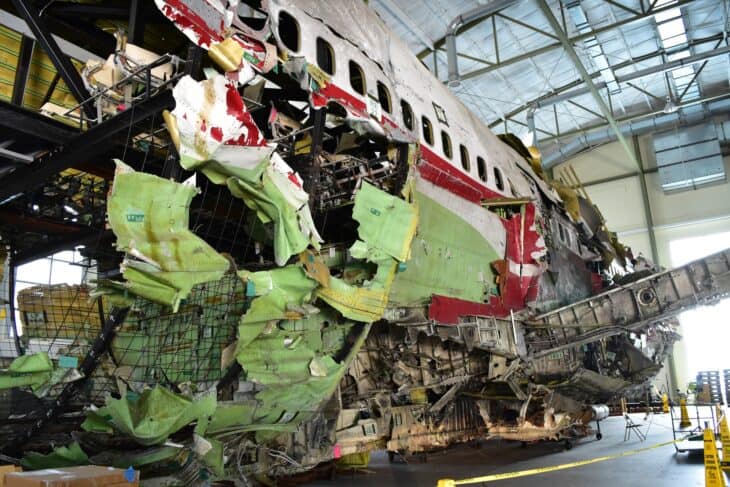

NTSB and FBI personnel watched every transfer of wreckage to preserve its evidentiary value. About 16 months after the crash, the FBI said no evidence of a criminal act had been found and closed its active investigation.
The NTSB’s final report, adopted on August 23, 2000, blamed an explosion of flammable fuel vapors in the center fuel tank. That answer depended on wreckage that had been recovered, logged and protected well enough for both agencies to trust it.
Differences between the two agencies during that case drew criticism. Congress later directed the NTSB and the FBI to revise their 1977 agreement on investigating accidents, according to the statutory notes to 49 U.S.C. 1131.
The Myth: “Crime Scene” Means Someone Suspects a Crime
The myth
If police are treating a crash site as a crime scene, investigators must suspect foul play. In fact, the label describes how the site is handled, not what anyone believes. The legal default is that a crash is an accident, and the NTSB, not the police or the FBI, leads unless a criminal act is determined.
Crime-scene handling is simply the most rigorous way anyone knows to protect physical evidence. A perimeter keeps out the curious, an access log records who touched what, and photographs fix every piece in place before it moves.
There are good reasons to use that standard on day one. Nobody can rule out a criminal act before the evidence has been examined, and evidence lost in the first hours cannot be recovered later if a criminal question does arise.
Courts are another reason. Federal law bars any part of an NTSB report from being admitted as evidence in a civil damages case, so lawsuits after a crash turn on the physical evidence and the factual record instead.
The investigation is built to stay clear of that fight, too. Under 49 CFR 831.11, no representative of a party to an NTSB investigation may hold a legal position or represent claimants or insurers.
As of November 3, 2026, no official has supported any criminal theory about the Greenacres crash, and the NTSB has not determined a cause.
So the next time a news report says a crash site is being treated as a crime scene, read it as a statement about method. The tape is there because the wreckage is the only witness that cannot change its story, and the people investigating intend to keep it that way.
Sources and references used for research and fact-checking.
- Cornell Law School, Legal Information Institute, 49 U.S. Code 1131: General authority
- Cornell Law School, Legal Information Institute, 49 U.S. Code 1134: Inspections and autopsies
- Cornell Law School, Legal Information Institute, 49 U.S. Code 1154: Discovery and use of cockpit and surface vehicle recordings and transcripts
- Cornell Law School, Legal Information Institute, 49 CFR 830.10: Preservation of aircraft wreckage, mail, cargo, and records
- Cornell Law School, Legal Information Institute, 49 CFR 831.11: Parties to the investigation
- Cornell Law School, Legal Information Institute, 49 CFR 831.12: Access to and release of wreckage, records, mail, and cargo
- National Transportation Safety Board, Federal Family Assistance Plan for Aviation Disasters (April 12, 2000)
- National Transportation Safety Board (Idaho Association of Counties), NTSB's Family Assistance Program and Perspectives on Disaster Victim Identification
- National Transportation Safety Board, Aviation Accident: Information for Families
- National Transportation Safety Board, The Investigative Process
- AviationPros (NTSB press release), NTSB Transfers Control of Investigation of Austin Plane Crash to FBI
- Wikipedia, TWA Flight 800
- AeroCorner, All Nine Aboard Killed as Learjet 60 Crashes Near Greenacres, Florida; NTSB Sends Go-Team
Get the Newsletter
The latest aviation news and stories sent to your inbox.
About the Author

Tim is the owner and lead editor of AeroCorner since 2019, overseeing aviation content covering aircraft, airlines, airports, and the broader aviation industry. Through years of researching, writing, editing, and publishing aviation-focused content, he has developed extensive practical knowledge of commercial aviation and air travel. Based in Asia and a frequent traveler himself, Tim also brings firsthand passenger experience to AeroCorner’s coverage. Outside of publishing, he has also explored aviation firsthand through hands-on flight training in New Zealand.