


Table of Contents
Every airline accident is supposed to end in a public report that says what happened and how to stop it happening again. For a large share of recent accidents, that report has not appeared.
Of the 269 accidents that IATA’s Accident Classification Task Force classified between 2018 and 2023, only 57% resulted in a final report. That leaves 43% with none. The figure comes from working paper A42-WP/330, which IATA, the aerospace manufacturers’ council ICCAIA and the pilots’ federation IFALPA put before the ICAO Assembly in July 2025.
Little has moved since. On Nov. 12, 2026, IATA safety director Mark Searle told the International Aviation Safety Summit in Montreal that the publication rate was still close to 50% and called the lack of progress unacceptable, Simple Flying reported, citing Reuters.
A note on the number: we use the Assembly paper’s 43% because it is the figure IATA put formally before ICAO’s member states. Other IATA snapshots differ because they use different years and cutoff dates, and we come back to them below.
Why the 12-Month Rule Does Not Produce Reports
The rules live in Annex 13 to the Chicago Convention, the treaty behind international aviation. The state where an accident happens normally leads the investigation, and Annex 13 sets three clocks for it.
A preliminary report goes out within 30 days. The final report should be made public “as soon as possible and, if possible, within 12 months.” If it is not out by then, an interim statement is due on each anniversary of the accident, according to a February 2025 joint position paper from seven industry groups, IATA among them.
The key words are “if possible.” The 12-month target is qualified, not absolute, and the Assembly paper itself describes “an unacceptable level of non-compliance” with Annex 13 obligations, resulting in long delays or no report at all.
The Assembly paper names the causes. ICAO’s own safety oversight audits find several states lack the resources, technical expertise or funding to run a timely investigation, and some lack investigators with current skills.
Independence is the second problem. The paper notes that some investigation agencies report to a Ministry of Transport, a Ministry of Justice or the civil aviation authority itself, which can create conflicts of interest and undermine the credibility of whatever report emerges.
Staffing came up again in Montreal. Hassan Shahidi, president and CEO of the Flight Safety Foundation, told Reuters that agencies often cite a shortage of people with the technical expertise that complex investigations demand, according to Simple Flying.
The Numbers Behind the Missing Reports
The gap is not limited to minor occurrences. In a September 2025 IATA post, Searle wrote that the 43% of 2018 to 2023 investigations without a final report included 12 accidents that claimed the lives of 242 people.
The other datasets tell the same story from different angles. The February 2025 joint paper counted 268 accidents for 2018 to 2023 and found 128, or 48%, still without a final report as of June 30, 2024.
IATA’s March 2026 safety report measured a slightly different window, 2019 to 2023, and put the completion rate at 63%, according to Simple Flying. The spread between 37% and 48% missing comes down to which years are counted and on what date the count was taken.
Even reports that do arrive often miss the target. Brazil’s CENIPA published its final report on the Voepass ATR 72 crash on July 23, 2026, almost 23 months after the Aug. 9, 2024 accident.
That counts as a delivered investigation. The cases that worry IATA are the ones where years pass and the record simply stops.
Metrojet 9268 and China Eastern MU5735 Show What a Missing Report Costs
Metrojet Flight 9268 is the long-running example. The Airbus A321 broke up over Egypt’s Sinai Peninsula on Oct. 31, 2015, with 224 people aboard and no survivors.
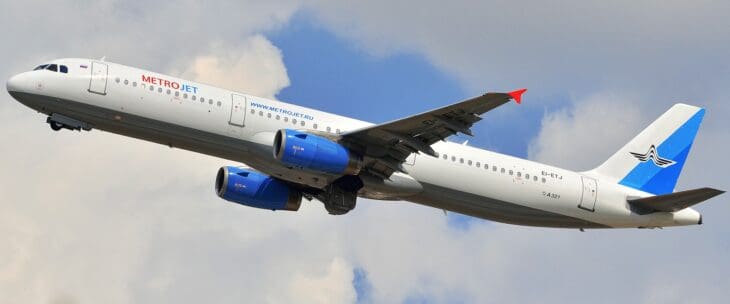

Egypt’s investigators released preliminary findings in December 2015, saying they had found no evidence of terrorism, while Russia said a bomb brought the aircraft down. More than 11 years later, no final report has been produced, so no official investigation stands behind either account.
China Eastern Flight MU5735, a Boeing 737-800, crashed in Guangxi on March 21, 2022, killing all 132 people aboard. The Civil Aviation Administration of China (CAAC) published a preliminary report on April 20, 2022, and interim statements around the first and second anniversaries.
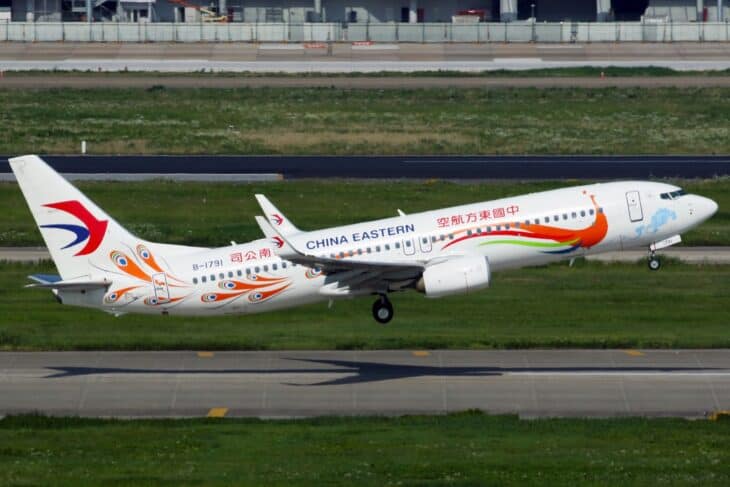

The third and fourth anniversaries, in 2025 and 2026, passed with no interim statement and no final report. In May 2026 the US National Transportation Safety Board released flight recorder data under a public-records request, but that release is not a finding of cause, and China has yet to release a final report.
Without that report, every explanation for MU5735 stays an explanation, not a finding. That is the cost the Assembly paper describes: operators, manufacturers and regulators lose information that could prevent the next accident, and families lose the official account they are owed.
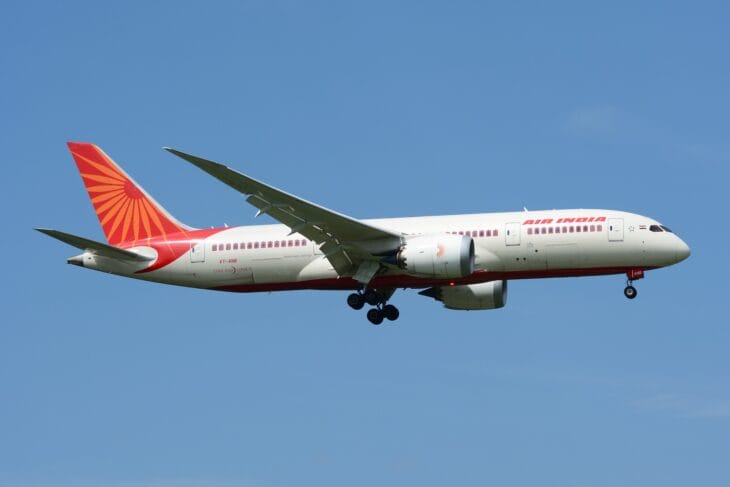
The newest high-profile case has already passed the 12-month mark. Air India’s Boeing 787 crash at Ahmedabad on June 12, 2025 killed 260 people, 241 aboard and 19 on the ground. Investigators issued an interim update on the first anniversary, and no date for the final report has been confirmed.

What ICAO Changed in 2026, and What It Did Not
On March 27, 2026, the ICAO Council approved Amendment 20 to Annex 13. It targets the independence problem rather than the calendar.
The amendment gives states guidance when a real or perceived conflict of interest could undermine trust in a finding. It lets a state hand an investigation to another state or a regional investigation body, lets ICAO and other states observe, and requires that investigators get unrestricted access to evidence without delay.
ICAO’s announcement describes no new deadline for final reports. The amendment also does not apply until Nov. 23, 2028, to give states time to write it into national law.
Industry is asking for more. The Assembly paper urged ICAO to press every state to keep to the existing Annex 13 timelines, to build investigator training, to push for agencies separate from regulators and airlines, and to review whether regional investigation organizations actually help states that cannot staff their own.
For a primer on the documents investigators publish along the way, see how an NTSB preliminary report works.
What the 43% measures is not a missing rule. It measures how many states never finish the job the rule already describes, and the 2026 amendment, as ICAO announced it, adds no deadline that would make them.
Sources and references used for research and fact-checking.
- ICAO Assembly, 42nd Session (presented by IATA, ICCAIA and IFALPA), A42-WP/330: Driving Safety: Enhancing Accident Investigation Report Publication and Mechanisms
- IATA (Mark Searle, Director Safety), Timely accident reports strengthen aviation safety
- IFATCA (with ACI Europe, ECA, FSF, IATA, ICCAIA, IFALPA), Joint Position Paper: Publication of Final Reports
- Simple Flying, IATA: Nearly 50% Of Air Accident Investigations Lack Final Reports, Hindering Safety Progress
- Airways, IATA Raises Concern Over Missing Accident Reports
- ICAO, ICAO strengthens global framework for accident investigations, addresses conflicts of interest
- Wikipedia, China Eastern Airlines Flight 5735
- The Star (Bloomberg, Reuters), Probe into fatal China Eastern plane crash points to deliberate fuel cut-off
- Wikipedia, Metrojet Flight 9268
Get the Newsletter
The latest aviation news and stories sent to your inbox.
About the Author

Tim is the owner and lead editor of AeroCorner since 2019, overseeing aviation content covering aircraft, airlines, airports, and the broader aviation industry. Through years of researching, writing, editing, and publishing aviation-focused content, he has developed extensive practical knowledge of commercial aviation and air travel. Based in Asia and a frequent traveler himself, Tim also brings firsthand passenger experience to AeroCorner’s coverage. Outside of publishing, he has also explored aviation firsthand through hands-on flight training in New Zealand.