

Table of Contents
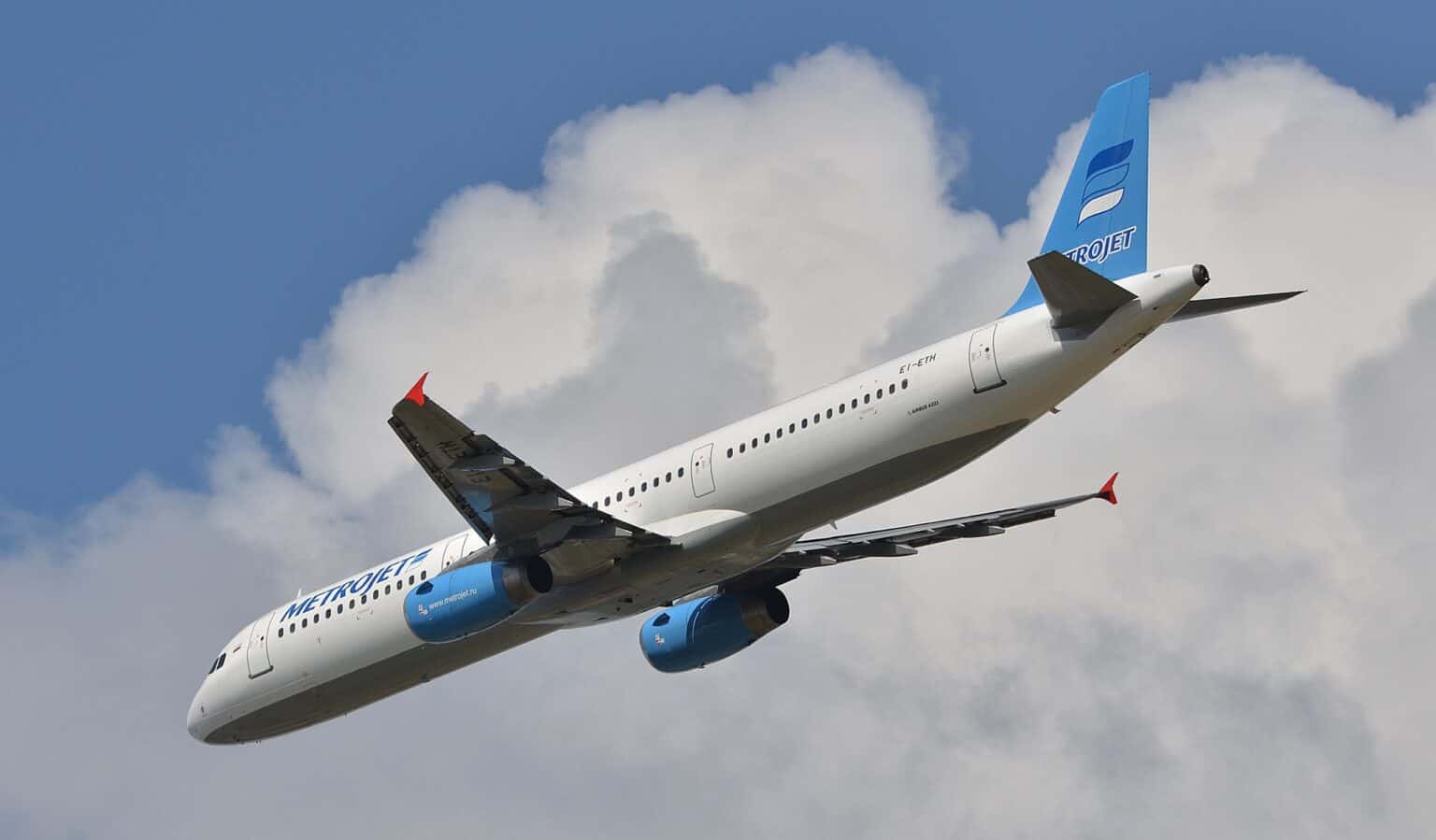
Metrojet Flight 9268 broke apart over Egypt’s Sinai Peninsula on October 31, 2015, 23 minutes after leaving Sharm el-Sheikh for St. Petersburg. The Airbus A321, registration EI-ETJ, carried 217 passengers and 7 crew. There were no survivors.
Russia’s security service called it a bombing within three weeks, and Britain and Russia stopped flying to Egypt’s resorts for years. The United Nations Security Council then passed its first resolution on terrorist threats to civil aviation.
What never arrived is a final report. Egypt’s Central Directorate of Aircraft Accident Investigation (CDAAI) issued a preliminary report in December 2015 and an interim statement in October 2016, and no official cause has been published since.
Oct 31, 2015, 03:50 UTC
Departure. Flight KGL 9268 takes off from Sharm el-Sheikh for Pulkovo Airport, St. Petersburg.
Oct 31, 2015, 04:13 UTC
Recordings end. The flight recordings stop at 04:13:24 UTC. Wreckage is later found spread over about 10 miles (16 km) of northern Sinai.
Nov 4, 2015
Britain suspends flights. Downing Street calls it a precautionary step after a UK security assessment at Sharm el-Sheikh.
Nov 8, 2015
Russia bans flights to Egypt. A presidential decree temporarily bars Russian airlines from flying to Egypt.
Nov 17, 2015
The FSB finding. Russia’s Federal Security Service reports traces of foreign explosives on the wreckage and calls the loss a terror act.
Dec 13-14, 2015
Egypt’s preliminary report. Issued to the participating states and ICAO. In public, the chief investigator says the committee has found no evidence of foul play.
Feb 24, 2016
Egypt’s president speaks. Abdel Fattah el-Sisi says the aircraft was brought down by terrorism, the first official Egyptian indication of a deliberate act.
Sep 22, 2016
UN Resolution 2309. The Security Council’s first resolution on terrorist threats to civil aviation, adopted unanimously.
Oct 31, 2016
Egypt’s interim statement. No cause stated. The committee records sending the FSB report to Egypt’s General Prosecutor.
Apr 11, 2018
Moscow to Cairo resumes. Aeroflot restarts regular flights to the Egyptian capital.
Oct 22, 2019
UK lifts Sharm restrictions. The Department for Transport cites improved airport security.
Aug 9, 2021
Russian flights reach the resorts. EgyptAir flight MS724 lands at Hurghada from Moscow, the first such flight since 2015.
Oct 2026
Still no final report. Eleven years after the loss, the investigation’s official conclusion has never been published.
How a 23-minute flight home from the Red Sea ended
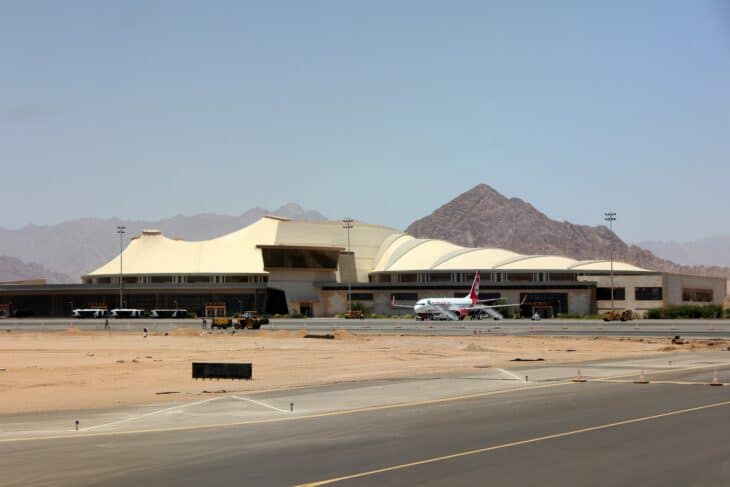
Kogalymavia, trading as Metrojet, was a Russian airline, and Flight 9268 was taking Russian holidaymakers home from Sharm el-Sheikh. On the morning of October 31, 2015, its Airbus A321 left Sharm el-Sheikh at 03:50 UTC, just before 6 a.m. local time, bound for St. Petersburg.

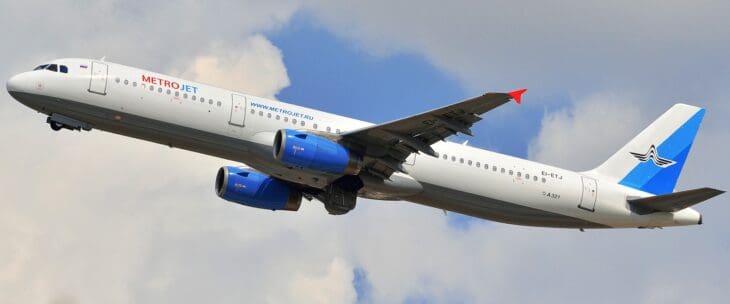
The Airbus A321 was 18 years old, owned by the Dublin lessor AerCap and registered in Ireland as EI-ETJ. It had suffered a tailstrike landing at Cairo in 2001 and had been repaired and returned to service.

Egypt’s investigators recorded the flight data ending at 04:13:24 UTC, 23 minutes into the flight. Their interim statement lists 217 passengers, 200 adults and 17 children, plus two pilots and five cabin crew.
The wreckage lay scattered along a line almost 10 miles (16 km) long. That is the spread of an aircraft that came apart in the air, not on the ground.
What Egypt’s CDAAI investigation actually published
Under ICAO Annex 13, the state where an accident happens leads the investigation. That made Egypt’s CDAAI the investigating authority, with Russia (state of the operator), France (design), Germany (manufacture), Ireland (registry) and the United States (engines) entitled to take part.
The committee recovered both flight recorders on the first day and downloaded them in Cairo. The flight data recorder was damaged, so its memory was moved into a bench unit with new wiring before the data could be read.
It issued its preliminary report on December 13, 2015, and sent it to the participating states and ICAO rather than the public. A day later the chief investigator, Ayman el-Muqaddam, told reporters the committee had not found any evidence of foul play.
Its fullest public account of the work is an 11-page interim statement dated October 31, 2016. It describes moving the wreckage to Cairo in February 2016, a spectrum analysis of the last second of cockpit audio in Germany, and a wreckage layout in August and September 2016 to find “the first disintegration point” of the fuselage.
The statement also shows how much of the work was shared. On December 19, 2015, the participating states sent back one joint set of remarks on the preliminary report, and Egypt answered them on December 29.
Both cabin pressure controllers went to Frankfurt so their memories could be read under the supervision of their maker, Nord-Micro. The last second of cockpit audio was compared against sound files held by Germany’s BFU and France’s BEA.
The wreckage layout drew 56 people. Twenty-one came from outside Egypt: seven from the BEA, five from Airbus, four from Russia’s Interstate Aviation Committee, two from the BFU, and one each from Ireland’s AAIU, the NTSB and engine maker Pratt and Whitney.
That layout ended with a recommendation to send 18 parts of the wreckage to Egypt’s Metallurgy Research and Development Center. They were moved in two groups, on October 16 and October 24, 2016, a week before the statement was signed. No results from that analysis have been published.
It contains no probable cause and no finding. Its most important line is procedural: the committee received the FSB’s report and sent it to Egypt’s General Prosecutor, under article 108 of the Civil Aviation law, because it “included some suspects of accident criminal act.”
Annex 13 asks for a final report within 12 months where possible, and an interim statement on every anniversary after that. The October 2016 statement is the last document for this accident on Egypt’s investigation pages that we could find.
What most accounts get wrong
Most accounts say investigators found that a bomb destroyed Metrojet 9268. The accident investigation never said so. Egypt’s CDAAI, which led it, said when it issued its preliminary report that it had found no evidence of foul play, then published an interim statement with no cause at all. The bomb finding comes from Russia’s FSB, a security service, and Egypt’s president accepted it in a speech, not in a report. In 2020 an Egyptian appeals court went the other way and ruled the crash was not an act of terrorism. Eleven years on, there is no final report.
Three governments, three different official answers
Russia’s answer came first. On November 17, 2015, FSB director Alexander Bortnikov told President Vladimir Putin that traces of foreign explosives had been found on the debris and that an improvised device of up to about 2.2 pounds (1 kg) of TNT equivalent had destroyed the aircraft.
A Sinai affiliate of the Islamic State group had already claimed responsibility. The investigation never addressed that claim in a published document.
Egypt’s answer split in two. On February 24, 2016, President Abdel Fattah el-Sisi said in a televised speech that whoever downed the plane meant to hit tourism and Egypt’s relations with Russia, the first official Egyptian indication that the aircraft was brought down deliberately.
Egypt’s courts later said the opposite. In early 2020, a Cairo appeals court rejected suits by victims’ families, upheld a 2018 lower-court ruling, and held that the crash “was not an act of terrorism,” according to The Moscow Times, citing Kommersant.
Britain never claimed a finding at all. Its November 2015 suspension rested on concern that the aircraft “may well” have been brought down by an explosive device, while stressing that the investigation was ongoing.
The contrast with TWA Flight 800 is sharp. There, the NTSB’s final report ruled out a bomb and named a fuel tank explosion, and the explanation became binding design rules. At Metrojet, governments named a bomb, and no investigation report ever stood behind any cause.
The flight bans and security rules that came from Flight 9268
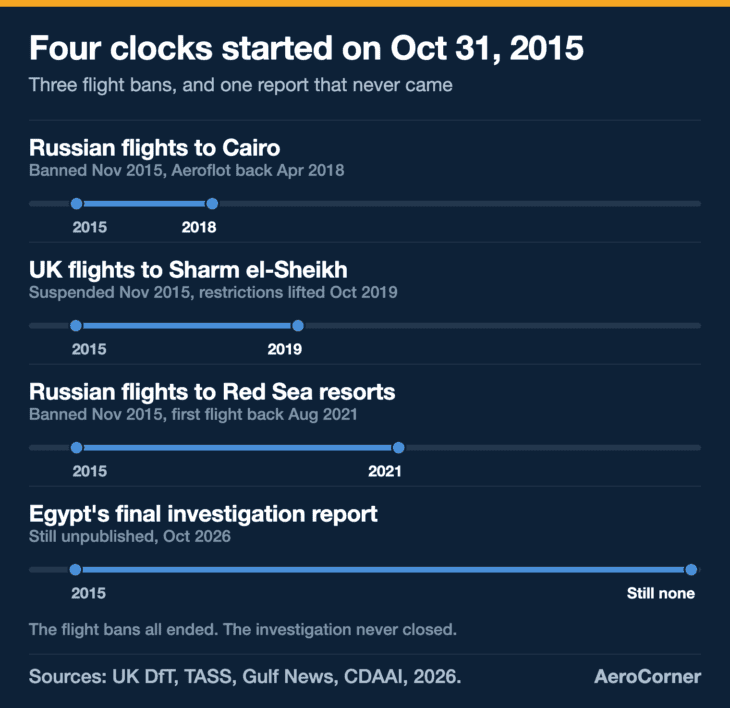
Because there was no report, nothing changed through the usual route of safety recommendations and airworthiness directives. The changes were security decisions by governments, and most of them have since been reversed.
The UK suspension (binding on UK flights, 2015 to 2019). Britain stopped flights between the UK and Sharm el-Sheikh on November 4, 2015. The Department for Transport lifted the restrictions on October 22, 2019, citing improved security at the airport and close UK and Egyptian cooperation on aviation security.
The Russian ban (binding on Russian airlines, 2015 to 2021). A decree reported on November 8, 2015, temporarily barred Russian airlines from flying to Egypt. Aeroflot returned to Cairo on April 11, 2018, and the first flight back to the Red Sea resorts, EgyptAir’s MS724 to Hurghada, landed on August 9, 2021.
UN Security Council Resolution 2309 (a call on states, 2016). Adopted unanimously on September 22, 2016, it was the Council’s first resolution on the terrorist threat to civil aviation, and the UK government named the Sinai loss among the attacks it answered.
The resolution asks states to keep security effective and to work through ICAO so standards keep pace with the threat. It created no new standard of its own.
The investigation rules (unchanged). The Annex 13 duties that were not met here, a final report within a year where possible and an interim statement every anniversary, already existed. A 2025 joint position paper published by IFATCA, the air traffic controllers’ federation, says state compliance with them is inconsistent and that some reports are never finalized.
What changed because of this accident
UK flight suspension to Sharm el-Sheikh: binding on UK flights, November 2015 to October 2019. Russian ban on flights to Egypt: binding on Russian airlines, November 2015, Cairo reopened April 2018, resorts August 2021. UN Security Council Resolution 2309: a call on all states to strengthen aviation security through ICAO, September 2016. The accident investigation itself: no final report, so no safety recommendations.
Most accidents in the flights that changed aviation end with a report and a rule, like the cargo fire rules that followed ValuJet Flight 592. Metrojet 9268 ended in border closures, a UN resolution and silence where the report should be.
That is the lesson it teaches about how aviation learns. Safety improves when a report says what happened in terms no government can rewrite, and Flight 9268 shows what is left when that report never comes.
FAQ
Sources and references used for research and fact-checking.
- Egypt Ministry of Civil Aviation, Central Directorate of Aircraft Accident Investigation, Interim Statement: Russian Aircraft crash at Sinai on 31-10-2015, Airbus A321 EI-ETJ, KGL 9268 (31 October 2016)
- Air Accident Investigation Unit (Ireland), Interim statement, Accident, EI-ETJ Metrojet Accident Sinai, Egypt, 31 October 2015
- Al Jazeera, Egypt: No terror link in Russian jet crash
- Human Rights Watch, Russia: Downing of Flight Caused by Bomb
- The Daily Star (BBC), Terror act downed Russia plane
- VOA News, Egypt's Sissi: Russian Plane Was Brought Down by Terrorists
- The Moscow Times, Deadly Russian Plane Crash Not Terrorism, Egypt Says
- Al Jazeera, UK suspends flights from Sinai over bomb risk concerns
- UK Department for Transport, Government lifts restrictions on flights to Sharm El-Sheikh
- TASS, Putin signs temporary ban on passenger flights from Russia to Egypt
- World Airline News, Aeroflot resumes service to Cairo
- Gulf News, Russia resumes flights to Egyptian resorts after 6 years
- UK Foreign, Commonwealth and Development Office, UN Security Council Resolution 2309 on aviation security
- IFATCA, Joint Position Paper: Publication of Final Reports
- Wikipedia, Metrojet Flight 9268
Get the Newsletter
The latest aviation news and stories sent to your inbox.
About the Author

Tim is the owner and lead editor of AeroCorner since 2019, overseeing aviation content covering aircraft, airlines, airports, and the broader aviation industry. Through years of researching, writing, editing, and publishing aviation-focused content, he has developed extensive practical knowledge of commercial aviation and air travel. Based in Asia and a frequent traveler himself, Tim also brings firsthand passenger experience to AeroCorner’s coverage. Outside of publishing, he has also explored aviation firsthand through hands-on flight training in New Zealand.