

Table of Contents
Shortly after midnight on August 27, 1990, a Bell 206B JetRanger leaving a golf course near Alpine Valley, Wisconsin, struck a hillside about 0.6 miles (1 km) from where it lifted off. All five people aboard died: guitarist Stevie Ray Vaughan, Eric Clapton’s agent Bobby Brooks, bodyguard Nigel Browne, assistant tour manager Colin Smythe, and pilot Jeffrey W. Brown.
The usual version says the helicopter flew into a wall of fog. The official record is more specific.
Pilots of the other three helicopters reported visual conditions with some fog, a witness near the hill could see stars, and the probable cause the investigators wrote down is about altitude and planning, with darkness and missing visual cues listed beside the fog.
This account is built from the National Transportation Safety Board’s final report, accident number CHI90MA244, first published on September 11, 1992. Where other accounts add detail, they are named.
Aug. 26, 1990
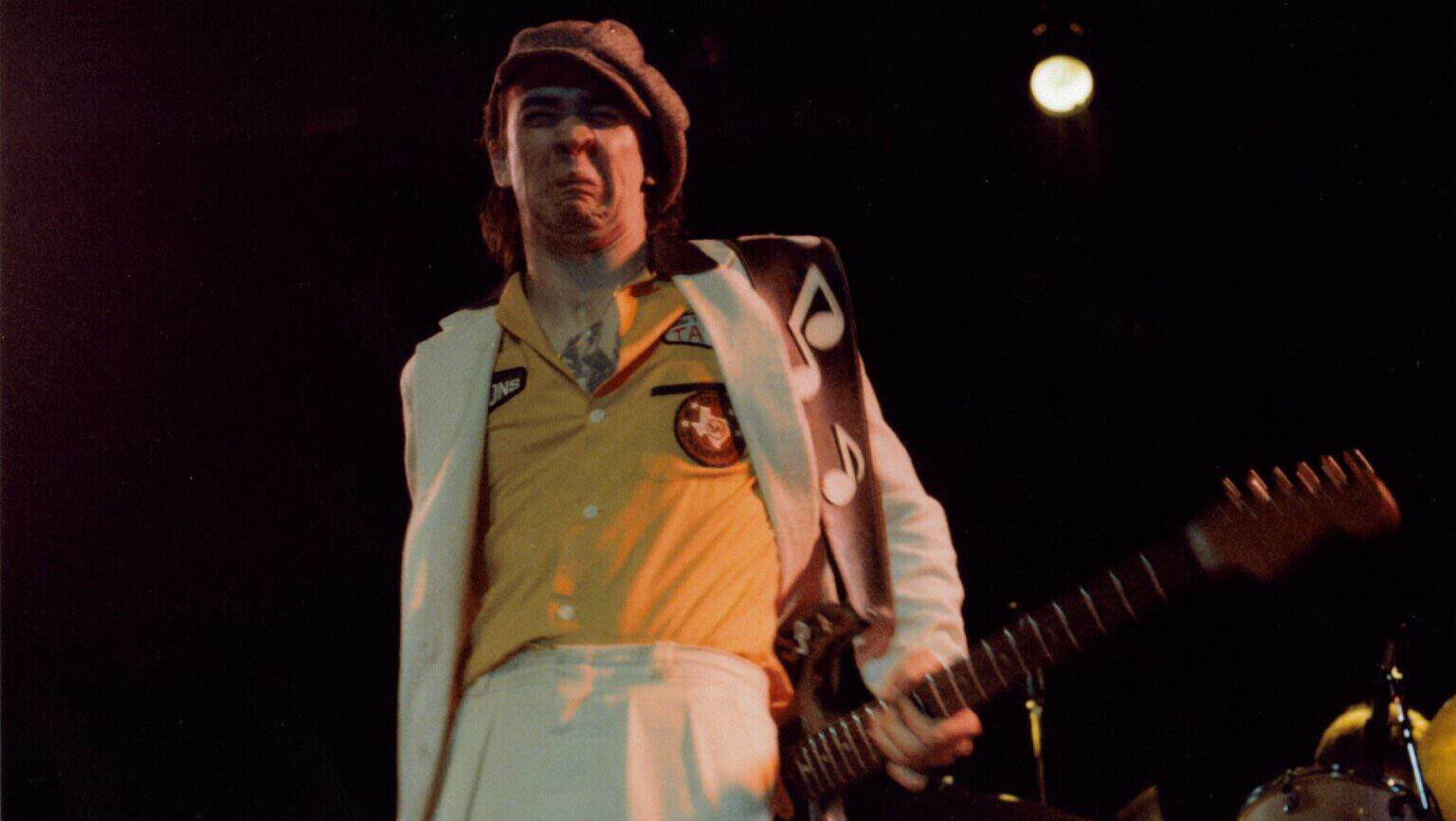
The last show. Vaughan closes a two-night stand opening for Eric Clapton at Alpine Valley Music Theatre, then joins the encore jam with Clapton, Robert Cray, Buddy Guy and his brother Jimmie Vaughan.
Shortly after midnight
Four helicopters wait. Omniflight Helicopters has four Bell JetRangers on a golf course near the venue to fly Clapton’s party to Chicago. A last-minute change leaves one seat, not three, for the Vaughans, and Stevie takes it.
About 1 a.m.
The third departure. N16933 lifts off third. It stays lower than the others and turns southeast, toward rising terrain. The NTSB logs the departure at 1:00 a.m.; other accounts put the helicopters away at about 12:40.
Moments later
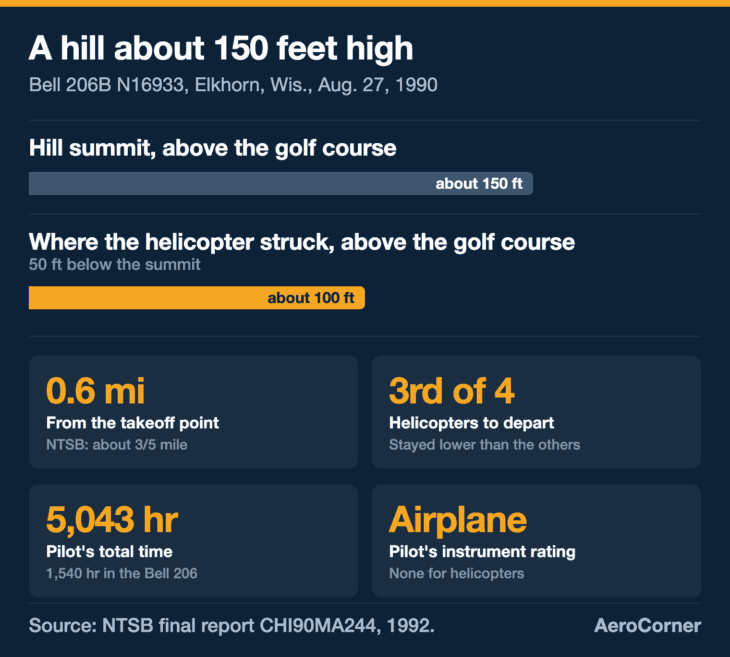
The hill. The helicopter strikes hilly terrain about 3/5 mile from the takeoff point, about 100 feet above the golf course and 50 feet below the summit. There is no fire.
About 7 a.m.
Found at daylight. Nobody knows the helicopter is missing until it fails to arrive. Its emergency locator transmitter, activated in the crash, helps searchers find the site.
Sept. 11, 1992
The NTSB report. The Board finds no mechanical failure and cites the pilot’s planning and his failure to gain enough altitude over rising terrain at night.
What happened
Vaughan had spent the night of August 26 on stage with some of the best blues guitarists alive. The plan afterward was helicopters from a field beside the venue to Chicago; the NTSB lists the destination as Chicago Midway.
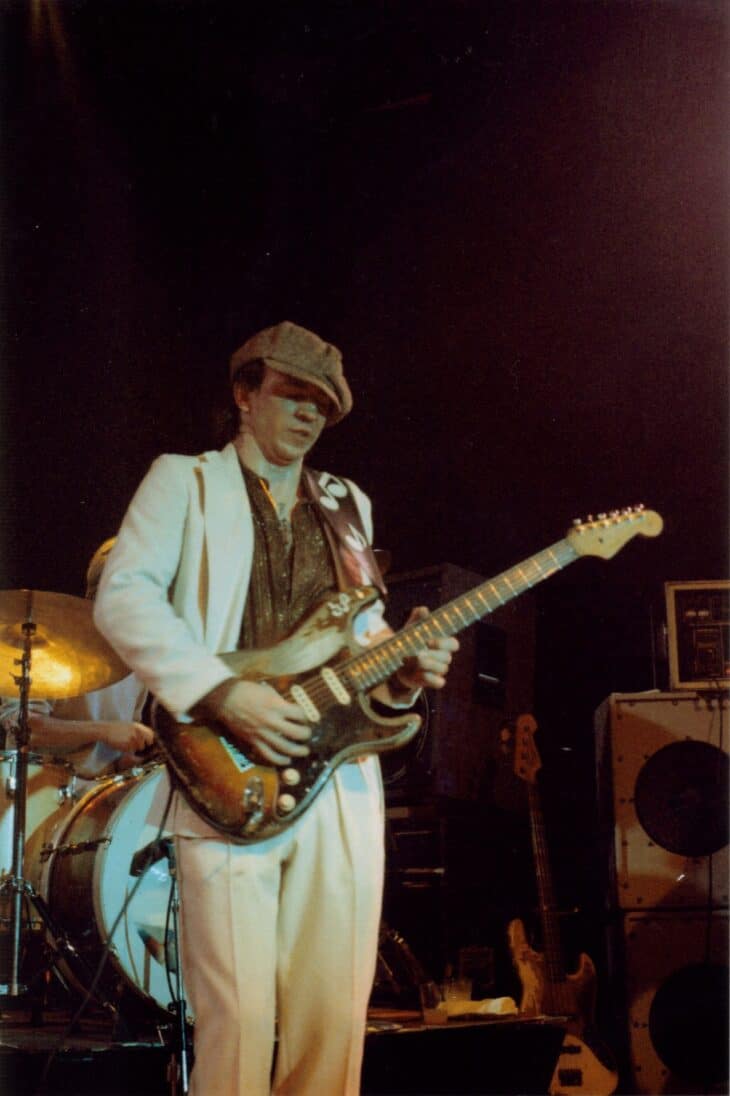

Omniflight Helicopters flew the leg as an on-demand air taxi under Part 135, with four Bell 206 JetRangers lined up on a golf course. Three seats had been held for Stevie, Jimmie Vaughan and Jimmie’s wife, Connie. At the last minute only one was available, so Jimmie and Connie stayed behind and Stevie boarded the third helicopter.
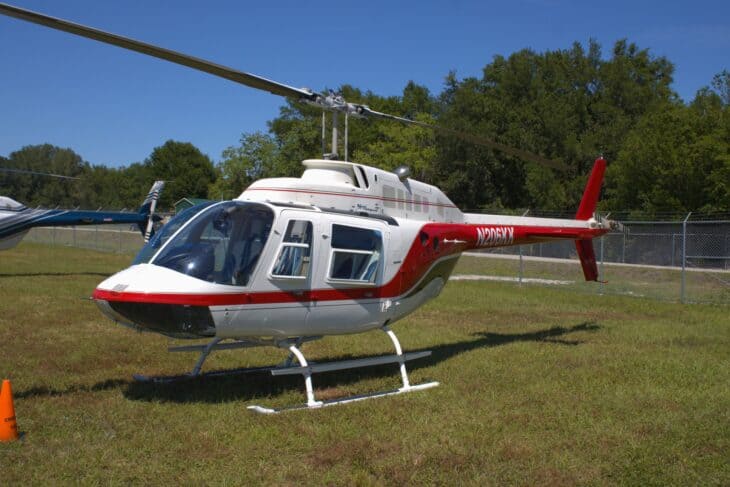

N16933 carried a pilot and four passengers. Its pilot, 42-year-old Jeffrey W. Brown, flew from the right seat, alone. No flight plan was filed, and none was required for a visual flight in uncontrolled (Class G) airspace.
The helicopters left one after another. The NTSB’s summary says the third one “remained at a lower altitude than the others,” and that the pilot turned southeast toward rising ground. It struck the hillside about 3/5 mile (1 km) from the takeoff point.
Nobody saw the impact. The other helicopters flew on to Chicago, and N16933 was only missed when it did not arrive. A Civil Air Patrol search found the wreckage at about 7 a.m., and the NTSB credits the emergency locator transmitter with helping locate it.
Clapton and Jimmie Vaughan identified the victims. A coroner’s inquest in Walworth County later found no evidence of drug or alcohol use and recorded a verdict of death by misadventure.
What the NTSB found
The NTSB found “no preimpact part failure or malfunction.” The engine, an Allison 250-C20B turboshaft, and the airframe were not part of the cause. The helicopter had been inspected on August 8, 1990, and had flown 36 hours since.
The probable cause, in the Board’s words: “Improper planning/decision by the pilot, and his failure to attain adequate altitude before flying over rising terrain at night.”
The factors it listed were darkness, fog, haze, rising terrain, and “the lack of visual cues that were available to the pilot.” The findings code the light as “dark night” and record a visual perception factor for the pilot.
On the weather, the report gives two accounts. The other Omniflight pilots “reported VFR flight conditions with some fog.” A ground witness near the crash site described haze and ground fog of varying intensity with patches of low cloud, “but said stars could be seen through the fog.”
The pilot was no novice. He held a commercial certificate with a helicopter rating, was a helicopter flight instructor, and had 5,043 hours in total, 1,540 of them in this make and model. His instrument rating covered airplanes only, so he was not rated to fly a helicopter by instruments alone.
What most accounts get wrong
The standard version is a helicopter that took off into thick fog and flew into a 300-foot ski hill. The NTSB record is narrower. The other three pilots reported visual conditions with some fog, a witness near the hill could see stars, and the Board’s probable cause is the pilot’s planning and his failure to climb before the rising ground, with darkness and the lack of visual cues listed alongside fog. The climb that mattered was smaller than that figure suggests: by the report’s numbers the summit stood about 150 feet above the takeoff area, and the helicopter hit 50 feet below it. Some retellings also say the NTSB found visibility too low to see the hill; the report contains no such finding. And the pilot was not unlicensed: he held a commercial helicopter certificate and an instructor rating, and a visual flight needed no instrument rating.
Why a dark valley is a trap for a VFR helicopter
A pilot flying under visual flight rules keeps the aircraft level by looking outside: the horizon, lights on the ground, the shape of the land. Take those away and the inner ear takes over, and the inner ear cannot tell a gentle turn or a slight descent from straight and level flight.
That is why the NTSB’s factor list matters more than the word “fog.” Over a rural golf course at 1 a.m., the bright spot is the takeoff area. Climb out of it and the pilot faces dark hills with no lights on them and no visible skyline, even on a night when the stars are out overhead.
Colin P. Cahoon, a former Army helicopter pilot who worked on the litigation as a lawyer for Allison, the engine maker, later described flying a JetRanger out of the same spot at night. In his 2020 account for D Magazine, the helicopter climbed past the parking-lot lights into what he called “a dark hole,” with no horizon until it topped the ridge.
Cahoon’s conclusion, which is his and not the NTSB’s, is that the pilot made a small, unnoticed control input in those few seconds, enough to stop the climb and drift toward the hill.
He also wrote that Brown was the only one of the four Omniflight pilots without a helicopter instrument rating, and that he had recently failed an instrument check ride. The NTSB report records only that his own instrument rating covered airplanes; it says nothing about the other pilots or a check ride.
The instrument rating matters even on a legal visual flight. A pilot trained to fly a helicopter on instruments can switch to the attitude indicator the moment the outside view goes black. A pilot without that training is relying on references that, for a few seconds over a dark valley, are not there.
John F. Kennedy Jr., flying his own Piper, lost the horizon at night over water, and the pilot of the helicopter carrying Kobe Bryant lost his outside references in cloud.
In each case, as the reports on the JFK Jr. plane crash and the Kobe Bryant helicopter crash show, a working aircraft flew into the ground or the water because the pilot could not see where it was going.
What changed
Nothing changed because of this report directly. The NTSB issued no safety recommendations from CHI90MA244, and the 1992 report is a short coded brief, not a full accident report.
The rules caught up 24 years later. When the FAA wrote its 2014 helicopter rule (79 FR 9932, published February 21, 2014), the basic visual rule still let a helicopter fly in Class G airspace below 1,200 feet with no set minimum visibility, only “clear of clouds” and at a speed that let the pilot see obstacles in time.
The 2014 rule set minimum visibilities for helicopters in that airspace of 1/2 statute mile by day and 1 statute mile at night. The FAA reviewed accidents from 1991 to 2010 and counted 49 helicopter accidents that the change might have prevented.
For commercial operators like Omniflight, the same rule required a radio altimeter in every Part 135 helicopter after April 24, 2017. It also added a check that pilots can recover from an inadvertent encounter with instrument conditions. A radio altimeter reads height above the ground directly, which a pressure altimeter set for a golf course cannot do over a hill.
The legal fallout came sooner. Lawsuits followed for all four passengers against Omniflight, Bell and Allison. Vaughan’s family settled with Omniflight in 1995 for an undisclosed amount, and N16933 was removed from the FAA register in October 1991.
Vaughan was buried in Dallas on August 31, 1990. His crash belongs with the Buddy Holly plane crash and the Lynyrd Skynyrd plane crash: touring musicians lost on a short night trip that the record shows was not a mystery.
FAQ
Sources and references used for research and fact-checking.
- National Transportation Safety Board, Aviation Investigation Final Report CHI90MA244, Bell 206B N16933, Elkhorn, Wisconsin, August 27, 1990
- Federal Register, Helicopter Air Ambulance, Commercial Helicopter, and Part 91 Helicopter Operations, final rule, 79 FR 9932
- D Magazine (Colin P. Cahoon), Revealed: The Truth About What Really Killed Stevie Ray Vaughan
- Wikipedia, Death of Stevie Ray Vaughan
- This Day in Aviation, 27 August 1990
Get the Newsletter
The latest aviation news and stories sent to your inbox.
About the Author

Tim is the owner and lead editor of AeroCorner since 2019, overseeing aviation content covering aircraft, airlines, airports, and the broader aviation industry. Through years of researching, writing, editing, and publishing aviation-focused content, he has developed extensive practical knowledge of commercial aviation and air travel. Based in Asia and a frequent traveler himself, Tim also brings firsthand passenger experience to AeroCorner’s coverage. Outside of publishing, he has also explored aviation firsthand through hands-on flight training in New Zealand.