

Table of Contents
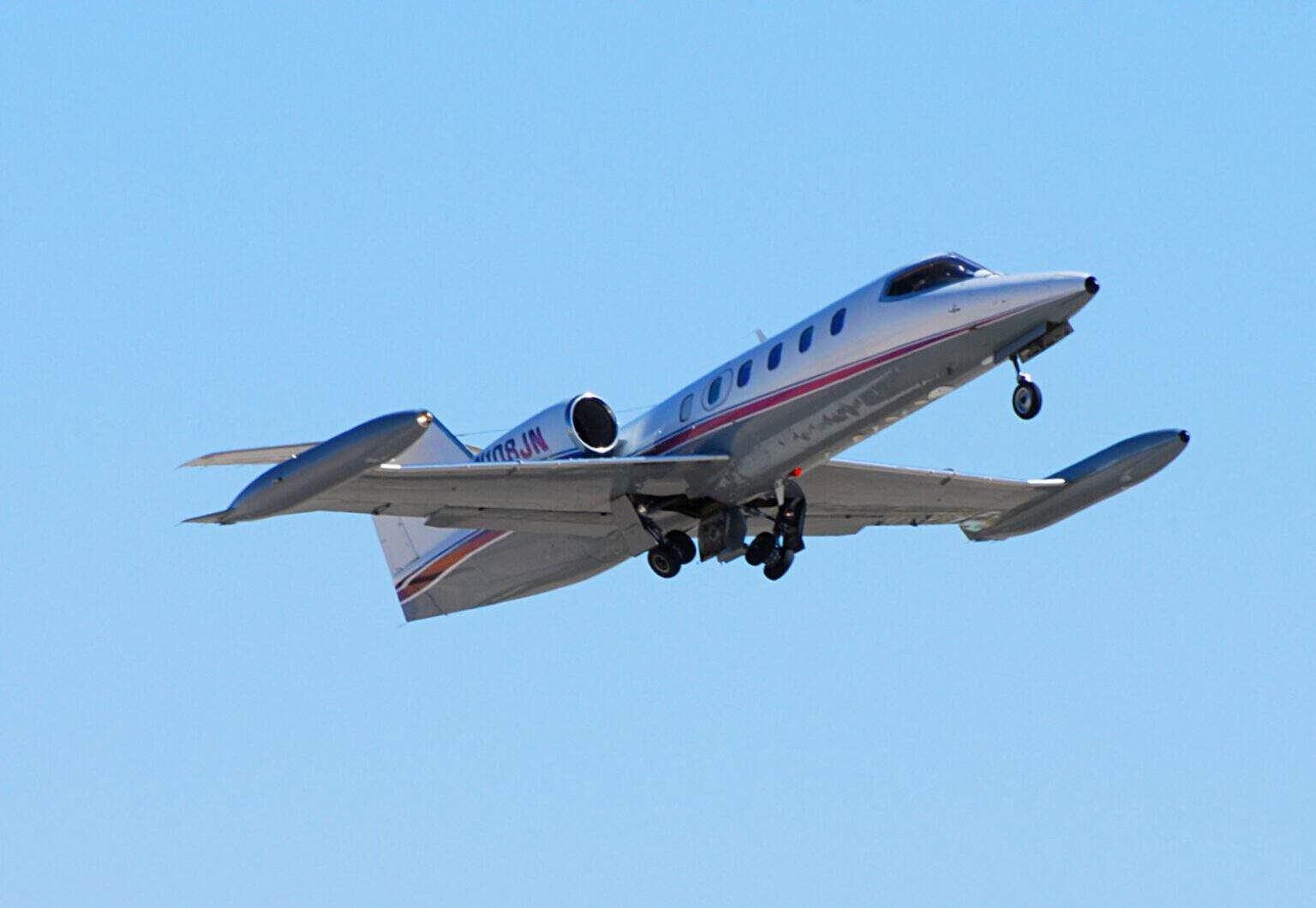
On October 25, 1999, a chartered Learjet 35 left Orlando for Dallas and stopped answering air traffic control about 14 minutes after takeoff. It flew on by itself for nearly four hours, ran out of fuel over South Dakota and crashed into an open field near Aberdeen.
All six people aboard died: golfer Payne Stewart, his agent Robert Fraley, Leader Enterprises president Van Ardan, golf course architect Bruce Borland, and the two pilots, Captain Michael Kling and First Officer Stephanie Bellegarrigue.
Most retellings describe an explosive decompression and fighter jets scrambled to chase the plane across the country. The record supports neither. The pilots were incapacitated after the cabin lost pressure, and investigators never established what caused that loss.
This article is built from the National Transportation Safety Board’s Aircraft Accident Brief NTSB/AAB-00/01, accident number DCA00MA005, adopted on November 28, 2000. Every time, altitude and finding below comes from that brief unless another source is named.
7:54 a.m. EDT
A short positioning hop. The Learjet leaves Sanford, Florida, for Orlando International, about 15 nautical miles away, to pick up its passengers.
9:19 a.m. EDT
Departure for Dallas. N47BA takes off from Orlando bound for Dallas Love Field with two pilots and four passengers. The flight plan shows 4 hours and 45 minutes of fuel.
9:27:18 a.m.
The last radio call. Climbing through about 23,200 feet, the first officer acknowledges a clearance to 39,000 feet. Her speech is normal and no warning horn is heard behind it.
9:30:45 a.m.
A small turn. Passing 30,200 feet, the jet turns slightly right. The NTSB found it likely came from someone turning the autopilot’s heading knob, but could not tell whether that was intentional. The jet holds that track for nearly the rest of the flight.
9:33:38 a.m.
No answer. Climbing through about 36,400 feet, the jet does not respond to a frequency change. The controller tries five more times over 4 1/2 minutes.
9:52 a.m. CDT
The first interception. An Air Force F-16 test pilot from Eglin Air Force Base is vectored to the Learjet. He finds no damage, both engines running and the cockpit windshield opaque, as if frosted on the inside.
10:12 a.m. CDT
The jet is alone again. The test pilot ends his inspection and heads for Scott Air Force Base in Illinois. The brief records no other interception for the next hour.
11:13 a.m. CDT
Oklahoma Guard F-16s. Two Oklahoma Air National Guard F-16s, call sign TULSA 13, are vectored to the jet. They see no movement in the cockpit.
11:50 a.m. CDT
North Dakota Guard F-16s. Two North Dakota Air National Guard F-16s, call sign NODAK 32, join. A pilot reports the windshield iced over and no movement in the ailerons or trim.
12:10:41 p.m.
An engine stops. Most likely out of fuel, an engine winds down on the cockpit voice recorder, followed by a stall warning and the autopilot disconnecting.
12:13 p.m. CDT
The end of the flight. The Learjet spirals down and strikes an open field near Aberdeen, South Dakota, 3 hours and 54 minutes after takeoff.
What happened
Stewart was four months removed from winning the 1999 U.S. Open at Pinehurst. He and his three business associates were flying to Dallas for a meeting about a golf course that would carry his name, then on to Houston for the PGA Tour Championship.
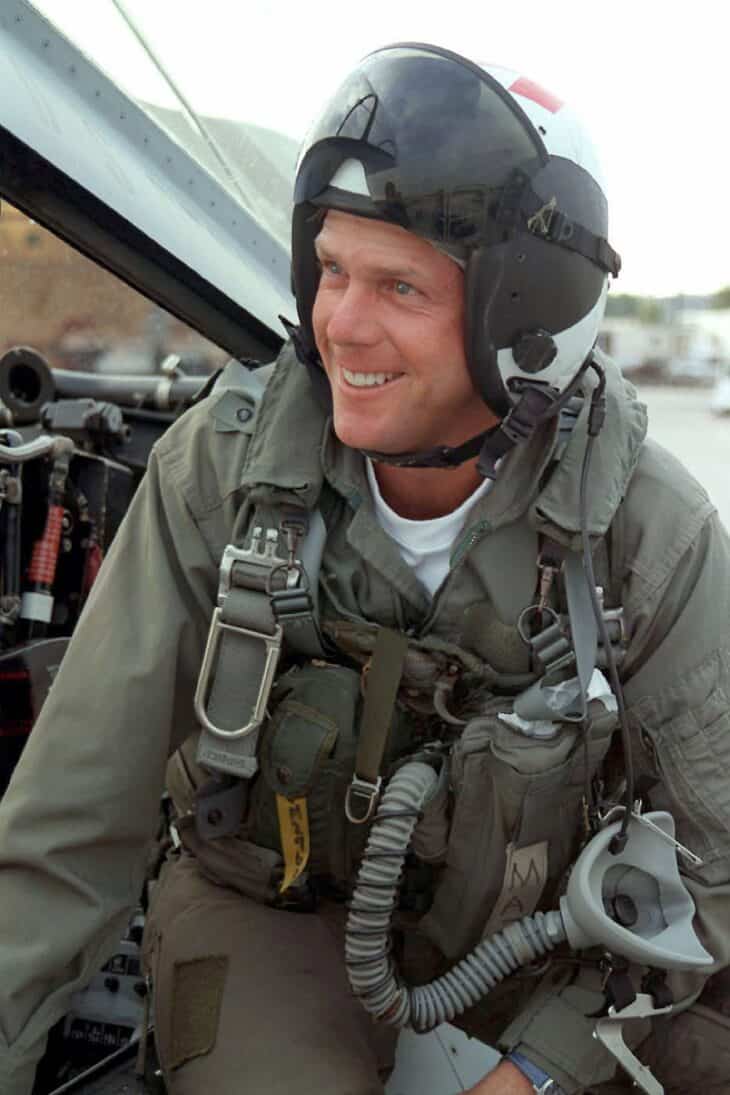

The aircraft was a 1976 Gates Learjet Model 35, registration N47BA, serial number 060. Sunjet Aviation of Sanford, Florida, operated it as a Part 135 charter, and the titleholder was a company called Jet Shares One. Stewart did not own the jet he died in.
Both pilots were properly certificated and rested. Kling, 42, was a former Air Force major who had flown the KC-135 tanker and the E-3A, with 4,280 total hours. He had joined Sunjet only on September 21, 1999, and had 38 hours as a Learjet captain.
Bellegarrigue, 27, held a commercial certificate with an instrument rating and was a flight instructor, with 1,751 hours. A pilot who had flown with her described a meticulous style, not someone who skipped checklists.
The weather was clear along the route and the NTSB ruled it out. At 9:27 a.m., climbing through 23,200 feet, the first officer read back a clearance to 39,000 feet. That was the last word anyone heard from the jet.
Six minutes and twenty seconds later, the jet stopped answering. It flew past its assigned altitude, never made the turn toward Dallas and continued northwest, eventually peaking at 48,900 feet. That is above the Learjet 35’s maximum operating altitude of 45,000 feet.
Air Force and Air National Guard F-16s took turns flying alongside. None of them could see into the cabin. When the fuel ran out, the jet came down about 1,500 miles (2,400 km) in a straight line from Orlando, more than 500 miles farther than Dallas.
What the NTSB found
The probable cause, in the Board’s words, was “incapacitation of the flight crewmembers as a result of their failure to receive supplemental oxygen following a loss of cabin pressurization, for undetermined reasons.”
The Board placed the crew’s incapacitation somewhere in the 6 minutes and 20 seconds between the last radio call and the first unanswered one. A cabin altitude warning horn sounded continuously through the final 30 minutes the voice recorder captured, which shows the cabin had lost pressure earlier in the flight.
The best physical clue was the flow control valve, which lets engine bleed air into the cabin. It was found fully closed. A closed valve would have stopped fresh air from entering the cabin and let it depressurize.
The frosted windshield the fighter pilots described points the same way. Bleed air blows warm across the Learjet’s windshield, so a cabin that kept its inflow would have kept the glass clear. Condensation that stayed there fits a loss of inflow, not a hole in the fuselage.
That is where the evidence stopped. The valve could have failed on its own, or the crew could have closed it while working a pressurization checklist with one step missed. The Board judged it unlikely that the pilots forgot to switch on cabin air before takeoff, and it could not rule out some other event.
Why the pilots did not get oxygen is also unresolved. Both crew masks appeared to be connected and their microphones plugged in. The oxygen bottle was found empty, but one mask’s regulator would have free-flowed above 39,000 feet cabin altitude, emptying even a full bottle in about 8 minutes, so the empty bottle proves nothing.
The brief also faults Sunjet’s paperwork. The jet had several pressurization write-ups between July and October 1999, one work order was never signed off, and it flew paying trips with that work deferred without authorization. The Board found no evidence that those problems caused the accident, but said the missing pilot reports left it unable to tell.

What most accounts get wrong
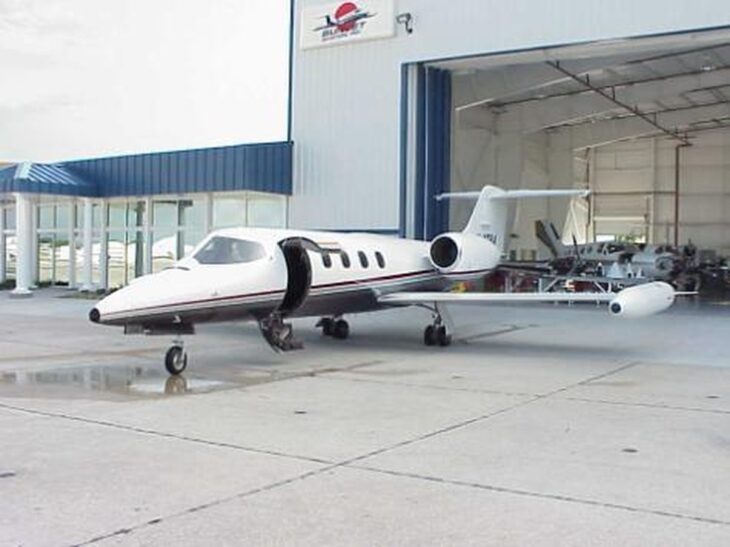
The popular version is an explosive decompression that killed everyone in an instant, with fighter jets scrambled to chase the Learjet across the country, ready to shoot it down. The record supports none of it. The military pilots saw no damage, the frosted windshield fits a quiet loss of incoming cabin air rather than a breach, and the NTSB never determined what caused the pressure loss. The first fighter to reach the jet was a single F-16 flown by an Air Force test pilot, vectored over at the controllers’ request about 85 minutes after the last radio call, and the brief records no interception for the hour after he left. The Pentagon said the escorting F-16s carried no air-to-air missiles and that it never came close to shooting the plane down. Even the altitude grew in the retelling: reports that week put the jet as high as 51,000 feet, while the NTSB put its peak at 48,900.
How a cabin can lose pressure without a sound
A jet’s cabin is a pressure vessel. Engines feed compressed bleed air in, a valve lets air out, and the balance holds the cabin at about 8,000 feet while the aircraft cruises far higher. Shut off the inflow and the cabin slowly rises toward the altitude outside.
There is no bang. Honeywell simulations run for the NTSB showed that losing bleed air above 25,000 feet could take the cabin to 10,000 feet in about 30 seconds and to 25,000 feet in about 2 1/2 minutes. The first clear alert is a horn at 10,000 feet cabin altitude.
That is the trap of hypoxia. Its effects include impaired judgment, drowsiness and difficulty thinking, the very faculties a pilot needs to notice it. The FAA’s tables give a pilot 3 to 5 minutes of useful consciousness after a gradual decompression at 25,000 feet, but only 30 to 60 seconds at 35,000 feet.
Useful consciousness is not the time until passing out. It is the window in which a pilot can still think clearly enough to put a mask on. Research cited in the brief found that as little as 8 seconds without oxygen after a rapid decompression to about 30,000 feet can measurably impair thinking.
The Learjet 35’s flight manual made that window harder to use. The FAA found it had no emergency procedure telling crews to put masks on the moment the horn sounded, and its abnormal checklist let them troubleshoot the pressurization first.
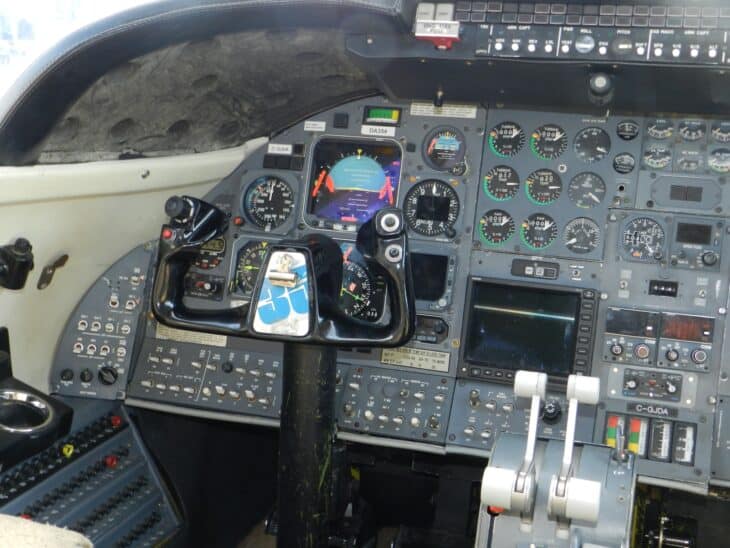

The rules did not require a mask on the face during most of the climb either. Under 14 CFR 135.89, a charter crew with quick-donning masks had to have one pilot wear a mask only above 35,000 feet, and the climb checklist simply set the masks in the quick-donning position.
The crew went silent while climbing from 23,200 to about 36,400 feet. With no one responding, the jet held its track for hours. When an engine stopped, most likely from fuel exhaustion, the voice recorder caught a stall warning and the autopilot disconnecting, and the jet spiraled down.
What changed
On December 20, 2000, the NTSB sent the FAA 11 safety recommendations, A-00-109 through A-00-119. According to the FAA’s own account, they covered automatic emergency pressurization, better documentation and follow-up of repeat pressurization problems, and training pilots to recognize hypoxia early.
The most direct fix was a procedure. Airworthiness Directive 2000-24-19, effective January 4, 2001, made every Learjet 35, 35A, 36 and 36A flight manual tell crews to put their oxygen masks on when the cabin altitude horn sounds. The FAA later required the same mask-first step for other types certified above 25,000 feet.
The accident aircraft itself lacked a backup that later Learjet 35 and 36 models carry: an automatic emergency pressurization system that routes alternate bleed air into the cabin without any action from the pilots.
Ten of the 11 recommendations were eventually closed as acceptable. The exception was A-00-109, which asked the FAA to update its guidance on how fast pilots lose useful consciousness; the NTSB closed it as unacceptable, though the FAA has since added a warning to that guidance.
Sunjet Aviation surrendered its operating certificate on July 17, 2000. Stewart’s family sued Learjet for $200 million, arguing a faulty pressurization system caused the decompression, and on June 8, 2005, a jury in Orlando found the manufacturer not liable.
The crash is still shaping the rules 27 years later. On September 24, 2026, the FAA cited it in a proposal to relax the pilot oxygen mask rules, raising the mask altitude for two-pilot charter crews from 35,000 to 41,000 feet. Comments close November 23, 2026, and nothing changes until a final rule is published.
FAQ
Sources and references used for research and fact-checking.
- National Transportation Safety Board, Aircraft Accident Brief: Learjet Model 35, N47BA, Aberdeen, South Dakota, October 25, 1999 (NTSB/AAB-00/01, DCA00MA005)
- Federal Aviation Administration, Federal Register, Airworthiness Directives; Learjet Model 35, 35A, 36, and 36A Series Airplanes (AD 2000-24-19, 65 FR 71239)
- Federal Aviation Administration, Federal Register, Flight Operations: Pilot Requirements; Use of Oxygen (NPRM, 91 FR 60530, Docket FAA-2026-12145)
- CNN, Investigators arrive at Payne Stewart crash site
- ESPN / Associated Press, Agent, a former Alabama QB, killed in Stewart plane crash
- Orlando Sentinel, Five Years Later
- CBS News, A '21-Tee Salute' For Stewart
- AVweb, Bombardier Not Negligent in Payne Stewart Crash
Get the Newsletter
The latest aviation news and stories sent to your inbox.
About the Author

Tim is the owner and lead editor of AeroCorner since 2019, overseeing aviation content covering aircraft, airlines, airports, and the broader aviation industry. Through years of researching, writing, editing, and publishing aviation-focused content, he has developed extensive practical knowledge of commercial aviation and air travel. Based in Asia and a frequent traveler himself, Tim also brings firsthand passenger experience to AeroCorner’s coverage. Outside of publishing, he has also explored aviation firsthand through hands-on flight training in New Zealand.