

Table of Contents
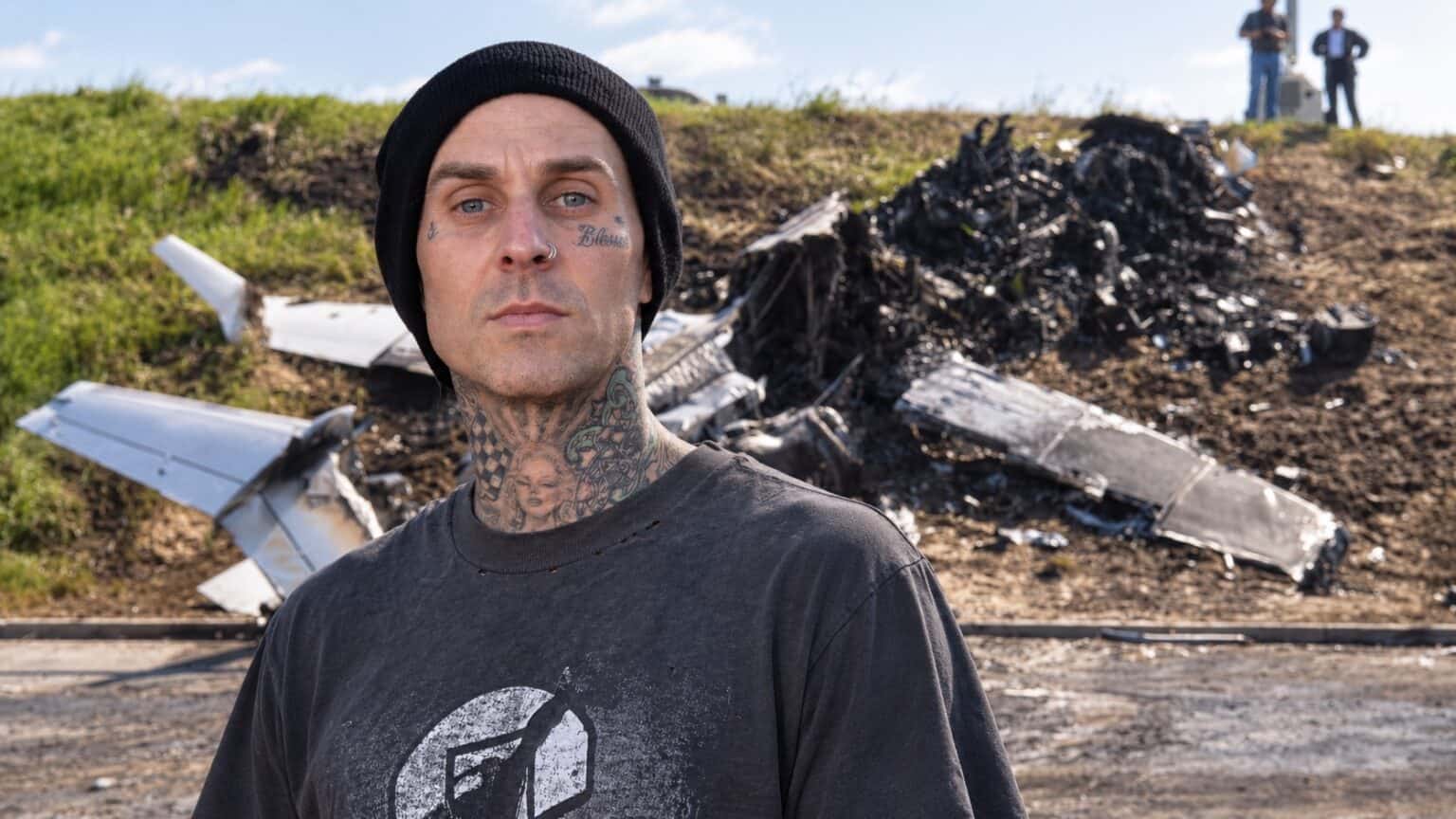
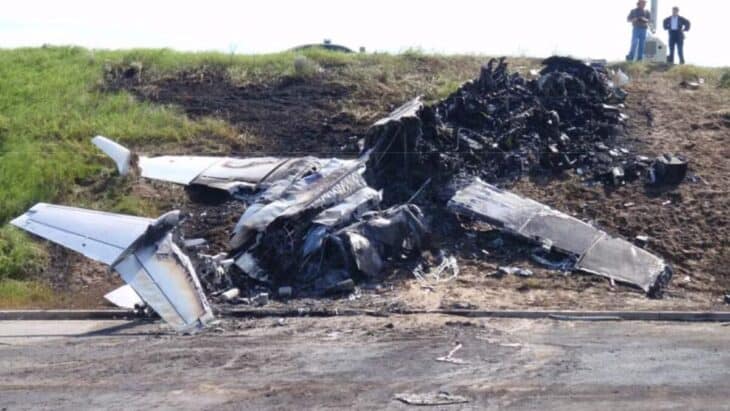
On the night of September 19, 2008, a Bombardier Learjet 60 ran off the end of runway 11 at Columbia Metropolitan Airport in South Carolina. Captain Sarah Lemmon, first officer James Bland, Travis Barker’s assistant Chris Baker, and his security guard Charles Still were killed. Barker and Adam Goldstein, the DJ known as DJ AM, survived with serious burns.
The version everyone remembers is that the tires blew and the jet could not stop. That is half of it. For the last stretch of runway the airplane was speeding up, under near takeoff power, while both pilots had the levers pulled back for full reverse thrust and no warning light told them otherwise.
This article is built from the National Transportation Safety Board’s final report, NTSB/AAR-10/02, accident number DCA08MA098, and from the two FAA airworthiness directives that followed it. Every speed, time and pressure below comes from that report.
11:47 p.m.
Taxi to runway 11. Construction had made the airport confusing to navigate. The crew turned the wrong way, and the controller issued an amended clearance that sent them back down the runway for a 180-degree turn.
11:51 p.m.
The takeoff briefing. The captain briefed that the crew would reject the takeoff for major problems occurring between V1 and V2. That is not what her training said, and the NTSB flagged it.
11:55:00
Eighty knots, crosscheck. The takeoff roll is normal to this point. Acceleration and engine performance match what the airplane was expected to do.
11:55:10.5
V1. The first officer makes the callout at about 131 knots ground speed. From this moment the trained response to almost any failure is to keep going.
11:55:12
The first tire lets go. A loud rumbling begins about 1.5 seconds after V1, more than 2,500 feet down the runway with roughly 6,100 feet still ahead.
11:55:13
Go, go, go. The first officer calls for the takeoff to continue. The airplane reaches its peak ground speed of about 144 knots.
11:55:17
We are not going, though. The captain commits to rejecting the takeoff, several seconds past V1 and after the airplane has already passed its peak speed.
11:55:19.5
Full out. The thrust reversers deploy and wheel braking begins within a second. The airplane starts to slow.
11:55:21.6
The jet decides it is airborne. Tire debris has cut the wiring that tells the airplane it is on the ground. The reversers stow, and the engines spool up to near takeoff power in forward thrust.
11:55:36
Roll the equipment, we are going off the end. The airplane crosses the 1,000-foot safety area at more than 100 knots, strikes the perimeter fence, crosses a five-lane road and comes to rest against an embankment, where it catches fire.
What happened
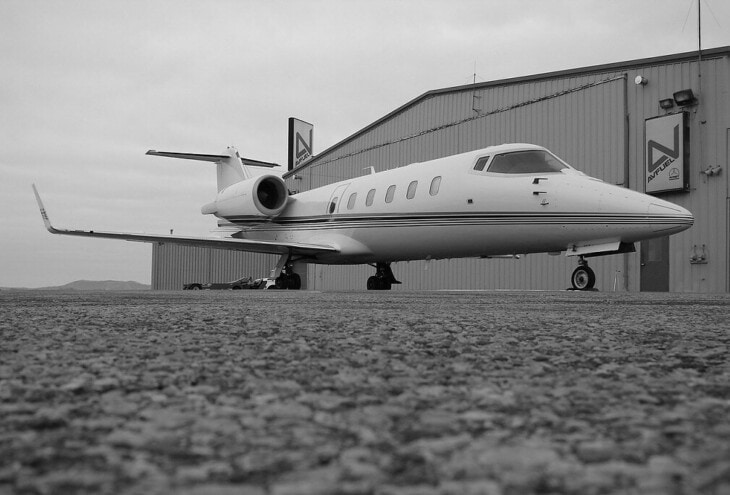
The flight was a charter home. Barker and Goldstein had played a show in Columbia and were flying to Van Nuys, California, on a Learjet 60 operated by Global Exec Aviation under Part 135, the rules that govern on-demand charter.
The airplane was almost new. It had held an airworthiness certificate since December 2006 and had accumulated only about 108.5 flight hours and 123 landings in its life. This is the mid-size twinjet that Bombardier later sold in updated form as the Learjet 60XR.
Runway 11 at Columbia is 8,601 feet long. Conditions were good, the wind was almost straight down the runway, and the first twenty seconds of the takeoff roll were entirely normal.
Then, about a second and a half after the first officer called V1, the right outboard main tire came apart. Investigators matched the start of the rumbling noise on the cockpit voice recorder to the exact spot on the runway where the first tire fragments were found.
The first officer called for the takeoff to continue. The captain hesitated, said she did not know what had happened, and announced she was stopping about five seconds after the noise began. The reversers did not deploy until seven and a half seconds after it.
What the NTSB found
The Board’s probable cause names two things: “the operator’s inadequate maintenance of the airplane’s tires, which resulted in multiple tire failures during takeoff roll due to severe underinflation, and the captain’s execution of a rejected takeoff after V1, which was inconsistent with her training and standard operating procedures.”
Four contributing factors follow, and they point at the manufacturer and the regulator as much as at the crew. Deficiencies in Learjet’s design and the FAA’s certification of the thrust reverser system allowed damage in the wheel well to produce uncommanded forward thrust.
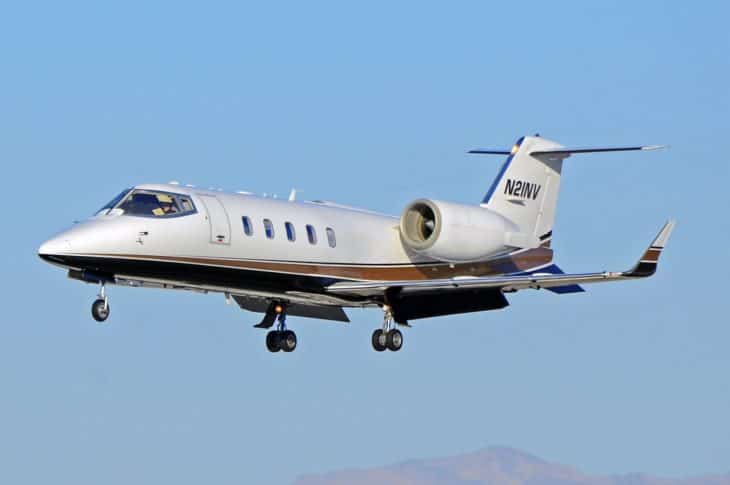
The Board also faulted Learjet’s safety analysis and the FAA’s review of it for failing to catch that flaw after an earlier uncommanded forward thrust accident, in January 2001, involving a Learjet 60 that hit deer on landing. Inadequate industry training for tire failure scenarios and the crew’s poor resource management round out the list.
One sentence in the analysis section carries more weight than the rest. The issues combined, the Board wrote, “to create a situation that was unacceptably intolerant to the captain’s deviation from a standard operating procedure.”
What most accounts get wrong
Almost every retelling stops at burst tires and failed brakes. The NTSB found something worse: about ten seconds after the rumbling began, tire debris severed the wiring that tells the jet it is on the ground, the reversers stowed themselves, and the engines went to near takeoff power in forward thrust while the cockpit levers were still held in full reverse. No annunciator lit. The Board was explicit that it could not determine whether the crew could have stopped on the runway even without that, because no data exists for braking an airplane with a cut hydraulic system and no intact tires. What it did conclude is that the uncommanded forward thrust substantially raised the speed at which the airplane left the airport.
The tires nobody could have checked
The Learjet 60’s main tires are rated at 220 pounds per square inch. On the night of the accident they were running about 36 percent below that, and they had probably not been checked in three weeks.
That matters because of how an aircraft tire fails. Underinflation does not make a tire go flat, it makes the sidewall flex further on every rotation, and that flexing generates heat until the structure comes apart under load and speed.
The maintenance manual called for replacing a tire at 15 percent underinflation. These were more than twice that far gone.
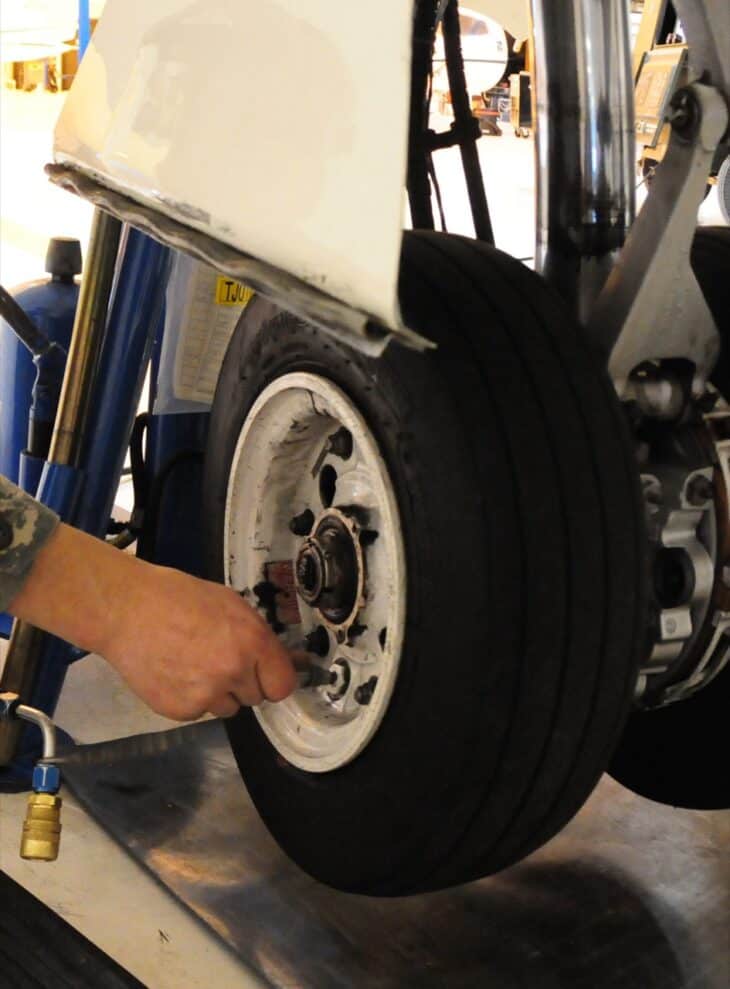
Here is the part pilots find alarming. Transport-category tires can lose up to 5 percent of their pressure per day, so a few days without a check can put a tire below its replacement limit, and that level of underinflation cannot be seen by looking at it.
The crew had no way to know. Under the FAA’s own interpretation at the time, a pilot flying that Learjet 60 on a Part 135 charter was not permitted to check the tire pressures, even though the same pilot could have checked them on the same airplane on a Part 91 flight.
Why V1 is a commitment, not a decision
V1 is the speed past which a takeoff must be continued. It is not a suggestion and it is not the last moment to think about it: it is the speed at which the pilot must have already taken the first stopping action to stop within the runway available.
For this airplane at this weight, V1 was about 136 knots. Rotation speed was 145 knots and takeoff safety speed was 153 knots.
The arithmetic is unforgiving. Industry data cited in the report shows that an airplane on a balanced-field takeoff will run off the end of the runway if the rejected takeoff is started just two seconds after V1. Here the tire failed a second and a half after the call, and the reversers deployed nine seconds after it.
It would be easy to file this as pilot error and stop. The Board did not. It noted that the captain had about 35 hours in the Learjet 60, only about 8 of them as pilot in command, and that her training had covered engine failures at V1 but not tire failures, which sound and feel completely different from the inside.
A 1990s study cited in the report found that many rejected takeoffs that ended in overruns were started after V1, roughly half of them. The instinct to stop when something goes bang is very hard to train out of people.
The safety feature that became the hazard
The Learjet 60 was the first Learjet with fully electronic thrust reverser control, and its logic was built around one fear: a reverser deploying in flight. To prevent that, the system was designed so that any fault or anomaly makes the reversers stow.
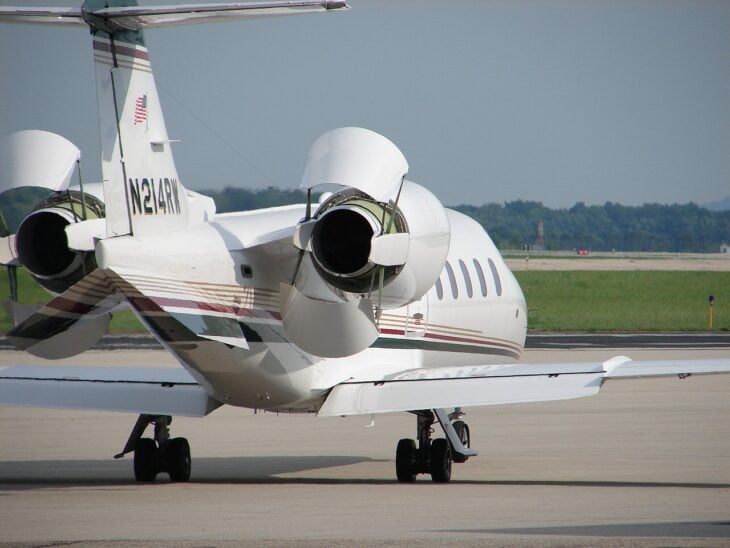
The airplane knows whether it is flying using squat switches on the landing gear. Tire fragments destroyed that wiring, the system read air mode, and it did exactly what it was designed to do.
The reversers stowed. The engine controls then read the levers, which were still commanding maximum reverse, through forward-thrust logic, and commanded forward thrust at near takeoff power. Engine speed climbed to about 9,165 rpm before the first officer worked out what was happening and called for the engines to be shut off.
The only way to reduce that thrust was to push the reverse levers back to the stowed position, which is the precise opposite of what a pilot wants to do while trying to stop. The Board called that action counterintuitive, which is a mild word for it.
What changed
The NTSB moved on the design first. On July 17, 2009, ten months after the accident, it asked the FAA to require Learjet to make the cockpit lever positions match what the reversers were actually doing, to add aural or visual cues so pilots could recognize an inadvertent stow, and to retrofit both to the existing fleet.


The tire rule came next. Airworthiness Directive 2010-11-11, effective July 13, 2010, required Learjet 60 operators to adopt revised tire servicing procedures and to check tire pressures at intervals not exceeding 96 hours.
The final report in 2010 added fourteen more recommendations, including that the FAA require tire pressure monitoring systems on all transport-category airplanes and that it let Part 135 pilots check their own tires.
The reverser warning took far longer. Airworthiness Directive 2020-11-04 became effective on June 25, 2020, and required a thrust reverser Voice Command Warning System on 289 US-registered Learjet 60s, at an estimated cost of about $29,974 per airplane.
That is close to twelve years between the accident and the mandatory cockpit warning the Board asked for in 2009. Both directives were written for the Learjet 60, not for the wider fleet.
Barker spent eleven weeks in hospital and did not board an aircraft again until August 14, 2021, thirteen years later. Goldstein died of an accidental overdose in August 2009, less than a year after the crash.
FAQ
Sources and references used for research and fact-checking.
- National Transportation Safety Board, Runway Overrun During Rejected Takeoff, Global Exec Aviation, Bombardier Learjet 60, N999LJ, Columbia, South Carolina, September 19, 2008 (NTSB/AAR-10/02, DCA08MA098)
- Federal Aviation Administration, Federal Register, Airworthiness Directives; Learjet Inc. Airplanes (AD 2020-11-04, Amendment 39-21129)
- Federal Aviation Administration, Federal Register, Airworthiness Directives; Learjet Inc. Model 60 Airplanes (AD 2010-11-11, Amendment 39-16316)
- CBS News, 4 Dead In S.C. Plane Crash
- Fox News, Travis Barker flew in a plane for the first time since deadly 2008 crash
- Wikipedia, 2008 South Carolina Learjet 60 crash
Get the Newsletter
The latest aviation news and stories sent to your inbox.
About the Author

Tim is the owner and lead editor of AeroCorner since 2019, overseeing aviation content covering aircraft, airlines, airports, and the broader aviation industry. Through years of researching, writing, editing, and publishing aviation-focused content, he has developed extensive practical knowledge of commercial aviation and air travel. Based in Asia and a frequent traveler himself, Tim also brings firsthand passenger experience to AeroCorner’s coverage. Outside of publishing, he has also explored aviation firsthand through hands-on flight training in New Zealand.