

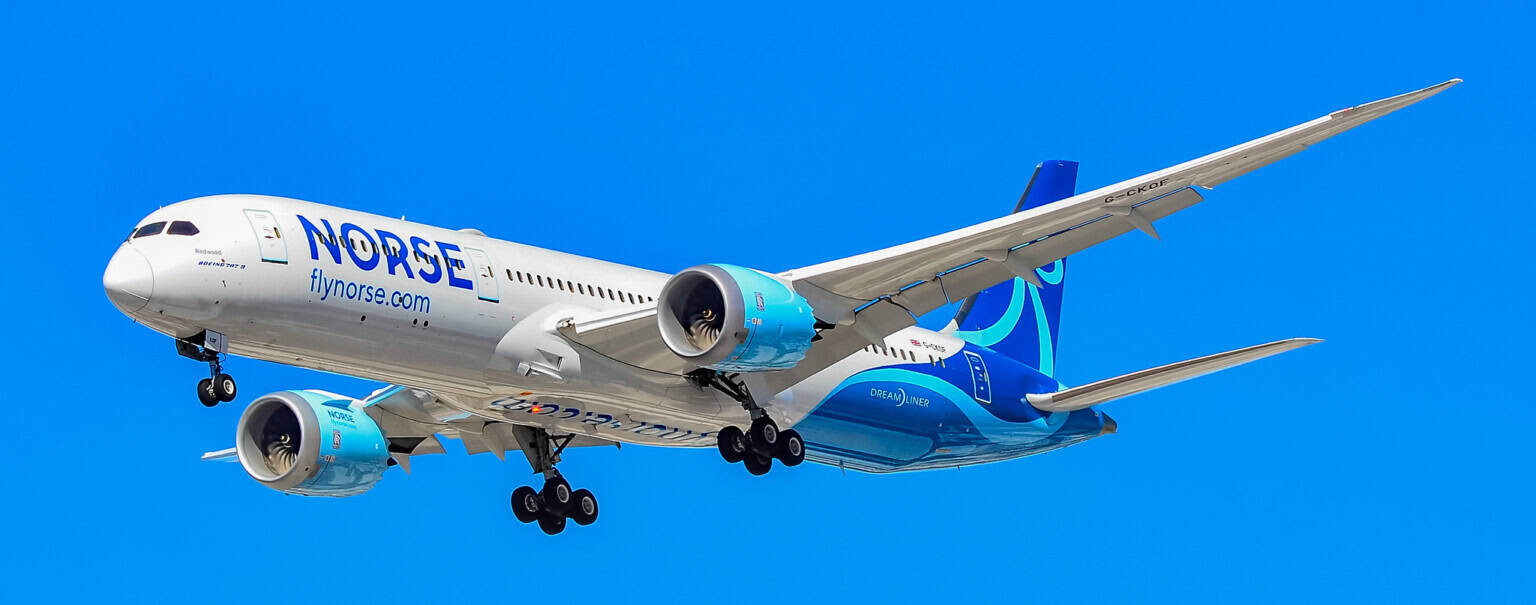
A Norse Atlantic Airways Boeing 787-9 rejected its takeoff at London Gatwick Airport on September 4, 2026, after a fault developed in the aircraft’s nose landing gear. The jet stopped safely on the runway with no injuries, but because Gatwick runs on a single operational runway, the closure brought both departures and arrivals to a standstill for nearly an hour.
A Rejected Takeoff at 120 Knots
Flight Z0701, a 787-9 registered G-CKOF and bound for New York’s JFK, was accelerating down runway 26L when the crew rejected the takeoff at roughly 120 knots over the ground. The nose wheels had turned about 90 degrees before the aircraft came to a stop, according to Aviation Herald, which tracks aviation incident reports from preliminary information.
Norse Atlantic confirmed the rejected takeoff in a statement carried by Air Cargo Week, saying the jet “stopped safely” after “an indication of a potential technical issue” and that it was cooperating with investigators. The airline said no passengers or crew members were hurt.
One Runway, One Stuck Jet, Hours of Delay
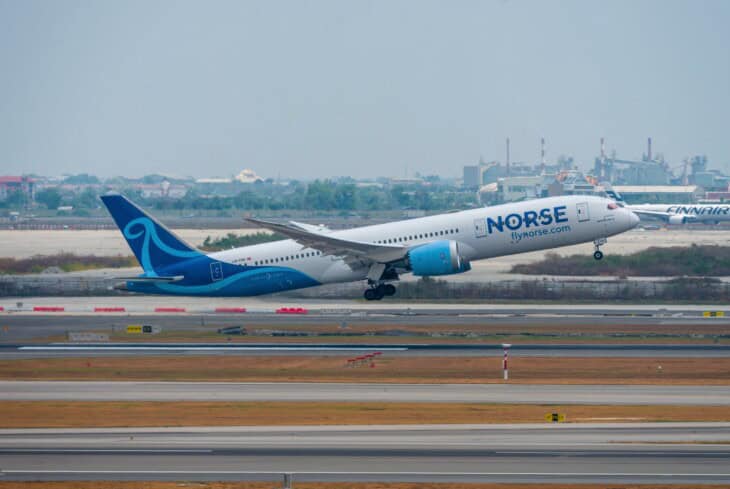
Gatwick operates the busiest single-runway airport in the world, a constraint that made a second runway a live legal fight earlier this year. With the disabled 787 blocking runway 26L, the airport declared an immediate ground stop, holding every arrival and departure until the jet could be cleared.
Ground crews towed the aircraft to a remote stand at around 2:30 p.m. local time, and the runway reopened roughly six minutes later following a full safety inspection, a Gatwick spokesperson said. Several flights, including EasyJet departures, diverted to London Luton and London Stansted while the runway was shut, according to AirLive. The closure itself lasted about 50 minutes, but the ripple effect of delays continued through the rest of the day.
Cause not yet confirmed
Neither Norse Atlantic nor Gatwick has said what caused the nose gear fault. The airline says the incident remains under investigation, and reports of the nose wheels turning 90 degrees are preliminary.
Why Crews Abort Below Rotation Speed
Every takeoff has a calculated decision speed, V1, set for that flight’s specific weight, runway, and conditions. Below V1, the standard response to a major system fault is to reject the takeoff: close the throttles, brake hard, and stop on the runway already under the wheels rather than risk flying with a known problem.
At 120 knots, a widebody like the Boeing 787-9 is still well below the speed at which it would normally rotate for liftoff, so the crew had runway and margin to spare. The harder calls come closer to V1, when the distance needed to stop and the distance needed to climb away are nearly the same.
Rejected takeoffs are routine, and usually uneventful
Airlines log low-speed rejected takeoffs regularly, most often for a warning light, an unusual noise, or a system fault caught before rotation. The overwhelming majority end exactly like this one did, with an intact aircraft and no injuries.
Get the Newsletter
The latest aviation news and stories sent to your inbox.
About the Author

Tim is the owner and lead editor of AeroCorner since 2019, overseeing aviation content covering aircraft, airlines, airports, and the broader aviation industry. Through years of researching, writing, editing, and publishing aviation-focused content, he has developed extensive practical knowledge of commercial aviation and air travel. Based in Asia and a frequent traveler himself, Tim also brings firsthand passenger experience to AeroCorner’s coverage. Outside of publishing, he has also explored aviation firsthand through hands-on flight training in New Zealand.