

Table of Contents
On the morning of January 26, 2020, a Sikorsky S-76B charter helicopter crashed into a hillside in Calabasas, California. All nine people aboard died: Kobe Bryant, his 13-year-old daughter Gianna, John and Keri Altobelli and their daughter Alyssa, Sarah Chester and her daughter Payton, assistant coach Christina Mauser, and the pilot, Ara Zobayan.
Most people remember it as a fog crash, or as a flight that should never have been allowed. The record says something more specific: the helicopter was working, the flight was legally cleared, and nobody pushed the pilot to go.
He flew into cloud, lost his sense of which way was up, and told air traffic control he was climbing while the helicopter was descending toward the ground.
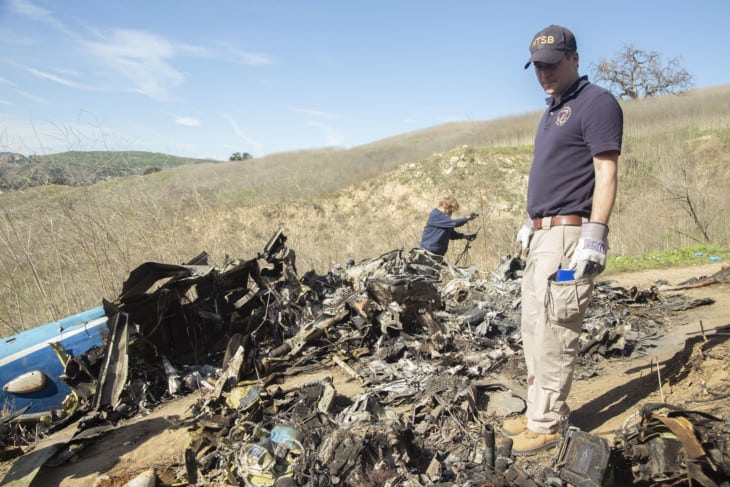
This article is built from the National Transportation Safety Board’s final report, NTSB/AAR-21/01, accident number DCA20MA059, adopted on February 9, 2021. Every time, altitude and finding below comes from that report unless another source is named.
9:07 a.m.
Departure from John Wayne Airport. The helicopter leaves Santa Ana for Camarillo under visual flight rules. Visibility is 4 miles in mist under an overcast at 1,000 feet.
9:20 a.m.
A request at Burbank. The pilot asks for a special VFR clearance through Burbank’s airspace. The controller has him hold outside because of traffic and reports cloud tops at 2,400 feet.
9:21 to 9:32
Eleven minutes of circling. The helicopter holds southeast of Burbank at 400 to 650 feet above the ground.
9:32 a.m.
Cleared. Burbank issues the special VFR clearance. Van Nuys follows with its own, and the pilot plans to join US Route 101 and follow it west.
9:40 a.m.
Low altitude, no radar service. The pilot tells Southern California approach he is in VFR conditions and staying low. The controller warns that radar and radio contact will likely be lost.
9:42:45
West along the 101. The helicopter follows the freeway at about 140 knots, roughly 550 feet above terrain that is rising ahead.
9:44:34
The climb. Two seconds after a witness sees it disappear into a wall of cloud, the pilot announces a climb to get above the layers. The helicopter climbs at about 1,500 feet per minute in a gradual left turn.
9:45:10
The turn tightens. The left bank steepens and the flight path leaves the freeway.
9:45:15
The peak. The helicopter reaches about 2,370 feet, roughly 1,600 feet above the ground, then begins a rapid descending left turn.
9:45:17
The last transmission. Asked his intentions, the pilot says the flight is climbing to 4,000 feet. The helicopter is already descending.
9:45:36
Last data point. The final ADS-B position is recorded about 500 feet from where the helicopter struck a hillside at about 1,100 feet elevation.
What happened
The flight was a charter from Santa Ana to Camarillo, about 24 miles past the eventual crash site. Island Express Helicopters of Long Beach operated it under Part 135, the rules for on-demand charter. The pilot had flown the same passengers to the same destination the morning before, on a more direct route and at a higher altitude.
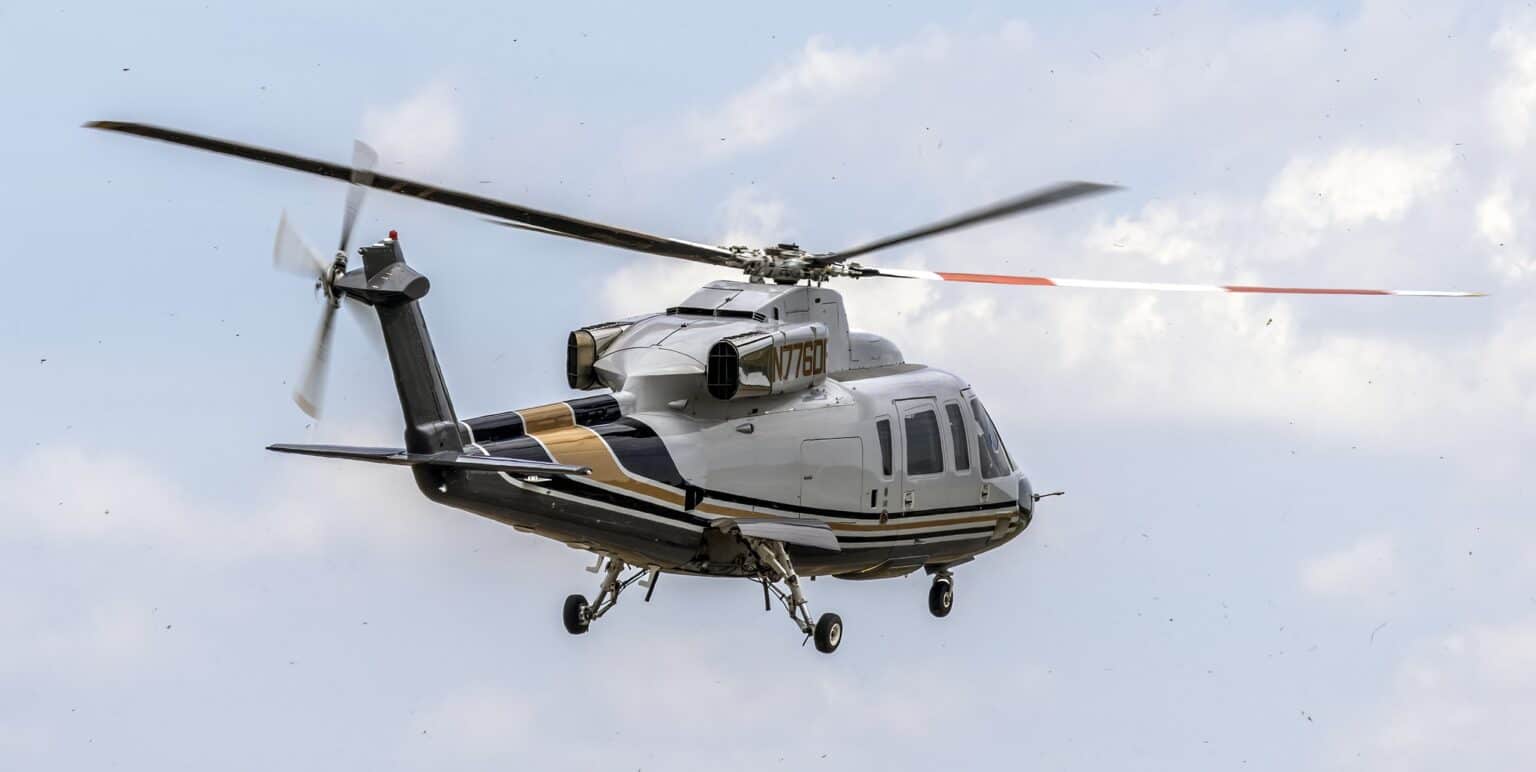
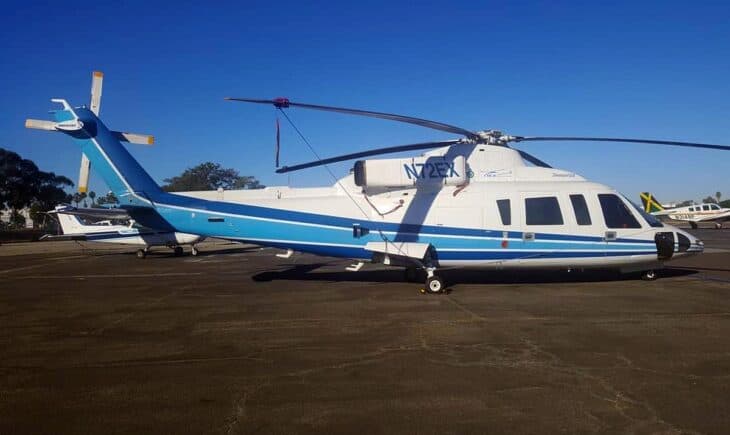
The aircraft was a 1991 Sikorsky S-76B, the Pratt and Whitney-powered member of the Sikorsky S-76 family of twin-engine helicopters. It had a four-axis autopilot and was certified for single-pilot flight under instrument flight rules.

The weather was the problem that morning. An unusually deep marine layer sat over the Los Angeles basin, and a local National Weather Service meteorologist told investigators he could not recall a January day when low cloud lingered that long.
The pilot worked through it by the book at first. He held for traffic outside Burbank, took the special VFR clearances he was given, and followed the freeways at 400 to 600 feet above the ground.
West of Van Nuys, the 101 climbs into hills where fog tends to stack up. Visibility under the cloud near the crash site was only 1 to 1.5 miles, and the helicopter was still covering the ground at about 140 knots when it entered the cloud base.
What the NTSB found
The probable cause, in the Board’s words, was “the pilot’s decision to continue flight under visual flight rules into instrument meteorological conditions, which resulted in the pilot’s spatial disorientation and loss of control.”
Two contributing factors follow. The first is the pilot’s “likely self-induced pressure” and his plan continuation bias, the pull to finish a plan that grows stronger as the destination gets closer. The second is Island Express’s “inadequate review and oversight of its safety management processes.”
The Board ruled several things out explicitly. It found no mechanical failure, no medical problem, no alcohol or drugs, no fatigue, and no pressure from the company, the charter broker, or the client to complete the flight.
The pilot was not a novice. Zobayan, 50, was Island Express’s chief pilot and a company check airman, with about 8,577 flight hours, 1,250 of them in S-76 helicopters. He held an instrument rating and had passed inadvertent-cloud recovery checks in this exact helicopter in 2019.
That is what makes the finding hard to read. The report describes a skilled pilot, trusted by the client to fly his children alone, whose decision that morning was “inconsistent with his typical judgment.” The Board’s word for the pressure he felt was self-induced.
What most accounts get wrong
The popular version says the helicopter should never have flown because the fog was so bad that police helicopters were grounded, and that a terrain warning system would have saved everyone. Neither holds up. The LAPD grounding was that department’s own policy call, not a rule for anyone else, while this flight held a legitimate special VFR clearance and was legal until it entered cloud. The NTSB found that the missing terrain warning system was not a factor: the pilot knew where the terrain was, and the crash was a loss of control, not a controlled flight into a hill he could not see. The helicopter was fully equipped to fly in cloud and the pilot was instrument-rated. What the flight lacked was a company certificate that allowed it, which left turning back or landing as the only legal choices once the cloud came down.
Why an instrument-rated pilot could not simply fly on instruments
Island Express held a certificate that authorized VFR-only charter, day and night. Its pilots could not file an instrument flight plan and fly through cloud on a charter, whatever the helicopter or the pilot was qualified to do. The report notes that 411 of the 476 Part 135 helicopter operators in the US were VFR-only.
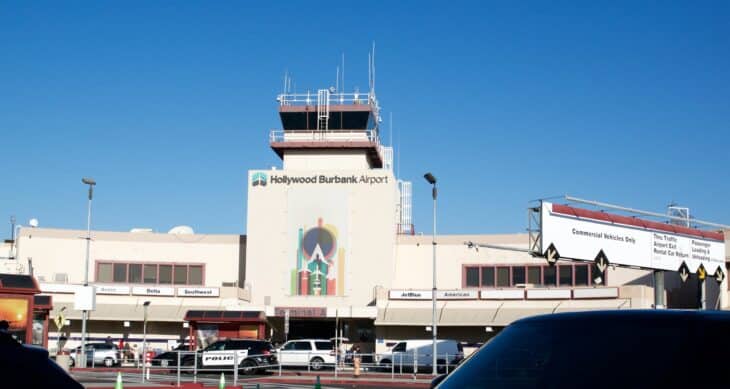
So the flight had to stay below the cloud and in sight of the ground. Burbank and Van Nuys normally require 3 miles of visibility for VFR flight in their airspace, and both were reporting 2.5 miles, which is why the pilot needed special VFR clearances to pass through.
A special VFR clearance is a controller’s permission to fly below the normal VFR minimums inside an airport’s airspace. It never permits flight into cloud. It hands the whole judgment of whether the pilot can still see to the pilot.
NTSB Chairman Robert Sumwalt put the consequence plainly in a concurring statement: Island Express was not approved for IFR flights, “so the pilot was forced to attempt to stay beneath the clouds to conduct the flight.”
How a pilot’s inner ear turns a descent into a climb
Spatial disorientation is not a failure of skill. The balance organs in the inner ear cannot tell the difference between tilting and accelerating, and without a view outside, the brain has nothing to check them against.
The NTSB traced two illusions in this flight. The first is the leans: hold a steady turn for around 30 seconds and the inner ear stops sensing it, so a banked helicopter feels level. The helicopter had been in a gradual left turn since the climb began.
The second is the somatogravic illusion. When an aircraft speeds up, the push back into the seat feels like pitching nose-up. As the helicopter descended and accelerated in a steep left bank, that sensation told the pilot he was climbing.
The instruments were telling the truth the whole time. The attitude indicator exists for exactly this moment, but the report found the pilot was either not referencing his instruments or was having trouble interpreting or believing them over what his body was telling him.

His workload made that harder. He was talking to a controller who was not expecting him, and he reached across to the center panel to press the transponder’s IDENT button, a head movement that leaves the inner ear more open to misleading cues while flying on instruments.
His training said to level the wings, establish a climb at about 75 to 80 knots, then hand the helicopter to the autopilot. Sumwalt noted that the S-76B’s autopilot could climb to a preset altitude and level off, and that an autopilot is not susceptible to spatial disorientation.
With no recorder aboard, the report cannot say what the autopilot was doing. Sumwalt’s view was that had the pilot engaged it, as his training called for, he likely could have climbed through the cloud without losing control.
What changed
The NTSB asked the FAA to require simulator training for Part 135 helicopter pilots in recognizing deteriorating weather and transitioning to instruments, and to convene a panel on spatial disorientation training. It asked Island Express to join the FAA’s voluntary safety management program and to start monitoring flight data.
The biggest change came from the FAA three years later. Its safety management systems rule, published April 26, 2024, extends the SMS requirement to every Part 135 operator and names the 2020 Calabasas crash among the accidents an SMS could potentially have prevented. Existing operators have until May 28, 2027, to comply.
The recorder question is still open. The S-76B was delivered with a cockpit voice recorder, but Island Express removed it during an interior refit, which the rules allowed on a single-pilot helicopter.
The Board reiterated a recommendation it first issued in 2013 for crash-resistant recorders on turbine-powered aircraft, helicopters included, and classified the FAA’s response as unacceptable.
Congress tried and stalled. The Kobe Bryant and Gianna Bryant Helicopter Safety Act, reintroduced in January 2021, would have required terrain warning systems and flight recorders on turbine helicopters with six or more passenger seats. It was referred to a House subcommittee in February 2021 and never got a vote.
A successor, the Helicopter Safety Parity Act of 2026, was introduced in April 2026 and covers turbine helicopters carrying two or more paying passengers. As of September 2026 it has not moved past committee referral.
The Calabasas crash is one of the entries on our list of the worst helicopter crashes in history.
FAQ
Sources and references used for research and fact-checking.
- National Transportation Safety Board, Rapid Descent Into Terrain, Island Express Helicopters Inc., Sikorsky S-76B, N72EX, Calabasas, California, January 26, 2020 (NTSB/AAR-21/01, DCA20MA059)
- Federal Aviation Administration, Safety Management Systems, final rule (Docket FAA-2021-0419), Federal Register Vol. 89, No. 82
- Congress.gov, H.R.486, Kobe Bryant and Gianna Bryant Helicopter Safety Act (117th Congress)
- Congress.gov, H.R.8226, Helicopter Safety Parity Act of 2026 (119th Congress)
- Vertical Mag, Kobe Bryant crash: NTSB blames spatial disorientation, calls for better training
- AOPA, NTSB faults pilot's decisions in Bryant crash
- CBS News, Kobe Bryant helicopter crash: LAPD grounded their helicopters. Why was Bryant's chopper allowed to fly?
- TIME, What to Know About the 9 Victims of the Helicopter Crash That Killed Kobe Bryant
- Sports Illustrated, Vanessa Bryant, families of crash victims agree to settle wrongful death lawsuit
Get the Newsletter
The latest aviation news and stories sent to your inbox.
About the Author

Tim is the owner and lead editor of AeroCorner since 2019, overseeing aviation content covering aircraft, airlines, airports, and the broader aviation industry. Through years of researching, writing, editing, and publishing aviation-focused content, he has developed extensive practical knowledge of commercial aviation and air travel. Based in Asia and a frequent traveler himself, Tim also brings firsthand passenger experience to AeroCorner’s coverage. Outside of publishing, he has also explored aviation firsthand through hands-on flight training in New Zealand.