

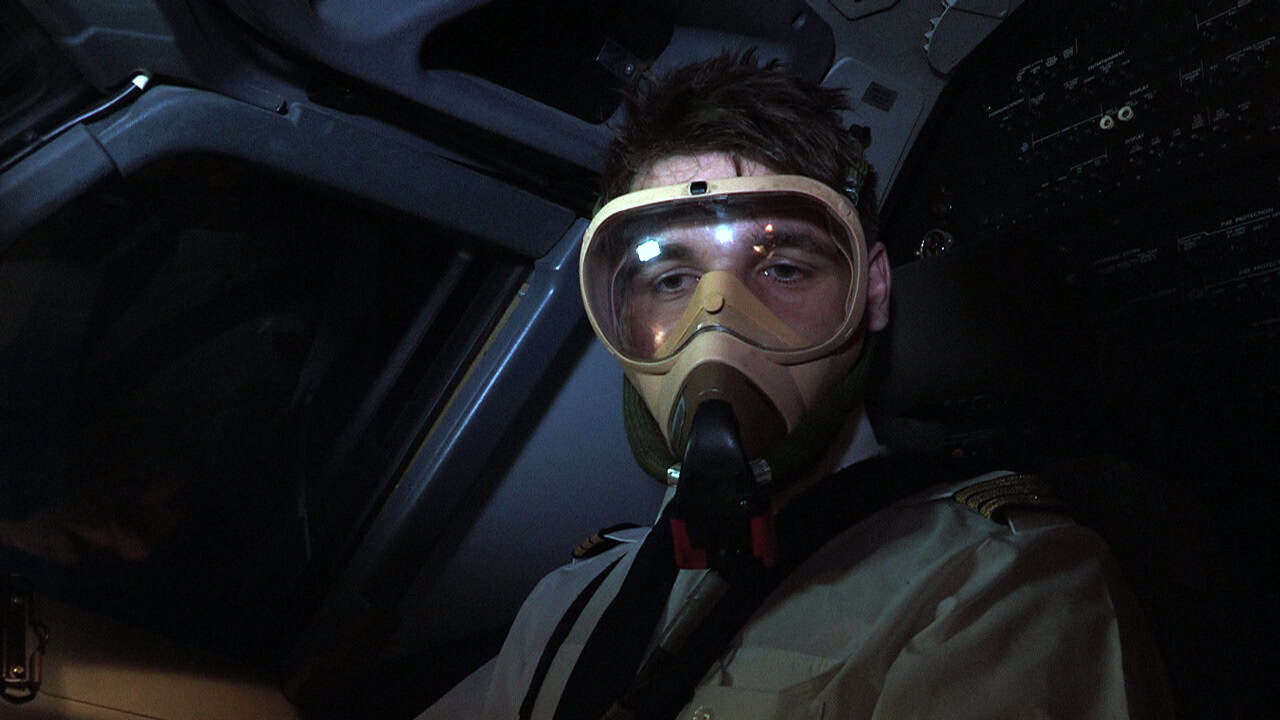
The FAA proposed on September 24, 2026, to relax rules dating to 1961 and 1970 that make one pilot wear an oxygen mask at high altitude in a pressurized aircraft. The notice of proposed rulemaking, published in the Federal Register, covers Part 135 charter and commuter flights and Part 91 private flying.
For charter crews, the mask altitude would rise from FL350 to FL410. Private operators whose pilots have quick-donning masks would not need a mask on at any altitude.
What would change
The proposal rewrites two regulations, 14 CFR 135.89 and 14 CFR 91.211. It does not touch Part 121, the rules for scheduled airlines.
A flight level is pressure altitude in hundreds of feet, so FL410 reads as 41,000 feet on a standard altimeter setting.
| Situation | Mask required today | Proposed |
|---|---|---|
| Part 135, two pilots with quick-donning masks | Above FL350 | Above FL410 |
| Part 135, one pilot at the controls | Above FL250 (when the other pilot leaves the seat) | Above FL350, and explicitly covering single-pilot flights |
| Part 91, two pilots with quick-donning masks | Above FL410 | Not required at any altitude |
| Part 91, one pilot at the controls | Above FL350 | Not required if a quick-donning mask is available |
| Part 91, no quick-donning masks | Above FL350 | Above FL350 (unchanged) |
A quick-donning mask is one a pilot can put on with one hand in five seconds, sealed and supplying oxygen. The FAA puts operator savings at $4.7 million to $18.6 million a year in oxygen servicing for every percentage point of roughly 4.7 million operations that no longer need a refill.
The Part 135 change was ordered by Congress. Section 834 of the FAA Reauthorization Act of 2024 told the agency to propose whether both Part 135 mask rules should apply only above FL410.
The Part 91 change is the FAA’s own addition.
Why the FAA stopped short of FL410 for a lone pilot
The agency did not give Congress everything it floated. It rejected FL410 for a single pilot at the controls because of time of useful consciousness, the window a pilot has to act before hypoxia takes over.
Citing its own advisory circular, the FAA says that window is about 30 to 60 seconds at 35,000 feet and roughly half that in a rapid decompression. At 40,000 feet it is 15 to 20 seconds, which the FAA judged too short for a lone pilot, so the single-pilot line stops at FL350.
The case for the rest rests on data. The FAA estimates Part 91 and Part 135 operators flew more than 20 million hours above FL250 between January 2015 and May 2025, and it found about 200 reported decompressions in that period.
Only four of those looked rapid or explosive, and two of the rapid ones ended in accidents. The FAA says both came down to pilots not following required procedures and that the new rule would not have changed either outcome.
The one fatal case was a single-pilot Cessna 560 on June 4, 2023, which the NTSB found was flown without supplemental oxygen on board. The pilot lost consciousness below the altitude where today’s rules already require a mask.
The rule has been tried before
The FAA proposed a similar relaxation in 1982 and withdrew it in 1986, saying it lacked data on rapid decompressions. The U.S. Air Force was among the objectors then, and the mask rules have not changed since.
The Air Force has since moved. Its current manual lets pressurized aircraft with an automatic emergency descent mode fly up to FL500 with no pilot masked, and the FAA notes that since at least 2010 it has allowed maskless flight above FL410 in the C-37, a military version of the Gulfstream V.
The notice spells out the trade-off. It says a mask already on the face helps prevent severe hypoxia in an explosive or rapid decompression, that the proposal gives up that benefit, and that such decompressions are extremely rare.
Comments are due by November 23, 2026, under docket FAA-2026-12145. Nothing changes until the FAA publishes a final rule.
Sources and references used for research and fact-checking.
Get the Newsletter
The latest aviation news and stories sent to your inbox.
About the Author

Tim is the owner and lead editor of AeroCorner since 2019, overseeing aviation content covering aircraft, airlines, airports, and the broader aviation industry. Through years of researching, writing, editing, and publishing aviation-focused content, he has developed extensive practical knowledge of commercial aviation and air travel. Based in Asia and a frequent traveler himself, Tim also brings firsthand passenger experience to AeroCorner’s coverage. Outside of publishing, he has also explored aviation firsthand through hands-on flight training in New Zealand.