

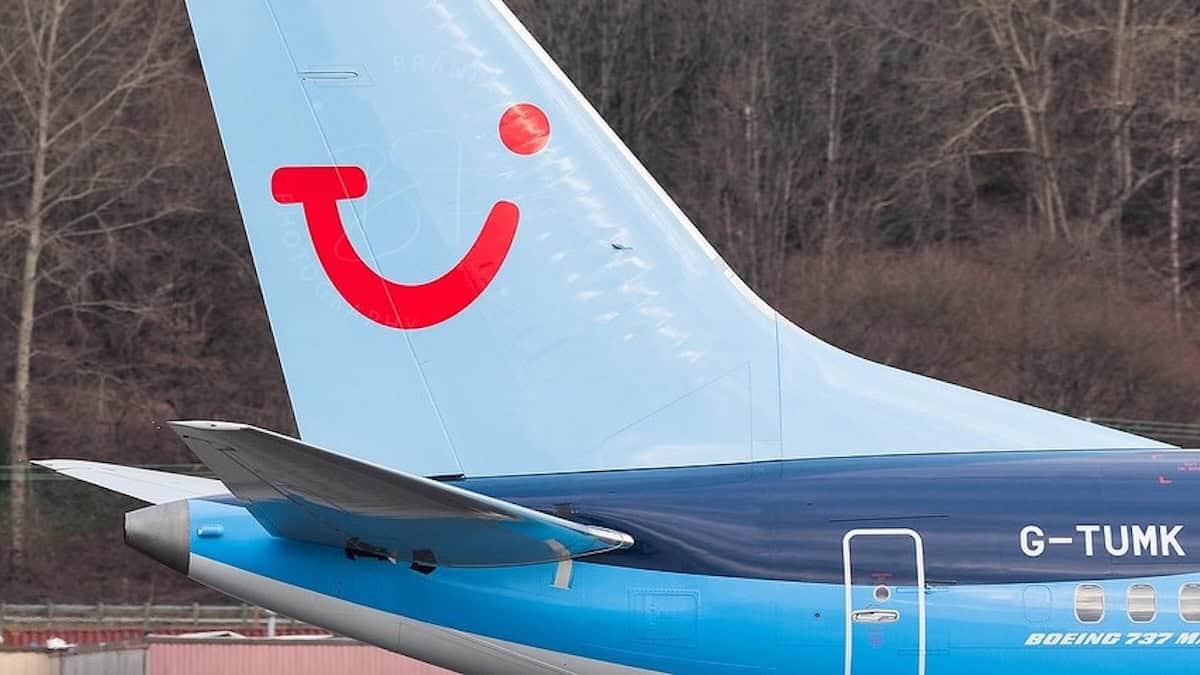
The FAA proposed a new airworthiness directive on September 21, 2026, covering Boeing 737-8, 737-9 and 737-8200 airplanes. It was prompted by a report that bearings in the elevator buss assembly may have been installed incorrectly during production, in some cases with no sealant applied at all.
The proposal, filed under docket FAA-2026-8811, would affect 95 airplanes on the US register. Comments are due by November 5, 2026.
What the elevator buss assembly does
In the FAA’s own description, the elevator buss assembly is part of the elevator control system and assists in the movement of the control columns. The directive is filed under Air Transport Association code 27, the chapter covering flight controls.
The failure chain the agency describes runs in stages. Improperly installed bearings could crack, the cracking could spread to the bearing housings, and that could cause premature failure of the elevator buss assembly crank arms.
The FAA states the end result plainly: the condition, if not addressed, “could impact elevator pitch control and affect continued safe flight and landing of the airplane.”
This is a proposal, not a rule
An NPRM is the stage before an airworthiness directive takes legal effect. Nothing is mandatory on any operator until the FAA reviews the comments and issues a final rule, which it may do with changes. Boeing issued its own service bulletin covering the same work in December 2025.
What the checks involve
The work comes from Boeing Alert Requirements Bulletin 737-27A1331 RB, dated December 17, 2025, which the directive would make mandatory. Mechanics would perform a detailed inspection of the elevator buss assembly bearings and housings, looking for cracks and for evidence that sealant was applied.
Where findings warrant it, the bulletin calls for a push-out load test on three specific bearing part numbers, a test that checks whether a bearing is still properly retained in its housing.
Depending on what that turns up, an operator may need to replace individual bearings, repair the assembly at the affected location, or replace the entire elevator buss assembly.
The FAA estimates the inspection alone at 23 work-hours per airplane, or $1,955 at its standard $85 labor rate, and $185,725 across US operators. Replacing a single bearing runs from $1,105 to $1,809, while replacing a whole elevator buss assembly is priced at $98,241 in parts.
The agency adds that according to the manufacturer, some or all of those costs may be covered under warranty.
The second factory-process defect on the MAX this month
Four days earlier, on September 17, the FAA issued a final rule on the same three 737 MAX models, ordering inspections for cracks in the fuselage skin, bear strap and stub frame. That one traced back to how the structure was handled on the production line.
These are different parts of the airplane and different defects, but they share a root: something done wrong while the aircraft was being built, found later, and pushed out to the fleet as an inspection order.
The pattern is not Boeing’s alone. On September 18 the FAA ordered repeat landing gear checks on 29 US A320-family jets after a supplier was found to have removed bushings the wrong way.
The applicability numbers are worth noting. This elevator proposal reaches 95 US airplanes rather than the whole MAX fleet, because it covers only the aircraft Boeing identified in its bulletin, which points at a defined production window rather than a design problem.
There is also a gap in the timeline. Boeing dated its bulletin December 17, 2025, and the FAA’s proposal to make that work mandatory landed just over nine months later.
No in-service failure is described
The FAA’s justification is a report of incorrect installation, not an accident, an incident or an in-flight control problem. The agency issued the proposal on the basis that the condition is likely to exist or develop on other airplanes of the same type design.
Sources and references used for research and fact-checking.
Get the Newsletter
The latest aviation news and stories sent to your inbox.
About the Author
Tim is the owner and lead editor of AeroCorner since 2019, overseeing aviation content covering aircraft, airlines, airports, and the broader aviation industry. Through years of researching, writing, editing, and publishing aviation-focused content, he has developed extensive practical knowledge of commercial aviation and air travel. Based in Asia and a frequent traveler himself, Tim also brings firsthand passenger experience to AeroCorner’s coverage. Outside of publishing, he has also explored aviation firsthand through hands-on flight training in New Zealand.