

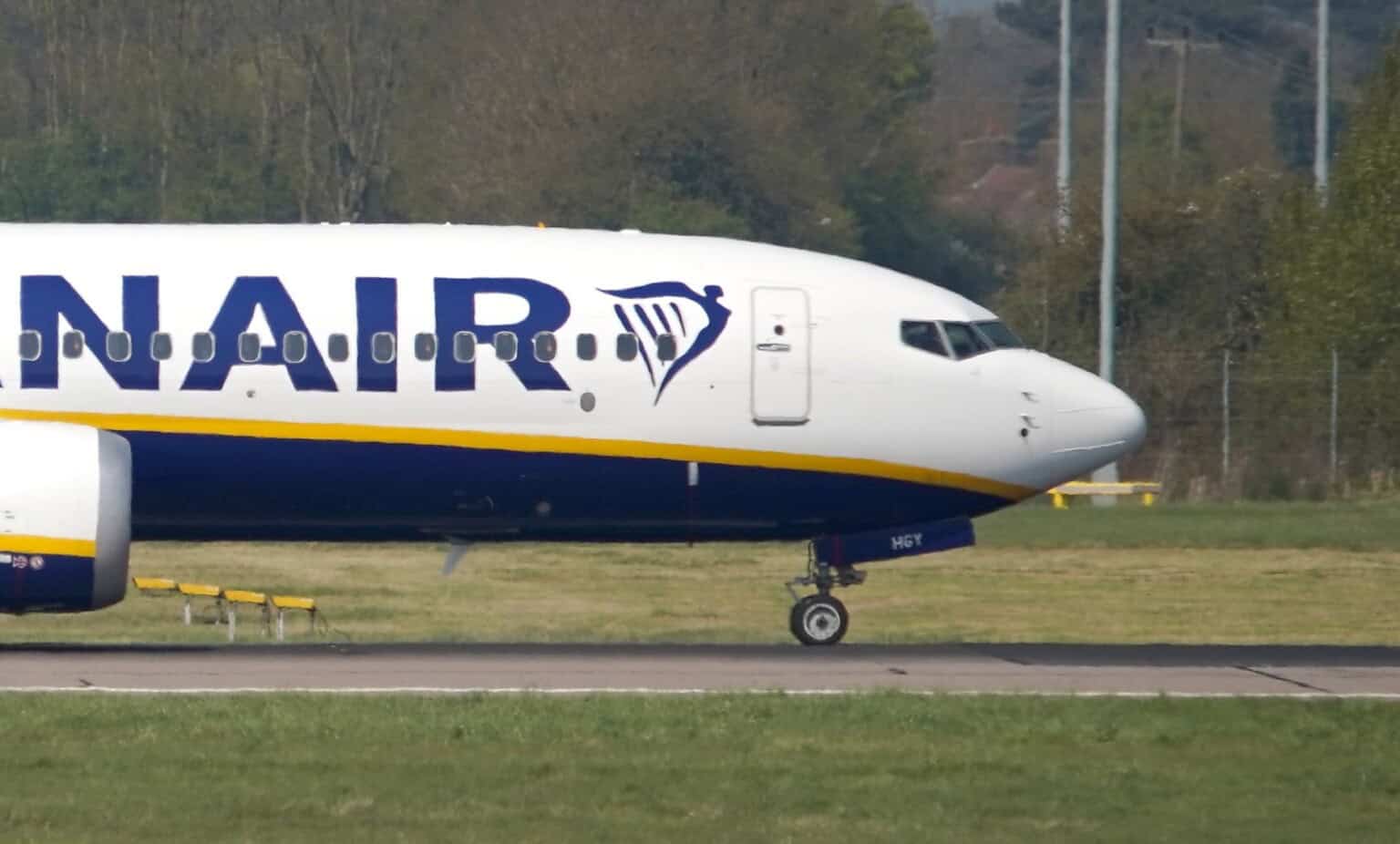
On September 17, 2026, the FAA published a final airworthiness directive requiring repeated crack inspections of a structural fitting beside the forward galley door on Boeing 737-8, 737-9 and 737-8200 airplanes. The directive, AD 2026-18-07, takes effect on October 22 and covers 476 airplanes on the US registry.
It is the second crack directive aimed at that exact spot on the 737 MAX in six weeks. The two are separate rules built on separate Boeing bulletins, and this one carries an answer the first did not.
What has to be inspected
The FAA says the rule was prompted by reports of cracking in the bear strap and stub frame at the forward galley door cutout, in a narrow band of structure from fuselage station 290 to station 296, between stringers S-8R and S-9R.
Operators pick one of two inspection options in Boeing Alert Requirements Bulletin 737-53A1420 RB. Both start with visual checks for existing repairs, then move to eddy current inspections of the skin, bear strap and stub frame, and both require the internal eddy current check to be repeated on a cycle thereafter.
The FAA’s stated worry is not the crack itself but its length. Left alone, it says, a crack there could grow until the structure can no longer carry limit load.
What a bear strap actually is
A door cutout interrupts the fuselage skin, and a hole in a pressurized tube concentrates stress around its edge. The bear strap is a reinforcing doubler bonded around that cutout to spread the load back into the surrounding structure, and the stub frame is the short frame section that carries it. They exist because the cutout is a stress concentration, which is also why they are the parts that crack.
An airliner is a tube because a tube handles internal pressure evenly, as our explainer on why every airliner is a tube sets out. Every door is a deliberate weakening of that tube.
A safety group asked about root cause, and the FAA answered
Four parties commented on the proposal: Boeing, United Airlines, Southwest Airlines and The Foundation for Aviation Safety. The Foundation asked what the FAA and Boeing were doing about the root cause, and why the inspection was not required sooner if the defect is serious enough to ground an airplane once found.
The FAA’s reply is the most consequential line in the document. It said the compliance times were set so that any crack is caught well before critical length, with multiple chances to detect it, and then added that Boeing is introducing changes to the manufacturing process that address the root cause on in-production airplanes.
That is the FAA stating, in a published rule, that the source of this defect is how the airplanes were built rather than how they have been flown. It also means the fix splits in two: a production change for jets not yet delivered, and recurring inspections for the 476 already in US service.
Two directives, one door frame
In August the FAA issued a separate bear strap directive covering the same door cutout, extending to the MAX an inspection already required on the older 737NG. That rule was precautionary, and rested on a different Boeing bulletin.
This one lists no affected ADs, meaning it neither replaces nor amends the August rule. Operators of the same fleet now hold two directives for structure a few feet apart.
The AD also does not say which airframes the cracks were found on. It refers only to reports of cracking at that location and to Boeing 737 fleet findings.
What it costs, and the small fight over paperwork
The FAA prices the first option at 31 work-hours per airplane, about $2,635, or roughly $1.25 million across the US fleet. The lighter second option runs 7 work-hours and about $595. The repeating internal inspection costs about $2,465 per airplane, near $1.17 million fleetwide every cycle.
Replacing a stub frame, if one is found cracked, is 35 work-hours plus $1,359 in parts, about $4,334. The FAA says it has no way to estimate how many airplanes will need it.
Boeing, Southwest and United all flagged the same typo in the bulletin, where a figure note said bear strap when it should have said stub frame. The FAA agreed and wrote an exception into the rule.
It turned down a separate United request to use later drawing revisions without approval, on the grounds that a directive cannot cite a document that does not yet exist.
Sources and references used for research and fact-checking.
Get the Newsletter
The latest aviation news and stories sent to your inbox.
About the Author

Tim is the owner and lead editor of AeroCorner since 2019, overseeing aviation content covering aircraft, airlines, airports, and the broader aviation industry. Through years of researching, writing, editing, and publishing aviation-focused content, he has developed extensive practical knowledge of commercial aviation and air travel. Based in Asia and a frequent traveler himself, Tim also brings firsthand passenger experience to AeroCorner’s coverage. Outside of publishing, he has also explored aviation firsthand through hands-on flight training in New Zealand.