

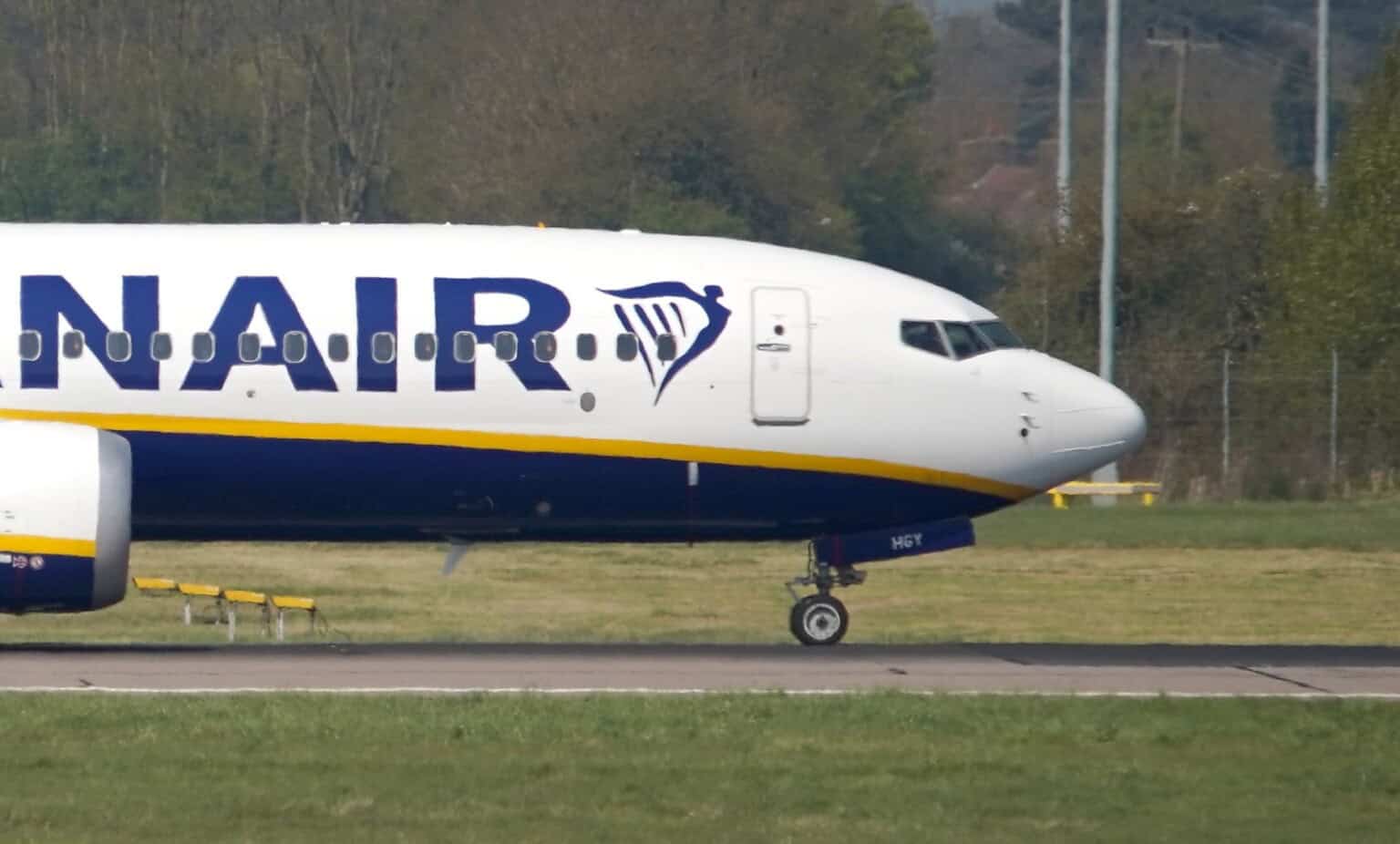
On August 6, 2026, the FAA adopted a final airworthiness directive requiring inspections of 471 US-registered Boeing 737 MAX 8, MAX 9, and 737-8200 airplanes, and 1,429 worldwide, for cracks in a structural fitting near the forward galley door. The directive, AD 2026-15936, takes effect September 10, 2026.
The three MAX variants share the same fuselage design and assembly process as the 737NG, the model family where this cracking first turned up. The FAA said no cracks have yet been confirmed on 737 MAX 9 airframes, but ordered the check anyway given that shared lineage.
What the bear strap is, and why it cracks
A bear strap is a structural reinforcement that wraps around a cutout in the fuselage skin, such as a door or emergency exit, to carry the loads the opening interrupts. The one at issue sits at the forward upper corner of the forward galley door cutout, on the right side of the fuselage just behind the cockpit.
Every pressurization cycle, essentially every takeoff and landing, puts stress on that corner. Over enough cycles, the stress concentration there can crack the fuselage skin and the bear strap itself. Left uncaught, the FAA said, a crack could grow long enough to sever the structure and undermine the airplane’s ability to carry its design loads.
How a 737NG problem became a MAX inspection
Boeing first flagged the cracking on 737NG airplanes, the 737-600 through -900ER generation that preceded the MAX, in an Alert Requirements Bulletin dated December 20, 2022. The FAA followed with its own directive, effective May 22, 2024, requiring NG operators to inspect that same fuselage skin and bear strap for cracks and existing repairs.
December 20, 2022
Boeing flags the crack on the 737NG. An Alert Requirements Bulletin covers the 737-600 through -900ER.
May 22, 2024
First FAA directive takes effect. NG operators must inspect the bear strap and fuselage skin for cracks and repairs.
November 25, 2025
FAA proposes extending the rule to the MAX. The agency cites the shared fuselage design and build process.
August 6, 2026
Final MAX directive adopted. AD 2026-15936 covers 471 US-registered and 1,429 worldwide 737-8, 737-9, and 737-8200 airplanes.
September 10, 2026
Compliance deadline begins. The directive takes effect and inspection intervals start running.
The FAA proposed extending that same requirement to the MAX in a notice published November 25, 2025, arguing that a design shared across generations can eventually develop the same fatigue problem even without a confirmed case yet. Boeing has said it extended its own inspection guidance to the MAX for the same reason, citing the design and build process it shares with the NG.
How many aircraft are affected
AD 2026-15936 covers 471 Boeing 737 MAX 8, MAX 9, and 737-8200 airplanes registered in the United States, and 1,429 worldwide.
What operators have to do
Under the new directive, operators must inspect the fuselage skin and the bear strap and stub frame at the forward galley door cutout for cracks and for any existing repairs, then repeat the inspection at set intervals. Where an inspection finds a crack, the directive requires an on-condition repair before the airplane flies again.
Boeing operators including Southwest and United have said they plan to fold the new inspections into their regular maintenance visits rather than pull aircraft out of service specifically for the check. It is the kind of routine but binding compliance step that follows almost every type certificate once in-service experience turns up a structural issue the original approval did not anticipate.
It is also not the MAX’s only open airworthiness directive this year. The FAA is separately managing an interim cabin-overheating fix on the same three variants, a reminder that a single high-volume airplane family can be carrying more than one open safety action at a time.
Sources and references used for research and fact-checking.
- Federal Aviation Administration / Federal Register, Airworthiness Directives; The Boeing Company Airplanes (AD 2026-15936)
- Federal Aviation Administration / Federal Register, Airworthiness Directives; The Boeing Company Airplanes (proposed rule, 2025-21093)
- Federal Aviation Administration / Federal Register, Airworthiness Directives; The Boeing Company Airplanes (AD 2024-06-01)
Get the Newsletter
The latest aviation news and stories sent to your inbox.
About the Author

Tim is the owner and lead editor of AeroCorner since 2019, overseeing aviation content covering aircraft, airlines, airports, and the broader aviation industry. Through years of researching, writing, editing, and publishing aviation-focused content, he has developed extensive practical knowledge of commercial aviation and air travel. Based in Asia and a frequent traveler himself, Tim also brings firsthand passenger experience to AeroCorner’s coverage. Outside of publishing, he has also explored aviation firsthand through hands-on flight training in New Zealand.