

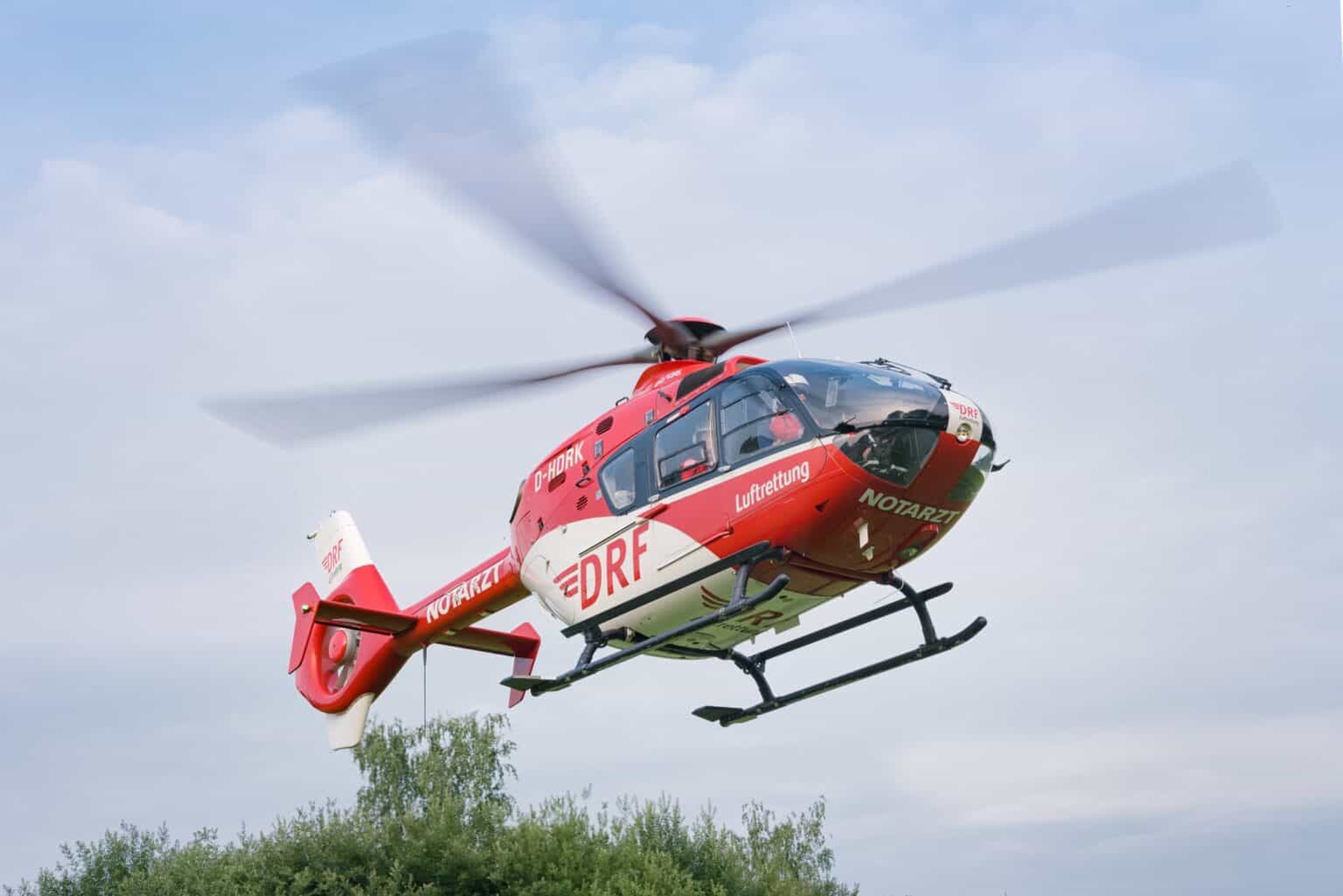
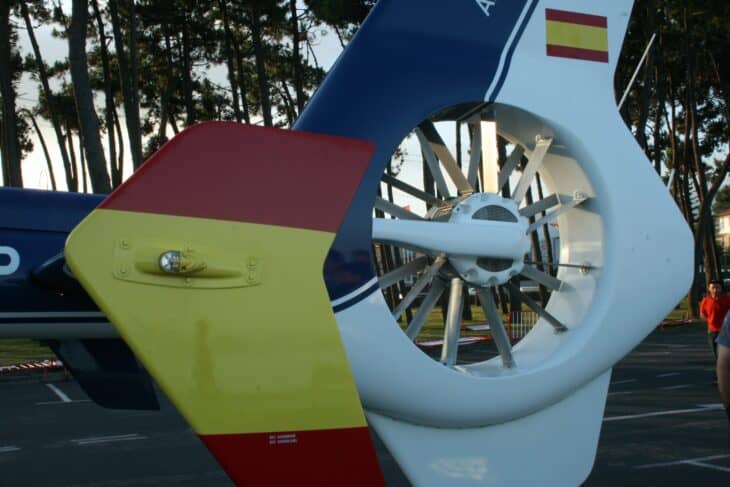
The FAA has made crack inspections mandatory for EC135 tail rotor blade assembly part number L642A2002121, a blade it says may crack from intergranular corrosion. AD 2026-23-03 was filed for public inspection on November 19, 2026, and is set to publish in the Federal Register on November 20.
It is the companion to an earlier FAA rule on two other EC135 blade part numbers, published on November 9. That rule left the third blade out, and this one covers it.
What AD 2026-23-03 requires
The rule applies to all Airbus Helicopters Deutschland EC135P1, P2, P2+, P3, T1, T2, T2+, T3 and EC635T2+ helicopters, and adopts EASA AD 2026-0031 of February 19, 2026. The FAA counts 359 US-registered helicopters, but the checks fall only on those with a -2121 blade fitted.
Each affected blade must be inspected before it reaches 1,432 hours time-in-service since it was first installed on a helicopter, or within 10 hours after the rule takes effect, whichever is later. The rule takes effect 35 days after publication, which puts it on December 25, 2026.
After that, the blades are checked every 30 hours on the EC135 P1, P2, P2+, T1, T2, T2+ and EC635 T2+, and every 20 hours on the P3 and T3. A blade moved to another helicopter must be checked within 20 or 30 hours depending on the models involved, and before the next flight if its hours since the last check are unknown.
A cracked blade comes off before the next flight, and special flight permits are not allowed. Replacing every -2121 blade on a helicopter with an eligible assembly of a different part number ends the repeat checks for that helicopter.
How the blade is inspected depends on its history. A blade already checked with visible dye gets visible dye (Method B) or eddy current, one never checked that way gets eddy current or fluorescent penetrant, and one with an unknown history is cleaned first and then gets eddy current or fluorescent penetrant.
The heated dye-penetrant check, Method A, is not allowed. The FAA says Airbus decided to discontinue it, and the agency points operators to its bulletin SAIB CE-18-26R1 on the risks of visible-dye checks on critical parts.
The FAA estimates each inspection at three work-hours and $50 in parts, up to $305, or up to $109,495 across the US fleet. A replacement blade assembly costs $4,900 in parts, and replacing all 10 on one helicopter would run up to $51,550.
Two rules, three blades
The two FAA rules follow a pair of EASA directives issued on the same day in February. They share a trigger and an inspection approach, but they cover different EC135 blades and start the clock at different points.
| AD 2026-22-10 | AD 2026-23-03 | |
|---|---|---|
| EASA directive adopted | AD 2026-0032 | AD 2026-0031 |
| Blade part numbers | L642A2002111, L642A2002112 | L642A2002121 |
| First check due | 685 hours since first installation, or within 10 hours after March 19, 2024 | 1,432 hours since first installation, or within 10 hours after the effective date |
| Earlier FAA rule | Replaces AD 2024-04-10 | None |
| Comments on the proposal | None | One, from Metro Aviation |
| Effective | December 14, 2026 | December 25, 2026 |
Both FAA rules describe the same trigger: a separated tail rotor blade assembly, cracked by intergranular corrosion. EASA’s account is that a helicopter reported increased tail rotor vibration and an inspection then found a ruptured blade assembly. Neither agency names the helicopter.
EASA first ordered checks on the -2111 and -2112 blades, then found that the -2121 blade can also be subject to intergranular corrosion. It has required checks on that part since AD 2025-0113 of May 15, 2025, which AD 2026-0031 replaced. The new FAA rule replaces no earlier US directive.
Neither FAA rule mentions G-WPDA, the EC135 P1 that lost a fenestron blade during a powerline inspection on November 16, 2025. The UK AAIB said a year later that its blade failed through a fatigue crack, and pointed to EASA AD 2026-0032 and FAA AD 2026-22-10, not to AD 2026-0031.
Why the intervals are so short
The only comment on the June 29 proposal came from Metro Aviation. It said 20- and 30-hour checks would keep aircraft out of service at widely spread Part 135 helicopter air ambulance bases, where qualified eddy current inspection vendors are scarce.
Metro asked for alternative methods, longer intervals for blades with a documented history of dye-penetrant checks, and a built-in route to relief. The FAA turned all of it down after consulting EASA and Airbus Helicopters.
Its answer explains how the numbers were set. Airbus first wanted to time inspections around finding the corrosion itself, but its investigation showed intergranular corrosion cannot be reliably detected.
So Airbus fatigue-tested fenestron blades with corrosion deliberately introduced in the critical area, then ran crack growth tests on them. Those results set the intervals, which differ by model because load spectra differ across the EC135 variants.
The intervals are meant to catch a crack before the blade fails, because a crack may still start. Several inspection campaigns have found no cracks, the FAA said, but that record does not justify stretching them.
Intergranular corrosion attacks the boundaries between the tiny crystals, or grains, that make up a metal more readily than the grains themselves. Because Airbus found it cannot be reliably detected on these blades, the rule hunts for the crack it can cause instead.
The tail rotor matters because it counters the main rotor’s torque, the force a pilot works against to turn a helicopter and hold its heading.

Sources and references used for research and fact-checking.
- Federal Register / FAA, Airworthiness Directives; Airbus Helicopters Deutschland GmbH (AHD) Helicopters (AD 2026-23-03, public inspection)
- EASA, AD 2026-0031: Tail Rotor - Tail Rotor Blades - Inspection
- Federal Register / FAA, Airworthiness Directives; Airbus Helicopters Deutschland GmbH (AHD) Helicopters (AD 2026-22-10)
- UK Air Accidents Investigation Branch, Anniversary Statement: EC135 P1, G-WPDA
Get the Newsletter
The latest aviation news and stories sent to your inbox.
About the Author

AeroCorner News is the aviation news desk of AeroCorner.com. It covers accidents and incidents, safety rulings, airline and airport disruption, and new aircraft. It works from primary sources such as the NTSB, FAA, EASA and the manufacturers' own announcements.