

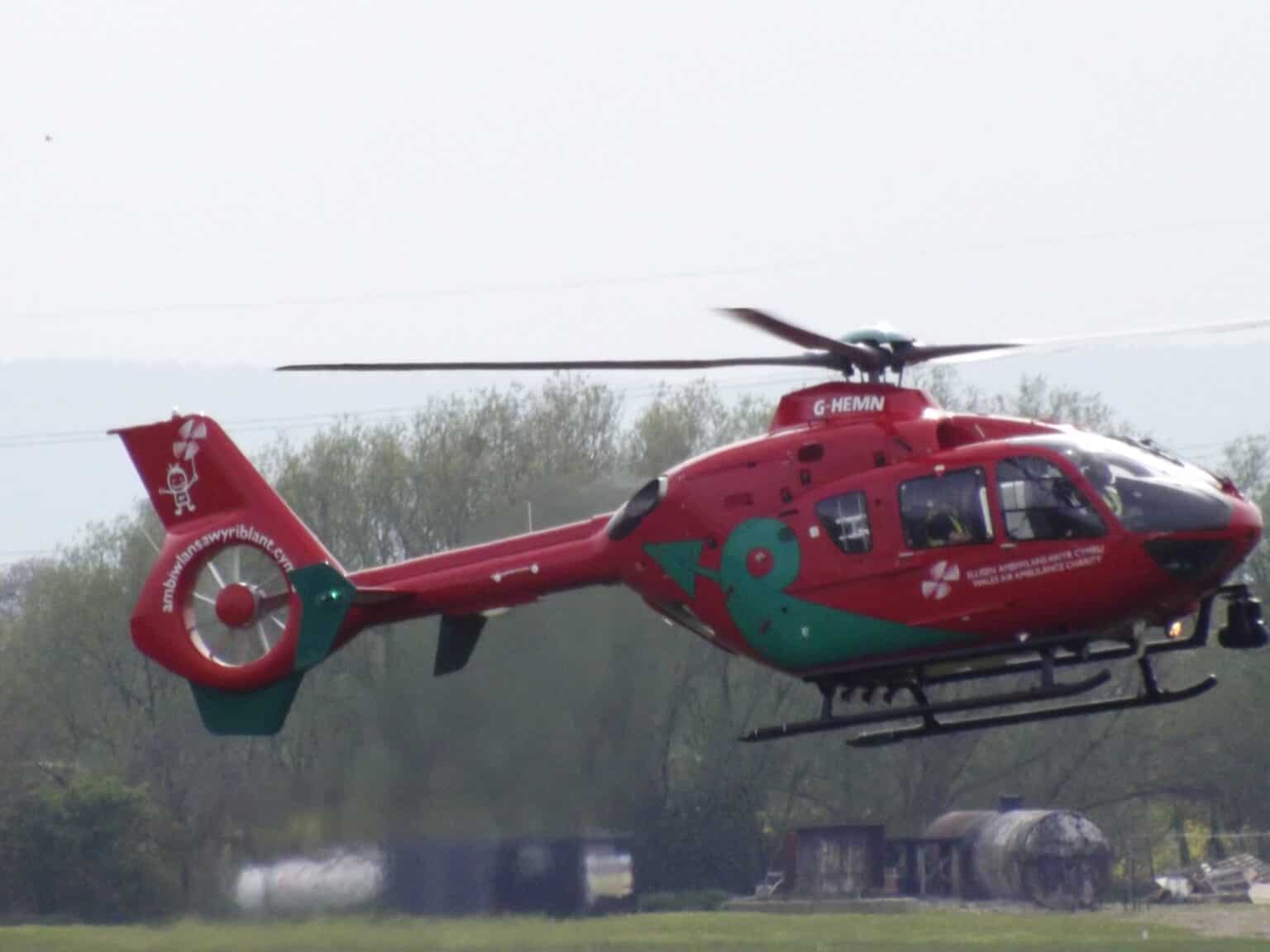
The FAA has ordered repeat crack inspections of the cable drums on certain Goodrich rescue hoists fitted to Airbus Helicopters EC135, EC635T2+ and BK117 models. AD 2026-21-09, published in the Federal Register on October 27, 2026, takes effect December 1 and is estimated to affect 476 US-registered helicopters.
The rule also sets a retirement date for one group of hoists. Those units cannot be operated from 36 months after the effective date, which works out to December 1, 2029, unless their drum has been replaced.
What the cracks could do
The FAA says Goodrich traced the cracks to a batch of drums made from a plate material with increased susceptibility to corrosion-induced fatigue. Neither regulator says how many cracks were reported, and neither document describes a hoist failure or an injury in service.
The drum is what the hoist cable winds onto. EASA AD 2025-0055, which the FAA rule adopts, says a cracked drum could lead to the cable being wrongly re-wound, possibly resulting in cable failure.
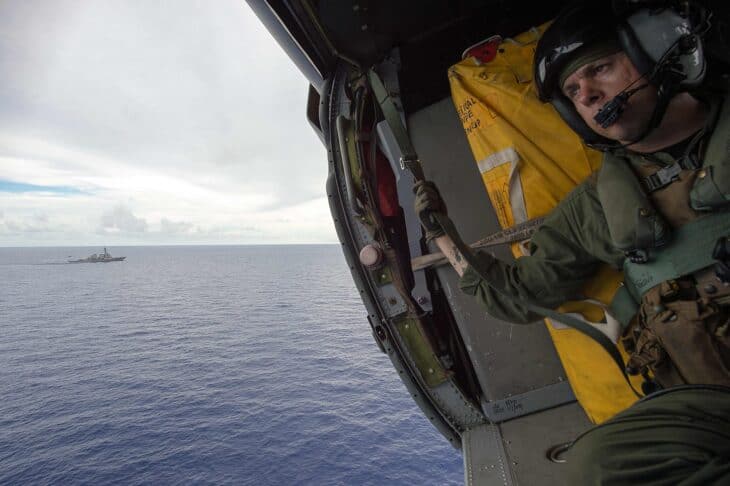

The stated risk is injury to people on the ground or to the person on the hook, whom both regulators call the “human load.”
Which helicopters and hoists are covered
The AD lists the EC135 P1, P2, P2+, P3, T1, T2, T2+ and T3 and the EC635T2+, serial numbers up to 1999, plus all serial numbers of the MBB-BK 117 C-2 and D-2. EASA’s version also names four other EC635 models, which the FAA leaves out because they have no FAA type certificate.
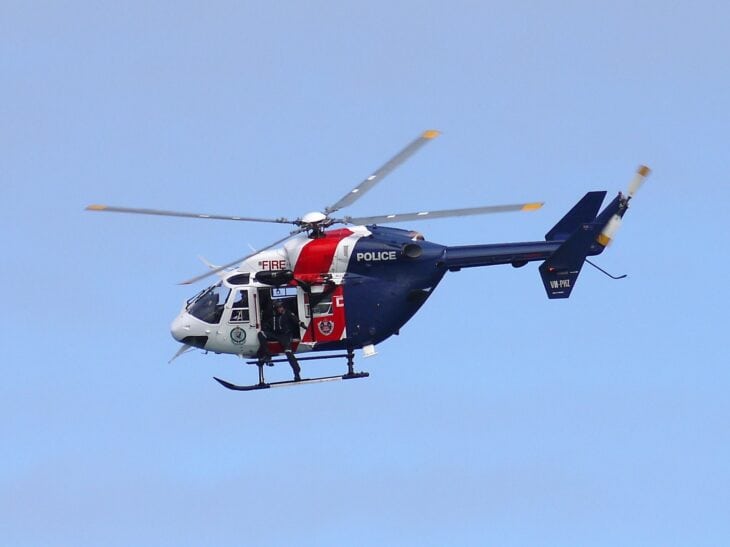
The AD treats helicopters designated EC135P3H and EC135T3H as the P3 and T3, and the MBB-BK 117 C-2e as a C-2. The Vertical Flight Society’s database lists the EC135 T3 and P3 as the H135 under later Airbus Helicopters designations.
EASA’s affected parts are rescue hoist assemblies with part numbers 44301-10-2, -4, -5, -6, -7, -10, -11, -12 and -13.
How often each hoist is inspected depends on whether it falls into what EASA calls Subgroup A, the group on a 40-cycle limit. The intervals below run on whichever limit comes first, so a heavily used hoist can come due before the month is out.
| Hoist | Inspection interval |
|---|---|
| Subgroup A: P/N 44301-10-4, -5, -7 or -10 with S/N X0067 to X0100 (X is 0 or 4), except X0082, X0098 and X0099, and except hoists with Goodrich SB 44301-10-45 done | 1 month or 40 hoist cycles |
| All other affected part numbers and serial numbers | 1 month, 3 hoist operating hours or 100 hoist cycles |
Under the FAA’s rule, a crack longer than about 0.12 inch (3 mm) must be repaired before next flight, using a method approved by the FAA, EASA or Airbus Helicopters’ design organization. EASA’s text also accepts swapping in a serviceable hoist or removing the affected one.
Subgroup A is the group facing the 2029 cutoff. Replacing the drum in the shop under the Goodrich bulletin takes a hoist out of that group, and a spare affected hoist can only be installed if it passed an inspection within the last interval.
Why the magnification changed
The final rule differs from the February 2026 proposal on how the check is done. The FAA had proposed replacing the service document’s “magnifying glass 6X maximum” with 6X or higher.
Airbus Helicopters Deutschland and Onboard Systems Hoist and Winch objected, warning of false indications and the unnecessary grounding of search and rescue assets. The FAA settled on 4X to 6X, saying 3 mm is too small to detect accurately with the unaided eye.
Onboard’s interest is direct: the company is the former Goodrich Hoist & Winch business, bought by Signia Aerospace from Collins Aerospace in a deal announced as complete in November 2024.
The FAA refused Onboard’s request for limited time to confirm a suspected crack with the manufacturer before repair, saying it may prioritize immediate action, and rejected an individual commenter’s call for inspection methods beyond visual checks.
That commenter also asked the FAA to target the highest-risk batches. The agency replied that every listed part number presents an equivalent level of risk, although the EASA table it adopts still gives Subgroup A a lower cycle limit and an end date.
What it costs, and why the US rule came later
The FAA puts each inspection at one work-hour, or $85, for $40,460 across the 476 helicopters. That total is a single pass, so on AeroCorner’s arithmetic a hoist inspected only monthly costs about $1,020 a year in labor, and the FAA does not say how many of the 476 carry an affected hoist.
Replacing a whole hoist assembly runs $123,298, of which $123,000 is parts. The FAA says it cannot determine how many helicopters would need a replacement or what a repair would cost.
The US rule takes effect more than 20 months after EASA’s, which began on March 25, 2025. Japan’s civil aviation bureau followed on June 5, 2025, for hoists on the Kawasaki BK117 C-2, with a 36-month drum replacement deadline on its listed serial numbers.
It also follows another FAA hoist directive on these types by two months. AD 2026-17-05, effective October 2, ordered affected hoists replaced over a possibly non-conformant overload clutch, across a wider list that includes the BK117 D-3, which this AD does not name.
Airbus describes the EC145 and BK117 family as used mainly for EMS, air rescue, law enforcement and aerial work, the missions behind that availability argument.
The same day’s Federal Register also carried a separate FAA order for AS350 cargo hook checks, another piece of external load equipment on Airbus helicopters.
Sources and references used for research and fact-checking.
- FAA / Federal Register, Airworthiness Directives; Airbus Helicopters Deutschland GmbH (AHD) Helicopters, AD 2026-21-09, final rule, 91 FR 67457, October 27, 2026
- EASA, AD 2025-0055, issued March 11, 2025, effective March 25, 2025
- FAA / Federal Register, Airworthiness Directives; AHD Helicopters, NPRM, 91 FR 6795, February 13, 2026
- FAA / Federal Register, Airworthiness Directives; Various Helicopters, AD 2026-17-05, August 28, 2026
- Japan Civil Aviation Bureau, TCD-10443-2025, issued May 23, 2025, effective June 5, 2025
- Onboard Systems Hoist & Winch, Signia Aerospace Completes Acquisition of Goodrich Hoist & Winch; Rebrands as Onboard Systems Hoist & Winch, November 5, 2024
- Airbus, Three years and 150 deliveries for the H145
Get the Newsletter
The latest aviation news and stories sent to your inbox.
About the Author

AeroCorner News is the aviation news desk of AeroCorner.com. It covers accidents and incidents, safety rulings, airline and airport disruption, and new aircraft. It works from primary sources such as the NTSB, FAA, EASA and the manufacturers' own announcements.