

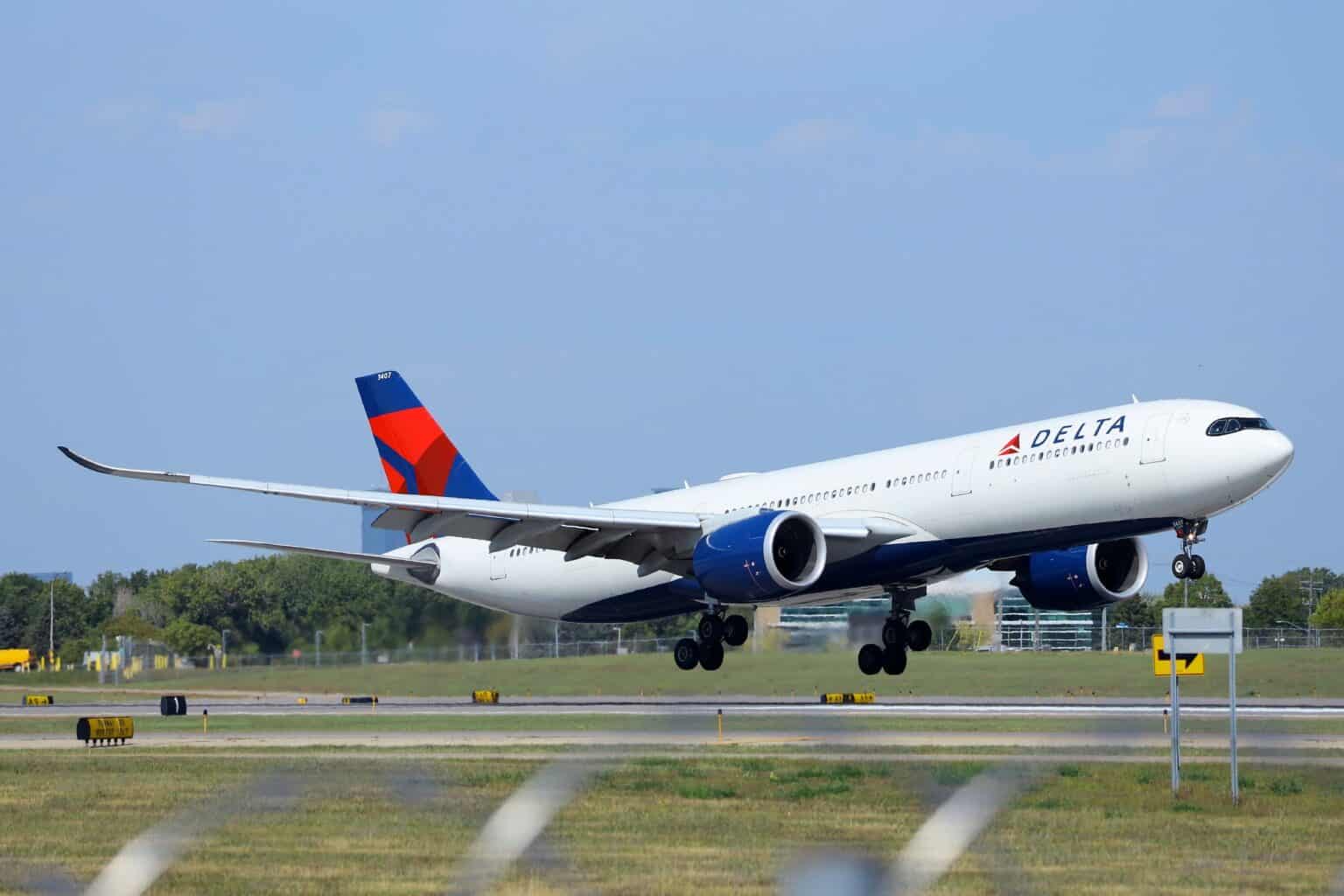
The FAA published a final airworthiness directive on October 27, 2026, that orders a new software standard for the flight control primary computers (FCPC, or PRIMs) on certain Airbus A330-941s, the type designation of the A330-900neo. AD 2026-22-02 takes effect on December 1, 2026.
The rule traces back to a landing in which all three PRIMs faulted at touchdown. According to the FAA, the aircraft lost its ground spoilers, thrust reversers and autobrake, three of the systems that slow a jet after landing.
What the A330-900 directive requires
The FAA rule adopts EASA AD 2025-0208, which Europe’s regulator issued on September 24, 2025, as the safety authority for Airbus designs. It applies to 152 A330-941s listed by manufacturer serial number, from MSN 1819 to MSN 2088.
Each PRIM must be brought up to standard P17B/M32NEO 2K2, which EASA’s text names as the fix. Under Airbus service bulletin A330-27-3250, there are three ways to get there: replace the computers, replace their on-board replaceable modules, or reprogram those modules.
The upgrade does not stand alone. Depending on the airplane’s configuration, operators must first or at the same time install matching updates to the flight management, guidance and envelope computers, the flight warning computers and the electronic instrument system, listed in a table of further Airbus bulletins.
Once an airplane is modified, only a PRIM at the new standard or a later approved one may be installed on it. That clause is what the FAA calls a parts prohibition: an older computer pulled from a spares shelf can no longer go back in.
EASA gave operators 12 months from its own effective date of October 8, 2025, so jets under EASA’s rules were due by October 8, 2026. The FAA substitutes its own effective date, which gives US operators until December 1, 2027.
The FAA counts 39 affected airplanes on the US register. It puts the work at up to 23 labor hours and up to $9,497 per airplane, or up to $370,383 across the US fleet.
The FAA proposed the rule on August 19, 2026. Its only comment came from the Air Line Pilots Association, which supported it without changes, and the final text is adopted as proposed apart from minor edits.
Why three computers failing at once matters
The A330 is a fly-by-wire jet, and its three PRIMs sit at the center of the system. When all three drop out at touchdown, the directive shows, the ground spoilers, thrust reversers and autobrake go with them.
Ground spoilers pop up at touchdown to dump lift and press the jet onto its wheels, which makes the brakes bite. Losing them, the reversers and the autobrake together leaves the crew with only manual wheel braking, and a longer stop.
EASA’s directive says the crew in the reported occurrence braked by hand and brought the aircraft to an uneventful stop. Investigators traced the cause to an undue triggering of the rudder order COM/MON monitoring in all three computers.
COM/MON refers to the two channels inside each PRIM: a command channel that computes the control orders and a monitor channel that checks them. When the two disagree beyond a set threshold, the computer drops out, a sound safeguard against one faulty computer but a problem when all three trip together.
If left uncorrected, the FAA says, the condition could cost an airplane its autobrake and reversers and possibly reduce control of the airplane.
A failure first seen on an A330-300 in Taipei
Neither the FAA rule nor the EASA directive identifies the aircraft, the operator or the date of the occurrence. Their description does match a June 14, 2020, landing by China Airlines flight CI202, an A330-302 registered B-18302, at Taipei Songshan Airport.
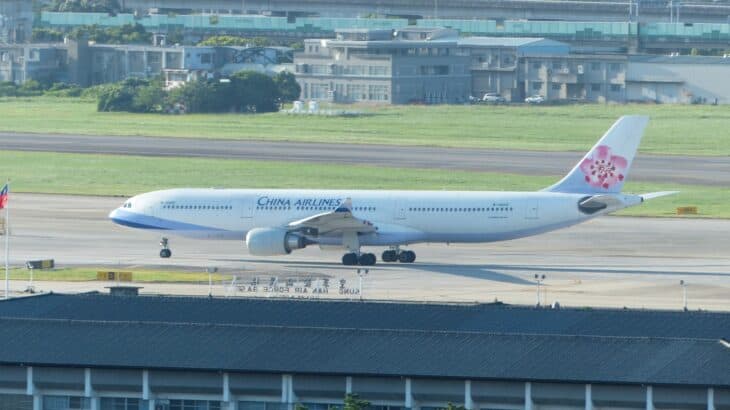

According to the Taiwan Transportation Safety Board, the three PRIMs failed almost simultaneously as the jet touched down on a wet runway 10 with 98 people aboard. The crew applied full manual braking and stopped about 30 feet before the end of the runway, with no damage and no injuries.
In its report, the TTSB recorded that Airbus planned a software fix in the next PRIM standard for every A330 variant. For the A330-900, that was a standard Airbus called “M3x,” targeted for mid-2024. It would cut the timing mismatch between the COM and MON channels and make the rudder order monitoring more robust as the jet moves between flight and ground.
The standard the new directive mandates carries the name M32NEO. When the TTSB published its findings, The Register reported the same root cause the directive now gives, an undue triggering of the rudder order COM/MON monitoring in all three computers.
Whether an A330-900 has had its own triple PRIM fault is not stated in either directive.
The order comes eight days after two other FAA actions on the A330neo. On October 19, the agency ordered new bleed computer software on the A330-800 and -900, and the same day it proposed a wiring and software fix for radio management panels that can lose sync.
Sources and references used for research and fact-checking.
- Federal Register / FAA, Airworthiness Directives; Airbus SAS Airplanes (AD 2026-22-02, final rule, FR Doc. 2026-21861)
- Federal Register / FAA, Airworthiness Directives; Airbus SAS Airplanes (NPRM, FR Doc. 2026-16874)
- EASA, EASA AD 2025-0208: ATA 27 Flight Controls, Flight Control Primary Computer, Modification
- Taiwan Transportation Safety Board, CI202 final report executive summary (B-18302, Taipei Songshan, June 14 2020)
Get the Newsletter
The latest aviation news and stories sent to your inbox.
About the Author

AeroCorner News is the aviation news desk of AeroCorner.com. It covers accidents and incidents, safety rulings, airline and airport disruption, and new aircraft. It works from primary sources such as the NTSB, FAA, EASA and the manufacturers' own announcements.