


Mid Size Helicopters
Eurocopter EC 135 P2i
ICAO: EC35
The twin-engine light helicopter built for air ambulance, police and utility work.
Updated: by Tim de Vries

The latest aviation news and stories sent to your inbox.
The Eurocopter EC135, now sold as the Airbus H135, is a twin-engine light helicopter that first flew in 1994. Its Fenestron tail rotor and bearingless main rotor keep noise and vibration low, which is why it became a standard air ambulance and police aircraft.
Live Fleet Activity (EC35)
Fetching live data…


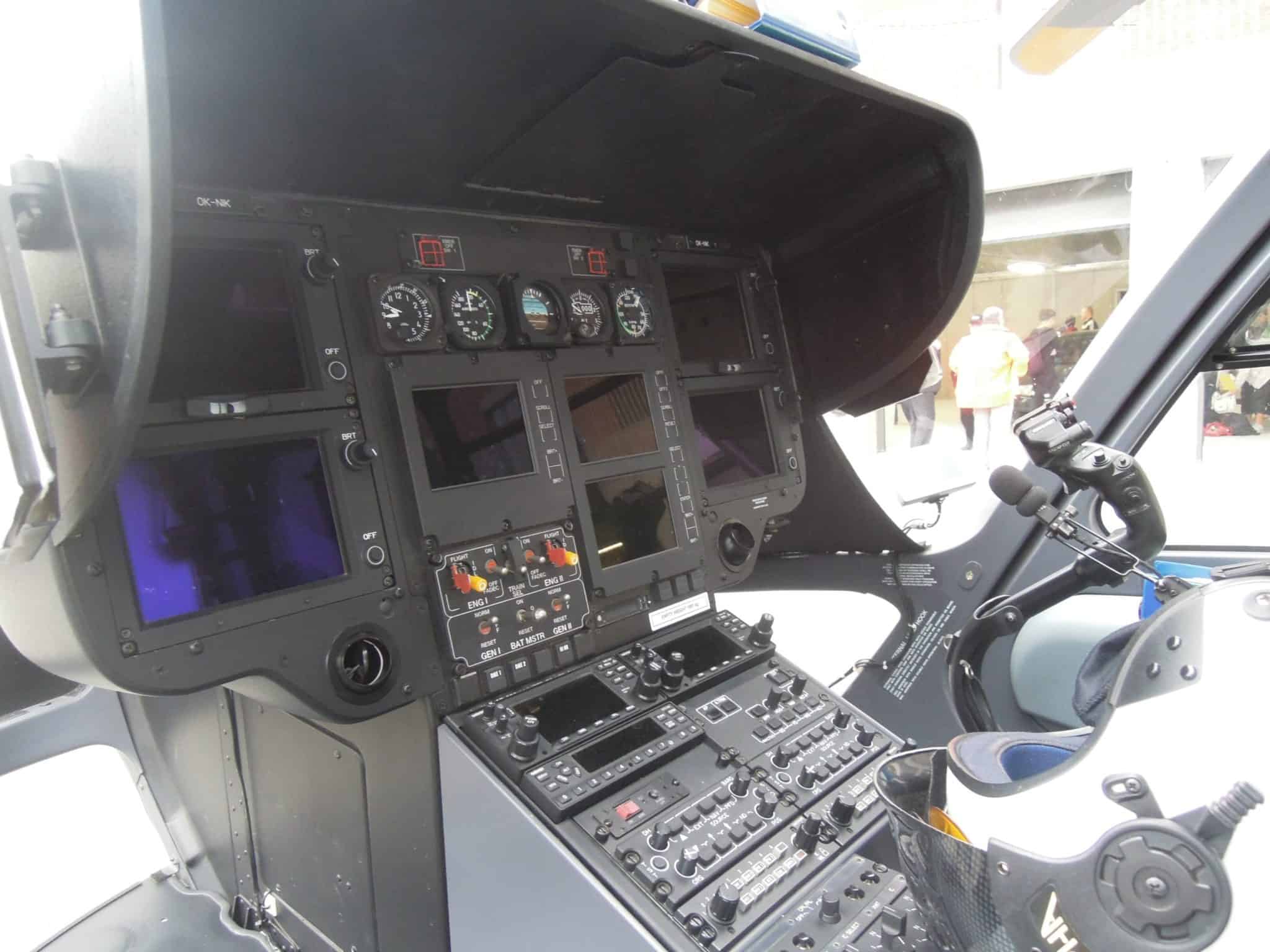


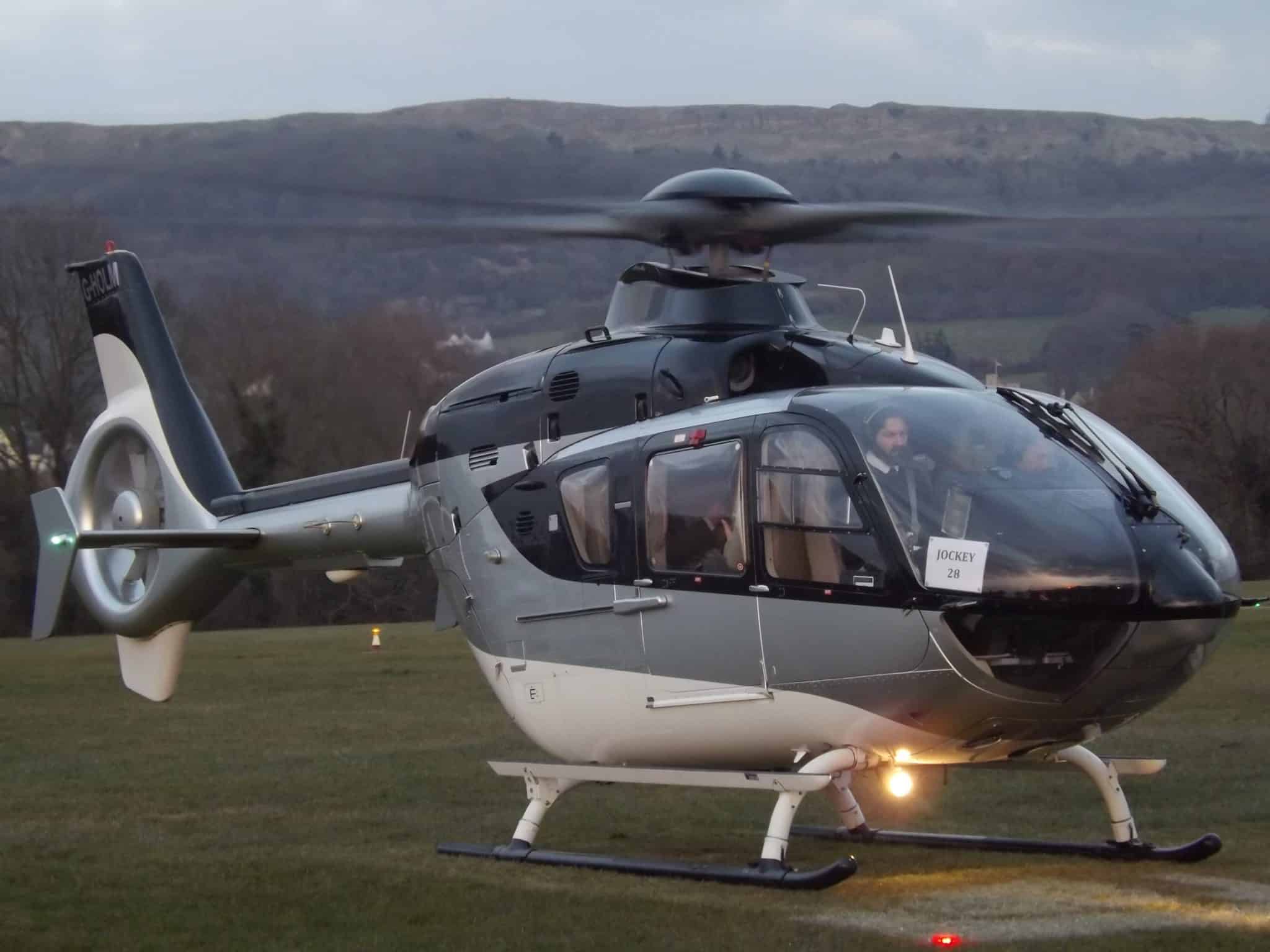


The Eurocopter EC135 is a twin-engine light utility helicopter, sold today as the Airbus H135. It is best known as an air ambulance and a police aircraft.
Airbus counts more than 700 dedicated air ambulances in the H135 fleet alone, and the type has flown for more than 30 years.
The full specification table for the aircraft is on this page. This article covers what the table cannot: where the helicopter came from, how the variants differ, who flies it and what it costs.
The EC135 is a light twin built around a four-blade bearingless main rotor and a Fenestron, a shrouded tail rotor set inside the tail fin. Two turboshaft engines drive the rotor system.
The cabin has a flat floor and aft clamshell doors designed for air ambulance work, so patients load from the rear of the helicopter.
Airbus Helicopters renamed the type H135 after Eurocopter was rebranded as Airbus Helicopters in 2014. Many operators, regulators and search engines still say EC135, and both names refer to the same helicopter.
The EC135 began as the MBB Bo 108 in the 1970s, a project of Messerschmitt-Bölkow-Blohm in Germany. The first prototype flew on October 17, 1988, with Allison engines.
A second prototype followed in June 1991 with Turbomeca engines. When Eurocopter was formed, the design was renamed EC135.
In the late 1990s the design was revised with the Fenestron tail rotor, a bearingless main rotor and composite materials. Reference histories credit the EC135 with the first full-authority digital engine controls (FADEC) on a helicopter.
The EC135 designation first flew on February 15, 1994. European JAA certification came in June 1996, followed by FAA approval in July 1996.
The first two production helicopters went to the German air rescue organization Deutsche Rettungsflugwacht in August 1996. In December 1999 the Luftfahrt-Bundesamt, Germany’s aviation authority, granted single-pilot instrument flight rules (IFR) certification.
Deliveries grew steadily. The 1,000th EC135 went to the German air rescue operator ADAC in 2011, and Airbus reported more than 1,600 delivered to over 325 operators by June 2026.
The letter in the variant name tells you the engine. A “P” is powered by Pratt & Whitney Canada PW206 engines, and a “T” by Turbomeca (now Safran) Arrius engines.
The first production versions were the P1 and T1. The P2 followed in August 2001 with improved one-engine-inoperative performance, and the T2 followed in August 2002.
The P2+ and T2+ added a FADEC upgrade and a higher takeoff weight. EASA certified the T2+ on February 21, 2006, and the specification table on this page describes that version.
The P3 and T3 reached the market in 2014, with a further weight increase and better hot-and-high performance. These are the versions Airbus now sells as the H135, with the Helionix avionics suite.
In December 2020 EASA certified an optional alternate gross weight for Helionix-equipped H135s. It raises the maximum takeoff weight by up to 265 lb (120 kg), which Airbus says can add range or up to 40 minutes of endurance.
The military version is sold as the EC635, or H135M. Our EC635 page covers it, and the EC135 P2i page covers the P2+ with its own specifications.
The T2+ uses two Arrius 2B2 turboshafts, and its type certificate lists a main rotor 33 ft 6 in (10.20 m) across and a Fenestron 3 ft 3 in (1.00 m) across with ten blades. The shroud keeps the tail rotor blades enclosed.
Airbus calls the H135 one of the quietest twin-engine helicopters. The main rotor is a bearingless, fiber-composite design.

The T2+ cockpit uses the Avionique Nouvelle glass cockpit, with dual displays and a central panel for engine and caution data. The later H135 adds Helionix, which Airbus describes as a four-axis autopilot with flight envelope protection and a synthetic vision system.
That combination is what allows single-pilot IFR flying, which matters to air ambulance and police operators that cannot always carry a second pilot.

The specification table on this page holds the numbers. A few of them need context, because the same helicopter is quoted at different figures depending on variant and measurement.
Take speed. The table lists a maximum speed of 155 kt (178 mph, 287 km/h), which is the never-exceed speed in the T2+ type certificate. The normal cruise speed is lower, at 137 kt (158 mph, 254 km/h).
Seats are worth a note too. The T2+ type certificate allows a passenger seat in the cockpit beside the pilot plus six cabin seats, or seven with an optional kit, which adds up to the 8 seats in the table.
Real missions carry far fewer. Airbus quotes one or two pilots and five or six passengers for the H135, and reference specifications list an air ambulance layout as two crew and two patients.
Payload deserves care as well. The table’s payload is the useful load, so it includes fuel, and every liter of fuel loaded comes off the cargo and passenger allowance.
The later P3 and T3 versions are certified at a higher takeoff weight than the T2+ the table describes. Airbus quotes an endurance of 3 hours 36 minutes on the standard fuel tank for the H135.
In 2016 about half of the EC135 fleet worked in emergency medical services. Air transport accounted for 17 percent, public services such as police for 16 percent, military missions for 10 percent, offshore work for 4 percent and military training for 3 percent.
That mix shows in the design: a compact twin that one pilot can fly and that is quiet enough for work over cities.

Police use is just as widespread. The UK National Police Air Service flies the type, and forces in Germany, Ireland and elsewhere have used it. Our guide to what police helicopters do covers the missions.

Armed forces use the H135 as a training helicopter. The Royal Air Force received the first two of 29 H135s, designated Juno HT1, in 2017.
Airbus delivered the first CT-153 Juno to the Royal Canadian Air Force on June 17, 2026, at its plant in Fort Erie, Ontario. Airbus says deliveries for that program continue through 2028.
In the United States, air medical operators such as Boston MedFlight fly the type, alongside NASA’s Kennedy Space Center and police departments in Massachusetts and Florida.
The EC135’s best-known accident is the Glasgow crash. On November 29, 2013, a Police Scotland EC135 T2+ crashed onto the Clutha Vaults pub in Glasgow, killing all three people on board and seven people in the bar.
The UK Air Accidents Investigation Branch published its final report in October 2015. It found fuel in the main tank that the engines could not reach, because both fuel transfer pumps had been selected off for a sustained period.
The investigators could not establish why the pumps were off, and found no significant technical defect in the aircraft. The helicopter did not land within the time the checklist specifies after the low-fuel warnings began.
The ICAO type designator for the EC135 is EC35, and it also covers the EC635 and the H135. In ICAO Doc 8643 the type is classed as a two-engine turbine helicopter, written H2T.
If you see “EC35” in a flight plan or tracking feed, it is this helicopter.
Airbus does not publish a list price, so figures come from brokers and valuation sites. A new EC135 is commonly quoted at roughly $4.7 million for a P2 and $5.7 million for a T3, depending on equipment.
Used estimates run lower and vary widely. Paramount puts a pre-owned P2 at about $3.6 million, while AircraftCostCalculator estimates about $2.6 million for a P2+. The $3.9 million header price on this page sits between those used estimates and the new-build quotes.
Purchase price is only part of the cost. Airbus lists inspection intervals of 500 flight hours for the intermediate check and 1,000 hours for the periodic check, which feeds directly into operating cost.
For a wider view of the market, see our guide to types of civilian helicopters.
Broker sources quote roughly $4.7 million to $5.7 million for a new EC135, depending on variant and fit. Used estimates vary widely, from about $2.6 million for a P2+ to about $3.6 million for a P2. Airbus publishes no official list price.
It is designed to be flown by one pilot, and it is certified for single-pilot IFR operations. The Helionix version adds a four-axis autopilot with flight envelope protection, according to Airbus. How easy it feels still depends on training and the mission.
There is no objective ranking. Difficulty depends on the rotor system, the mission and the pilot’s training, so any “hardest helicopter” list reflects opinion more than data.
The EC135 T2+ type certificate allows up to eight passenger seats, one in the cockpit beside the pilot and seven in the cabin with an optional kit. Airbus quotes five or six passengers for typical missions. An air ambulance layout carries patients and medical crew instead.
They are the same helicopter family. Eurocopter built the EC135, and after Eurocopter became Airbus Helicopters in 2014 the type was sold as the H135. The current H135 corresponds to the later P3 and T3 versions with Helionix avionics.
Yes. Airbus delivered the first Canadian CT-153 Juno on June 17, 2026, and says deliveries for that program continue through 2028. Airbus reports more than 1,600 H135 family helicopters delivered in total.
Two turboshaft engines, either Pratt & Whitney Canada PW206 or Safran (formerly Turbomeca) Arrius. A “P” in the variant name means Pratt & Whitney, and a “T” means Turbomeca.
Sources and references used for research and fact-checking.


