

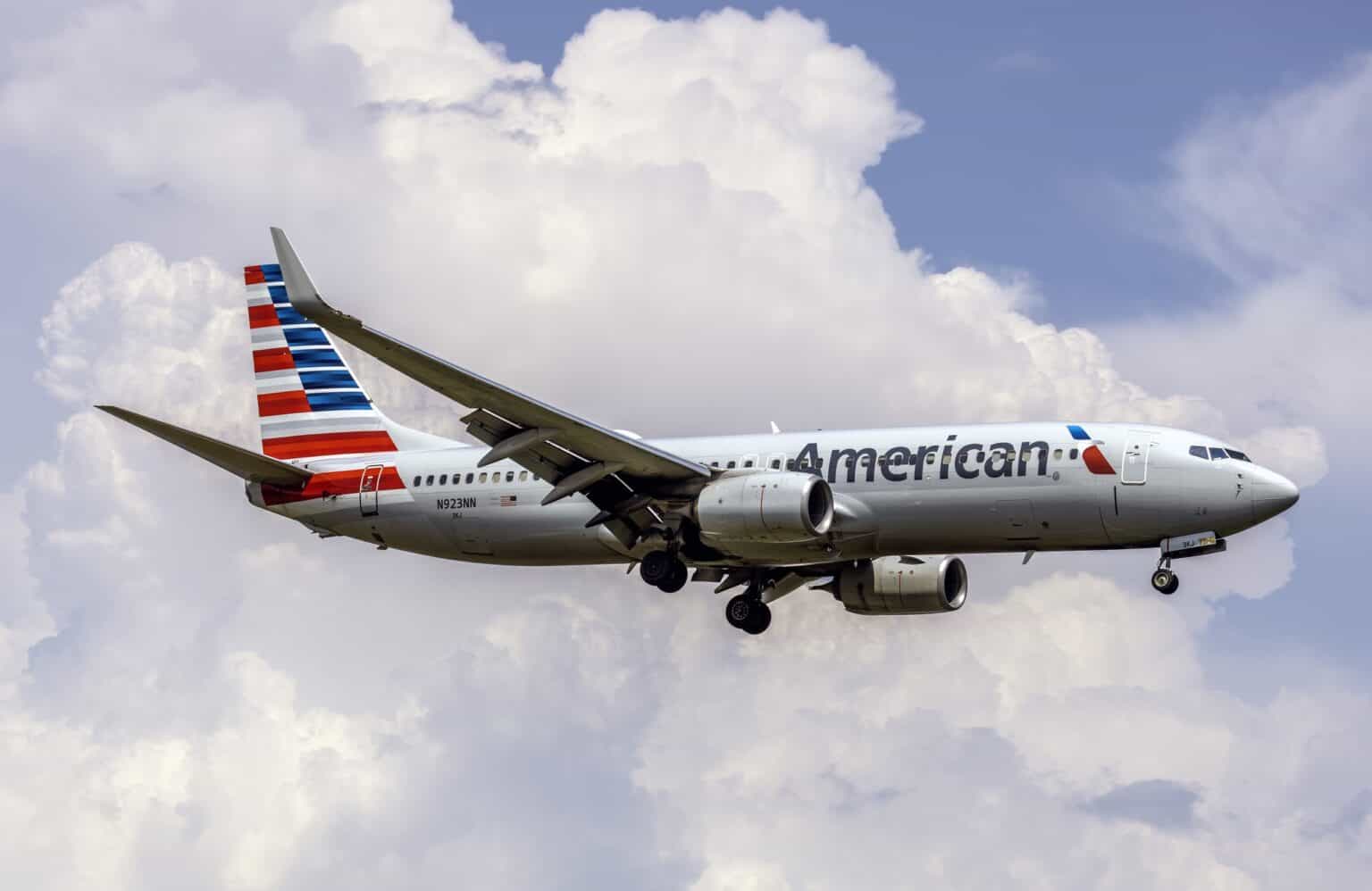
The FAA has ordered repeated built-in tests on about 300 US-registered Boeing 737NG jets, after a review found that bad or missing spoiler sensor data could go unnoticed and keep the autothrottle’s cruise thrust split monitor from activating. Airworthiness Directive 2026-23-04 went on public inspection at the Federal Register on November 18, 2026, and is scheduled for publication on November 20.
It covers certain 737-600, -700, -700C, 737-800 and -900 airplanes. The FAA adopted it as an immediately effective final rule, skipping the usual proposal stage, and will take public comments afterward.
What the directive requires
Operators must run repeated aileron built-in test equipment (BITE) tests of the 737NG’s digital flight control system. If a test fails, the fault has to be fixed and the test repeated until it passes.
The steps come from Boeing Alert Safety Advisory 737-BSA-22-001, dated October 30, 2026. The FAA’s rule points to that document for the compliance times rather than printing them, so the test interval is not in the public text.
One change applies: where Boeing’s advisory counts its deadlines from its own issue date, the directive counts them from the directive’s effective date. The rule’s list of models does not name the 737-900ER, and the exact airframes covered are those identified in the Boeing advisory.
The FAA puts each test at two work-hours, or $170 per airplane, with no parts. That is $51,000 per round of tests across the US fleet, before any repairs, which the agency says it has no definitive data to estimate.
The rule takes effect 15 days after publication, which works out to December 5, 2026, and comments are due 45 days after publication, on January 4, 2027. The FAA said the compliance time is shorter than a comment period and publication would take, one reason it went straight to a final rule.
Why a spoiler sensor matters to the autothrottle
The cruise thrust split monitor, which FAA documents abbreviate as MONFD, is a safeguard built into the autothrottle. As the FAA’s directives describe it, its job is to disengage the autothrottle when a significant thrust lever split develops, before the asymmetric thrust can roll the airplane.

The monitor does not work from engine data alone. A 2024 directive on older 737s said spoiler deflection must reach a minimum level before the monitor engages, and a 2021 one named flap position as another input to its logic.
If a spoiler sensor stops reporting, or reports the wrong position, the monitor may never activate. The FAA warns the chain could run from a large throttle split to asymmetric thrust, an autothrottle that stays engaged and an uncommanded roll, which could cost control of the airplane if the crew does not catch and correct it in time.
The key word in the rule is latent: the fault gives no sign in normal operation. On older 737s, the FAA said in 2022 that a spoiler sensor failure could not be detected without a maintenance action on the flight control system, which is exactly what a scheduled BITE test is.
The same fix, now on the 737NG
The 737NG order follows a path the FAA already took with the earlier 737 Classic. In October 2022 it ordered repeat BITE tests on 737-300, -400 and -500 jets after a report that a spoiler sensor failure could go undetected by the autothrottle computer, a rule that covered 21 US-registered airplanes.
It went further on the 737-300 and -400 with AD 2024-23-03, issued in December 2024. Because flight control rigging tolerances could keep spoiler deflection below the level needed to engage the monitor, that rule required changing certain wire bundles, installing a new housing assembly and removing the mechanical aileron force limiter, among other steps, on 110 US-registered jets.
The earliest of these recent Classic rules came out of the investigation into Sriwijaya Air flight SJ182, a 737-500 that crashed into the Java Sea after takeoff from Jakarta on January 9, 2021, killing all 62 people on board. In a May 2021 directive, the FAA said Boeing had reported during that investigation that a flap synchro wire failure could go undetected by the autothrottle computer, though preliminary data showed it was highly unlikely to have caused the crash.
Indonesia’s investigators, the KNKT, released their final report in November 2022. As Reuters reported, they found a faulty autothrottle that the pilots did not properly monitor: the left thrust lever moved back to as low as 34% while the right stayed near 92%, before the jet rolled left more than 45 degrees and dived.
Nothing in the new rule ties the 737NG review to any accident or in-service event. The FAA says only that it received a report on a review of the monitor on these models.
What it means for airlines
The workload is small: a two-hour test with no parts. The weight of the rule lies in its timing, since the FAA judged the risk serious enough to make the tests binding before hearing any comments.
It is the latest in a run of 737NG directives, after freeplay checks on the horizontal stabilizer and an order to fit new overhead video monitors in October. FlightGlobal reported the order on November 18.
Sources and references used for research and fact-checking.
- FAA / Federal Register, Airworthiness Directives; The Boeing Company Airplanes (AD 2026-23-04, Docket FAA-2026-13812), public inspection
- FAA / Federal Register, AD 2022-21-05, Boeing 737-300/-400/-500 spoiler sensor BITE tests (FR Doc 2022-23366)
- FAA / Federal Register, AD 2024-23-03, Boeing 737-300/-400 flight control rigging and MONFD (FR Doc 2024-28134)
- FAA / Federal Register, AD 2021-08-14, Boeing 737-300/-400/-500 flap synchro wire BITE tests (FR Doc 2021-10562)
Get the Newsletter
The latest aviation news and stories sent to your inbox.
About the Author

AeroCorner News is the aviation news desk of AeroCorner.com. It covers accidents and incidents, safety rulings, airline and airport disruption, and new aircraft. It works from primary sources such as the NTSB, FAA, EASA and the manufacturers' own announcements.