

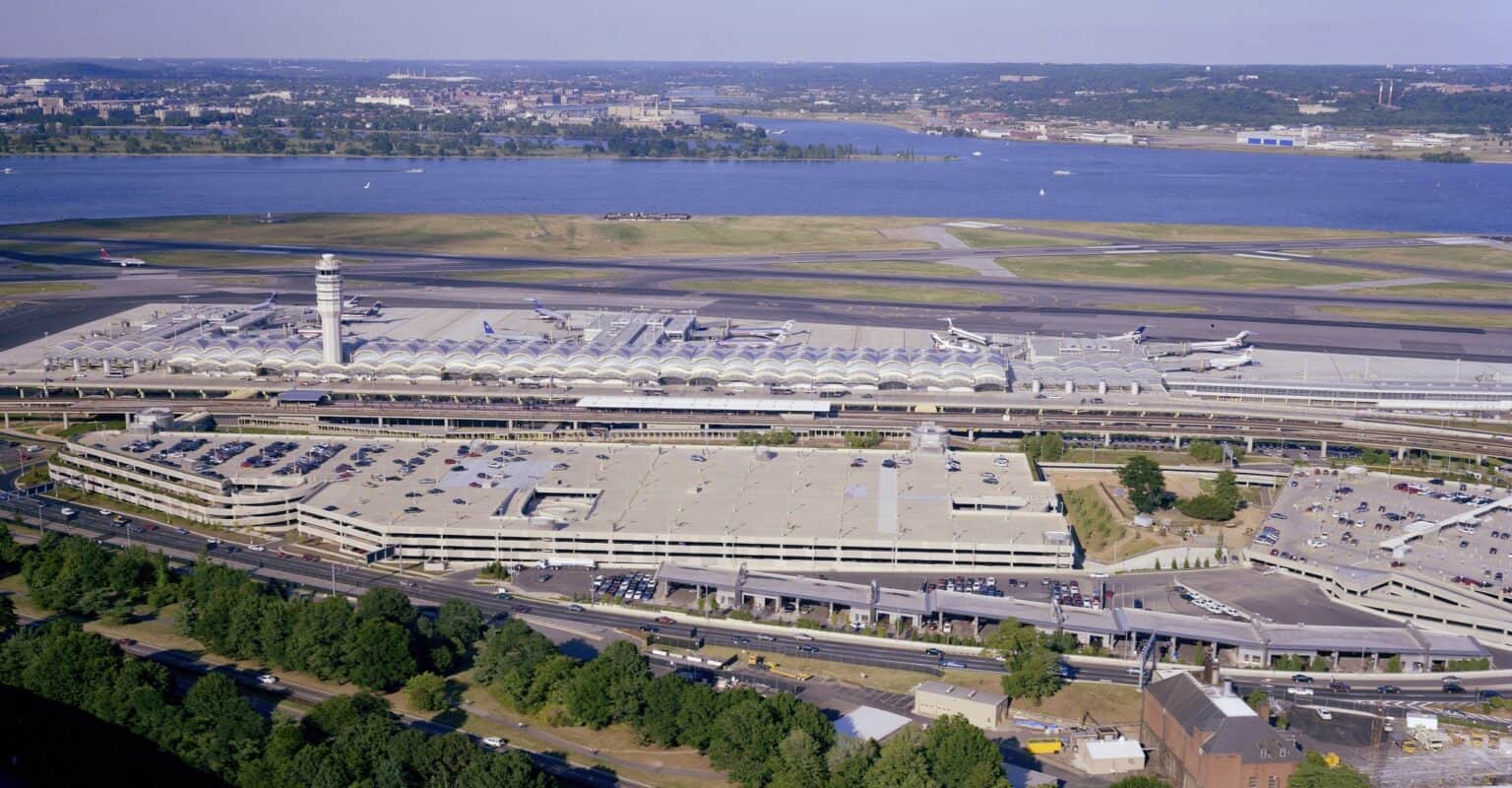
An independent review of the Flight 5342 midair collision, released on November 18, 2026, by the National Academies of Sciences, Engineering, and Medicine, finds that the FAA and the US Army did not adequately identify and address long-standing weaknesses in how collision risks around Reagan National Airport (DCA) were managed. Some of those risks remain nearly two years after the accident, the report says.
Its 25 recommendations go to the FAA, the Army, the Department of Defense and Congress. The most pointed one asks lawmakers to order a public safety and capacity assessment before they authorize any more flights at the airport.
What the Report Found
Congress requested the study after the January 29, 2025, collision between American Airlines Flight 5342, a regional jet on approach to DCA, and an Army Black Hawk over the Potomac River, which killed all 67 people aboard the two aircraft. The Department of Transportation sponsored it, and it builds on the NTSB’s investigation of the crash.
The committee was chaired by James P. Bagian, a former NASA astronaut who runs a risk-analysis center at the University of Michigan. “The collision revealed weaknesses in how aviation safety risks were identified, assessed, and managed both prior to and since the accident,” he said in the National Academies release.
On the FAA side, the report points to the crossing of Helicopter Route 4 and the approach to Runway 33. A near-midair collision happened in that same area in 2013, pilots and controllers raised concerns afterward, and the FAA did not adequately identify and address the underlying hazard before January 2025.
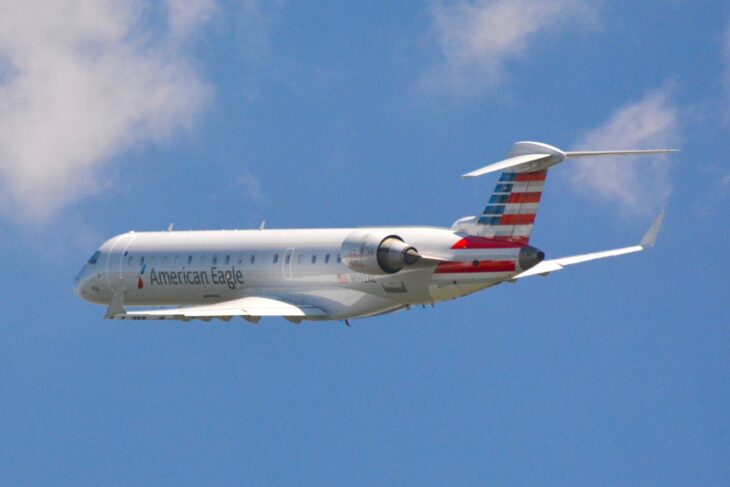

The committee found that FAA reviews often checked whether procedures were followed, rather than asking why deviations happened or whether the procedures protected anyone. Its fixes for the FAA’s Air Traffic Organization include root-cause analysis, a review of the helicopter charts controllers use, and clearer rules and phraseology for clearing aircraft into DCA’s Class B airspace.
On the Army side, the committee examined the preflight risk assessment for PAT25, the Black Hawk involved. Three risks first rated medium were lowered to low without documented measures that clearly justified it, and the assessment never explicitly named a midair collision with civilian aircraft as a risk, a gap that echoes the Army’s own Flight 5342 report.
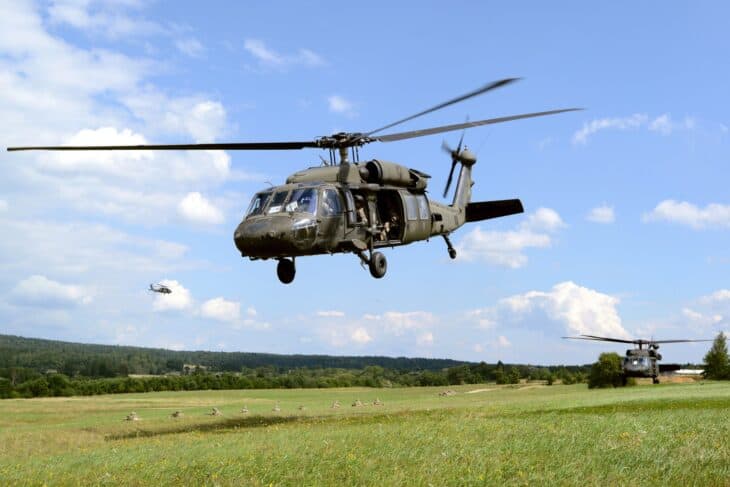

The report wants Defense Department rules requiring standardized Washington-area airspace training and proficiency checks for military helicopter crews. It also asks the Army to record, for routine training flights, whether the mission could be flown at another time, place or route, or in a simulator.
The Message to Congress on Slots
In 2023, DCA’s principal runway averaged 819 scheduled commercial movements a day, which the report calls the busiest single runway in the United States. It notes that Congress has repeatedly authorized additional flights, and that airline schedules can bunch arrivals and departures into short windows even when hourly limits are met.
Recommendation 2-3 asks Congress to direct the FAA to conduct and publicly report a DCA-specific safety and capacity assessment before any future statutory increase in operations. It would cover hourly and sub-hourly traffic, controller workload, fleet mix, runway use and helicopter traffic, and would be refreshed whenever airline seasonal schedules come out.
The FAA is also told to schedule DCA in intervals shorter than an hour and to review the airport’s arrival rates against current data. That overlaps with the DCA Air Safety Act, the bill from Virginia Sens. Tim Kaine and Mark Warner that would cap arrivals at 28 an hour, set 30-minute caps and remove 30 slots by the end of 2032.
Why “Layers of Defense” Is the Core Argument
Airspace safety is built in layers: route design keeps aircraft apart, air traffic control separates what the routes do not, and cockpit technology warns the crew when both fail. The committee found every layer inadequate on the night of the collision.
Route 4 and the Runway 33 approach let aircraft fly intersecting paths without assured separation, and controllers leaned heavily on pilots seeing each other in the dark. The jet’s collision avoidance system detected and alerted on the helicopter but could not give maneuver guidance at that low altitude, and the Black Hawk had no comparable system.
So the technology recommendations target that last layer. The FAA should set objective conditions in which visual separation is not allowed, speed up standards for the ACAS Xr helicopter collision avoidance system and then mandate it, and study whether ACAS Xa alerts can work lower to the ground.
It also asks the FAA to give ADS-B In traffic displays to aircraft without directive collision avoidance first, and to line up the equipment mandates so operators can fit everything in one shop visit. That lands two days after Senate and House negotiators announced a deal in principle on an ADS-B In mandate.
How this differs from the NTSB report
The NTSB’s January 2026 investigation issued 50 recommendations, 33 of them to the FAA and eight to the Army. The National Academies committee says many of its 25 complement the NTSB’s, while others reach past the accident itself, such as how much traffic DCA should carry at all. Neither body can order the FAA or the Army to act on them.
What Comes Next
The committee did not rank its recommendations, and it warned that the changes made since the crash are not enough on their own unless their effect is checked over time. A public release webinar is scheduled for November 19 at 1 p.m. Eastern, according to the study’s project page.
A second report will cover records of close calls involving military aircraft, wider civil-military coordination and FAA-wide safety oversight. The project page gives no release date for it.
Sources and references used for research and fact-checking.
- National Academies of Sciences, Engineering, and Medicine, Stronger Aviation Safety Management and Collision Protections Needed Following Reagan National Midair Collision, Says New Report
- National Academies of Sciences, Engineering, and Medicine, Aviation Safety in the National Capital Region, Report 1: Managing Risk in the Reagan National Airport Airspace (Recommendations)
- National Academies of Sciences, Engineering, and Medicine, Aviation Safety in the National Capital Region, Report 1 (Highlights)
- National Academies of Sciences, Engineering, and Medicine, Airspace Design, Civil-Military Coordination, and Operational Safety in the National Capital Region (project page)
- NTSB, Systemic Failures Led to Midair Collision Over Potomac River in Washington
- Office of Sen. Tim Kaine, Kaine & Warner Unveil Legislation to Reduce Traffic, Improve Safety at DCA
Get the Newsletter
The latest aviation news and stories sent to your inbox.
About the Author

AeroCorner News is the aviation news desk of AeroCorner.com. It covers accidents and incidents, safety rulings, airline and airport disruption, and new aircraft. It works from primary sources such as the NTSB, FAA, EASA and the manufacturers' own announcements.