

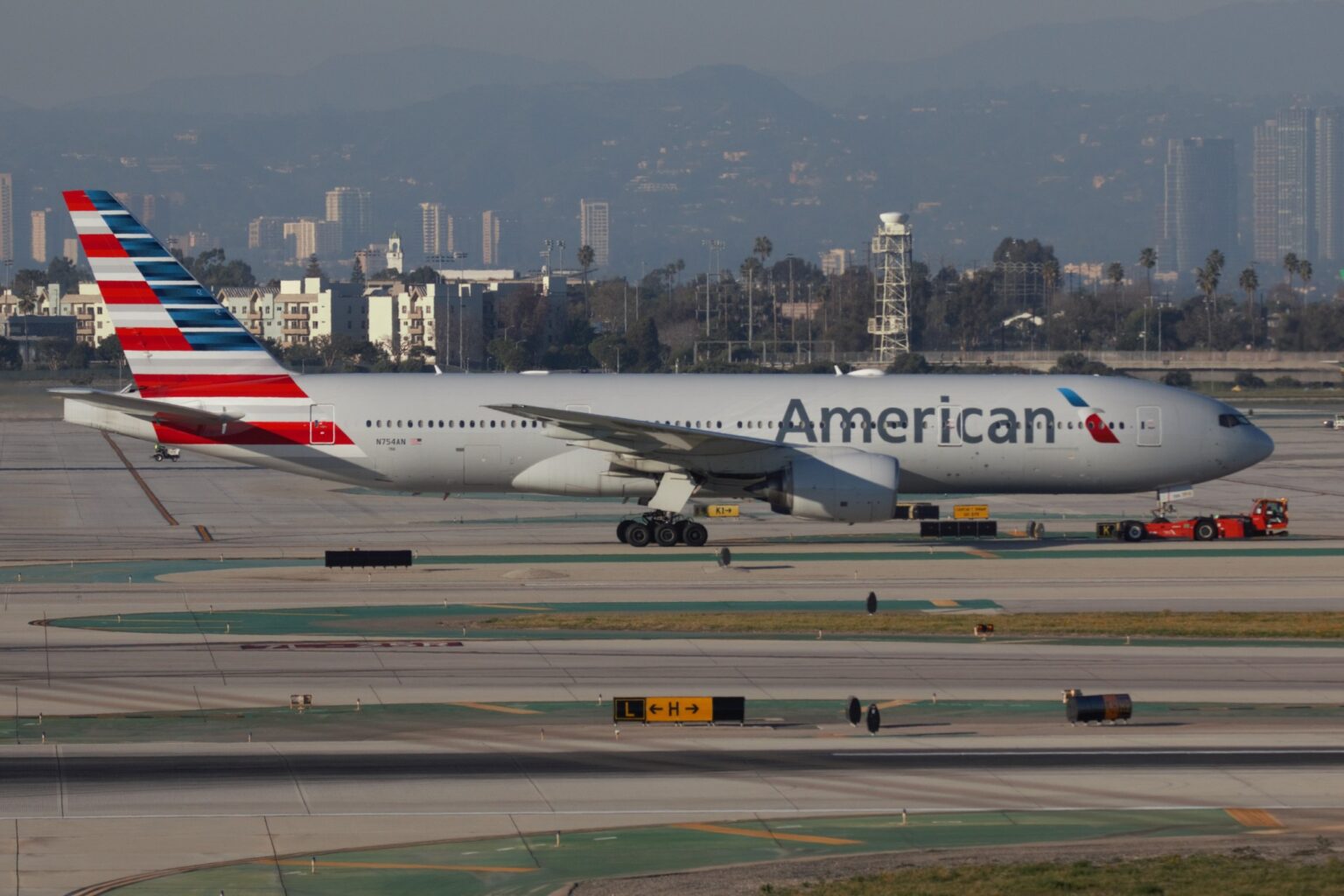
The FAA is asking airlines to make pilots say the number of a runway out loud before they cross it, a direct response to the night in January 2023 when American Airlines AA106 taxied across a JFK runway in front of a departing Delta 737. The guidance, Information for Operators (InFO) 26016, is dated November 18, 2026.
It recommends that Part 121 airlines, Part 135 operators and Part 91 Subpart K fractional programs update their standard operating procedures so crews “announce the runway they are about to cross, as indicated by signage.” Crews flying aircraft with an aural advisory system or equivalent technology are exempt.
What the FAA is recommending
An InFO is guidance, not a rule. The FAA’s notice states that it is not legally binding and that conformity is voluntary, so ignoring it carries no penalty in its own right.
The FAA describes the callout as “a double-check mechanism” that confirms intended actions and prevents misunderstandings about clearances. It also asks operators with a safety management system to look for taxi navigation errors caused by multitasking and to apply human factors principles when fixing them.
The notice cites the NTSB’s safety recommendations from its report on the JFK incursion, and both of its asks closely follow the board’s wording.
What happened at JFK on January 13, 2023
According to the NTSB’s final report (AIR-24-01), the crew of AA106, a Boeing 777-200 registered N754AN and bound for London Heathrow, was cleared to taxi to Runway 4L via taxiways B and K and to cross Runway 31L. The captain missed the right turn at K and continued onto taxiway J, which leads across Runway 4L.
Delta DL1943, a 737-900 registered N914DU and headed for Santo Domingo, had just started its takeoff roll on 4L. Airport surface detection equipment (ASDE-X) alerted the tower, the local controller cancelled Delta’s takeoff clearance, and the Delta crew rejected the takeoff from a peak groundspeed of 105 knots.
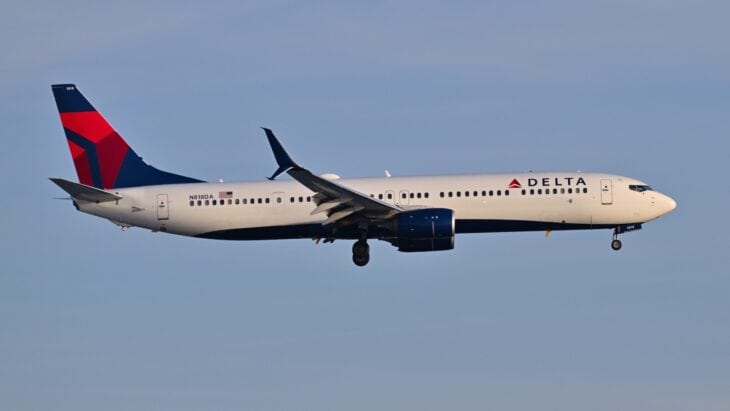

When the 777 cleared the runway, the 737 was 1,000 feet (305 m) away, the NTSB found. Nobody among the 159 people on the Delta jet or the 149 on the American jet was hurt, and neither aircraft was damaged.
Why “clear left, clear right” was not enough
The American crew did run a check before crossing. All three pilots told investigators the captain called “clear left” and the first officer answered “clear right,” a visual scan for traffic on the runway and its approach path.
That scan answers whether a runway looks empty, not which runway it is. The NTSB found that American’s procedures required the visual inspection but not a verbal crosscheck of the number on the runway hold signs, even though FAA advisory material already recommended one.
Investigators estimated that one sign or another was likely in the first officer’s view for about 10 seconds, enough time to read it. She had spent about 1.5 minutes head-down on load closeout tasks, and she either did not read the signs or did not notice that the number conflicted with the clearance.
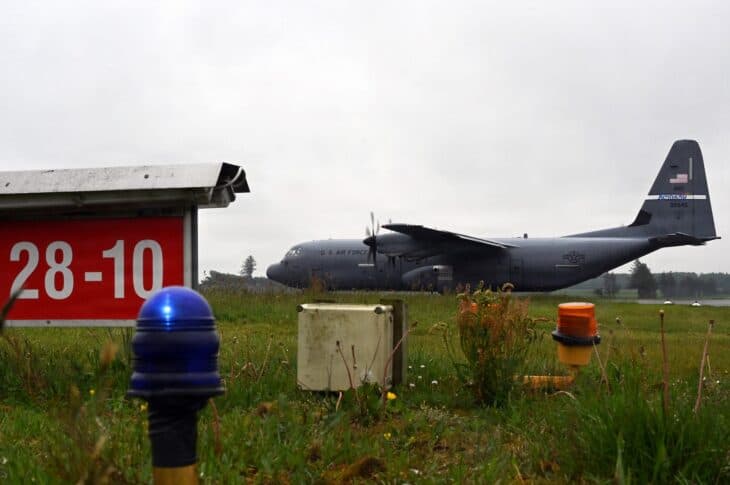

The first officer and the relief first officer both recalled the taxi clearance throughout the taxi, so a verbal crosscheck of the runway number could have alerted them to the wrong runway, the NTSB said. It called such a procedure one that “would be easy to perform.”
The red runway entrance lights were no backstop that night. They lit as the 777 reached the hold short line, and the NTSB named the system’s late activation as a contributing factor. Our guide to runway lights explains what those red lights mean.
The NTSB recommendation behind it
The InFO answers Safety Recommendation A-24-2, one of eight new recommendations in the May 29, 2024, report. It asked the FAA to encourage Part 91K, 135 and 121 operators to adopt the runway-number callout “unless a flight deck automated system already provides an aural advisory.”
A companion recommendation, A-24-3, covered the safety management system work. The NTSB’s runway safety page, last updated in August 2024, lists A-24-2 among the open recommendations it treats as critical safety priorities, and the board decides whether this notice is enough to close it.
Automated systems that announce an approaching runway’s number already exist, the NTSB noted, but none was installed on AA106. One is Honeywell’s SmartRunway, a software option for its Enhanced Ground Proximity Warning System and the successor to its Runway Awareness and Advisory System (RAAS), which lists an “Approaching Runway (on Ground)” advisory.
The callout is the cheap half of the NTSB’s answer. The same report asked the FAA to develop, then require on new and existing transport-category airplanes, a flight deck system that alerts pilots to traffic on a runway, taxiway or final approach.
JFK has had other incursions since. In April 2024, runway crossings in front of Swiss LX17 led to another rejected takeoff, which the NTSB traced to controller phraseology in its Swiss LX17 final report.
The new notice was reported by FlightGlobal and Simple Flying. The InFO does not say how many operators already use such a callout, and it sets no deadline.
Sources and references used for research and fact-checking.
- FAA, InFO 26016: Flight crew Surface Navigation Errors, Communication, and Standard Operating Procedures (SOP), Nov 18, 2026
- NTSB, Aviation Investigation Report AIR-24-01: Runway Incursion and Rejected Takeoff, American Airlines Flight 106 and Delta Air Lines Flight 1943, JFK, Jan 13, 2023
- NTSB, NTSB Releases Abstract of Final Report on 2023 JFK Airport Runway Near-Collision (June 4, 2024)
- NTSB, Runway Safety (safety issue page, updated Aug 22, 2024)
- Honeywell Aerospace, SmartRunway and SmartLanding
Get the Newsletter
The latest aviation news and stories sent to your inbox.
About the Author

AeroCorner News is the aviation news desk of AeroCorner.com. It covers accidents and incidents, safety rulings, airline and airport disruption, and new aircraft. It works from primary sources such as the NTSB, FAA, EASA and the manufacturers' own announcements.