

Table of Contents
At about 6:52 p.m. on October 20, 1977, a 30-year-old Convair 240 carrying Lynyrd Skynyrd ran out of fuel and crashed into woods near Gillsburg, Mississippi. Singer Ronnie Van Zant, guitarist Steve Gaines, backing singer Cassie Gaines, assistant road manager Dean Kilpatrick and both pilots died. The other 20 people aboard survived.
It is usually told as an old plane with a bad engine, chartered from a Texas company and flown by a careless crew. The record is stranger.
Both engines ran until the tanks were dry, toxicology found no evidence of alcohol or drugs in either pilot, and under the lease the band had signed, Lynyrd Skynyrd’s own company was the legal operator of the flight.
This article is built from the National Transportation Safety Board’s aircraft accident report NTSB-AAR-78-6, adopted on June 19, 1978. Every time, quantity and finding below comes from that report unless another source is named.
October 11, 1977
The lease. L & J Company of Addison, Texas, leases Convair 240 N55VM to Lynyrd Skynyrd Productions, Inc. for October 11 to November 2. The pilots are employed by a third company, Falcon Aviation.
October 18, 4:30 a.m.
Flames on the way in. N55VM lands at Greenville Downtown Airport, South Carolina, from Lakeland, Florida. On that leg a pilot-qualified passenger sees flames up to 10 feet (3 m) long from the right engine for about five minutes. 400 gallons (1,515 L) of fuel are added at Greenville.
October 20, 4:02 p.m.
Departure. The flight leaves Greenville on an instrument flight plan to Baton Rouge, Louisiana. The pilot files 2 hours 45 minutes en route and 5 hours of fuel aboard.
6:39 p.m.
Descent. Houston Center clears the flight down from 12,000 feet to 6,000 feet.
About 6:42 p.m.
Low fuel. The crew asks for the closest airport: “we’re low on fuel and we’re just about out of it.” Houston Center vectors the flight toward McComb, Mississippi.
6:44 p.m.
No emergency declared. “We are not declaring an emergency, but we do need to get close to McComb as straight and good as we can get.”
6:45 p.m.
Out of fuel. “Center, five victor Mike, we’re out of fuel.” Asked to confirm, the crew says it is “just an indication of it.” The last call reports 4,500 feet.
About 6:52 p.m.
The crash. Without power and in twilight, the Convair comes down in heavily wooded terrain near Gillsburg, about 10 miles short of McComb-Pike County Airport. There is no fire.
7:36 p.m.
Found. A Coast Guard helicopter homes in on the emergency locator transmitter and lights the site from 25 feet above the trees.
June 19, 1978
The report. The NTSB rules fuel exhaustion from crew inattention to fuel supply, with inadequate flight planning and a right-engine malfunction as contributing factors.
What happened
Lynyrd Skynyrd had released their album Street Survivors only days earlier. On October 19 they played Greenville Memorial Auditorium in South Carolina, and the next show was at Louisiana State University in Baton Rouge.
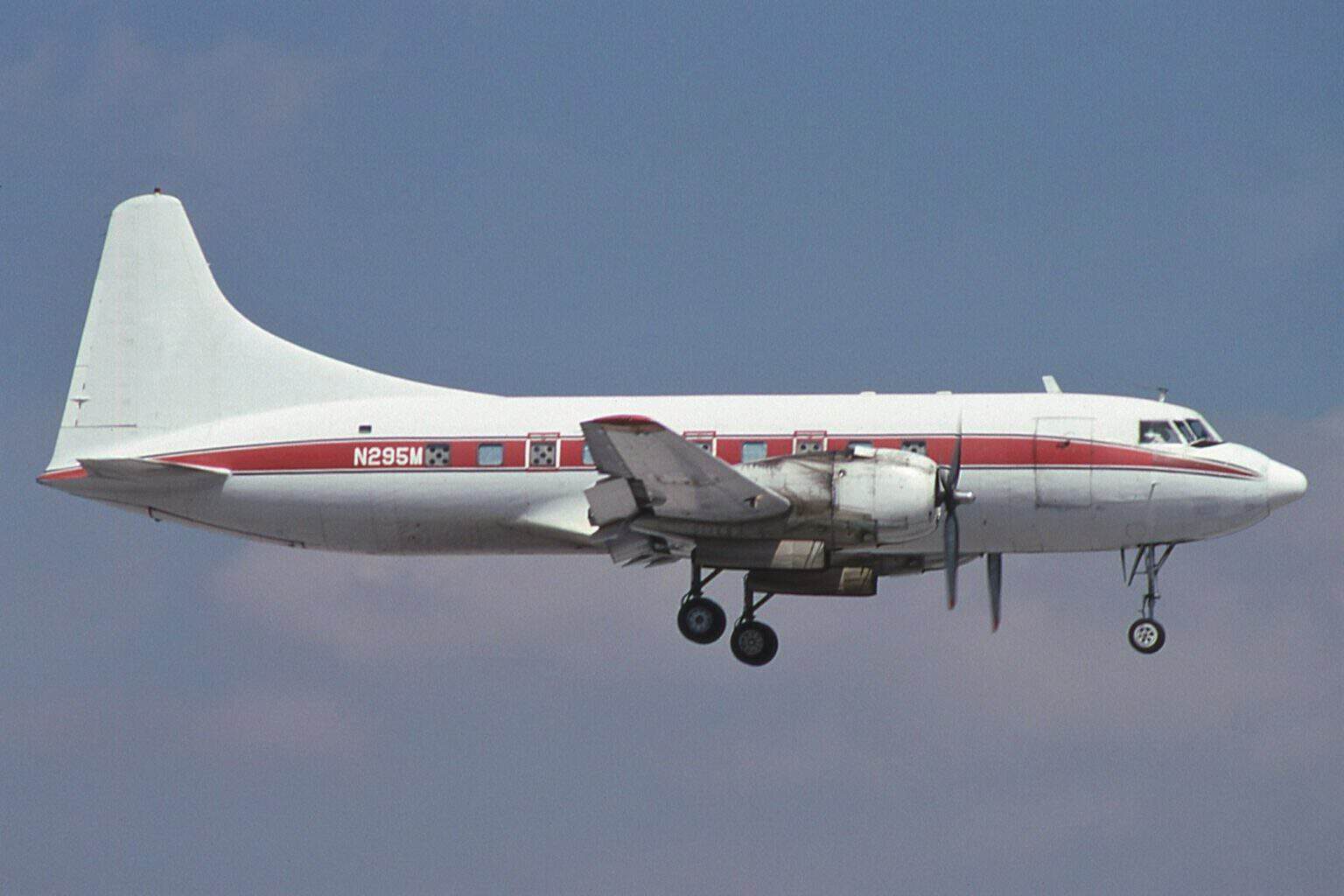
The band was flying in N55VM, a twin-engine Convair 240, the airliner the US military flew as the C-131 Samaritan. It was built in 1947, had flown 29,013.6 hours, and had been bought by L & J Company in April 1977. The cabin had been refitted with couches, swivel seats and tables for 24 passengers.
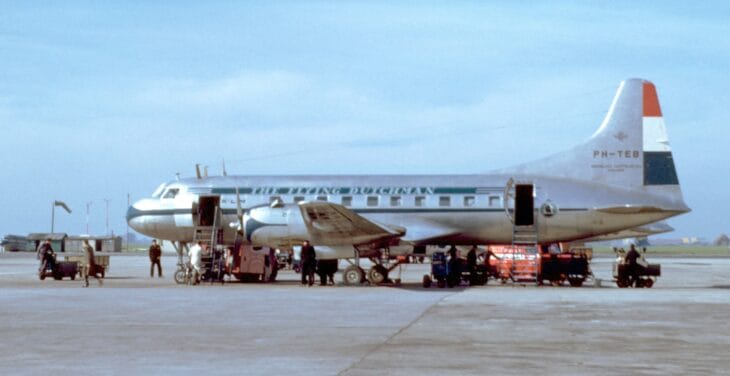

The band’s circle agreed it was past its prime. Drummer Artimus Pyle said it looked like it “belonged to the Clampett family,” and the band planned to switch to a Learjet after Baton Rouge, according to later accounts collected on Wikipedia.
Captain Walter McCreary, 34, held an airline transport pilot certificate dated September 12, 1977, with a Convair 240 rating and 6,801.6 total hours, 68 of them in Convairs. First Officer William Gray Jr., 32, held a commercial certificate with an instrument rating and had 2,362 hours, 38 in Convairs. The NTSB found both properly certificated and trained.
The flight left Greenville at 4:02 p.m. Central time on an instrument flight plan. The pilot asked for 12,000 feet, filed 2 hours 45 minutes to Baton Rouge, and declared 5 hours of fuel aboard.
The weather played no part. At McComb, the airport the crew turned toward, the sky held only scattered cloud at 5,000 feet, visibility was 15 miles and the wind was calm.
About 6:42 p.m., two minutes after starting down from 12,000 feet, the crew asked Houston Center for “the closest airport you’ve got.” Asked if it was an emergency, the reply was: “Yes, sir, we’re low on fuel and we’re just about out of it.” They wanted vectors to McComb “post haste.”
Two minutes later the pilot said they were not declaring an emergency. At 6:45 he reported “we’re out of fuel,” then softened it to “just an indication of it.” His last call gave the altitude as 4,500 feet.
A crew member warned the passengers, and most took the brace position. The Convair came down in twilight into trees as tall as 80 feet (24 m), about 10 miles (17 km) southwest of the McComb runway. According to later accounts, the crew had been aiming for an open field nearby.
Ronnie Van Zant, 29, Steve Gaines, 28, his sister Cassie Gaines, 29, Dean Kilpatrick, Captain McCreary and First Officer Gray died. All 20 survivors were hospitalized, most with multiple fractures. Pyle and two others walked out of the woods to a farm to get help.
What the NTSB found
The probable cause, in the Board’s words, was “fuel exhaustion and total loss of power from both engines due to crew inattention to fuel supply. Contributing to the fuel exhaustion were inadequate flight planning and an engine malfunction of undetermined nature in the right engine which resulted in higher-than-normal fuel consumption.”
The Board found nothing wrong with the structure or the flight controls, and the engines were “producing power until fuel was exhausted.” Only one quart of fuel was recovered from both engines, and the fuel crossfeed and fuel dump valves were all found closed.
The right engine had been running rough for some time. The crew told the passenger who saw the flames that they were running it with the mixture in “auto-rich” to smooth it out. The right magneto tested normal, and the Board judged the fault to be a general ignition or induction problem, not a major mechanical failure.
The fuel numbers are where it falls apart. The Board added up every refueling since the plane left Texas and could not find the 5 hours, or about 900 gallons (3,400 L), the pilot had filed. Greenville to the crash site took 2.8 hours, which at the normal 183 gallons (690 L) an hour is 512 gallons (1,940 L).
Running one engine rich adds about 25 gallons (95 L) an hour, roughly 70 gallons (265 L) over that flight. The Board could not say exactly how much fuel left Greenville or how long the engine ran rich, but it found no leak and no gap between the fuel receipts and the fuel pumped.
Its verdict on the crew was direct. They “failed to monitor adequately the fuel flow, en route fuel consumption, and fuel quantity gages,” and had they caught the burn early, “they could have planned an alternate refueling stop.” The pilot was also “not prudent” to fly on with a known engine problem he had not had fixed at Greenville.
Then the Board turned to the paperwork. The lease named Lynyrd Skynyrd Productions as the operator, with “paramount and complete responsibility for the supervision and direction of the flightcrew.” The band’s company, the report says, appears to have had no understanding that it was the operator or what that meant.
The rules required a copy of the lease to be mailed to the FAA within 24 hours of signing. This one, signed October 11, carried a postage-meter date of October 17, was not cancelled by the Dallas post office until October 21, the day after the crash, and reached the FAA on October 25.
Who had legally been the operator was still being fought over when the report came out. The FAA had brought an enforcement action against L & J Company, and the question was headed for the civil lawsuits that followed the crash.
What most accounts get wrong
This was not a plane brought down by its bad engine, a drunk crew, or a charter company that cut corners. Both engines ran until the tanks were empty, and the right engine mattered only because it burned extra fuel. Toxicology found no drugs or alcohol in either pilot. And it was not a charter in the legal sense: under the lease, Lynyrd Skynyrd’s own company was the operator, responsible for a crew it apparently did not know it was supervising.
The drinking story comes from Aerosmith. Their flight-operations chief, Zunk Buker, later said he saw the two pilots sharing a bottle of Jack Daniel’s when he inspected the Convair for an Aerosmith tour before the crash, and Aerosmith passed on it.
Whatever happened that day, the NTSB’s toxicology found no evidence of alcohol, drugs or carbon monoxide in either pilot’s blood.
Even Wikipedia’s account opens by calling the plane “chartered by the rock band.” The word matters because a charter company holds an FAA certificate and answers for its crews and aircraft. A lease hands that job to the customer, and here the customer was a rock band.
How a twin-engine plane runs both tanks dry
Fuel exhaustion means there is no usable fuel left anywhere on the airplane. It is different from fuel starvation, where fuel is still aboard but never reaches the engine, as in John Denver’s crash 20 years later. In N55VM, one fuel gauge was found reading zero and the tanks were empty.
The mixture control sets how much fuel each engine burns for the air it takes in.
“Auto-lean” is the economical cruise setting. “Auto-rich” feeds in extra fuel, which can smooth a rough engine at the cost of range. The Board read the torching flames as a sign of a rich mixture or some other combustion problem.
For the Convair’s Pratt & Whitney R-2800 engines at 12,000 feet, the manufacturer’s figures put auto-rich at about 650 pounds (295 kg) of fuel an hour against 500 pounds (227 kg) for auto-lean.
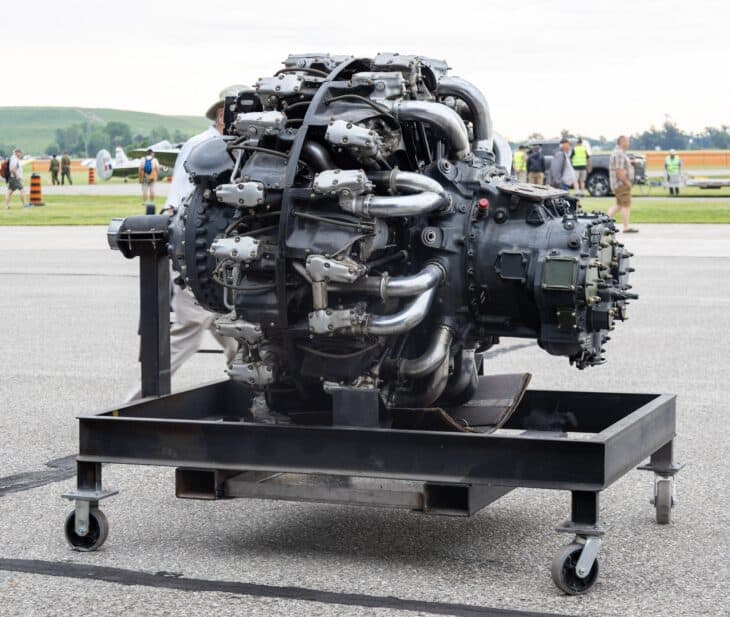

That gap, about 25 gallons an hour on one engine, shows up only on the fuel-flow and fuel-quantity gauges, which the Board found the crew had not watched closely enough.
That is why the rules build in a buffer. Today an instrument flight must carry enough fuel to reach its destination, fly on to an alternate when one is required, and then keep flying for 45 minutes at normal cruise. Airlines carry more, for reasons covered in why planes carry more fuel than they need.
A reserve only works if the crew compares what the gauges say with what the plan said. Fourteen months later, an airline crew with far more experience made the same mistake: United Flight 173 circled Portland troubleshooting a landing gear light until its fuel ran out, and that crash led to crew resource management training.
The empty tanks also explain why 20 people lived. The Board found there was no fire because the wing tanks held no fuel when the wings tore off in the trees. The cockpit was crushed, but the center of the cabin held together, and that, with the lack of fire, is what the Board credited for the survivors.
What changed
The NTSB made no safety recommendations. Its report pointed to two FAA actions instead, without saying this crash caused them.
In November 1977, a month after the crash, the FAA amended its leasing rule. Lessees now had to notify the nearest FAA office at least 48 hours before the first flight under a lease, giving the departure airport, the time and the registration. On January 16, 1978, the FAA issued Advisory Circular 91-37A with detailed guidance on leasing aircraft.
The Board was frank about why. The question was not whether the lease wording was adequate but “how does the system in such a case protect a lessee who is uninformed either by design, by inadvertence, or by his own carelessness.”
The FAA said the notice would let it inspect lease operations before they flew, and the Board hoped it would also let the FAA make sure a customer knew it was the operator.
That rule is still on the books as 14 CFR 91.23, the truth-in-leasing clause. A lease of a large aircraft must name, in large print, the person responsible for operational control, a copy must be mailed to the FAA within 24 hours, and the 48-hour notice still applies.
The problem it targets has not gone away. The FAA’s Safe Air Charter campaign tells passengers to check that an operator is certificated, and lists the question this crash asks: “Am I liable for the flight (do I have operational control)?” How a certificated operator handles a booking is covered in what air charter actually is.
Lynyrd Skynyrd stopped performing after the crash and did not reform until 1987, with Ronnie’s younger brother Johnny Van Zant singing. The crash site in the woods near Gillsburg has become a memorial for fans, survivors and the rescuers who reached it that night.
FAQ
Sources and references used for research and fact-checking.
- National Transportation Safety Board, Aircraft Accident Report NTSB-AAR-78-6: L & J Company, Convair 240, N55VM, Gillsburg, Mississippi, October 20, 1977
- Embry-Riddle Aeronautical University Hunt Library, AAR78-06 (text-searchable copy of the NTSB report)
- Electronic Code of Federal Regulations, 14 CFR 91.23, Truth-in-leasing clause requirement in leases and conditional sales contracts
- Electronic Code of Federal Regulations, 14 CFR 91.167, Fuel requirements for flight in IFR conditions
- Federal Aviation Administration, Safe Air Charter
- Wikipedia, Lynyrd Skynyrd plane crash
- Wikipedia, Ronnie Van Zant
- Wikipedia, Steve Gaines
- Wikipedia, Cassie Gaines
- AirNav, McComb-Pike County Airport (KMCB)
Get the Newsletter
The latest aviation news and stories sent to your inbox.
About the Author

Tim is the owner and lead editor of AeroCorner since 2019, overseeing aviation content covering aircraft, airlines, airports, and the broader aviation industry. Through years of researching, writing, editing, and publishing aviation-focused content, he has developed extensive practical knowledge of commercial aviation and air travel. Based in Asia and a frequent traveler himself, Tim also brings firsthand passenger experience to AeroCorner’s coverage. Outside of publishing, he has also explored aviation firsthand through hands-on flight training in New Zealand.