

Table of Contents
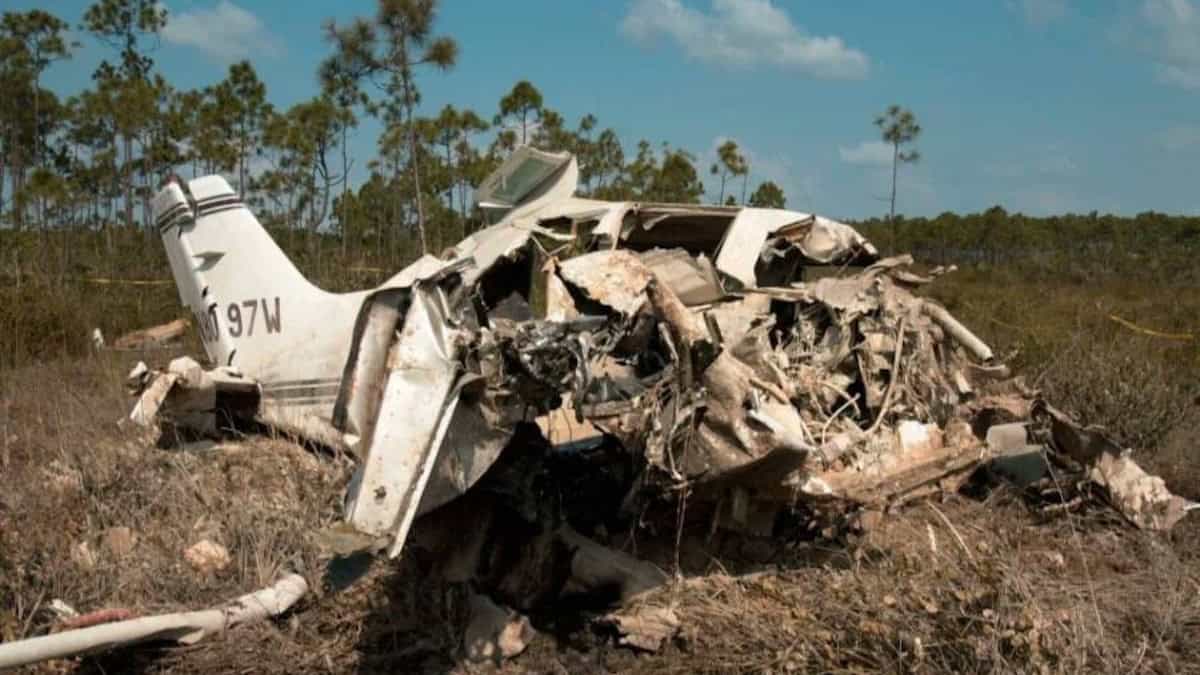
At about 6:45 p.m. on August 25, 2001, a chartered Cessna 402B crashed into a marsh seconds after taking off from Marsh Harbour in the Bahamas. Aaliyah, 22, died with her pilot and seven members of her team. The Bahamian investigators found the airplane 941 pounds (427 kg) over its maximum takeoff weight and loaded tail-heavy.
The story is usually told as an unlicensed pilot and a plane stuffed with video gear. The pilot held an FAA commercial certificate with a multi-engine rating. What he lacked was permission: the charter company was approved for exactly one pilot, its owner, and he had padded his logbook to look qualified.
This article is built from the Bahamas Civil Aviation Department’s final report, FSI File A0619836, dated August 30, 2006. The NTSB never issued its own findings: its record, MIA01RA225, was filed for information only. Facts from other sources are named as they come.
August 22, 2001
Filming starts. Shooting for the “Rock the Boat” video begins in Miami, with the second half planned for the Bahamas.
August 23
A new pilot. Blackhawk International Airways hires Luis Morales III, two days before the accident. The company’s FAA certificate allows only one pilot, its owner, Gilbert Chacón.
August 24
Out to Abaco. Aaliyah and 10 others fly to the Bahamas on two flights in a Fairchild Metro III chartered through another company, Sky Limo.
August 25
The swap. At Lantana, Florida, a fueled Cessna 404 scheduled to collect the group is replaced at the last minute by the smaller Cessna 402B, N8097W. It flies 165 miles (266 km) to Marsh Harbour.
About 6:45 p.m.
Takeoff. After an argument on the ramp over the number of passengers and bags, eight passengers board. The airplane takes off downwind on Runway 27 in 86°F heat.
Seconds later
The crash. It lifts off 2,500 to 2,800 feet down the runway, climbs steeply nose-high to about 40 feet, banks left and pitches nose down into the marsh, 300 feet (90 m) from the runway’s end. All nine aboard die.
August 29-30, 2001
First findings. The FAA says the pilot was not authorized to fly the airplane. A day later, a preliminary Bahamian report says it was loaded to within 805 pounds of its limit before anyone boarded.
November 2003
The inquest. A coroner’s inquest in Nassau hears the pathologist’s evidence, including a toxicology finding on the pilot.
August 30, 2006
The final report. Five years after the crash, the Bahamas Civil Aviation Department publishes its findings and probable cause.
What happened
Aaliyah was on Abaco to finish the video for “Rock the Boat,” the third single from her album Aaliyah. Her part was done a day early, so she and part of her team booked a flight to Opa-locka, Florida, while the shoot went on without them.
Seven people flew with her. Rolling Stone’s obituary named them: Douglas Kratz, 28, director of video production at Virgin Records; bodyguard Scott Gallin, 41; hairstylists Anthony Dodd, 34, and Eric Forman, 29; makeup artist Christopher Maldonado, 32; Blackground Records product manager Gina Smith, 30; and family friend Keeth Wallace, 49.
.jpg)
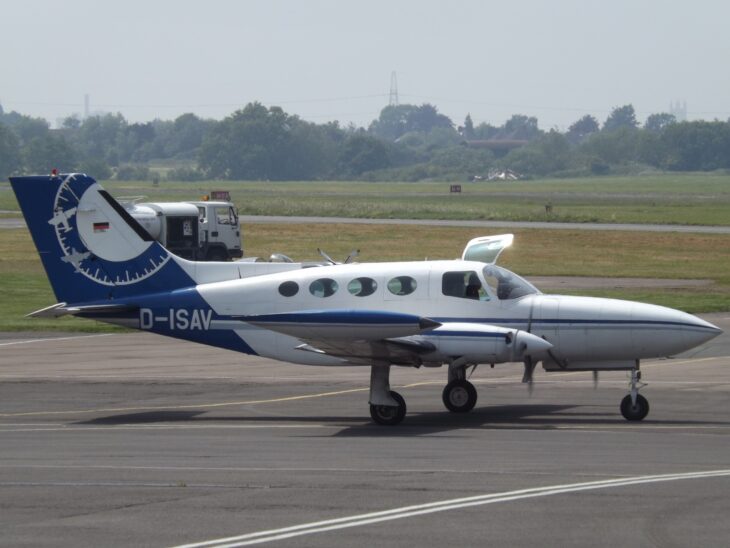
The pilot was Luis Morales III, 30, born in Santurce, Puerto Rico. The airplane was a 1976 Cessna 402B, a twin-engine piston commuter built as a utility liner and configured for nine seats, registered to Skystream Inc. and flown under Blackhawk International Airways’ FAA air taxi certificate.
It was not the airplane the trip was booked on. According to the manager of the airport at Lantana, Florida, a Cessna 404 was scheduled and fueled for the flight, then swapped for the 402B by Blackhawk’s owner, Gilbert Chacón.
Witnesses at Marsh Harbour told investigators the pilot and the group argued about how many people and bags would go. Eight passengers boarded, and the two largest, believed to weigh about 300 pounds (136 kg) each, sat in the rear of the cabin. One witness said the pilot loaded the airplane himself, and several said he had trouble starting the engines.
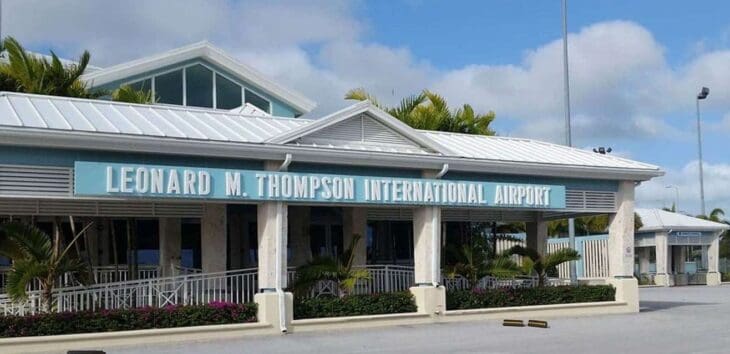

The weather was clear, with a 3 to 4 knot wind from the east and a temperature of 86°F (30°C). The Cessna took off toward the west, with the wind behind it, on the 5,000-foot (1,524 m) runway.
It used 2,500 to 2,800 feet (760 to 850 m) of runway before lifting off. It then climbed in a steep nose-high attitude to about 40 feet (12 m), banked left, pitched nose down and hit the marsh south of the runway. There was a fire after impact, and all nine people aboard died.
What the Bahamian report found
The report’s first finding: “Aircraft overweight. Pilot did not determine if the aircraft was within operating limitations.” Its second: “Pilot Unqualified. Pilot was not qualified under Part 135 for the aircraft in which he was flying.”
The numbers are stark. The 402B’s maximum takeoff weight is 6,300 pounds (2,858 kg), and the investigators put N8097W about 941 pounds over it. That figure leaves out one bag that sank in the marsh and was never recovered, so the true overload was higher.
The preliminary report showed how little room there was. Empty, the airplane weighed 4,117 pounds; the recovered bags weighed 574 pounds and the fuel 804. That left 805 pounds (365 kg) for nine people, or just under 90 pounds each, according to CNN’s account of the report.
Where the weight sat mattered as much. With the heaviest passengers in the back, the investigators calculated the center of gravity at 4.4 inches (11 cm) behind the rearmost limit of 159.8 inches. No load manifest or weight and balance calculation was ever found, and the bags were reportedly loaded without being weighed.
The pilot’s paperwork fell apart under review. His logbook listed seven “Cessna C402” registrations that FAA records identified as other types, including a 1940 Boeing PT-17 biplane, a Cessna 150 and two Beech Musketeers. In several places he had added as much as 1,000 hours to his total and multi-engine time.
The company was in breach too. Blackhawk was approved by the FAA as a single-pilot Part 135 operation, with Chacón as the only authorized pilot. Putting Morales in command made it a multi-pilot operation, which the report calls “a clear violation of the FAA regulations.”
Blackhawk also had no permission from the Bahamian authorities to fly commercially in the Bahamas, and its owner never handed over the airplane’s maintenance logbooks.
Nothing failed on the engines. Teledyne Continental’s teardown found no discrepancy that would have stopped either one running normally, and both propellers showed damage consistent with high power. The maintenance record was still poor: lint in a fuel screen, worn spark plugs overdue for replacement, rust and metal in the fuel filters, and a mandatory Cessna service bulletin not done.
Inside the wreck, the flap handle was at 15 degrees, where the handbook calls for zero on a normal takeoff. Both fuel selectors pointed to the right main tank, and the elevator trim was at full nose down. The report warns that impact damage may have moved these settings, so it treats them as unreliable.
Its human-factors section is direct. The passengers were in a hurry to leave, it says, but the pilot “did not exercise command and allowed passengers to influence him into taking all of the luggage and persons onboard.” Under the rules, that decision belonged to him alone.
The report also records that benzoylecgonine, a cocaine metabolite, was found in the pilot’s urine and ethanol in his stomach contents. It lists this as a finding without saying whether it played a part, and the pathologist at the 2003 inquest was not required to say.
What most accounts get wrong
The pilot was not unlicensed. The FAA said in 2001 that Morales was licensed to fly multi-engine commercial aircraft. His problem was authorization: Blackhawk’s certificate allowed one pilot, and it was not him. The overload is also usually given as 700 pounds, an early estimate. The final report says 941, without the bag that sank. And on the preliminary report’s figures, the recovered bags weighed 574 pounds, so leaving every one of them behind would still not have brought the airplane under its limit.
The 700-pound figure came from the first days of the investigation, and it was still being repeated two years later in the Associated Press report on the inquest. Early coverage also said no cause had been determined. That was true when Rolling Stone wrote it in 2001, but the 2006 report settled it.
The video-equipment version is murkier than either side admits. The production’s cameras, costumes and gear were shipped by a separate cargo company, according to The New York Times, and director Hype Williams told Rolling Stone the camera-equipment rumors were “all false.” At the inquest, two taxi drivers said they had worried about how much sound and video equipment the group had with them.
The 2021 claim that Aaliyah was drugged before boarding has no basis in any official record. It grew from a book passage about a baggage handler who saw her take a pill he could not identify, and the author, Kathy Iandoli, told Rolling Stone she never presented it as a drugging. The only toxicology finding in the report concerns the pilot.
Why a heavy, tail-heavy twin cannot climb out
Weight and balance are two separate problems, and N8097W had both. Weight decides whether the airplane can perform. Balance, the position of the center of gravity, decides whether the pilot can control it.
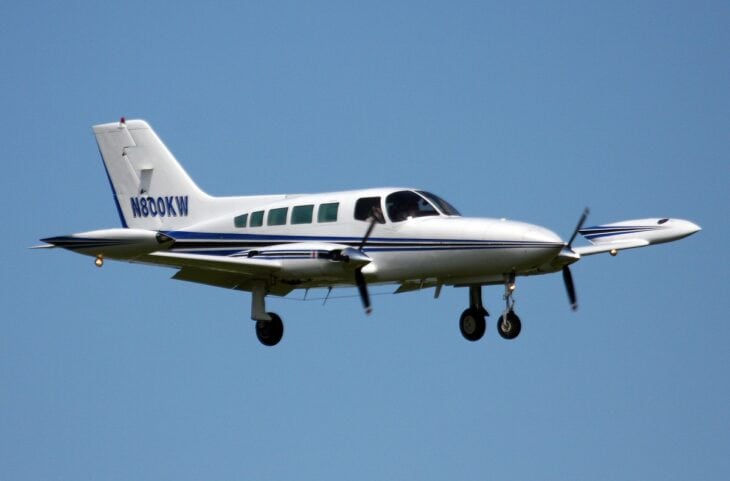
The FAA’s Pilot’s Handbook of Aeronautical Knowledge lists what extra weight costs: a higher takeoff speed, a longer takeoff run, a lower rate and angle of climb and a higher stalling speed. It warns that an overloaded airplane “may not be able to leave the ground, or if it does become airborne, it may exhibit unexpected and unusually poor flight characteristics.”
The investigators ran the handbook numbers for that day’s heat. At the legal maximum weight, the 402B needed a ground roll of 2,167 feet (660 m). N8097W, almost half a ton heavier, rolled 2,500 to 2,800 feet before it flew.
Balance is the deadlier half. An airplane is designed to pivot around a center of gravity inside a narrow range, so the tail can always push the nose back down. Move the weight too far back and the tail loses that leverage.
The same FAA handbook says tail-heavy loading “has a serious effect upon longitudinal stability, and reduces the capability to recover from stalls and spins.” It also produces very light control forces. In plain terms, the nose wants to rise, and the pilot has less with which to stop it.
The report does not use the word stall. It concludes that the overload, the aft center of gravity, the trim settings and the heat together were “a major contributing factor,” and the sequence its witnesses describe, a steep nose-high climb, then a left bank and a nose drop at 40 feet, is the poor flight behavior the handbook warns about.
The rule meant to catch this was already written. Under 14 CFR 135.63, a charter operator flying a multi-engine airplane must prepare a load manifest before each takeoff, and the pilot must carry a copy. No manifest for this flight was ever found.
What changed
Stopping this crash did not need a new rule. The single-pilot limit on Blackhawk’s certificate and the load-manifest requirement were both in force in 2001. The flight broke them both.
The Bahamian report aimed its seven safety recommendations at the gap the flight slipped through: US charter operators flying into the Bahamas without anyone checking them. It recommended that they show proof of FAA oversight, disclose any FAA maintenance citations, and face background checks and wider ramp checks. The report does not record whether those steps were adopted.
The FAA had already been watching Blackhawk. It had cited the company four times in three years, the New York Times reported, including a 1999 warning for not testing employees for drugs. The final report adds an April 2000 letter of correction over maintenance failures.
Aaliyah’s parents sued Blackhawk, Skystream, Chacón and the broker that arranged the flight, Atlantic Flight Group, for negligence. In September 2003 they reported an undisclosed settlement.
It belongs with the Buddy Holly crash of 1959 in one respect. Both were short charter flights whose pilots were not qualified for what the flight demanded, and both ended within minutes of takeoff.
FAQ
Sources and references used for research and fact-checking.
- Bahamas Civil Aviation Department, Flight Standards Inspectorate, Accident Final Report, FSI File A0619836, Cessna C402B N8097W, Marsh Harbour, Abaco, August 25, 2001
- National Transportation Safety Board (via Internet Archive), NTSB Identification MIA01RA225 (archived brief)
- The New York Times, Questions Raised About Pilot in Crash That Killed Singer
- The New York Times, Haste, Errors and a Fallen Star
- CNN, Aaliyah plane was overloaded by hundreds of pounds
- CBS News / Associated Press, Aaliyah Crash Pilot Was On Cocaine
- Rolling Stone, Aaliyah: 1979-2001
- Rolling Stone, No, a New Book on Aaliyah Doesn't Claim She Was 'Drugged' Before Her Death
- Federal Aviation Administration, Pilot's Handbook of Aeronautical Knowledge, Chapter 10: Weight and Balance
- Electronic Code of Federal Regulations, 14 CFR 135.63, Recordkeeping requirements
Get the Newsletter
The latest aviation news and stories sent to your inbox.
About the Author

Tim is the owner and lead editor of AeroCorner since 2019, overseeing aviation content covering aircraft, airlines, airports, and the broader aviation industry. Through years of researching, writing, editing, and publishing aviation-focused content, he has developed extensive practical knowledge of commercial aviation and air travel. Based in Asia and a frequent traveler himself, Tim also brings firsthand passenger experience to AeroCorner’s coverage. Outside of publishing, he has also explored aviation firsthand through hands-on flight training in New Zealand.