


Table of Contents
At about 1:00 a.m. on February 3, 1959, a chartered Beechcraft Bonanza crashed into a farm field about 5 miles (8 km) northwest of the Mason City airport in Iowa, minutes after takeoff. Buddy Holly, 22, Ritchie Valens, 17, and J.P. “The Big Bopper” Richardson, 28, died with their pilot, Roger Peterson, 21.
It is usually told as a small plane taking off into a snowstorm. At takeoff, Mason City was reporting light snow, 6 miles of visibility and a 3,000-foot ceiling, which was legal for visual flight. The record points somewhere else: a night with no horizon, two weather warnings nobody passed on, and an instrument that showed pitch the opposite way from every one Peterson had trained on.
This article is built from the Civil Aeronautics Board’s accident report, File No. 2-0001, adopted on September 15, 1959 and released on September 23, 1959. Every time, weather report and finding below comes from that report unless another source is named.
February 2, 1959
The last show. The Winter Dance Party plays the Surf Ballroom in Clear Lake, Iowa. After days of broken-down tour buses, Holly, Valens and Richardson arrange a charter to Fargo, North Dakota, the nearest airport to the next night’s show in Moorhead, Minnesota.
5:30 p.m.
The first weather check. Peterson visits the weather office in the Mason City tower. Every station on the route reports ceilings of 5,000 feet or better and at least 10 miles of visibility.
11:20 p.m.
The front speeds up. A cold front forecast to pass Fargo at 4 a.m. is now due at 2 a.m. Mason City still reports a 6,000-foot overcast and 15 miles of visibility.
11:35 p.m.
The first advisory. The Weather Bureau in Minneapolis issues a flash advisory for a band of snow about 100 miles wide, with visibility generally below 2 miles, moving southeast.
11:55 p.m.
One more check. Peterson returns with the airplane’s owner, Hubert Dwyer. The ceiling is down to 5,000 feet and light snow is falling.
12:15 a.m., February 3
The second advisory. Kansas City warns of freezing drizzle and moderate to locally heavy icing in cloud over most of Iowa. Neither advisory reaches the pilot.
12:55 a.m.
Takeoff. During taxi, Mason City reports a 3,000-foot ceiling, sky obscured, 6 miles visibility, light snow and wind gusting to 30 knots. The Bonanza departs runway 17, turns back, climbs to about 800 feet and heads northwest.
About 1:00 a.m.
The tail light descends. Watching from a platform outside the tower, Dwyer sees the light sink gradually out of sight about 5 miles out. Radio calls go unanswered.
9:35 a.m.
Found. After an air search, the wreckage is sighted in an open farm field under about 4 inches of snow.
September 23, 1959
The report. The Civil Aeronautics Board releases its findings: an unwise decision to fly into likely instrument weather, a seriously deficient briefing, and an unfamiliar attitude instrument.
April 2015
The case stays closed. The NTSB declines a request to reopen the investigation, saying the new arguments were not enough to reconsider the original findings.
What happened
The Winter Dance Party was a midwinter bus tour of Midwestern towns. The buses were poorly heated and kept breaking down, and performers came down with flu and even frostbite. On February 2 the tour played the Surf Ballroom in Clear Lake, a date its agency had added at the last minute.
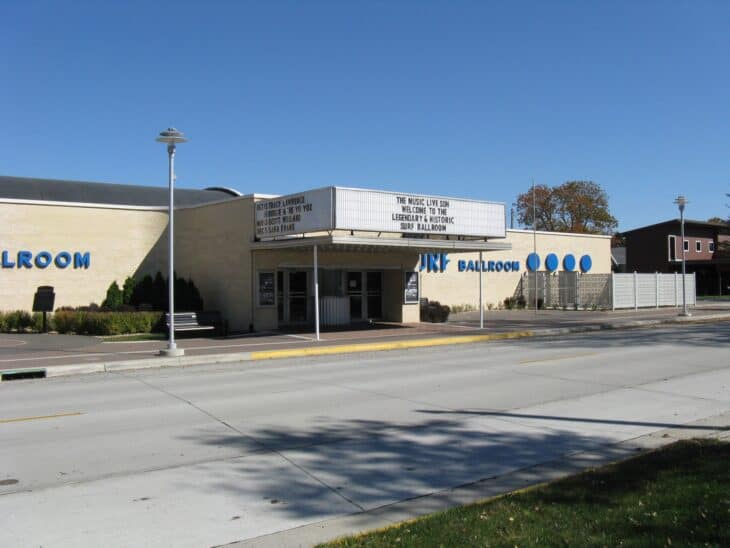

The report says only that, because of the bus trouble, three of the entertainers decided to go ahead of the others. They booked through Roger Peterson, a commercial pilot and flight instructor at Dwyer Flying Service on the Mason City airport. The fare came to $36 a seat.
Who sat where comes from the musicians, not the report. Waylon Jennings, Holly’s bass player, gave his seat to Richardson, who had the flu. Guitarist Tommy Allsup lost his to Valens on a coin toss.
The airplane was a 1947 Beechcraft Bonanza Model 35, registration N3794N, the V-tail original of the line that continues today as the Beechcraft Bonanza G36. Its Continental engine had 40 hours since overhaul, and the Board found the airplane properly maintained.

.jpg)
The panel carried a full set of instruments for flying in cloud, including a Sperry F3 attitude gyro. A Lear autopilot had been installed only recently and was not working.
Peterson started checking the weather at 5:30 p.m. and went back three more times before midnight. Each report looked flyable on its own. Together they showed a falling barometer, a lowering ceiling, snow beginning to fall and a cold front arriving two hours early.
The passengers reached the airport at about 12:40 a.m. Peterson told Dwyer he would file his flight plan by radio once airborne, for an estimated two-hour flight of about 300 miles (480 km) to Fargo.
He took off at 12:55 a.m., made a left turn back past the airport and headed northwest at about 800 feet (245 m). Dwyer could see the tail light for most of the flight. About 5 miles out, he watched it descend gradually until it disappeared, and the radio calls that followed got no answer.
The crash happened in a sparsely populated area, and nobody saw it. After an air search the next morning, the wreckage was spotted at 9:35 a.m. All four men aboard had died.
What the Civil Aeronautics Board found
The probable cause, in the Board’s words: “the pilot’s unwise decision to embark on a flight which would necessitate flying solely by instruments when he was not properly certificated or qualified to do so. Contributing factors were serious deficiencies in the weather briefing, and the pilot’s unfamiliarity with the instrument which determines the attitude of the aircraft.”
Nothing on the airplane failed. There was no fire, no sign of a structural or flight-control failure in flight, and no sign of an engine problem. The engine was producing power at impact, the propeller was in the cruise range and the landing gear was up.
The wreckage showed the right wingtip struck first, in a steep right bank with the nose low, at high speed on a heading of 315 degrees. The attitude gyro was stuck showing a 90-degree right bank, the vertical speed indicator at 3,000 feet per minute down, and the airspeed needle at 165 to 170 mph (265 to 275 km/h).
Peterson had 711 flying hours, 128 of them in Bonanzas, almost all on charter flights. He had about 52 hours of dual instrument training and had passed the instrument written exam. He failed an instrument flight check on March 21, 1958, so he held no instrument rating.
The company was in the same position. Its air taxi certificate allowed passengers for hire under visual flight rules only, day and night. Dwyer told investigators he had confidence in Peterson and relied entirely on his judgment for the flight.
The briefing was the Board’s other target. The weather office read Peterson current reports and the Fargo forecast. Neither communicator could recall pointing out the two flash advisories, and Dwyer said nothing they were told suggested instrument weather on the route. The Board called the briefing “seriously inadequate.”
It did not let the pilot and operator off, either. They had “a definite responsibility” to ask for all the available information and interpret it correctly. With a falling barometer, lowering cloud and winds that strong, the Board wrote, “the decision to go seems most imprudent.”
What most accounts get wrong
This was not a takeoff into a snowstorm. Mason City was reporting light snow, 6 miles of visibility and a 3,000-foot ceiling when the Bonanza left, and the FAA’s own case study says visual flight was still technically possible. The Board’s case rests on three other things: a dark night over farmland with no horizon, two flash advisories that never reached the pilot, and an attitude gyro that showed pitch the reverse way from the instruments he had trained on.
The snowstorm version is everywhere. A 2016 retrospective by Ultimate Classic Rock says the plane “took off in a snowstorm with strong winds” and that Peterson misread “the altitude indicator.” The instrument in question was the attitude indicator, which shows pitch and bank, not height.
Two other myths have no record behind them. No name was ever given to N3794N, so it was never called “American Pie.” The .22 revolver Holly carried was found in the field after the snow melted, and the farmer later said he had fired it himself to see whether it still worked. A 2007 re-examination of Richardson’s body found no evidence of a gunshot.
An instrument that showed pitch the other way
The attitude indicator is the one gauge that shows the airplane’s nose up or down and its wings level or banked. With no horizon outside, it is the horizon.
Every instrument Peterson trained on was the conventional kind. A miniature airplane sits against a horizon bar, as if seen from behind. Pitch the nose up and the symbol appears to climb above the horizon, which is how modern attitude indicators still work.
The Sperry F3 used a sphere, dark on the top half and light on the bottom, the reverse of the usual shading. According to the FAA’s case study, if the airplane pitched nose-up, the symbol would appear to move down the face. A pilot reading it by habit could take a dive for a climb.
The Board explained why that mattered that night. Gusty winds would have made the vertical speed indicator and the turn needle swing too much to read, and airspeed and altitude alone could not hold the pitch. A pilot of Peterson’s experience would lean on the attitude gyro, the steadiest instrument on the panel.
Under that workload, the Board reasoned, a trained reflex wins. Peterson “could have become confused and thought that he was making a climbing turn when in reality he was making a descending turn.” The wreckage, in a steep turn with the nose only slightly low, showed that some control was still being applied.
One more instrument was out of the picture. The directional gyro was found caged, locked and not working. The Board said it may never have been used on the flight, which could only have added to the confusion.
The 1959 report never uses the phrase, but this is spatial disorientation: a pilot without a visible horizon who can no longer tell which way is up. It is the same trap that caught John F. Kennedy Jr. over dark water 40 years later, on a night that was also legal for visual flight.
What changed
The report made no formal recommendations. It carried an attachment instead, a “Safety Message for Pilots” about the two kinds of attitude instrument.
Its advice was blunt: pilots trained on the artificial horizon should “not rely upon the attitude gyro unless sufficient experience has been gained under simulated instrument conditions to insure competence with this instrument.” The same applied to any equipment a pilot had not practiced with.
The rules tightened later, and the FAA’s case study ties that to a rise in weather accidents as faster airplanes arrived in the 1960s, not to this crash alone. Today, a commercial pilot without an instrument rating gets a certificate that bars carrying passengers for hire at night or on cross-country flights of more than 50 nautical miles.
Charter rules go further. Under Part 135, the pilot in command of an airplane must hold an instrument rating or an airline transport certificate even when the flight is planned under visual rules. Peterson’s flight, at night and with paying passengers, could not legally be flown by a pilot with his ratings today.
The briefing gap is now written into the procedure. In 1959 the communicators’ job was to hand over information but “not to advise in any manner.” Today the FAA’s standard preflight briefing opens with adverse conditions, and a briefer who doubts a visual flight says so in four words: “VFR flight not recommended.”
In 2015 a retired pilot asked the NTSB to reopen the case, pointing to weight and balance and fuel gauge readings. In an April 21 letter the NTSB said his evidence was not enough to reconsider the original findings.
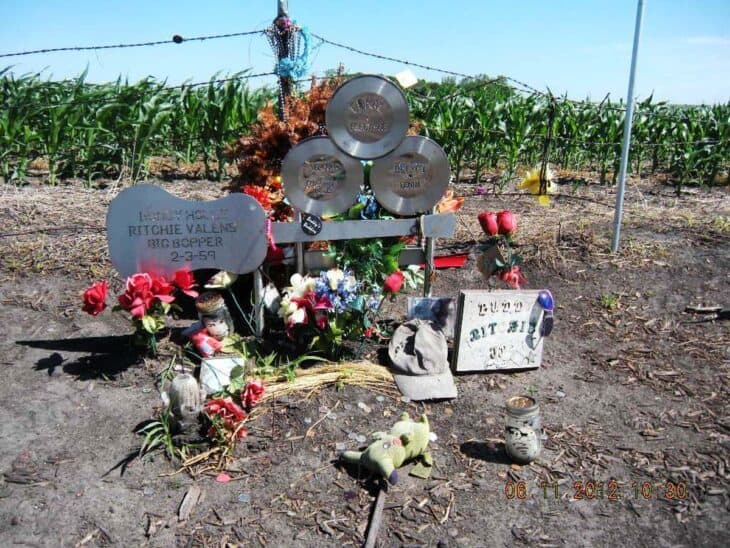
Two memorials stand near the spot in the field. A steel guitar and three records bearing the musicians’ names went up in 1989. In 2009, 50 years on, a pair of pilot wings was added for Roger Peterson.

FAQ
Sources and references used for research and fact-checking.
- Civil Aeronautics Board (via FAA), Aircraft Accident Report, File No. 2-0001, Beech Bonanza N3794N, Mason City, Iowa, February 3, 1959
- Federal Aviation Administration, Lessons Learned: Beechcraft Bonanza 35, Dwyer Flying Service, N3794N
- Flight magazine (via FAA), Sperry Attitude Gyro (Flight, March 29, 1945)
- Electronic Code of Federal Regulations, 14 CFR 61.133, Commercial pilot privileges and limitations
- Electronic Code of Federal Regulations, 14 CFR 135.243, Pilot in command qualifications
- Federal Aviation Administration, Aeronautical Information Manual 7-1-5, Preflight Briefing
- Associated Press via Pollstar, Federal Board Declines Request To Reopen Buddy Holly Crash
- AOPA, Safety Pilot Landmark Accidents: The Day the Music Died
- Plane & Pilot, Mysteries Of Flight: The Day The Music Died
- Wikipedia, The Day the Music Died
- Wikipedia, Buddy Holly
- Wikipedia, Ritchie Valens
- Wikipedia, The Big Bopper
- Ultimate Classic Rock, When Buddy Holly, Ritchie Valens and the Big Bopper Died
Get the Newsletter
The latest aviation news and stories sent to your inbox.
About the Author

Tim is the owner and lead editor of AeroCorner since 2019, overseeing aviation content covering aircraft, airlines, airports, and the broader aviation industry. Through years of researching, writing, editing, and publishing aviation-focused content, he has developed extensive practical knowledge of commercial aviation and air travel. Based in Asia and a frequent traveler himself, Tim also brings firsthand passenger experience to AeroCorner’s coverage. Outside of publishing, he has also explored aviation firsthand through hands-on flight training in New Zealand.