

Table of Contents
On the morning of March 31, 1931, a Transcontinental & Western Air Fokker F-10A lost a wing in flight and crashed in the Flint Hills near Bazaar, Kansas. All eight aboard died: Notre Dame football coach Knute Rockne, 43, five other passengers and the two pilots.
Most accounts say investigators found rotten glue in the wooden wing and published that as the cause. There was never such a report. The government blamed a broken propeller first, then ice and the pilot’s recovery, and only named the wing’s construction when it pulled the type from passenger service five weeks later.
This article is built from that official record: the Department of Commerce Aeronautics Branch statements of April 3 and April 8, 1931, the May 4, 1931 withdrawal of the F-10A, and the FAA’s own historical chronology. Where the record runs out, the article says so.
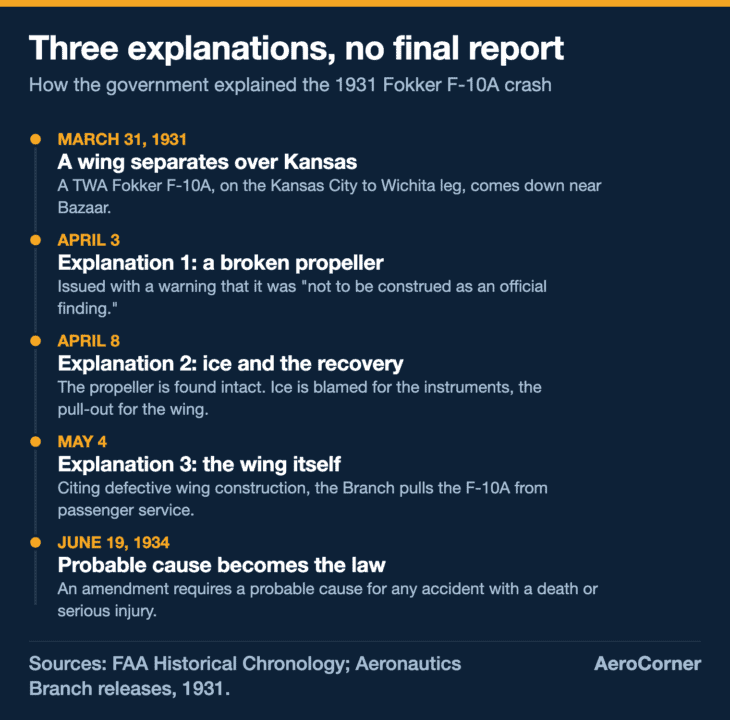
March 31, 1931, 9:15 a.m.
Departure from Kansas City. The TWA Fokker leaves 15 minutes late, held for the delayed mail, bound for Wichita on the way to Los Angeles.
Mid-morning
Weather closes in. The co-pilot radios that the weather is getting tough and the crew may turn back to Kansas City.
About 10:45 a.m.
Last radio message, a request about the weather ahead.
Late morning
Near Bazaar, Kansas. Witnesses hear the engines above the clouds, then see the airplane drop out of them banked to one side and part of a wing falling separately.
April 3
First statement. The Aeronautics Branch blames a broken propeller on the right engine, and says the statement is not an official finding.
April 8
Second statement. The propeller is found intact underground. Ice is now blamed for disabling the instruments in cloud, and the recovery for overstressing the wing.
May 4
The F-10A is withdrawn from passenger service after the investigation discloses defective wing construction.
June 19, 1934
Congress amends the Air Commerce Act. A statement of probable cause becomes mandatory for any accident with a death or serious injury.
What happened
Rockne had left his family on vacation in Florida for the start of spring practice at Notre Dame and a visit to his mother in Chicago. From there he headed west on business in Los Angeles.
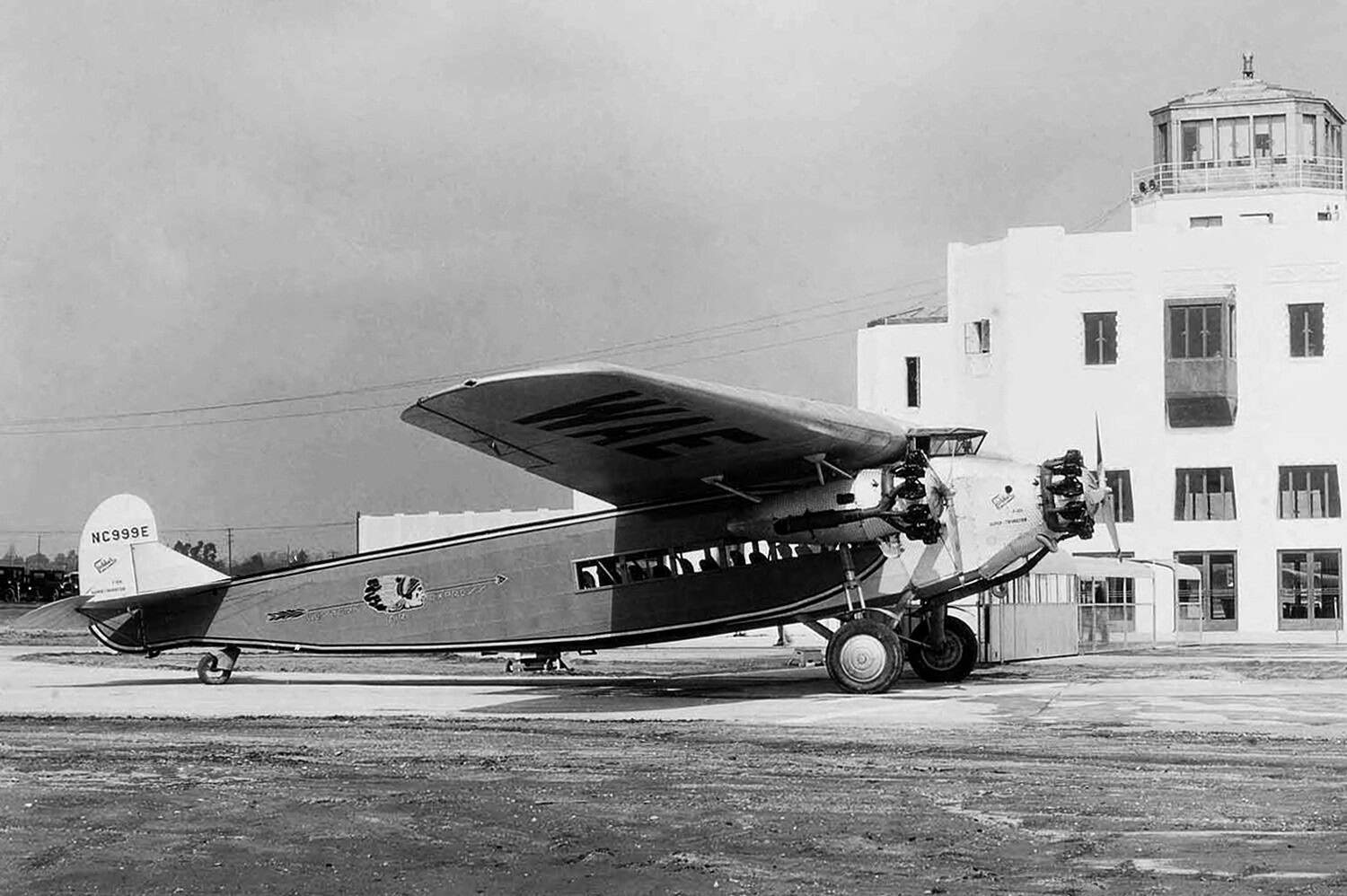
At Kansas City he boarded a Fokker F-10A operated by Transcontinental & Western Air, the airline better known as TWA. The F-10A was a high-wing trimotor with three Pratt & Whitney Wasp radial engines, about 14 passenger seats and a wooden wing. It was among the best-known airliners of the late 1920s.
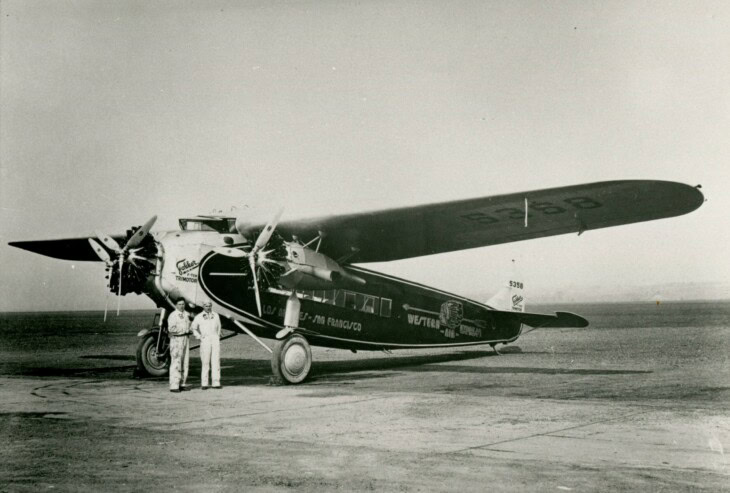
The flight left at 9:15 a.m., 15 minutes late because the mail had arrived late. Aboard were pilot Robert Fry, co-pilot Jess Mathias and six passengers: Rockne, H. J. Christen and J. H. Happer of Chicago, W. B. Miller of Hartford, Connecticut, Spencer Goldthwaite of New York, and C. A. Robrecht of Wheeling, West Virginia.
The route crossed a sharp cold front with thick cloud, fog, icing and low ceilings. Mathias radioed that the weather was getting tough and that they might turn back to Kansas City. The flight continued, and its last message, a weather inquiry, was logged at about 10:45 a.m.
Near Bazaar, a witness told the coroner’s jury he heard the engines sputtering above the low cloud. The airplane came out of the cloud tipping to one side and heading for the ground, and a moment later he saw part of a wing coming down on its own.
The airplane struck an open field a few miles southwest of the town, about 90 minutes after leaving Kansas City. Nobody survived.
What the Aeronautics Branch found
In 1931 airline accidents were investigated by the Aeronautics Branch of the Department of Commerce, the forerunner of the FAA. The Air Commerce Act told it to “make public the causes of accidents,” but since its earliest years the Branch had kept individual findings confidential and released only statistics.
Its reasons were that findings could be used in lawsuits, that witnesses spoke more freely in confidence, and that it had no power to subpoena anyone. Senators had attacked the policy for two years. Rockne’s death, front-page news across the country, made it impossible to hold.
On April 3, the Branch issued a statement that began with a disclaimer: it was “not to be construed as an official finding.” It blamed a broken propeller on the right engine.
Ice on the hub might have broken loose and struck a blade, it suggested, and the vibration from the unbalanced propeller threw off the hub and the remaining blades and took the wing with it. The theory rested on one fact: when the engine was dug out of the ground, its propeller was missing.
On April 8, the Branch withdrew it. The propeller and its hub had been found underground, beneath the spot where the engine was dug out.
The new explanation was that ice had made the pilot’s instruments useless in cloud, the airplane had gone into a steep dive, and the wing failed when the pilot pulled out of it too hard. The New York Times reported it as the first time the department had made public the findings of its inspectors.
The third answer came through the fleet, not a report. According to the FAA’s historical chronology, “an investigation disclosed defective wing construction,” and on May 4 the Aeronautics Branch took the F-10A out of passenger service. The trade journal Aviation recorded the notice as a temporary withdrawal of 35 tri-engined Fokkers, and said it drew more public attention than anything the Branch had done before.
The inspections focused on the wooden wing spars, where investigators found delamination and failed joints. Most of the grounded airplanes eventually flew again, but only under costly periodic inspections the Branch now required.
What most accounts get wrong
The crash is usually summed up as investigators finding that moisture had rotted the glue in the Fokker’s wooden wing. That is the most likely explanation, and the wing’s construction is what grounded the type, but no government report ever stated it as the probable cause. The Aeronautics Branch published two explanations in April 1931, a broken propeller and then ice plus an over-hard recovery, and the wing appears in the record only as the reason for the May 4 withdrawal. A published probable cause did not become a legal requirement until 1934. Two other details are often wrong. The grounding is frequently credited to the Civil Aeronautics Authority or the Civil Aeronautics Board, but neither existed until 1938 and 1940. And the crash did not invent the metal airliner: Ford’s metal trimotor was already flying, and airlines turned to it first.
Why a wooden wing could fail in flight
The F-10A’s wing was a cantilever design: no struts or wires, all the strength inside. Wooden spars and ribs carried the load, and a plywood skin was glued over them. Glue held the structure together, and the glue joints sat where no mechanic could see them without stripping the skin.
Plywood and the glues of the period were sensitive to moisture and age. Water that worked into the wing could soften joints and let layers separate, so a wing that looked sound outside could be losing strength inside.
A weakened spar also lets a wing twist more than designed. In turbulent air that can start flutter, an oscillation in which each twist feeds the next until the structure lets go. The leading reconstruction of the Rockne crash is a spar failure in rough air followed by flutter and separation.
The April 8 theory points at a different hazard: flying blind in cloud. A pilot with no outside horizon and failing instruments can enter a steep spiral without feeling it, the same spatial disorientation the NTSB cited in the Kobe Bryant crash 89 years later.
Both theories can be partly true. A pull-out that a sound wing survives can break a weakened one.
What changed
Crash findings became public. The April 8 statement broke the Branch’s secrecy, and Congress made the change law. The June 19, 1934 amendment to the Air Commerce Act gave the Secretary of Commerce power to subpoena witnesses and hold public hearings, and required a statement of probable cause for every accident involving a death or serious injury.
That obligation now belongs to the NTSB, whose probable-cause findings cannot be entered as evidence in court.
The F-10A disappeared. The FAA chronology says the loss of public confidence and the required inspections “led to the demise of the once popular airplane.” Time magazine wrote in 1938 that Fokker’s American plant never recovered from the 1931 order, and that Fokker airplanes disappeared from the US sky.
Airlines moved to metal. United got the all-metal Boeing 247, which first flew on February 8, 1933, but Boeing would not commit to supplying TWA. On August 2, 1932, TWA asked manufacturers for an all-metal, three-engine airliner that could take off fully loaded on two engines from any airport on its route.
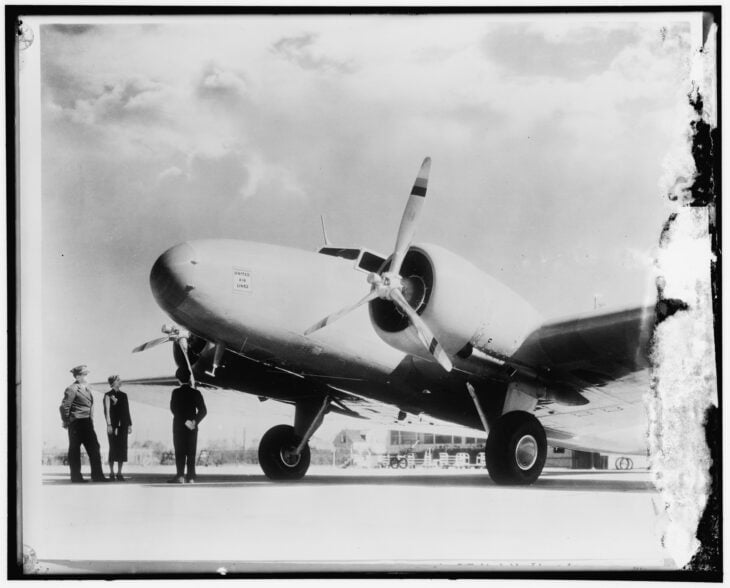

Douglas answered with two engines instead of three. The Douglas DC-1 flew on July 1, 1933, and TWA bought the only one built.
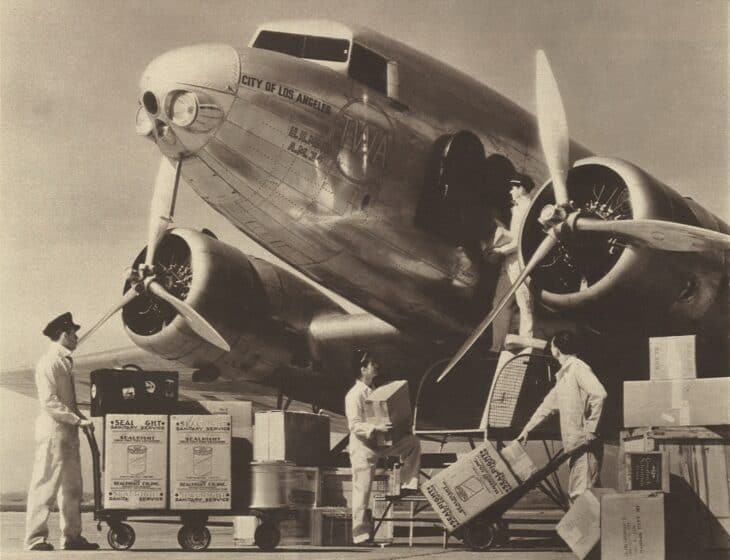

The production Douglas DC-2 entered TWA service in 1934, and its stretched successor, the DC-3, became the defining airliner of the decade. All three were metal from nose to tail.
A granite memorial now stands at the crash site, on private land near Bazaar. James Easter Heathman, who reached the field as a 13-year-old boy that morning, looked after it until his death in 2008.
FAQ
Sources and references used for research and fact-checking.
- Federal Aviation Administration, FAA Historical Chronology, 1926-1996
- Randy Johnson, University of Nebraska at Omaha Aviation Institute, via NASA Technical Reports Server, The 'Rock': The Role of the Press in Bringing About Change in Aircraft Accident Policy (Journal of Air Transportation World Wide, Vol. 5 No. 1, 2000)
- Aviation Week archive, Aviation, June 1, 1931 (News of the Month, pp. 334-335)
- University of Notre Dame Archives, The Notre Dame Alumnus, Vol. 9 No. 9 (April 1931)
- Click Americana (reproducing the Evening Independent, Massillon, Ohio, April 1, 1931), When Knute Rockne's plane crashed, the football legend died with 7 others (1931)
- Knute Rockne Memorial Society (Jim Lefebvre), March 31, 2021, 90 Years Later: Rockne Crash Shocked Nation, Changed Aviation
- U.S. Centennial of Flight Commission, Development of the Douglas airliners (DC-1)
- U.S. Centennial of Flight Commission (Roger Mola), Accident investigation essay
- Time, Transport: Grounded (Time, January 24, 1938)
- Fokker Heritage (fokker-history.com), The plane crash with Knut Rockne and the consequences for Fokker
- Wikipedia, 1931 Transcontinental & Western Air Fokker F-10 crash
- Wikipedia, Fokker F-10
- Wikipedia, Knute Rockne
Get the Newsletter
The latest aviation news and stories sent to your inbox.
About the Author

Tim is the owner and lead editor of AeroCorner since 2019, overseeing aviation content covering aircraft, airlines, airports, and the broader aviation industry. Through years of researching, writing, editing, and publishing aviation-focused content, he has developed extensive practical knowledge of commercial aviation and air travel. Based in Asia and a frequent traveler himself, Tim also brings firsthand passenger experience to AeroCorner’s coverage. Outside of publishing, he has also explored aviation firsthand through hands-on flight training in New Zealand.