

Table of Contents
On the night of September 20, 1973, a chartered Beech E18S struck a tree just after taking off from Natchitoches, Louisiana. Jim Croce, 30, died with his guitarist Maury Muehleisen, his booking agent Kenneth D. Cortese, road manager Dennis Rast, comedian George Stevens and the pilot, Robert N. Elliott.
Retellings often say the pilot suffered a heart attack at the controls. The NTSB’s record never says so. It found that Elliott had severe coronary artery disease and coded “physical impairment” as a factor, but its probable cause is that he failed to see and avoid obstructions.
This article is built from the National Transportation Safety Board’s own accident record, file FTW74AF017 (docket 3-3541), and the FAA registration history of the airplane, N50JR. Facts from other sources are named as they come.
Evening, Sept. 20
The concert. Croce plays Prather Coliseum at Northwestern State University in Natchitoches, according to Wikipedia.
Before departure
The pilot reaches the field. The NTSB file records that Elliott ran from his motel to near the airport, a distance of about 3 miles (5 km).
22:45 (file time)
Takeoff. The Beech E18S leaves Natchitoches Municipal on a dark night with no flight plan filed, about an hour after the show by Wikipedia’s account.
Initial climb
The tree. The airplane strikes a tree within a quarter mile of the airport, south-southeast of the field, and is destroyed. All six aboard die.
Nov. 20, 1973
Registration cancelled. N50JR is removed from the FAA register.
Jan. 25, 1974
The finding. The NTSB’s file shows its analysis complete, with one cause and four factors.
What happened
By September 1973 Croce was a star. “Bad, Bad Leroy Brown” had spent two weeks at No. 1 on the Billboard Hot 100 that July, and he was on the road with Muehleisen, the guitarist who played beside him on stage. The Natchitoches show was one date on that tour.
The next stop was Texas. Wikipedia says the group was flying to Sherman for a concert at Austin College, and the NTSB file records Sherman and lists Dallas as the intended destination.
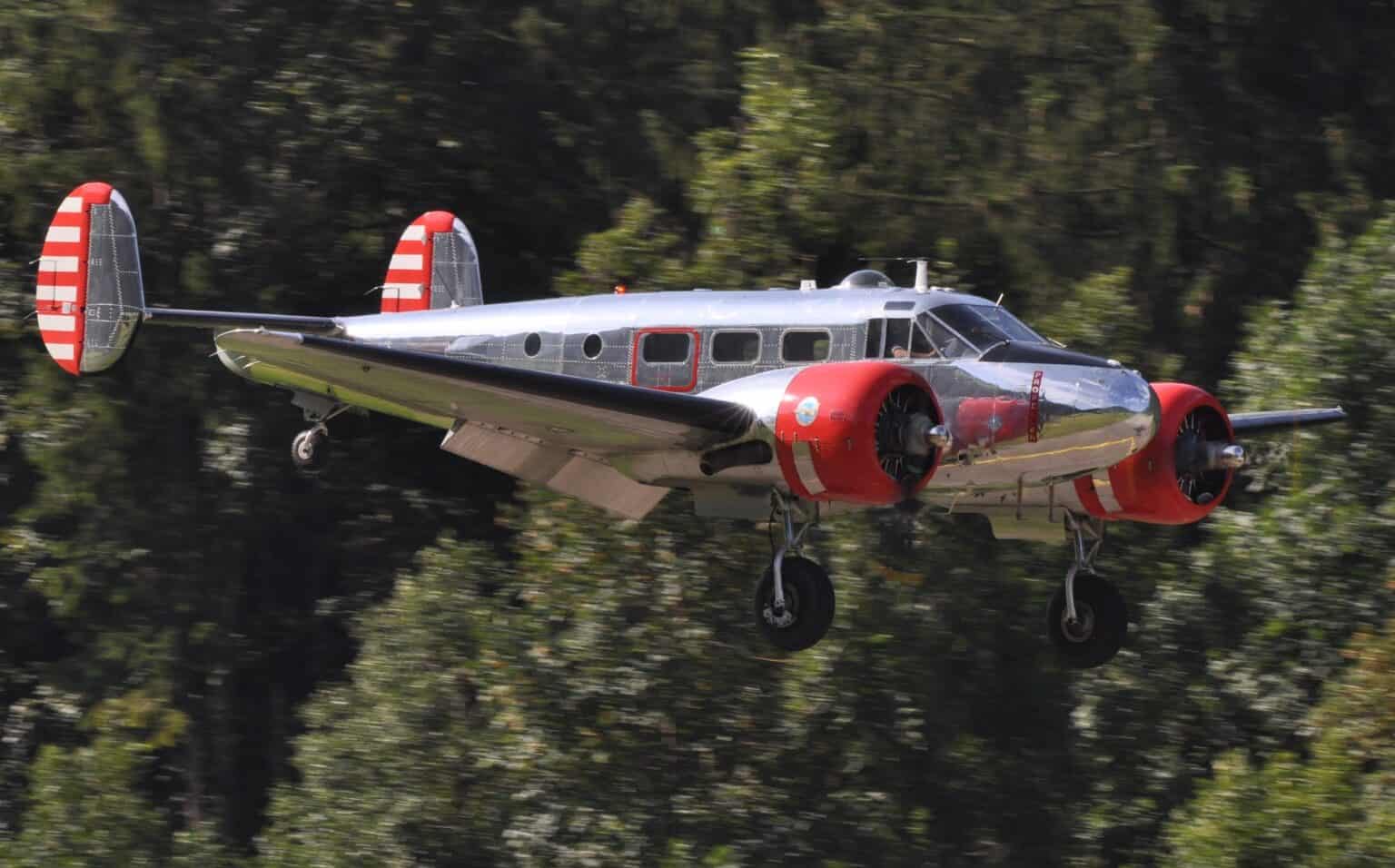
The airplane was a Beechcraft E18S, a version of the twin-engine, tailwheel Model 18 that Beech first flew in 1937 and built until 1969, as a business airplane, small airliner and military trainer. FAA records list N50JR, serial BA-176, under Bromley Corp of Dallas. The NTSB file names the operator as Robert Airways and codes the flight as an air taxi passenger charter.
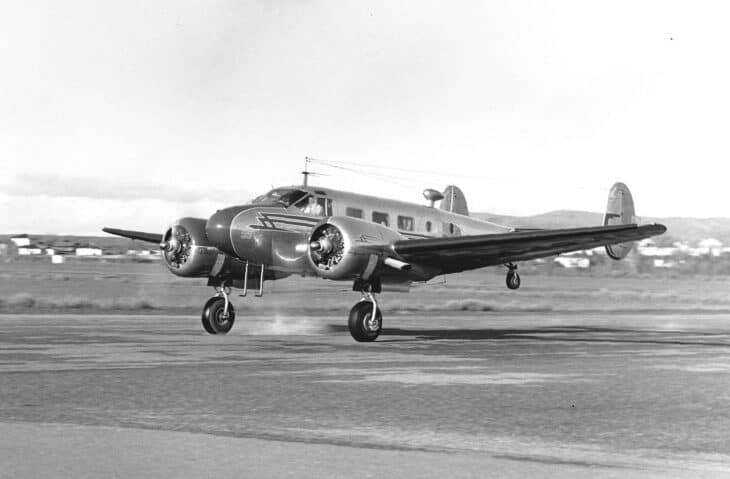

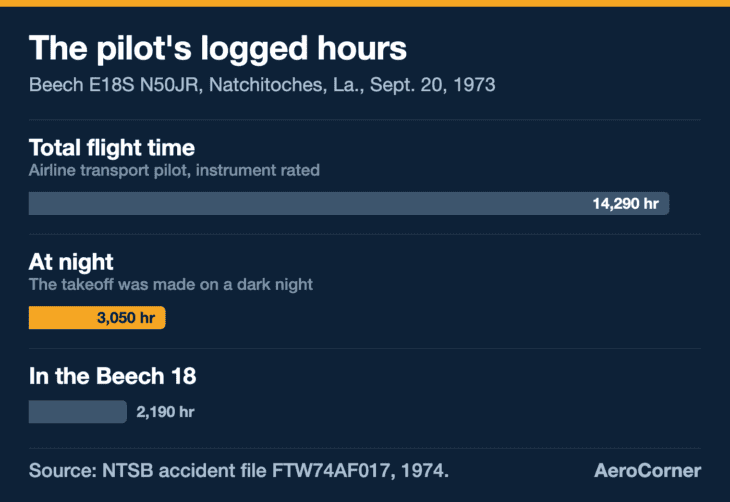
The airframe had 9,157 hours on it. The pilot was no weekend flyer: Elliott, 57, held an airline transport pilot certificate with multiengine and instrument ratings, and the file lists him as a professional pilot.
The Shreveport Times, retelling the night in 2019, says witnesses described him as rattled, hot and sweaty after getting to the airport. The NTSB file records the reason: he had run from his motel to near the field, about 3 miles (5 km).
The file logs the accident at 22:45, and the Beech never climbed clear. The file codes the accident as a collision with trees during the initial climb, within a quarter mile of the airport, over level ground. Witness accounts in the press describe a pecan tree just past the end of the runway.
What the NTSB found
File FTW74AF017 is a single coded entry, released as a “brief”. Each line comes from a fixed code list, not the long narrative report the NTSB writes today, and investigator Schretter’s name is on it. It is short, but it is the board’s official record of the cause.
The probable cause is a single line, coded to the pilot in command: “failed to see and avoid objects or obstructions”. Everything else in the record is a factor, not a cause.
There are four factors. The first is “physical impairment”, again coded to the pilot. The other three describe the night: “fog”, “obstructions to vision” and “high obstructions”.
The remarks field adds the detail behind the impairment code. It reads, in the file’s own shorthand, that the pilot had severe coronary artery disease and ran from his motel to near the airport, about 3 miles. Toxicology found no alcohol, no drugs and carbon monoxide at or below 10 percent.
That matches what the local coroner, Charles Cook, told reporters at the time, according to the Shreveport Times: some drugs were found at the scene, but the pilot was clean. The NTSB codes no drug or alcohol factor.
The weather fields are less tidy than the factor list. They class the night as VFR, with a clear sky, visibility of 5 miles or more, no precipitation and haze, at 69°F. Fog appears as a factor, but the file does not say where it lay or how thick it was, so it never reconciles the two.
What most accounts get wrong
The crash is widely told as a heart attack at the controls. One history site says it is believed the pilot suffered a heart attack, and PlaneCrashInfo says he may have had one. The NTSB file does not say that. It records severe coronary artery disease and codes physical impairment as a factor, while the probable cause is that the pilot failed to see and avoid obstructions. Wikipedia’s summary folds the two together as failure to see obstructions because of physical impairment and fog. The coded record keeps them apart: one cause, then the impairment, fog, haze and trees as factors.
The difference matters. A heart attack would be an incapacitation, the pilot no longer able to fly. A failure to see and avoid an obstruction is a pilot still flying who did not get the airplane clear of something he could not see, with his health named as one reason why.
Nothing in the record settles which happened in the cockpit. Its codes say only that the disease and the exertion were part of the picture, alongside the dark, the haze and the trees.
The distances are told loosely too. PlaneCrashInfo puts the tree about 200 yards past the end of the runway, while the Shreveport Times says only that it stood just off the end of the runway. The NTSB file codes only that the crash was within a quarter mile of the airport, south-southeast of it, so we print no exact distance.
Why a night takeoff leaves so little room
In the first seconds after liftoff, an airplane is slow, low and climbing toward whatever stands past the end of the runway. On a dark night, a tree line beyond the airport lights may not be visible at all.
The NTSB’s safety alert on reduced visual references says that even in visual weather, night flights over areas with limited ground lighting can be challenging. It warns that such areas can render rising terrain visually imperceptible, and it tells instrument-rated pilots to consider following instrument procedures.
The Beech was also flown by one pilot that night. The file lists only one pilot aboard, and no flight plan was filed. A pilot who is unwell or short of breath on that climb has no one beside him to call the altitude or take the controls.
Today, 14 CFR 135.101 says no person may operate an aircraft carrying passengers under IFR without a second in command, with an exception for an approved autopilot under 135.105. The rule is written for instrument flights, so a charter flown under visual rules is not covered by it.
How a pilot with heart disease held a medical
The record lists Elliott’s medical certificate as class II with no waivers or limitations. A second-class medical is the one a commercial pilot needs, and the file does not say whether his disease had ever been diagnosed before the crash.
The modern rules show how silent heart disease can pass. Under 14 CFR 67.211, a second-class applicant must have no history or diagnosis of a heart attack, angina, or coronary heart disease that has needed treatment or has been symptomatic or clinically significant. The section requires no electrocardiogram.
A first-class medical, the one an airline captain needs, goes further. Under 14 CFR 67.111, the applicant needs an ECG at the first exam after turning 35 and every year after 40. Elliott was 57 and flying on the lower class.
What changed
We could find no rule or safety recommendation that traces back to this crash. It was handled as a brief air taxi file, with the analysis marked complete about four months later.
The legal fight lasted longer. The law firm Corboy and Demetrio says it won a federal jury verdict in Dallas for Linda Cortese, the booking agent’s widow, upheld by the Fifth Circuit. The verdict was more than the insurance coverage, and a bad-faith case against the insurer followed.
The music outlived the night. Wikipedia says the single “I Got a Name” was released the day after the crash, and “Time in a Bottle” became Croce’s second and final No. 1 in early January 1974. His son, A.J. Croce, was eight days short of his second birthday and grew up to be a singer-songwriter himself.
Croce’s crash belongs to a grim list of tour flights. The Buddy Holly plane crash in 1959 was another charter that went down minutes after a night takeoff. The Otis Redding plane crash in 1967 involved another Beech 18, Redding’s own H18.
FAQ
Sources and references used for research and fact-checking.
- National Transportation Safety Board, Aviation accident database, pre-1982 records (PRE1982.zip), file FTW74AF017, docket 3-3541, Beech E18S N50JR, Natchitoches, Louisiana, September 20, 1973
- Federal Aviation Administration, Releasable Aircraft Database (deregistered aircraft file), N50JR
- National Transportation Safety Board, Safety Alert SA-020, Reduced Visual References Require Vigilance
- Wikipedia, Beechcraft Model 18
- Wikipedia, Bad, Bad Leroy Brown
- Cornell Legal Information Institute, 14 CFR 67.211, Cardiovascular (second-class medical)
- Cornell Legal Information Institute, 14 CFR 67.111, Cardiovascular (first-class medical)
- Cornell Legal Information Institute, 14 CFR 61.23, Medical certificates: requirement and duration
- Cornell Legal Information Institute, 14 CFR 135.101, Second in command required under IFR
- Wikipedia, Jim Croce
- Wikipedia, A. J. Croce
- Shreveport Times (via Yahoo News), Jim Croce died 50 years ago in Louisiana: Here's what happened on that fateful night
- KPEL 96.5, 50 Years Ago Today, Jim Croce Died in a Plane Crash in Natchitoches, Louisiana
- The Vintage News, Today in History: September 20th, 1973
- PlaneCrashInfo, Accident details, September 20, 1973, Natchitoches, Louisiana
- Corboy and Demetrio, Jim Croce plane crash case
Get the Newsletter
The latest aviation news and stories sent to your inbox.
About the Author

Tim is the owner and lead editor of AeroCorner since 2019, overseeing aviation content covering aircraft, airlines, airports, and the broader aviation industry. Through years of researching, writing, editing, and publishing aviation-focused content, he has developed extensive practical knowledge of commercial aviation and air travel. Based in Asia and a frequent traveler himself, Tim also brings firsthand passenger experience to AeroCorner’s coverage. Outside of publishing, he has also explored aviation firsthand through hands-on flight training in New Zealand.