

Table of Contents
At about 10:05 p.m. on August 25, 1985, Bar Harbor Airlines Flight 1808, a Beech 99 commuter turboprop, crashed in woods about a mile southwest of the Auburn-Lewiston airport in Maine. Samantha Smith, 13, the schoolgirl who wrote to Soviet leader Yuri Andropov, died with her father Arthur, four other passengers and both pilots.
Many accounts, including Smith’s Wikipedia biography, say the official report blamed a ground radar failure. It did not. The National Transportation Safety Board found the captain kept flying an approach that never stabilized, after a controller gave the crew a nonstandard turn toward the final course.
This article is built from the NTSB’s final report, NTSB/AAR-86/06, adopted September 30, 1986. Facts from other sources are named as they come.
About 2:00 p.m.
The relief crew reports. Captain Roy Fraunhofer and first officer David Owen sign on in Bangor for four trips between Bangor and Boston in Beech 99 N300WP, flying through worsening weather all afternoon.
8:15 p.m.
Boston, 25 minutes late. Six passengers board for the return run. The company adds a stop at Auburn-Lewiston, and two booked passengers are moved to a nonstop flight to Bangor.
9:30 p.m.
Takeoff. Flight 1808 is cleared for takeoff from Logan runway 4L. Auburn-Lewiston is reporting an indefinite 300-foot ceiling and 1 mile visibility in drizzle and fog.
9:58:38 p.m.
Cleared for the approach. Portland Approach clears the flight for the ILS runway 4 approach, to hold 3,000 feet until the Doley intersection.
10:01:40 p.m.
The turn. Seeing the airplane east of the course, the controller assigns a heading of 340, a large correction about 1 mile from the outer marker.
About 10:02:31 p.m.
Last radio call. The controller terminates radar service and switches the flight to the airport’s advisory frequency. The first officer’s acknowledgment is the last transmission.
About 10:04:20 p.m.
The crash. The Beech 99 strikes trees 4,007 feet short of runway 4 and 440 feet right of the centerline. All eight aboard die.
September 30, 1986
The final report. The NTSB adopts AAR-86/06 and names the captain’s continuation of an unstabilized approach as the probable cause.
What happened
Smith was famous at 10. In November 1982 she wrote to Andropov that she was worried about a nuclear war, he answered in April 1983, and that July she toured the Soviet Union for two weeks as his guest. By 1985 she was acting, cast as Robert Wagner’s elder daughter in the ABC series Lime Street.
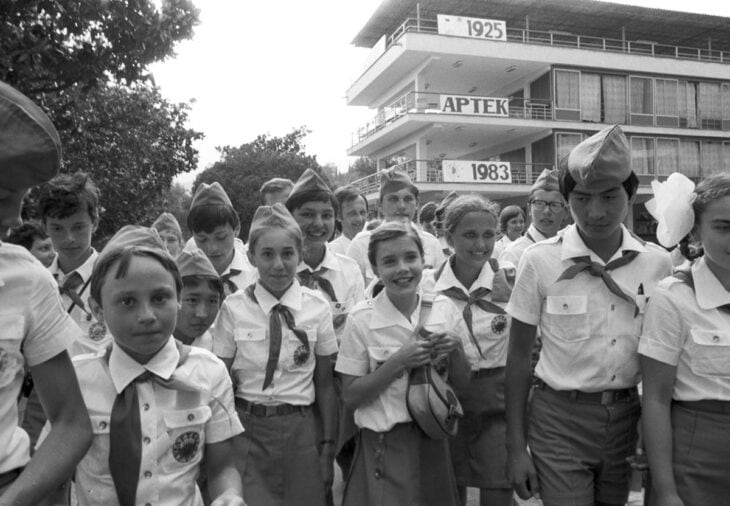

She and her father were flying home from filming in London. Their connection from Boston was a Sunday night commuter run to Bangor, with stops at Auburn, Augusta and Waterville.

The others aboard were Earl Dunphy, 57, a former Auburn resident living in Louisiana; Alan Saveall, 38, of Waterville; James C. Eastman, 46, of Chevy Chase, Maryland; and Joanne Reilly, 53, of San Diego. The captain was Roy Fraunhofer, 37, and the first officer was David Owen, 23, both of Bangor, UPI reported.
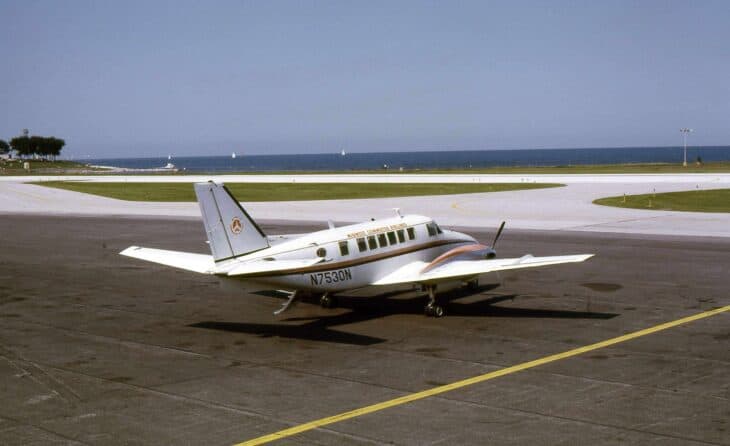
The airplane was a Beech 99, a 1968-certified, unpressurized twin turboprop with Pratt & Whitney PT6 engines. Beech later built the larger Beechcraft 1900 for the same commuter market. N300WP had about 30,335 hours on it and, by the report’s account, no flight recorder of any kind, because none was required.
Both pilots were new to their seats. The captain had about 5,153 hours in total but only 212 as a Beech 99 captain, a job he qualified for on June 3, 1985. The first officer had joined the airline on May 28 and had about 153 hours in the type.
The en route flight was normal. The trouble began on the approach, where the airplane arrived high and fast. Past the Doley intersection it was still doing about 190 knots, where the report says it should have been at 120 to 130 knots with approach flaps set.
The Portland controller, working two radar positions combined and four other airplanes, saw Flight 1808 east of the final course and asked if it had the localizer. The captain said they had not intercepted, and the controller turned them left to a heading of 340.
The airplane passed the outer marker outside the localizer’s limits, about 500 feet above the glideslope intercept altitude, at 165 knots and descending at 2,200 feet per minute. It flew straight through the course, turned back, and its altitude swung by hundreds of feet in seconds before it settled into a steady descent of about 1,300 feet per minute.
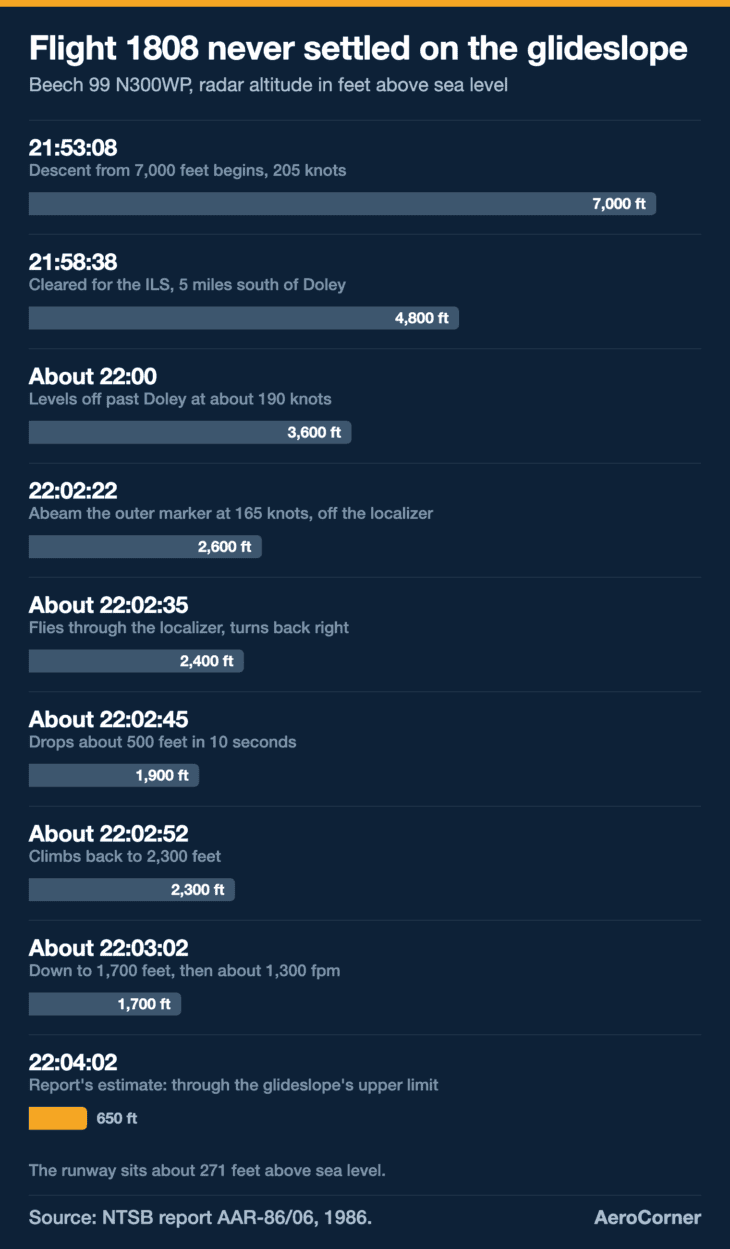
That descent took it below the glideslope. The Beech 99 passed to the right of Christian Hill and hit trees about 180 feet below the glideslope’s centerline, close to the middle marker. Its gear was down and its flaps were up.
What the NTSB found
The probable cause, in the report’s words, was “the captain’s continuation of an unstabilized approach which resulted in a descent below glideslope.” Contributing was “the radar controller’s issuance and the captain’s acceptance of a nonstandard air traffic control radar vector resulting in an excessive intercept with the localizer.”
The Board said the controller “used poor judgment and technique.”
The 340 heading would have meant roughly a 60-degree intercept of the final course about a mile from the outer marker; the right move was to tell the crew where they were, ask their intentions and offer vectors. It added that the captain could have asked for vectors at any time, and that he should have gone around near the marker.
The controller’s last call, terminating radar service and reading out the missed approach instructions, was still running 2 seconds after the airplane left the far side of the localizer. The report says it could have distracted the pilot flying at the moment he needed to turn back.
The airplane itself was cleared. The Board found it airworthy, with no evidence of a failure in its systems, though it could not rule out a fault or mis-setting in the navigation radios, which had been replaced often in the previous year.
Both altimeters were found set to values that did not match the airport’s 30.24 inches, and the Board said they may have been mis-set.
The findings went past the cockpit. Bar Harbor’s management had not made sure crews followed company procedures, FAA surveillance was short of staff, pilot turnover had drained experience, and cockpit noise in the Beech 99 likely hurt crew communication. The airport’s published visibility minimum was also wrong, reduced from 3/4 to 1/2 mile by an oversight.
NTSB Chairman Jim Burnett filed his own view that the probable cause stopped short. He wanted it to name poor crew coordination from cockpit noise and inadequate training, ineffective company supervision, and the lack of adequate FAA oversight.
What most accounts get wrong
Samantha Smith’s Wikipedia biography, and many pages that copy it, say the official report pointed to a rainy night, inexperienced pilots and “an accidental, but not uncommon and not usually critical, ground radar failure.” The 76-page NTSB report contains no radar failure. Portland Approach tracked Flight 1808 on radar, used that radar to spot the drift east of course, and an FAA flight inspection the next day found radar coverage within standards. The only radar gap in the report is that Boston Center’s long-range radar lost the low airplane near the outer marker, so the NTSB rebuilt the approach from Navy radar at Brunswick. The cause it named was an unstabilized approach the captain continued, with the controller’s vector contributing.
The other myth is older. Smith was famous in the Soviet Union, and accusations of foul play circulated there after her death. The report gives them nothing to stand on: it traces the accident to the approach, the weather and the crew’s workload, and found no evidence of a failure in the airplane.
Why an unstabilized approach is so dangerous at night
An instrument landing system gives the crew two beams: a localizer for left and right, and a glideslope for the 3-degree path down to the runway. Flown well, the airplane joins both well outside the outer marker, already slowed, configured and trimmed.
Bar Harbor’s own procedures said the airplane must not descend below 500 feet unless it was configured to land and stabilized on speed and sink rate, or a go-around was mandatory. Flight 1808 reached the marker too high, too fast and off the course.
The report says the crew probably fell behind on flaps, gear and the checklist, and that under that workload pilots narrow their attention to a few instruments and stop cross-checking.
The way out is a go-around. Here it meant climbing to 900 feet, then a climbing right turn to 2,500 feet and a hold at the outer marker. The Board’s view was that the captain’s decision to “salvage” the approach, rather than fly it, is what turned a bad setup into an accident.
Then the night worked against the crew.
Breaking out about 1 to 1 1/2 miles from the airport, they would have seen only the approach lights over dark, unlit woods, through a wet windshield, with the runway sloping slightly uphill. The report calls this a “black-hole approach,” an illusion that makes pilots feel high and fly a curved path that touches down short.
A VASI on runway 4 could have helped, but the Board thought the crew probably never saw it. The airplane also had no ground proximity warning system, which commuter turboprops were not required to carry.
What changed
The report made 21 new recommendations to the FAA (A-86-98 to A-86-118) and four to the Regional Airline Association (A-86-119 to A-86-122). They asked for instrument proficiency checks for commuter first officers, simulator training, crew interphones in noisy cockpits, night visibility markers at airports, and a policy against pairing two pilots who are both new to their seats.
Two went straight at this crash. A-86-109 asked for ground proximity warning in turbine commuter airplanes with 10 or more seats. A-86-115 to A-86-118 asked air traffic control to treat every radar-tracked arrival as a radar arrival, with standard intercept angles and a duty to ask a pilot’s intentions when a flight is too far off course.
The terrain warning came, slowly. Under 14 CFR 135.154, adopted in 2000, turbine airplanes with six or more passenger seats flown under Part 135 have had to carry a terrain awareness and warning system since March 2005.
The recorders the NTSB had already asked for in 1982 also arrived. Today 14 CFR 135.151 requires a cockpit voice recorder in multiengine turbine airplanes with six or more passenger seats that need two pilots.
Without one in N300WP, the Board could not say who was flying or what was said; our guide to which aircraft must carry black boxes explains where the line sits now.
FAQ
Sources and references used for research and fact-checking.
- National Transportation Safety Board, Aircraft Accident Report: Bar Harbor Airlines Flight 1808, Beech BE-99, N300WP, Auburn-Lewiston Municipal Airport, Auburn, Maine, August 25, 1985 (NTSB/AAR-86/06)
- UPI, Officials and friends from the capital of Maine to the capital of the Soviet Union mourned the death of Samantha Smith
- UPI, Peace activist Samantha Smith dies in plane crash
- Los Angeles Times, Pilot Blamed in Samantha Death
- Wikipedia, Samantha Smith
- Cornell Law School Legal Information Institute, 14 CFR 135.154, Terrain awareness and warning system
- Cornell Law School Legal Information Institute, 14 CFR 135.151, Cockpit voice recorders
Get the Newsletter
The latest aviation news and stories sent to your inbox.
About the Author

Tim is the owner and lead editor of AeroCorner since 2019, overseeing aviation content covering aircraft, airlines, airports, and the broader aviation industry. Through years of researching, writing, editing, and publishing aviation-focused content, he has developed extensive practical knowledge of commercial aviation and air travel. Based in Asia and a frequent traveler himself, Tim also brings firsthand passenger experience to AeroCorner’s coverage. Outside of publishing, he has also explored aviation firsthand through hands-on flight training in New Zealand.