Fighter Jets
Mikoyan MIG-31E Foxhound
ICAO: MG31
The Fulcrum's last major upgrade, ordered in tiny numbers
Updated: by Tim de Vries
The latest aviation news and stories sent to your inbox.
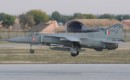
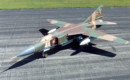
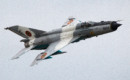
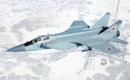
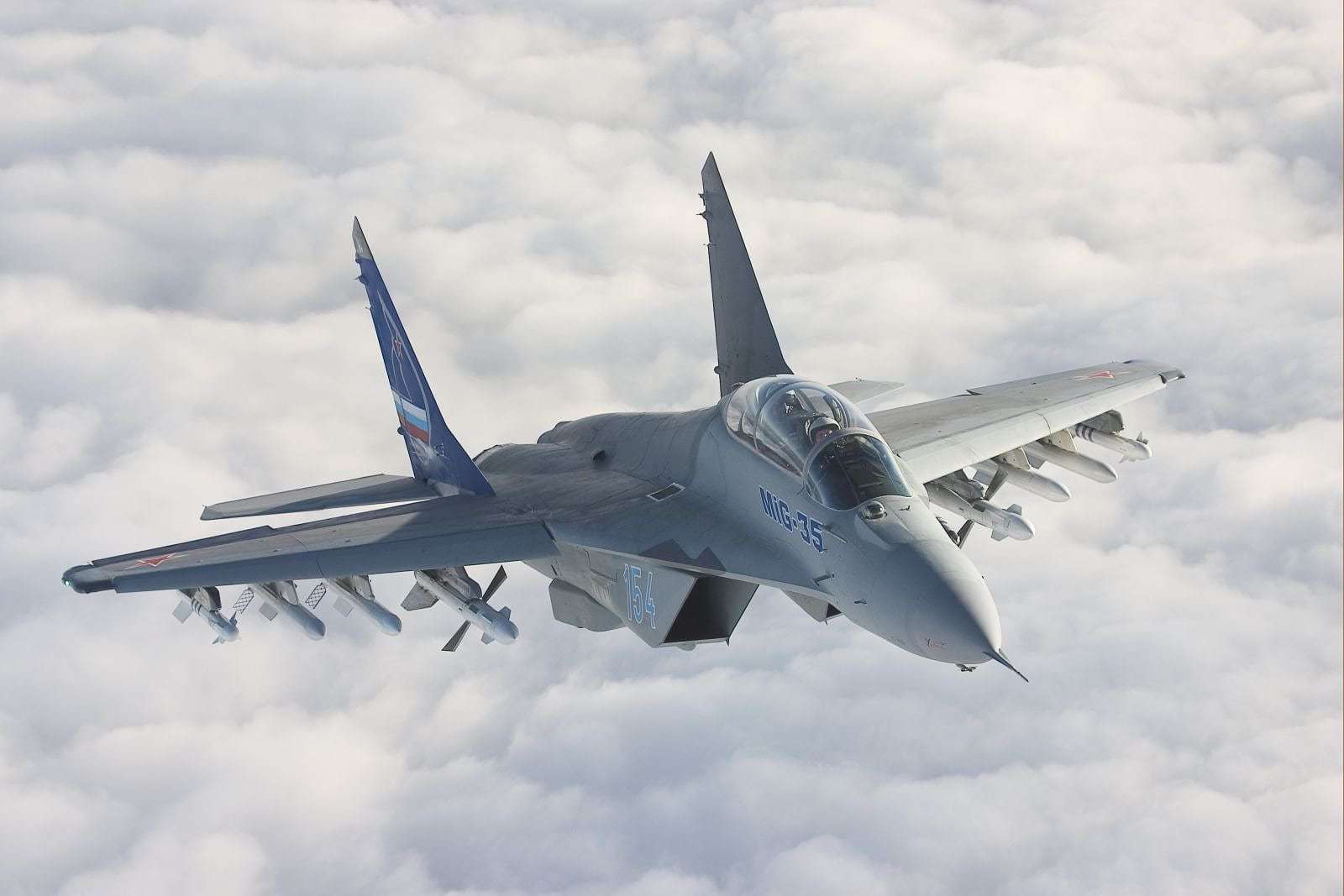
The Mikoyan MiG-35, NATO reporting name Fulcrum-F, is a twin-engine Russian multirole fighter developed from the MiG-29M. Marketed as a 4++ generation design, it adds a new cockpit, upgraded sensors and RD-33MK engines to the Fulcrum airframe. Only a handful of serial aircraft have reached the Russian Aerospace Forces, the sole operator.


The MiG-35 is a twin-engine multirole fighter that grows out of the MiG-29 “Fulcrum.” NATO calls it the Fulcrum-F. Mikoyan markets it as a 4++ generation fighter, meaning a fourth-generation airframe fitted with some fifth-generation technology.
It is not stealthy and it is not a new design. It is the MiG-29M airframe with a new cockpit, new sensors and uprated engines.
The type first appeared in public at Aero India in 2007, when Russia showed a MiG-29M under the temporary name “MiG-35.”
Most of the changes are inside. Its changes include new avionics, an upgraded radar and more powerful engines than the original Fulcrum.
The single-seat MiG-35S uses the space behind the pilot for an extra fuel tank.
The engines are two Klimov RD-33MK turbofans. They are about 7% more powerful than the baseline RD-33, and Wikipedia describes them as smokeless, which lowers how visible the jet is to the eye and to infrared sensors.
The engines have digital controls (FADEC). Thrust-vectoring nozzles are not fitted to serial aircraft, though they can be added on customer request.
Serial MiG-35s use the mechanically scanned Zhuk-M radar. An AESA version, the Zhuk-A, was offered to export customers, but reports differ on whether it entered series production.
The fighter has nine hardpoints and one 30 mm GSh-30-1 cannon. Its weapons include R-73 and R-77 air-to-air missiles, Kh-31 anti-radiation and anti-ship missiles, Kh-29 and Kh-38 air-to-surface missiles, rockets and KAB-500 series guided bombs.
The full specification table for the aircraft is on this page. A few figures need context.
The stored range is the published range on internal fuel. Combat radius is a different number. It is around 1,000 km (620 miles) on a typical mission, and the ferry range reaches 3,000 km (1,860 miles) with three external tanks. One in-flight refuelling is quoted to stretch ferry range to about 6,000 km (3,730 miles).
Speed has the same problem. The top speed in the table is the figure published for high altitude. Sea-level speed is far lower, about Mach 1.14. Some sources quote Mach 2.25, which is the usual marketing figure for this class of fighter.
Weights depend on the mission. The maximum takeoff weight is a ceiling reached with heavy fuel and weapons, and the max landing weight is well below it.
Against the MiG-29, the MiG-35 has newer avionics, uprated engines and a single-seat version with extra fuel. It keeps the same basic airframe.
Against the Su-35, it is the smaller design and has a far smaller order book. Against the Dassault Rafale, it fared worse in export competition: India dropped the MiG-35 from its MMRCA contest in April 2011, citing radar and engine shortfalls.
Russia signed a first contract for six aircraft on 22 August 2018. The first two serial aircraft reached the Russian Aerospace Forces on 17 June 2019.
A 2017 plan called for 24 aircraft, but a follow-on batch of 14 planned for 2020 was not confirmed. Fleet estimates put the total at around six to ten aircraft. A June 2026 report citing a Telegram channel counted six MiG-35S in service with no new order, though the Ministry of Defence has not confirmed that figure.
Wikipedia lists production as ending in 2024 and the Russian Aerospace Forces as the only operator.
The first known operational use came in May 2025, when the Russian Defence Ministry said MiG-35s were deployed to defend Moscow against Ukrainian drones. Export interest has been limited. Belarus and North Korea have reportedly shown interest, but no deal has been confirmed.
Check our guide to the best fighter jets in the world to see how it compares with other types.
The MiG-35 name debuted at Aero India in 2007, but serial aircraft only entered Russian service on 17 June 2019, when the first two were delivered.
No. It is marketed as 4++ generation, a fourth-generation airframe with some newer technology. It is not stealthy.
Two Klimov RD-33MK afterburning turbofans, each rated at 19,800 lbf (88 kN) with afterburner.
The MiG-35 has newer avionics, an upgraded radar and uprated RD-33MK engines. The basic airframe layout is the same.
Only the Russian Aerospace Forces, in small numbers. No export customer has been confirmed.
The naval version is the MiG-29K, a carrier-capable development of the Fulcrum. The MiG-35D demonstrator was partly converted from MiG-29K/M airframes.
Sources and references used for research and fact-checking.