

Large Helicopters
Mil Mi-38
ICAO: MI38
The export Mi-8 that armed forces, aid agencies and the CIA all ended up flying.
Updated: by Tim de Vries
The latest aviation news and stories sent to your inbox.
The Mil Mi-17 is the export version of the Soviet Mi-8, rebuilt around the more powerful TV3-117 engine family. It is a twin-turbine, three-crew workhorse that carries troops, cargo and stretchers from Kazan and Ulan-Ude to some 60 air forces and civil operators.
Live Fleet Activity (MI8)
Fetching live data…


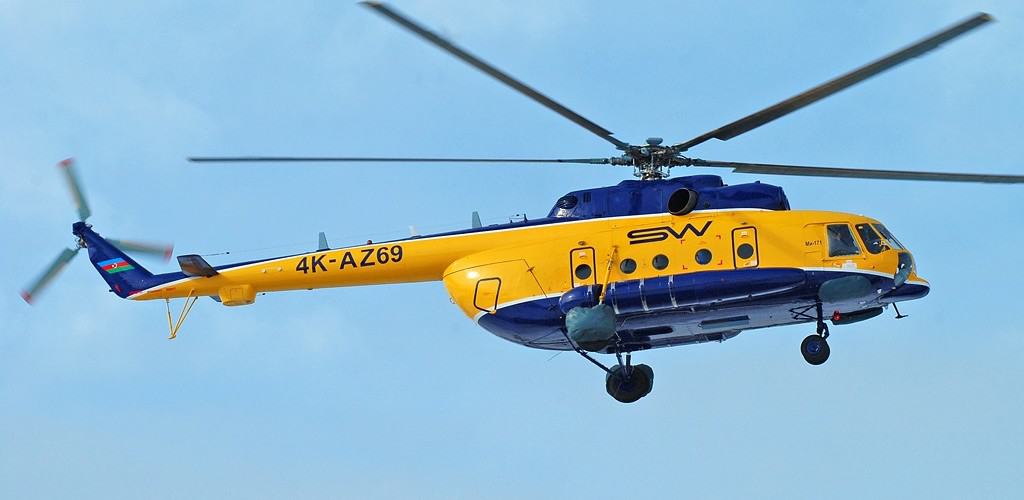


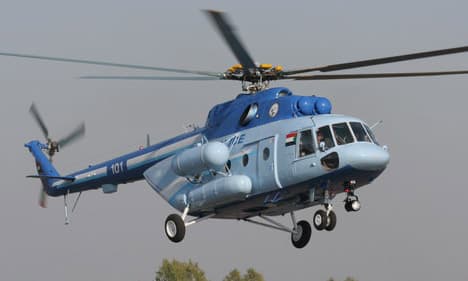
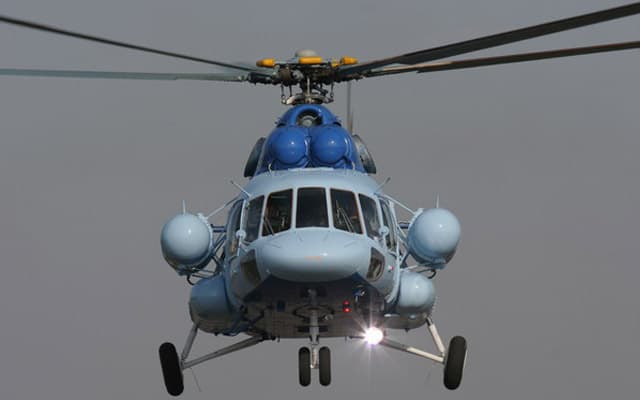
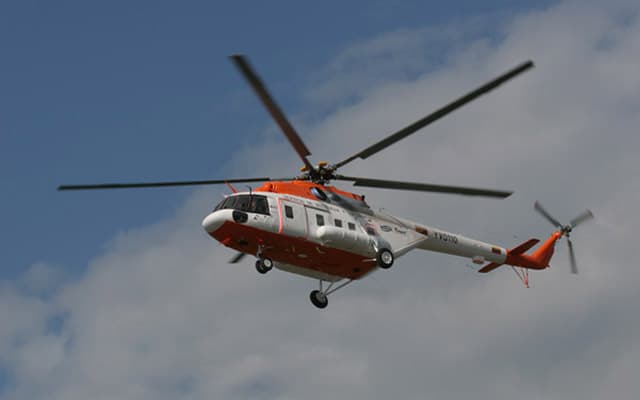
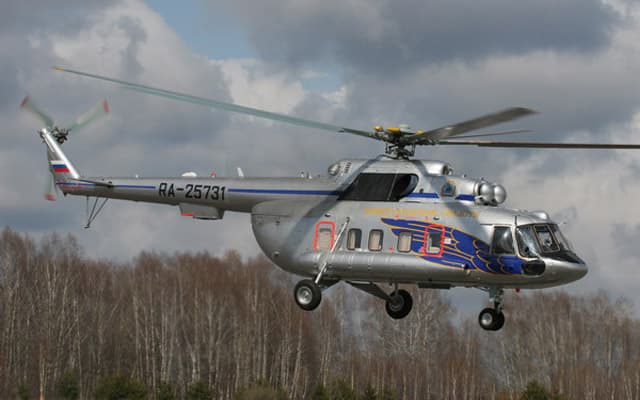
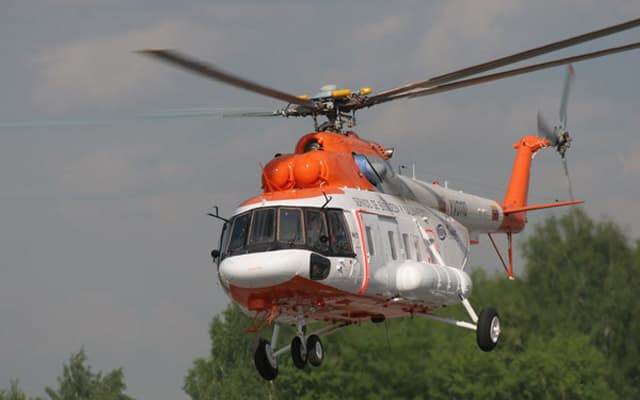
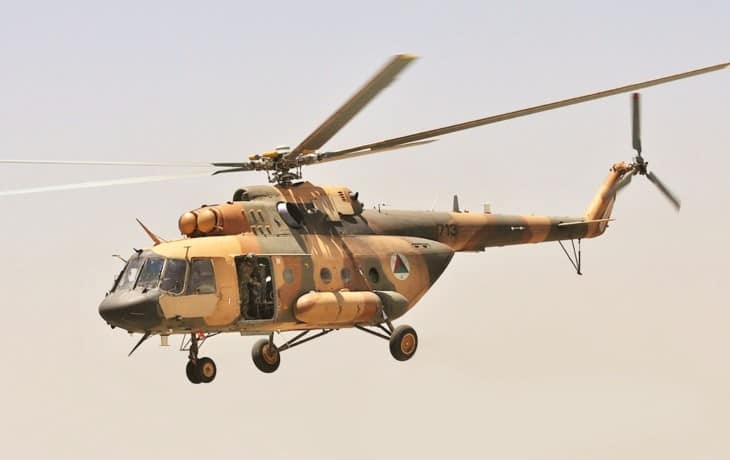
The Mil Mi-17 is a Russian twin-turbine transport helicopter, and it is the export version of the Mi-8. Russian forces call the same machine the Mi-8MT. Mi-17 is the name on the sales brochure.
It is built by the Kazan Helicopter Plant, and the related Mi-171 comes from the Ulan-Ude Aviation Plant. The design bureau behind both is the Mil Moscow Helicopter Plant.
Wikipedia lists production from 1977 to the present, with approximately 60 other countries flying the type alongside Russia.
The Mi-17 is from Russia, and before that the Soviet Union. It grew out of the Mi-8, which Wikipedia calls the world’s most-produced helicopter, with over 17,000 built.
The Mi-17 first flew in 1975. Wikipedia dates its introduction to 1977 as the Mi-8MT and 1981 as the Mi-17.
The Mi-17 keeps the Mi-8 airframe but swaps in the larger Klimov TV3-117MT engines. It also borrows a rotor and transmission developed for the Mi-14, and the fuselage was reinforced for heavier loads.
You can tell them apart from the ground. The Mi-17 has its tail rotor on the left side, where the Mi-8 has it on the right, and it has oval exhausts and dust shields over the engine intakes.
The Mi-17 also carries improved crew armor.
For the earlier version and its long history, see the Mil Mi-8 Hip page.
The base Mi-17 uses two TV3-117MT turboshafts, each rated at 1,950 hp (1,454 kW). The panel on this page is for that version.
The family then splits by engine. Wikipedia notes an optional TV3-117VM rated at 2,072 shp for hot and high conditions, and the newest builds use the Klimov VK-2500PS-03, rated at 2,400 hp for takeoff and 2,700 hp at its emergency rating.
The names are easy to mix up, so here is the short map:

The cabin takes 24 troops or 12 stretchers, and the crew is three: pilot, copilot and flight engineer. Cabin length is 17 ft 6 in (5.34 m). Cabin width is 7 ft 8 in (2.34 m), and cabin height is 5 ft 11 in (1.80 m).
Clamshell doors at the rear and a ramp let it take vehicles and bulky freight, up to 4,000 kg of internal cargo according to Army Technology. The same page lists external sling loads between 3,000 kg and 5,000 kg depending on the variant.
Those sling figures disagree even within that one page, so no single number is safe to quote for every Mi-17.

The full specification table for the aircraft is on this page. A few figures need context, because they get quoted against each other.
Speed first. The panel shows a top speed of 135 kt (155 mph, 250 km/h), which matches the 135 kt that Doc8643 lists for the Mi-17 under ICAO type designator MI8. Cruise speed is lower, at about 130 kt (150 mph, 241 km/h) per Jane’s.
Range is about 267 nm (310 mi, 490 km) on the TV3-117 engines. The older TV2-117 Mi-8 managed about 465 km, and the VK-2500-powered Mi-171A2 is quoted at 800 km on Wikipedia, so a “Mi-17 range” depends entirely on which Mi-17 you mean.
Ceiling is the same story. The panel carries 16,404 ft (5,000 m) for the Mi-8MT, while Army Technology gives service ceilings between 4,500 m and 6,000 m by variant. For a helicopter the hover ceiling matters more, and Army Technology lists it lower than the service ceiling, from 800 m on the oldest engines to 3,980 m on the best.
One panel row is easy to misread. The “wing span” figure of 69 ft 10 in (21.29 m) is the main rotor diameter, because the Mi-17 has no wing to measure.
Weights are simpler. The maximum takeoff weight is 28,700 lb (13,000 kg), and the type can lift a payload of 8,800 lb (4,000 kg).

India is a major customer. It reportedly ordered 80 Mi-17V-5s in December 2008, added 71 more under a December 2012 contract, and had all 151 delivered by February 2016.
China ordered 100 Mi-171s in 2019, including 18 Mi-171Sh. Thailand has taken 10 since 2011, and Bangladesh ordered 11 Mi-171Sh in 2014 and 2015.
It is just as common in civil and government work. Malaysia’s fire and rescue department flies one, and Sri Lankan Mi-17s have served on United Nations duty in the Central African Republic.

American forces have used the Mi-17 for decades. Wikipedia notes that US Army Special Forces relied heavily on CIA-operated Mi-17s in the early days of the war in Afghanistan.
Later the United States bought Mi-17s for Afghan forces. Afghanistan’s army chief of staff said the choice over the American Chinook came down to familiarity and suitability for the terrain, and the purchase drew criticism in Washington.
In 2022 the helicopters found a new use. President Joe Biden announced on April 13, 2022 that the US would send 11 Mi-17s to Ukraine, which reports link to the Afghan purchase, and other reports put the total at 16.
That is why a Russian-built helicopter shows up in American training. In June 2025 a gray Mi-17 over Tucson, Arizona, drew attention. The Pima County Sheriff’s Department said it was affiliated with the US military, and The War Zone judged that its configuration pointed most strongly to the Army’s Aviation Technology Office, an inference rather than a confirmed attribution.
The Mi-17 has been shot down and has crashed in many places. An Indian Mi-17 was shot down by Pakistani missiles in the 1999 Kargil War.
In 2019 an Indian Air Force Mi-17 crashed at Budgam, and a later investigation found it was hit by friendly fire from a SPYDER system. In 2005 a Mi-17 carrying John Garang crashed in South Sudan and killed him.
More recent events show the type is still hard at work. A Peruvian Air Force Mi-17 crashed on February 22, 2026, killing all 15 aboard, and a Pakistan Army Mi-17 crashed near Muzaffarabad on June 10, 2026, with all 22 aboard killed.
In the war in Ukraine, Ukraine’s Unmanned Systems Forces said it destroyed four helicopters, including two Mi-17s, while they refueled in Voronezh Oblast on April 29, 2026. Claims in this war change quickly, so check recent reporting for any current count.
The Mi-17 is from Russia, which developed it from the Soviet Mi-8. It is built at the Kazan Helicopter Plant, and the related Mi-171 is built at Ulan-Ude.
Nearly. The Mi-17 is the export name for the Mi-8MT, which has the larger TV3-117MT engines. Visually, the Mi-17 has its tail rotor on the left, oval exhausts and dust shields over the intakes.
It seats 24 troops or 12 stretchers, with a crew of three. Army Technology quotes up to 30 troops for the wider Mi-8 and Mi-17 family.
The maximum speed is about 135 kt (155 mph, 250 km/h). Cruise speed is about 130 kt (150 mph, 241 km/h). The VK-2500-powered Mi-171A2 is quoted faster, at 280 km/h on Wikipedia.
Yes. The CIA has long operated Mi-17s, and the US military flies them for training and evaluation, because allies and adversaries use the type so widely. In 2022 the US also announced Mi-17s for Ukraine.
Marine One is not a type of helicopter. It is the call sign of any US Marine Corps aircraft carrying the president, flown by HMX-1 in the VH-92A, VH-60N and VH-3D, not in Mi-17s.
The Soviet gunship in the film is a Mi-24 Hind-D, not a Mi-17. Wikipedia notes the Hinds on screen were modified Aérospatiale Puma transports with bolt-on wings. For the real machine, see our Mil Mi-24 and Mi-35 page.
Some variants are. Wikipedia describes the Mi-17-1V as a transport and gunship version and the Mi-171Sh as armable, with some Mi-171 variants carrying rockets and gun pods on six hardpoints, and window-mounted machine guns on others.
Sources and references used for research and fact-checking.

_(cropped)_(cropped).jpg)

