

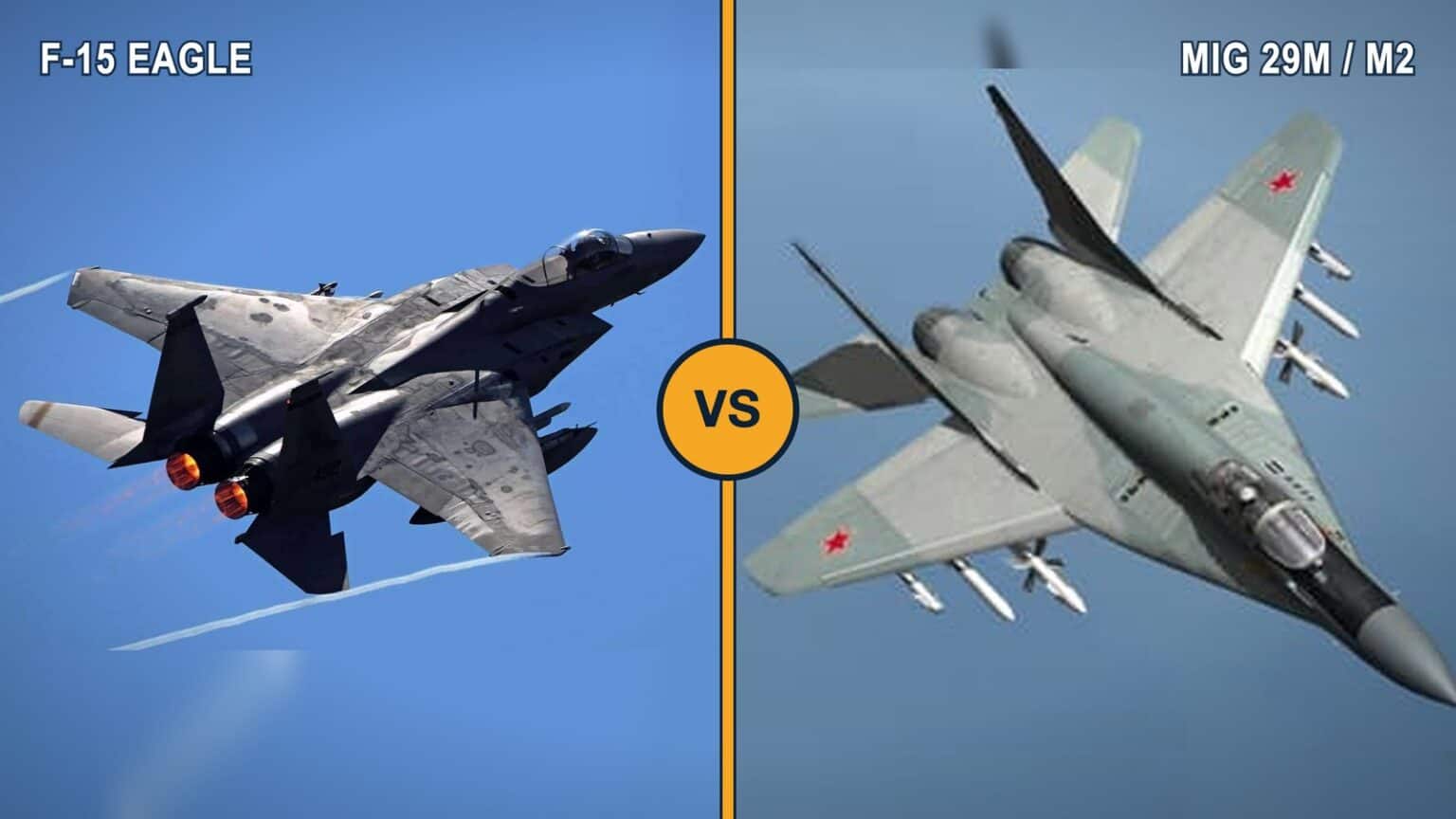

The F-15 Eagle is the better all-round fighter. It has the stronger radar, more range and a combat record of 104 kills and no losses through 2008, including five MiG-29s over Iraq in 1991 and four over Kosovo in 1999.
The MiG-29 wins one fight, the slow, close-in turning duel. German pilots who flew ex-East German Fulcrums found it more maneuverable than the Eagle at low speed. This page compares the F-15C with the MiG-29, and uses the newer MiG-29M for the database specs.

General
McDonnell Douglas F-15 Eagle
Manufacturer
McDonnell Douglas
ICAO code
F15
Military code
F-15C
Produced
1972–1997
Price
$29.9 million (1998)
Engine
2 × Pratt & Whitney F100-PW-220
Engine type
Turbofan
Thrust
2 × 23,770 lbf · 106 kN
+20% (total)
Avionics
AN/APG-63 pulse-Doppler radar (later upgraded to APG-63(V)1 and APG-63(V)3 AESA), head-up display, AN/ALR-56C radar warning receiver, AN/ALQ-135 electronic countermeasures (TEWS)
Wing tips
No winglets
Seats
1
Crew
1
Mikoyan MIG 29M / M2
Manufacturer
Mikoyan Gurevich
ICAO code
—
Military code
MiG-29M
Produced
2017–Present
Price
—
Engine
2 × Klimov RD-33MK afterburning turbofans
Engine type
Turbofan
Thrust
2 × 19,840 lbf · 88 kN
-17% (total)
Avionics
Zhuk-ME pulse-Doppler radar, OLS-UE infrared search and track, helmet-mounted sight
Wing tips
No winglets
Seats
2 economy · 1 business
Crew
1
Dimensions
McDonnell Douglas F-15 Eagle
Exterior length
63 ft 9 in
19.43 m
63 ft 9 in
19.43 m
+12%
Tail height
18 ft 6 in
5.64 m
18 ft 6 in
5.64 m
+28%
Wing span
42 ft 10 in
13.06 m
42 ft 10 in
13.06 m
+9%
Mikoyan MIG 29M / M2
Exterior length
57 ft 0 in
17.37 m
57 ft 0 in
17.37 m
-11%
Tail height
14 ft 5 in
4.40 m
14 ft 5 in
4.40 m
-22%
Wing span
39 ft 4 in
11.99 m
39 ft 4 in
11.99 m
-8%
Weights
McDonnell Douglas F-15 Eagle
Empty weight
29,000 lb
13,154 kg
29,000 lb
13,154 kg
+13%
Max payload
—
—
—
Fuel capacity
2,008 gal
7,601 L
2,008 gal
7,601 L
Max takeoff weight
68,000 lb
30,800 kg
68,000 lb
30,800 kg
+16%
Mikoyan MIG 29M / M2
Empty weight
25,573 lb
11,600 kg
25,573 lb
11,600 kg
-12%
Max payload
12,100 lb
5,500 kg
12,100 lb
5,500 kg
Fuel capacity
—
—
—
Max takeoff weight
58,500 lb
26,500 kg
58,500 lb
26,500 kg
-14%
Performance
McDonnell Douglas F-15 Eagle
Max cruise speed
1,434 kt · 1,650 mph
2,656 km/h
1,434 kt
1,650 mph
2,656 km/h
+26%
Max speed
1,434 kt · 1,650 mph
2,656 km/h
1,434 kt
1,650 mph
2,656 km/h
+26%
Cruise speed
496 kt · 571 mph
919 km/h
496 kt
571 mph
919 km/h
Rate of climb
67,050 ft/min
341 m/s
67,050 ft/min
341 m/s
+3%
Range
3,000 nm · 3,450 mi
5,560 km
3,000 nm
3,450 mi
5,560 km
+178%
Service ceiling
65,000 ft
19,800 m
65,000 ft
19,800 m
+24%
Takeoff distance
900 ft
280 m
900 ft
280 m
Landing distance
3,600 ft
1,100 m
3,600 ft
1,100 m
Mikoyan MIG 29M / M2
Max cruise speed
1,134 kt · 1,305 mph
2,100 km/h
1,134 kt
1,305 mph
2,100 km/h
-21%
Max speed
1,134 kt · 1,305 mph
2,100 km/h
1,134 kt
1,305 mph
2,100 km/h
-21%
Cruise speed
—
—
—
Rate of climb
64,961 ft/min
330 m/s
64,961 ft/min
330 m/s
-3%
Range
1,080 nm · 1,240 mi
2,000 km
1,080 nm
1,240 mi
2,000 km
-64%
Service ceiling
52,493 ft
16,000 m
52,493 ft
16,000 m
-19%
Takeoff distance
—
—
—
Landing distance
—
—
—
McDonnell Douglas F-15 Eagle comparisons
-
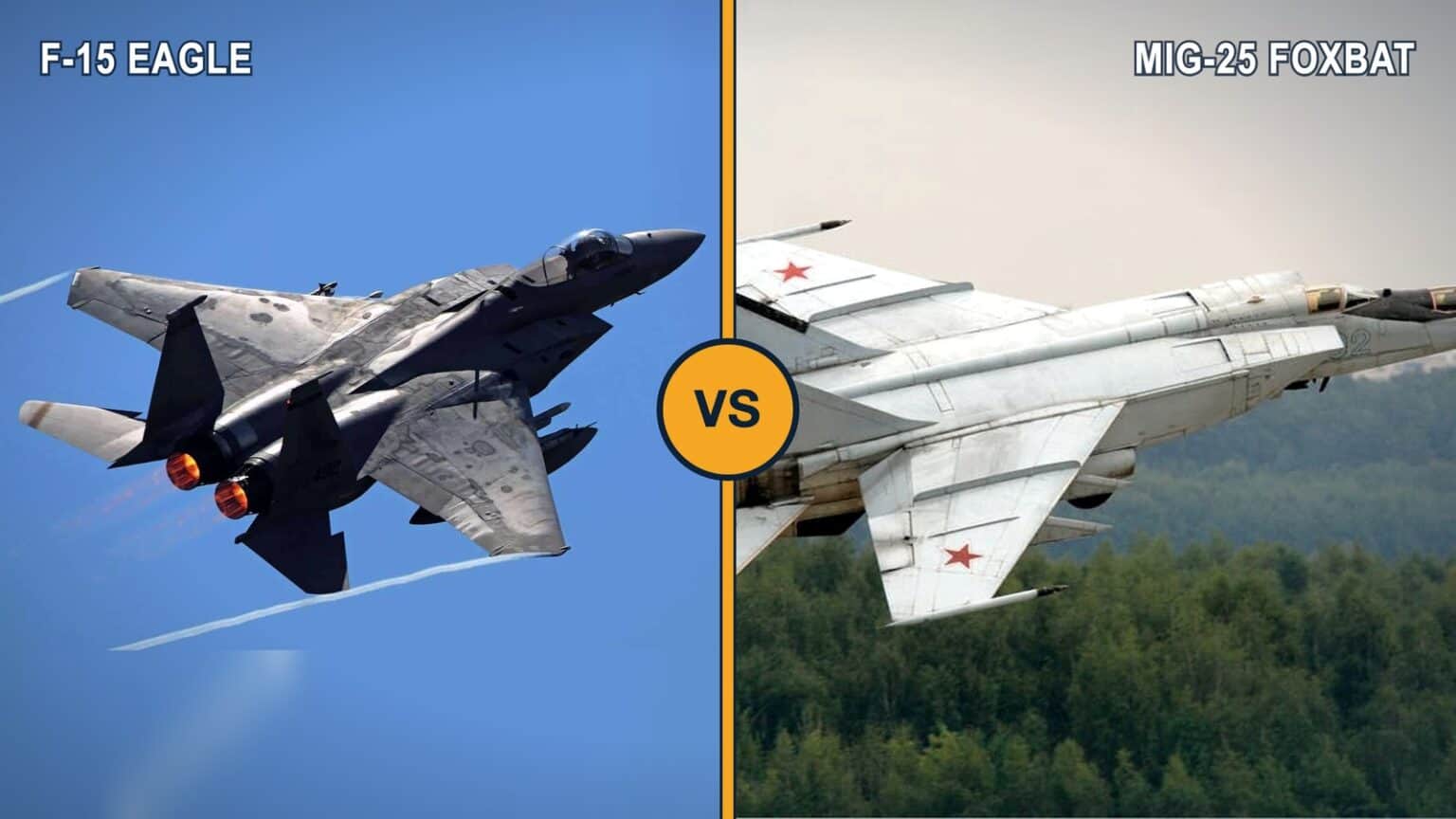 F-15 vs MiG-25: Eagle or Foxbat, Which Would Win?
-
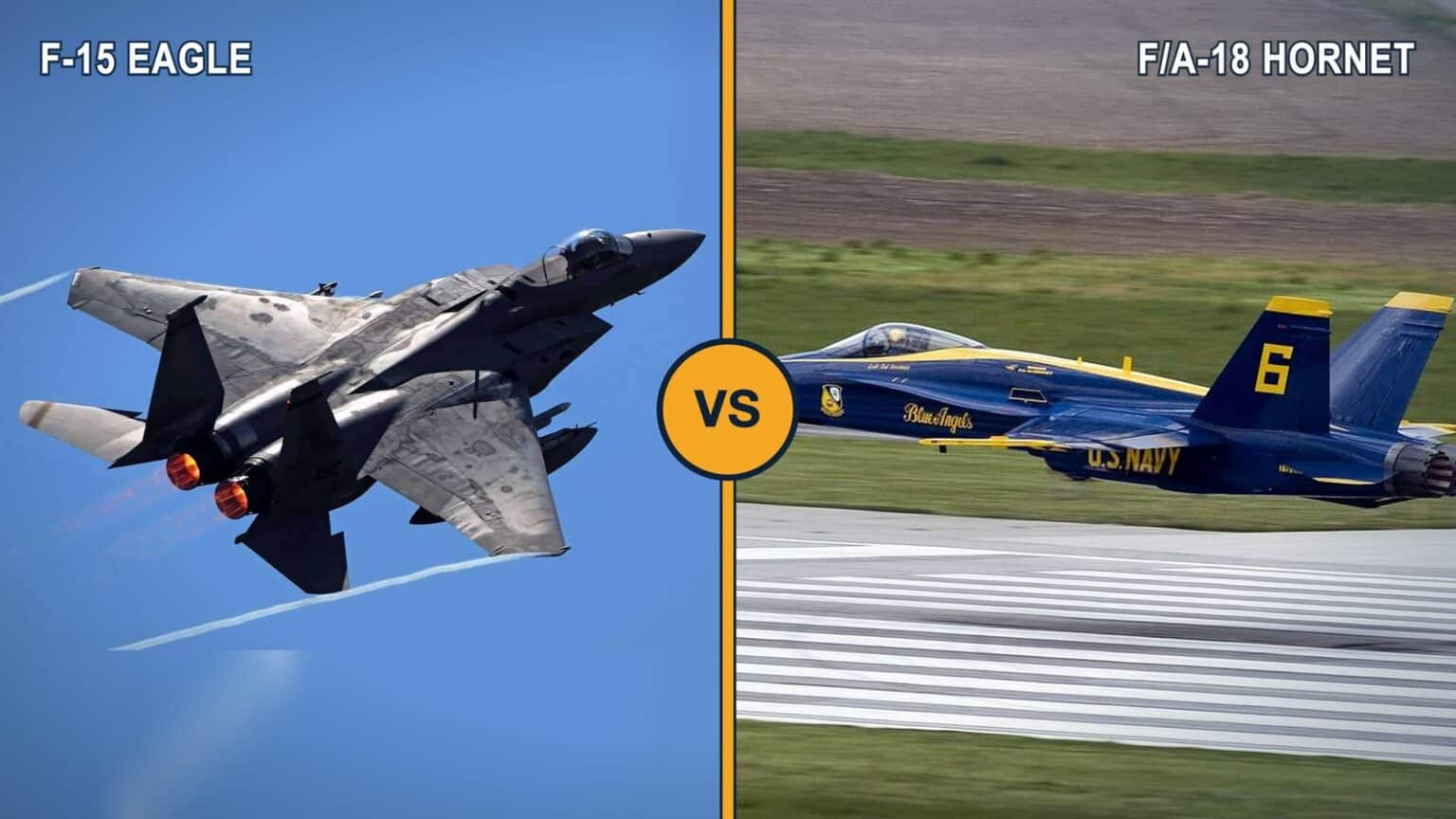 F-15 Eagle vs F/A-18 Hornet: Air Superiority Against Versatility
-
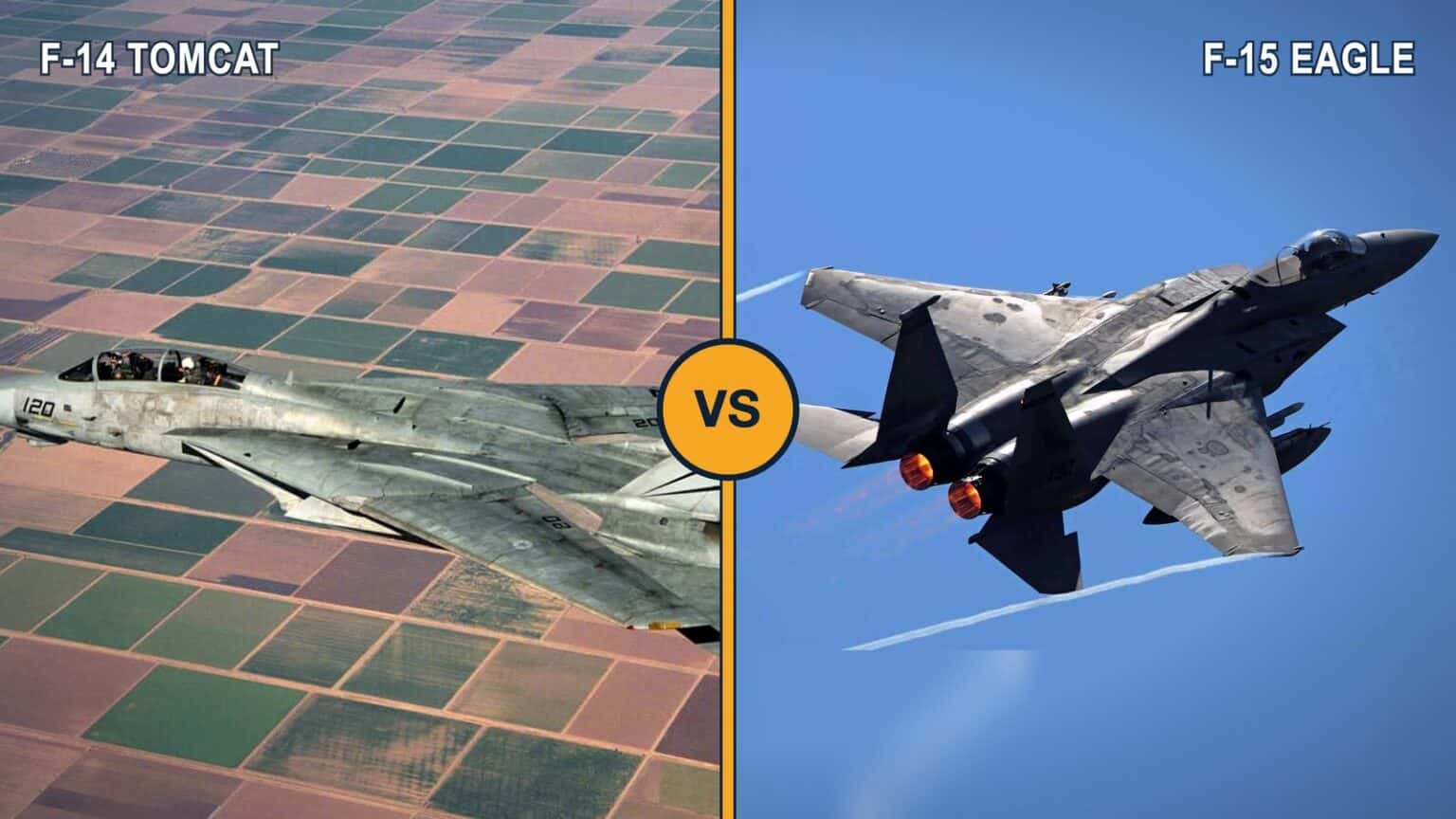 F-14 vs F-15: Which Was the Better Fighter, the Tomcat or the Eagle?
-
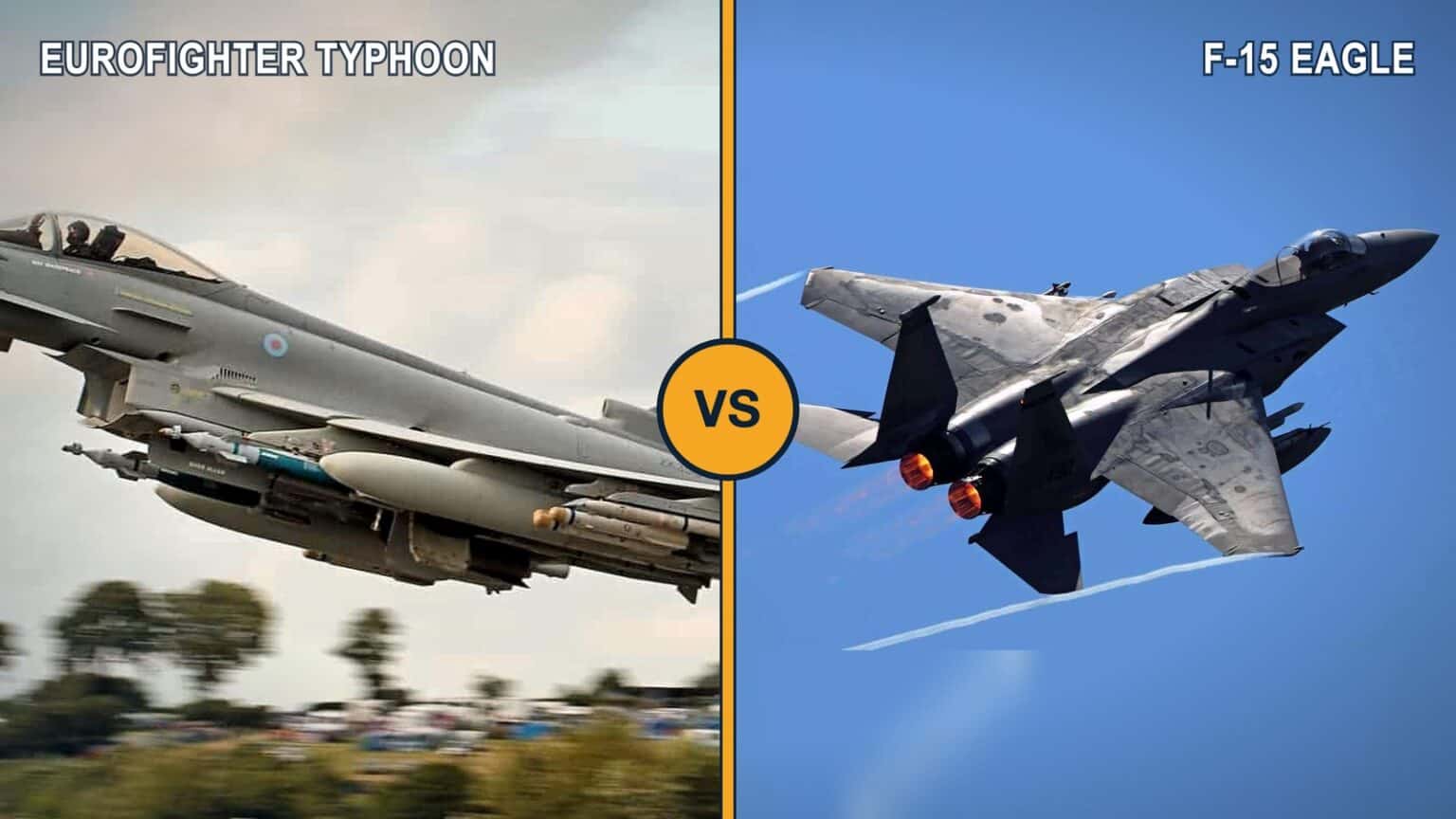 Eurofighter Typhoon vs F-15 Eagle: Which Fighter Wins?
-
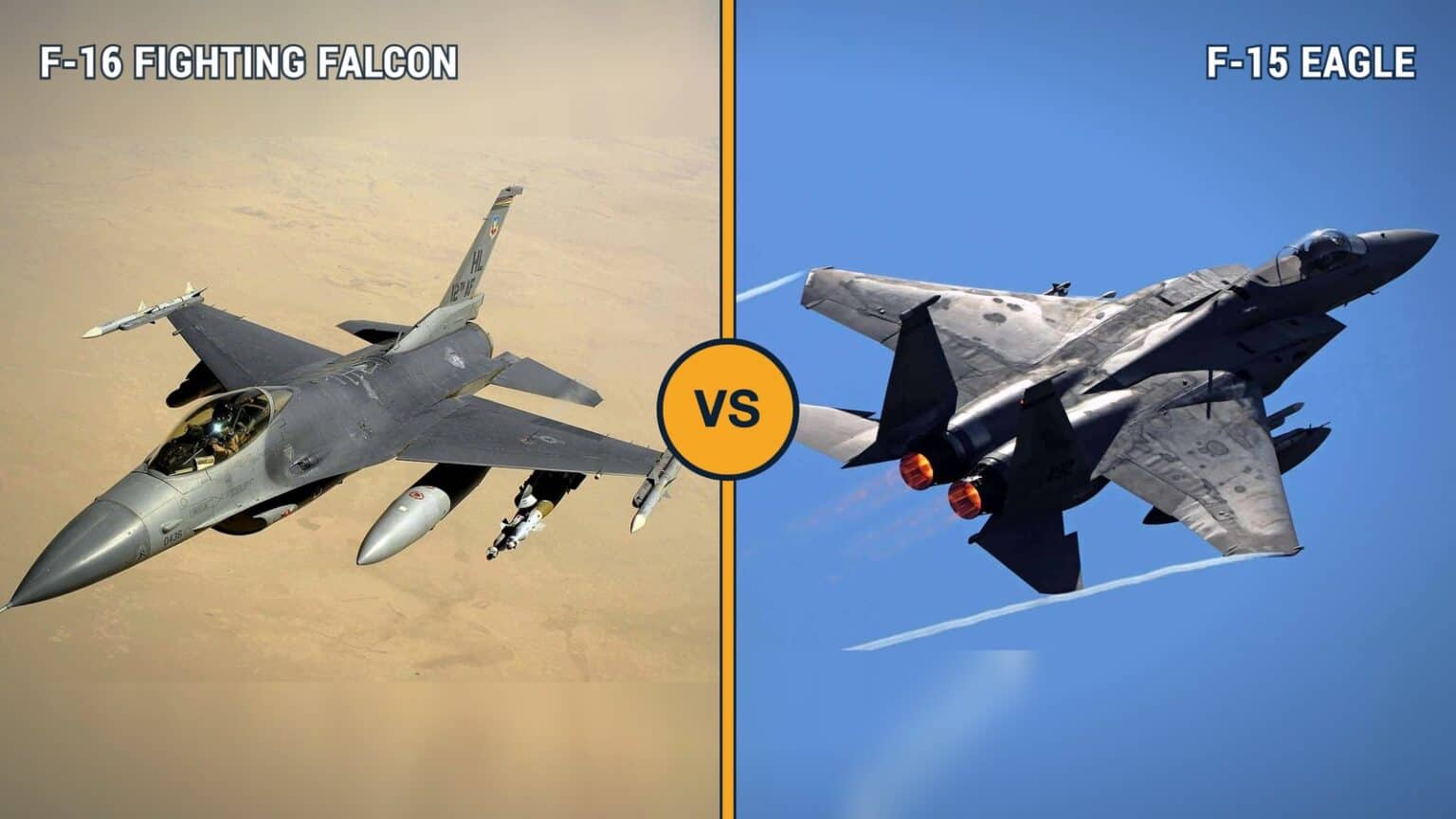 F-15 vs F-16: Which Fighter Is Better, and Why the Air Force Needed Both
-
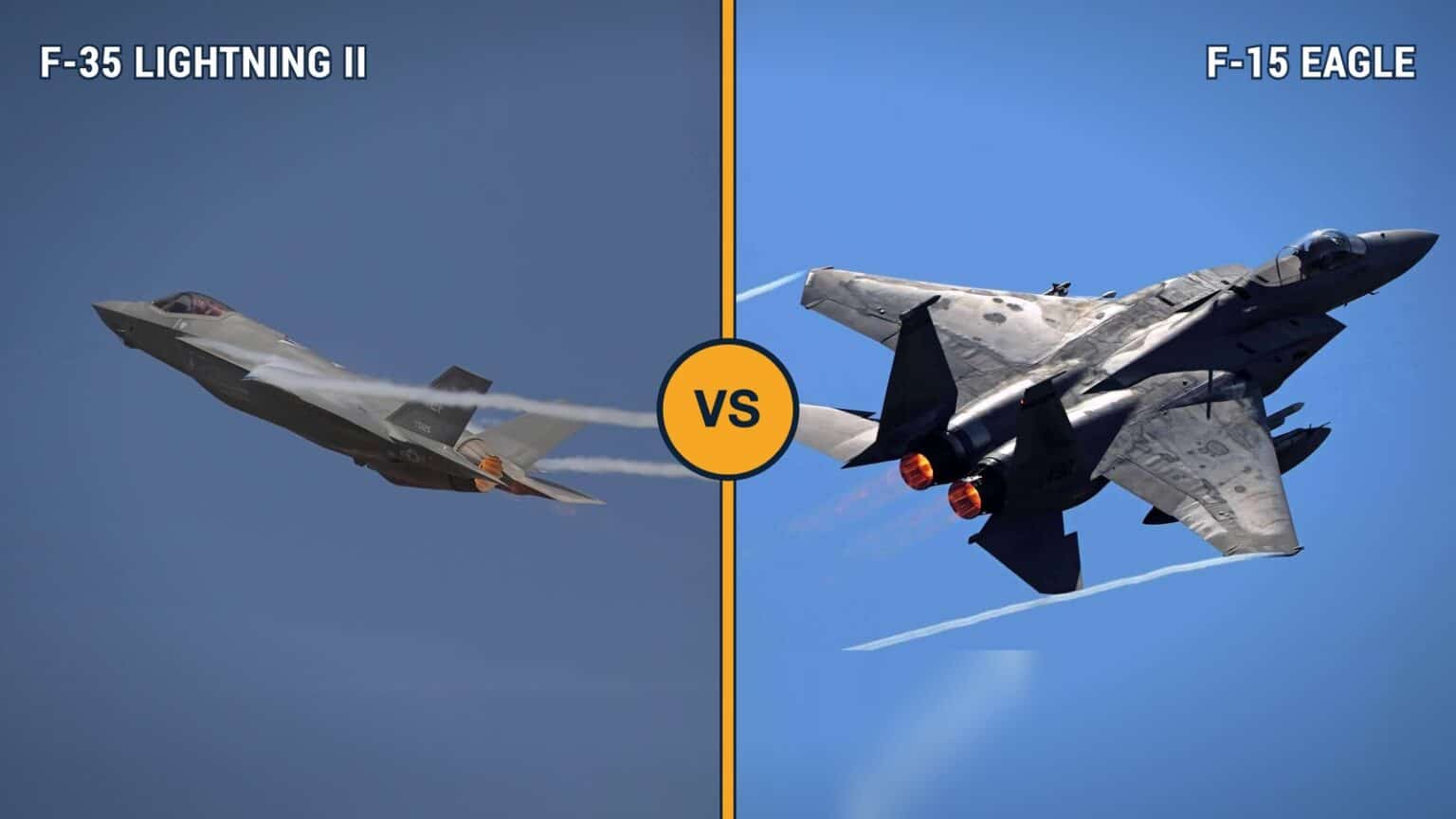 F-15 vs F-35: Which Fighter Is Better, and Why the Air Force Is Buying Both
Mikoyan MIG 29M / M2 comparisons
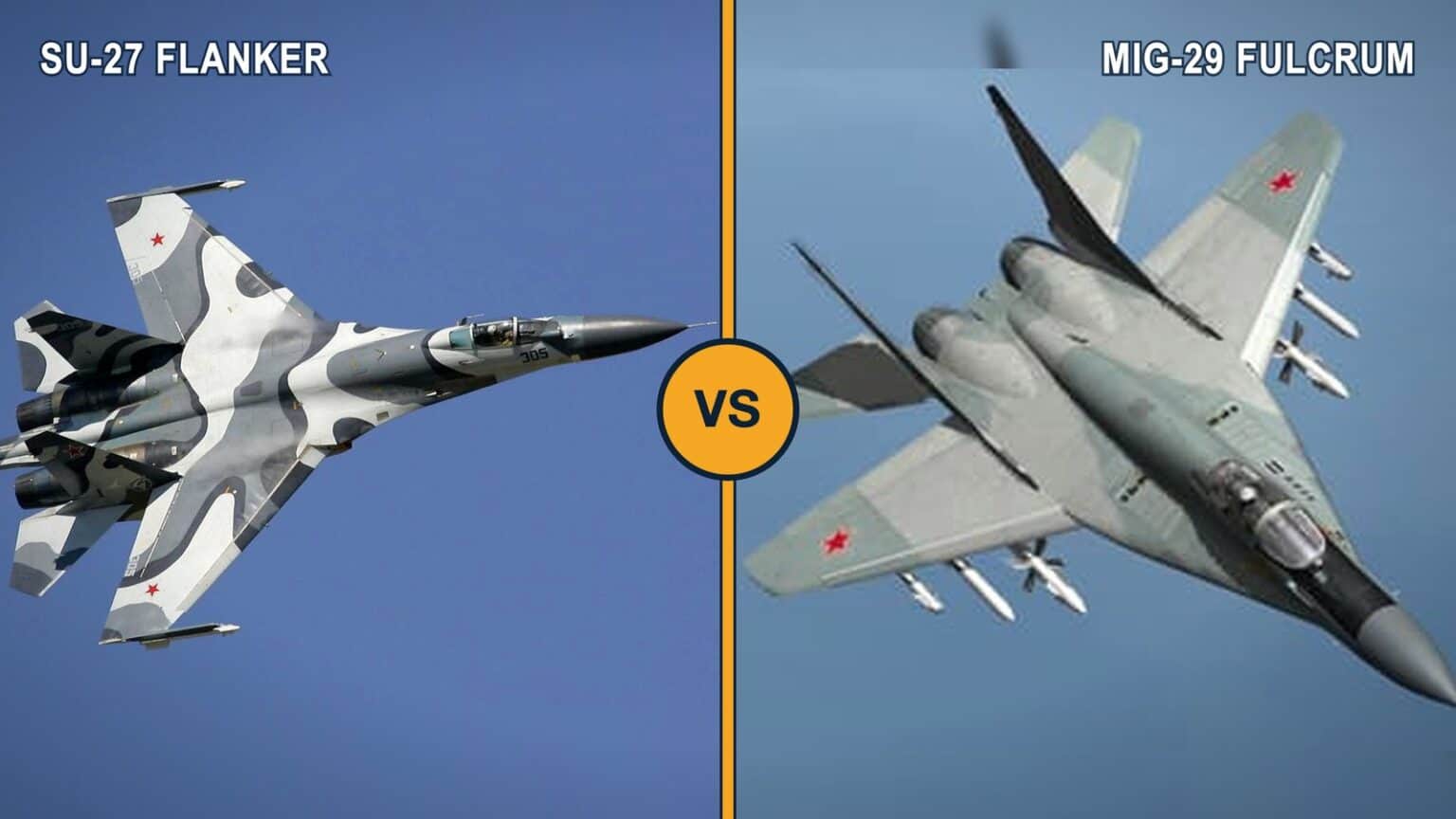
Table of Contents
| Measure | F-15 Eagle (F-15C) | MiG-29 / MiG-29M |
|---|---|---|
| Role | Air-superiority fighter, with the F-15E Strike Eagle as a strike derivative | Frontline air-defense fighter, with later multirole variants |
| First flight, service | First flight July 27, 1972; USAF service from 1976 | First flight October 6, 1977; Soviet service from 1983 |
| Radar | AN/APG-63 pulse-Doppler; AESA radars on upgraded jets | Zhuk-ME pulse-Doppler on the MiG-29M; older MiG-29s carry a shorter-range radar |
| Gun | 20 mm M61 Vulcan in the right wing root | 30 mm GSh-30-1 in the port wing root |
| Dogfight missiles | AIM-9 Sidewinder | R-73 (AA-11 Archer), plus a helmet-mounted sight |
| Medium-range missiles | AIM-7 Sparrow and AIM-120 AMRAAM | R-27 (AA-10 Alamo); R-77 on the MiG-29M |
| Cockpit | Single bubble canopy, HOTAS controls, head-up display | Conventional dials, high-mounted canopy, helmet cueing, no HOTAS on the original |
| Air combat record | 104 kills and no losses through 2008 | Six shot down over Kosovo in 1999 and five over Iraq in 1991 |
| Main operators | The USAF, Israel, Japan and Saudi Arabia | Russia, India, Poland and more than 30 nations in all, past and present |
Two fighters built to answer each other
The F-15 Eagle was the US Air Force’s first dedicated air-superiority fighter since the F-86 Sabre. It first flew on July 27, 1972 and entered service in 1976. McDonnell Douglas built it as a twin-engine jet with one pilot, a big radar and a gun.
The MiG-29 was the Soviet reply. It was designed, along with the larger Su-27, to counter the F-15 and the F-16. It first flew on October 6, 1977 and joined Soviet front-line units in 1983.
The newer MiG-29M is a deep modernization of that first jet, with a new radar and a wider weapons load. The database comparison above uses it. The combat record below belongs to the older MiG-29s that actually fought.
For the wider lineup, see our guide to the best fighter jets in the world.

Where the F-15 wins
Radar and beyond-visual-range fighting
The F-15 sees farther. Its look-down, shoot-down radar picks out low-flying targets from ground clutter, and it carries AIM-7 Sparrow and AIM-120 AMRAAM missiles.
German pilots who flew the MiG-29 found it hard to manage a radar lock and fire an R-27 while avoiding the longer-range search of American radars. They also said the American fighters held the advantage at night and in bad weather.
The combat record
The F-15 has a combined air-to-air record of 104 kills and no losses through 2008. The air-superiority models, the F-15A through F-15D, have not been lost to enemy action. More than half of the kills belong to Israeli pilots.
The Luftwaffe judged the MiG-29 best as a point-defense interceptor over cities and bases, and not as a fighter for sweeps over hostile territory.
Cockpit and pilot workload
The F-15 was designed so one pilot could fight alone. Weapons selection sits on the throttles and stick, and the head-up display shows guidance for whichever weapon is selected. The single canopy frame gives a clear view forward.
The original MiG-29 cockpit has conventional dials and no HOTAS. Mikoyan kept it close to the earlier MiG-23 so pilots could convert easily. Its high bubble canopy still gave better visibility than earlier Soviet fighters.
The radar that was sold to the CIA
The MiG-29’s N019 radar had a troubled development. Phazotron designer Adolf Tolkachev passed the design to the CIA, and he was executed in 1986.
The Soviets rushed out an improved N019M for the MiG-29S, and the MiG-29M later received the Zhuk radar, a planar-array design.

When the two met in real wars
In the 1991 Gulf War, Iraq had received 37 MiG-29s before the invasion of Kuwait. USAF F-15s shot down five of them. Iraq had not received the R-73 or R-27T missiles that Coalition planners feared most.
In 1999, during NATO’s Kosovo campaign, six Serbian MiG-29s were shot down. USAF F-15s took four of them, using AIM-120 and AIM-7 radar-guided missiles. One USAF F-16 and one Royal Netherlands Air Force F-16 took the other two.
Those were not fair fights. The Yugoslav fleet had been starved of maintenance by a UN arms embargo, and the Iraqi jets flew without their best missiles.
Where the MiG-29 wins
The close-in turning fight
This is the MiG-29’s real advantage. After reunification, German pilots flew the 24 MiG-29s that East Germany had bought, and found them more maneuverable at slow speeds than the F-15, F-16, F-14 and F/A-18.
The Federation of American Scientists rates it equal to or better than the F-15C in short engagements. The reasons are its slow-speed handling and its helmet sight.

The R-73 and the helmet sight
The R-73 is a short-range missile that German pilots rated above the AIM-9 Sidewinder of the day. Paired with the helmet-mounted sight, it lets a pilot lock any target he can see, including ones almost 45 degrees off the nose.
In a close merge, that lets a Fulcrum pilot shoot at a target his opponent has not yet pointed at.
A cheap export fighter
The MiG-29 was a popular export. More than 30 nations have operated it, and an estimated 728 MiG-29 and MiG-35 variants remained in service in 2026.
The F-15 is still in production in advanced forms for foreign customers.

Myth check: the MiG-29 was never a match for the Eagle
The record is more mixed than that. German pilots found the MiG-29 beat every NATO fighter in a slow, close-in fight. What it lacked was radar, data and fuel, which is why F-15s won the real wars where those mattered.
Which jet is better depends on the mission. An air force defending its own airspace from nearby bases can live with the MiG-29’s limits, while one that must patrol far from home wants the F-15.
So which is better, the F-15 or the MiG-29?
The F-15 is the better fighter. It sees farther, shoots farther and has a record no MiG-29 has dented. That is why it flew for the USAF, Israel, Japan and Saudi Arabia.
The MiG-29 is the better pure dogfighter at low speed, and the MiG-29M narrows the sensor gap. In a real fight, the pilot, the missile and who sees the other first usually decide the result.
To go deeper, see how the Fulcrum fares against the F-16 in our F-16 vs MiG-29 comparison, or read about the top fighter jets in the world.
FAQ
In most roles, yes. The F-15 has a stronger radar, more range, and a 104-0 air combat record through 2008. The MiG-29 is stronger in a slow, close-range turning fight, where its nose-pointing and helmet-cued R-73 missile give it an edge.
Yes. In the 1991 Gulf War, USAF F-15s shot down five Iraqi MiG-29s. In 1999, during NATO’s Kosovo campaign, USAF F-15s shot down four Yugoslav MiG-29s.
It can in a slow, close-in fight. German pilots who flew East German MiG-29s found the Fulcrum more maneuverable at slow speeds than the F-15, and its R-73 missile better than the Sidewinder of the day. Beyond visual range they found the American radar and AMRAAM missiles gave the F-15 the advantage.
The F-15. It first flew on July 27, 1972 and entered USAF service in 1976. The MiG-29 first flew on October 6, 1977 and entered Soviet service in 1983.
The Soviet Union developed the MiG-29, alongside the larger Su-27, to counter American fighters such as the F-15 Eagle and the F-16 Fighting Falcon.
No. The MiG-29M is a deep modernization of the original, with the Zhuk-ME radar and a wider weapons load. The database specs on this page use the MiG-29M, while the combat record covers the earlier jets.
Sources and references used for research and fact-checking.
About the Author

Tim is the owner and lead editor of AeroCorner since 2019, overseeing aviation content covering aircraft, airlines, airports, and the broader aviation industry. Through years of researching, writing, editing, and publishing aviation-focused content, he has developed extensive practical knowledge of commercial aviation and air travel. Based in Asia and a frequent traveler himself, Tim also brings firsthand passenger experience to AeroCorner’s coverage. Outside of publishing, he has also explored aviation firsthand through hands-on flight training in New Zealand.