


Table of Contents
| Measure | F-15 Eagle | MiG-25 Foxbat |
|---|---|---|
| Built for | Air superiority for the US Air Force | High-speed, high-altitude interception for Soviet air defense |
| First flight | July 27, 1972 (F-15A) | March 6, 1964 (reconnaissance prototype); September 9, 1964 (interceptor) |
| Built | 1,198 F-15A/B/C/D/J/DJ | 1,186, from 1964 to 1984 |
| Air-to-air record | More than 104 victories, no losses in air combat | Every confirmed kill was made by Iraq |
| Status | Flown by the US, Japan, Saudi Arabia and Israel, among others | Retired from most air forces; Algeria reportedly still flies some for reconnaissance |
| Surprise on inspection | Not applicable | Belenko’s 1976 defection showed it was less advanced than feared |
How we compare the Eagle and the Foxbat
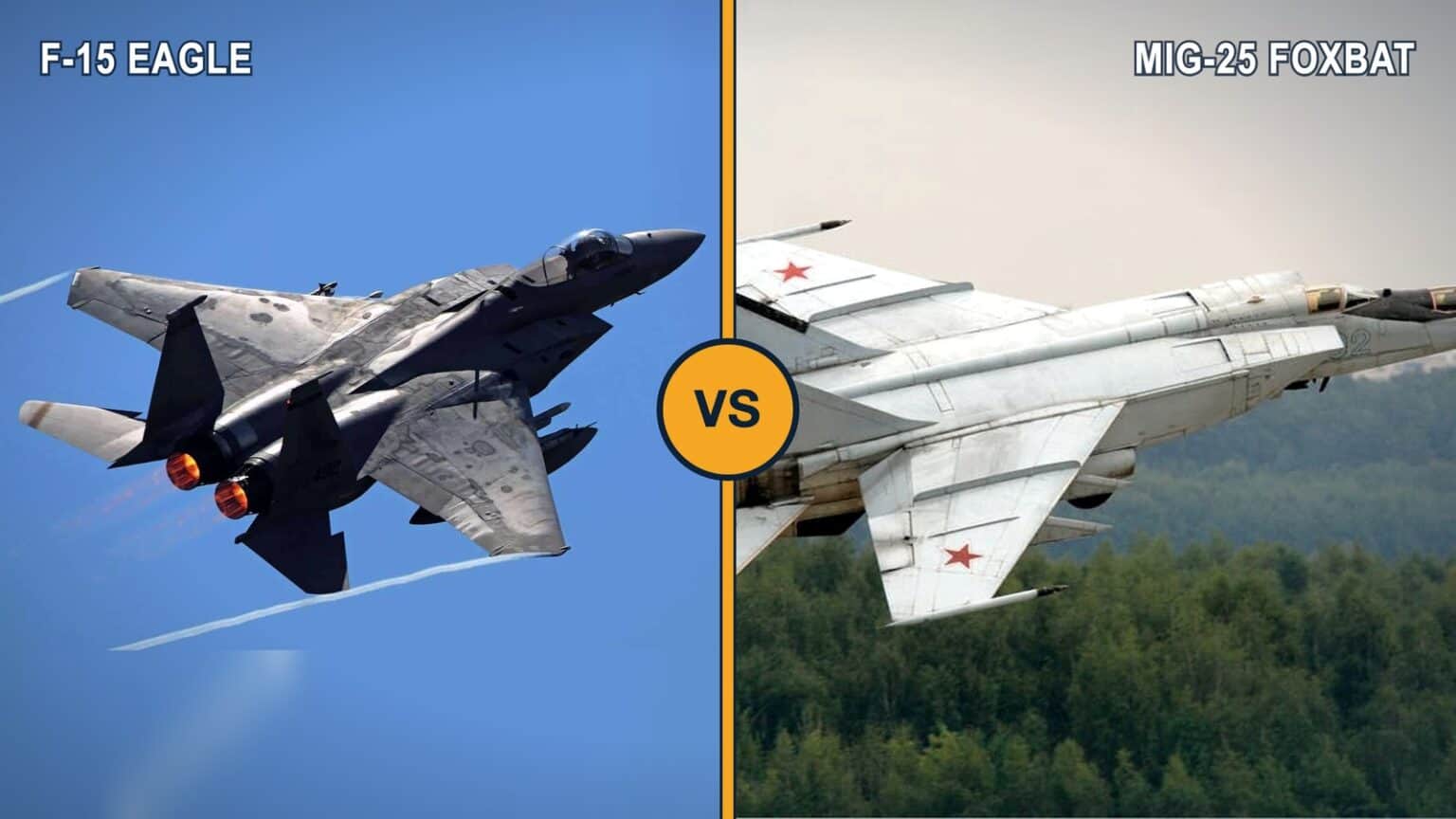
The F-15 and the MiG-25 are the two great jets of the 1970s air-defense race. One was an American fighter built to win dogfights. The other was a Soviet interceptor built to run down bombers.
We compare the F-15C Eagle with the MiG-25PD, the version Iraq flew against it in 1991. Where a figure applies to one variant only, we name it.
Full specifications for the McDonnell Douglas F-15 Eagle and the Mikoyan MiG-25 Foxbat sit in our aircraft database.
Two different jobs
The MiG-25 was a high-speed interceptor meant to catch very fast, high-flying bombers. The F-15 was an air-superiority fighter meant to win close and long-range fights against other fighters. They were designed to answer different questions.
Which is better, the F-15 or the MiG-25?
In air combat, the F-15. It was built to maneuver, to carry a full set of missiles, and to fight other fighters. It has more than 100 victories and no losses in air-to-air combat.
The MiG-25 did one thing well: go very fast and very high in a straight line. That made it hard to catch and a threat to bombers, but it paid for it everywhere else.
So the answer depends on the question. For a fighter fight the Eagle wins, and for a high-speed dash the Foxbat does.
Where the F-15 Eagle wins
A fighter, not an interceptor
The MiG-25 was designed in the late 1950s and 1960s around one target, fast and high-flying bombers. The Soviet air defense force wanted an interceptor that could reach 3,000 km/h and 27 km.
The Eagle was designed to fight. Its F-X program stressed maneuverability over speed, and McDonnell Douglas won the contract on December 23, 1969.

A jet that can turn
The MiG-25 was a stiff airframe. Viktor Belenko’s aircraft showed a structural limit of 2.2 g with full fuel tanks and an absolute limit of 4.5 g.
That is a low number for a fighter in a turning fight. The F-15 was designed from the start around maneuverability.
A combat record with no losses
The F-15 has more than 104 air-to-air victories and no losses in air combat. Over half of those kills were scored by Israeli pilots.
In the 1991 Gulf War, F-15Cs had 34 confirmed kills, including 2 MiG-25s, 5 MiG-29s and 8 MiG-23s.
Where the MiG-25 Foxbat wins
Speed
This is the one measure the Foxbat owns. Our spec widget above shows its higher top speed.
The real limit was lower than the headline figure. Engine overspeed damage set an operational limit of Mach 2.83, flown for no more than five minutes. Typical intercepts ran near Mach 2.5.

Reconnaissance flights nobody could stop
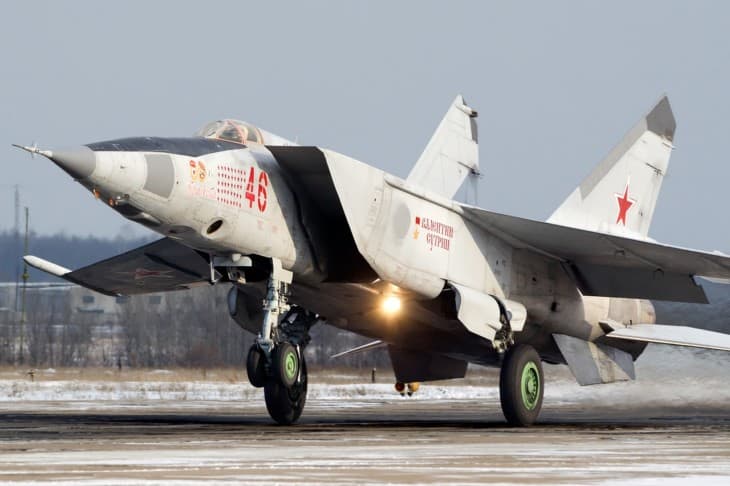
From March 1971 to July 1972 a Soviet detachment in Egypt flew two MiG-25Rs and two MiG-25RBs on about 20 reconnaissance missions over Israeli-held Sinai, at 17,000 to 23,000 m.
On November 6, 1971, Israeli F-4Es fired on a MiG-25 flying at Mach 2.5 and missed. A MiG-25 was later tracked at Mach 3.2 over Sinai, and its engines were scrapped afterward because of overspeed damage.
The F-15 did not exist yet. It first flew on July 27, 1972, the month the detachment left.
Did the F-15 get built because of the MiG-25?
Partly. The MiG-25 was revealed in 1967, and its speed and altitude made it look better than anything the US had flying, even the F-X proposals. That helped push the F-X toward a stronger fighter.
The F-15 entered service on January 9, 1976, when the first aircraft for a combat squadron, the 555th Tactical Fighter Squadron, was delivered.
Myth check: the MiG-25 was a Mach 3 super-fighter
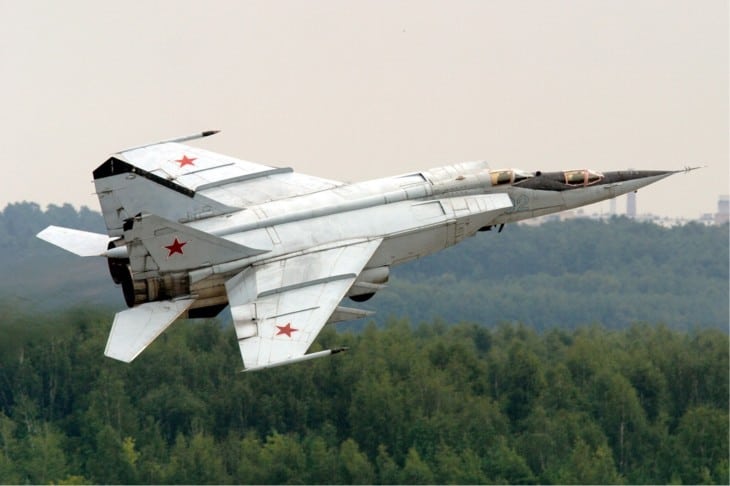
It was not. On September 6, 1976, pilot Viktor Belenko landed his MiG-25 at Hakodate, Japan, and Western engineers took it apart. They found an airframe mostly of nickel-steel rather than titanium, hand welding, and mostly vacuum-tube electronics. The jet could exceed Mach 3.2, but at the cost of its engines, so Mach 2.83 was the working limit.

F-15 vs MiG-25 in combat
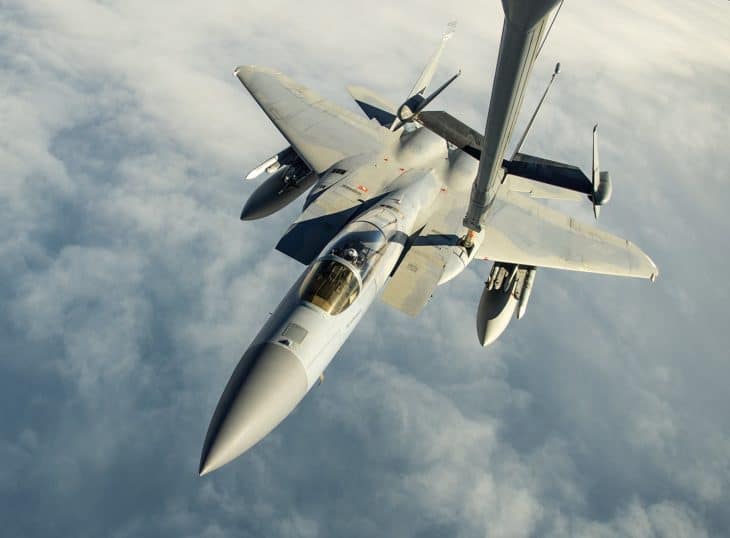
The two types met in the 1991 Gulf War. On January 19, 1991, two Iraqi MiG-25s were shot down by USAF F-15s using AIM-7 Sparrow missiles.
On January 17, 1991, a US Navy F/A-18 flown by Lt. Cdr. Scott Speicher was lost. An unclassified summary of a 2001 CIA report points to a missile from an Iraqi aircraft, most likely a MiG-25. Reports name the pilot as Lt. Zuhair Dawood, but the sources disagree on details and the case remained open.
On January 30, 1991, in what is called the Samurra air battle, Iraq claimed an R-40 missile hit on an F-15C. USAF records list no F-15 damaged that day, and the Iraqi pilots themselves disputed the claim.
After the war, an Iraqi MiG-25 violating the southern no-fly zone was shot down on December 27, 1992, by a US Air Force F-16D with an AIM-120 AMRAAM. It was the first AMRAAM kill.
Israeli F-15 pilots are also credited with shooting down Syrian MiG-25s over Lebanon in 1979 to 1982. The sources differ on whether the count is two or three.
Record check
All confirmed air-to-air kills by the MiG-25 were made by Iraq. In the Gulf War, two Iraqi MiG-25s were shot down in air combat, and most of the rest were destroyed on the ground.
F-15 vs MiG-25: the verdict
The F-15 Eagle is the better fighter. It was built to win air combat, it can turn, and it has more than 100 victories without an air-combat loss.
The MiG-25 Foxbat was the faster jet, and for a few years it frightened Western planners. Once its secrets came out in 1976, it looked like what it was: a fast, specialized interceptor.
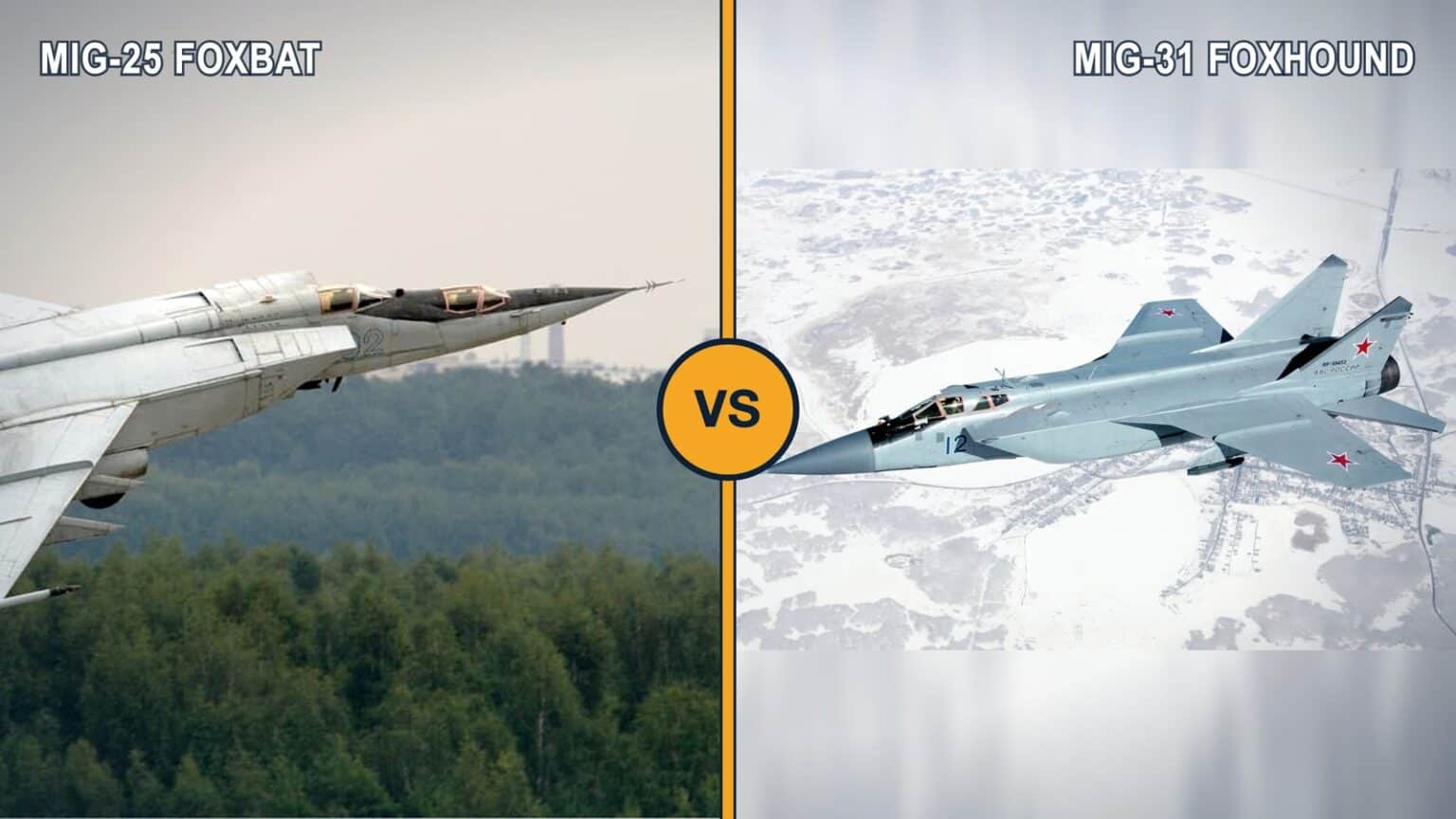
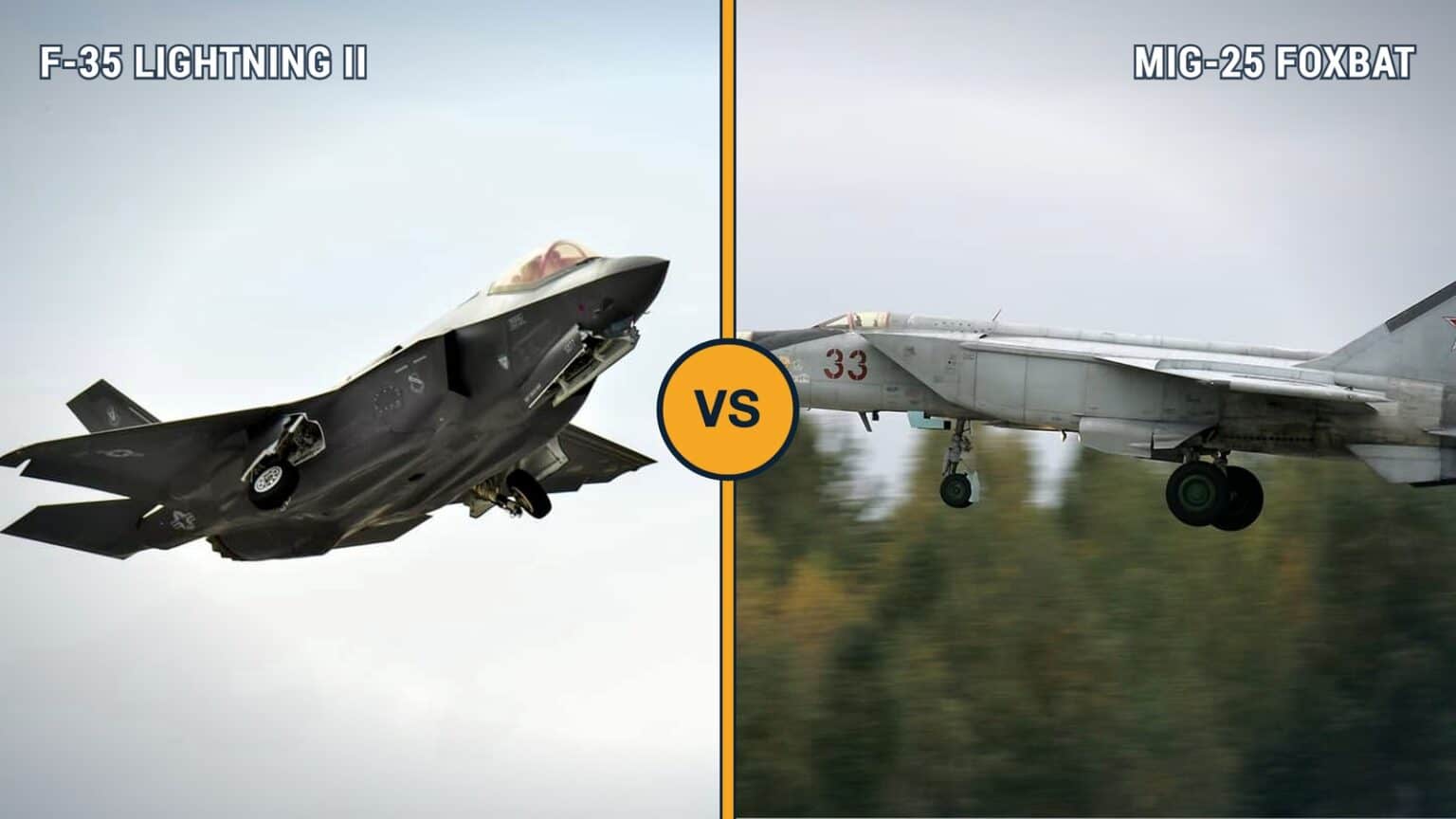
For where both sit in the wider field, see our ranking of the fastest fighter jets in the world, or the F-35 vs MiG-25 comparison.
FAQ
Sources and references used for research and fact-checking.
About the Author

Tim is the owner and lead editor of AeroCorner since 2019, overseeing aviation content covering aircraft, airlines, airports, and the broader aviation industry. Through years of researching, writing, editing, and publishing aviation-focused content, he has developed extensive practical knowledge of commercial aviation and air travel. Based in Asia and a frequent traveler himself, Tim also brings firsthand passenger experience to AeroCorner’s coverage. Outside of publishing, he has also explored aviation firsthand through hands-on flight training in New Zealand.