

Table of Contents
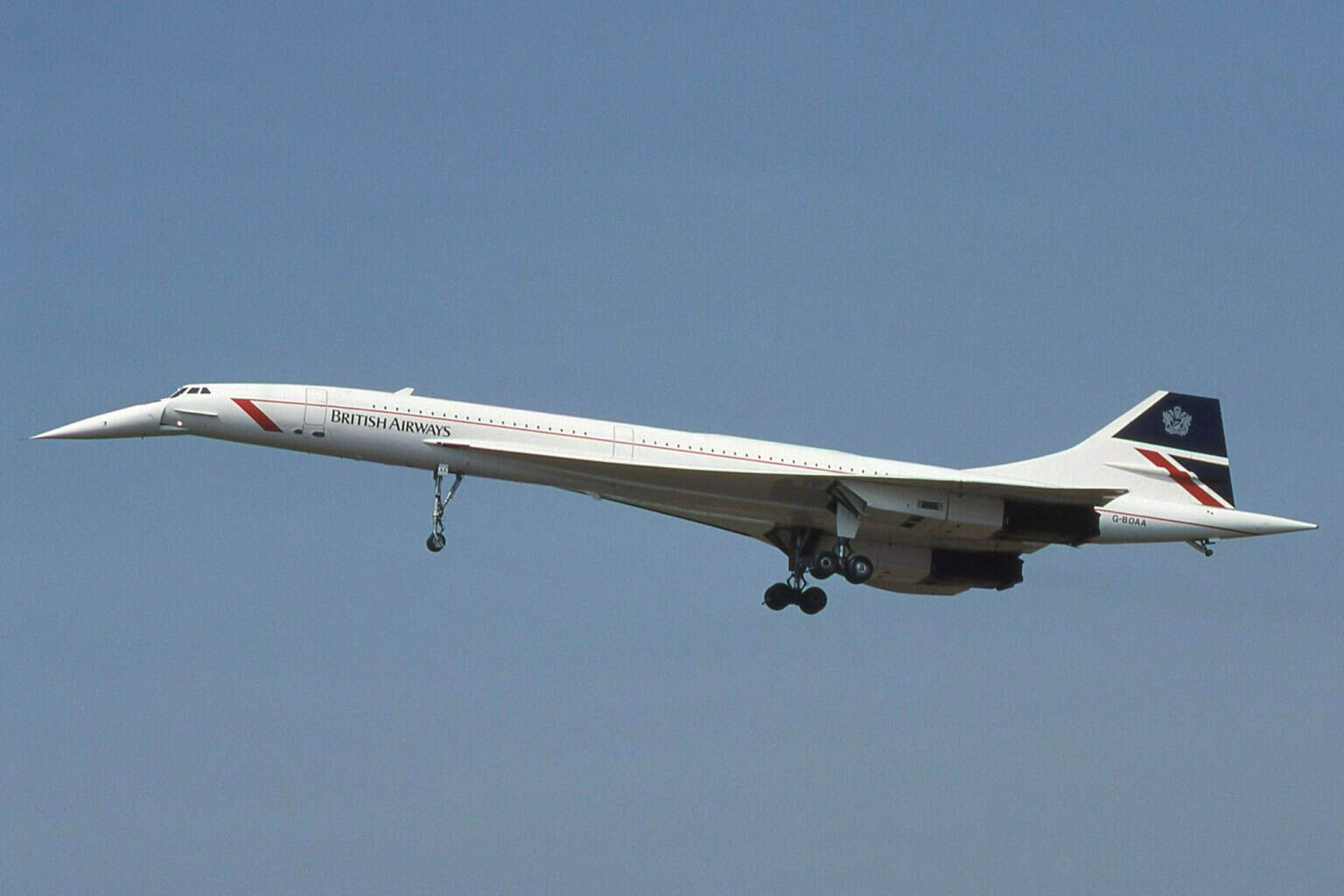
On the afternoon of 24 October 2003, three Concordes circled low over London together, with special permission to break the usual altitude rules, then landed in sequence at Heathrow. Crowds lined the fences. It was the last day British Airways flew a supersonic airliner.
Almost everyone remembers why: the crash outside Paris. A Concorde had gone down on takeoff three years earlier and killed 113 people, and the aircraft never recovered from it.
That story has one large hole in it. By October 2003, Concorde had been carrying paying passengers again for almost two years, after both airlines spent a fortune putting it back in the air. Something else finished it off, and it was closer to a supply contract than to a crash site.
Why Did Concorde Stop Flying?
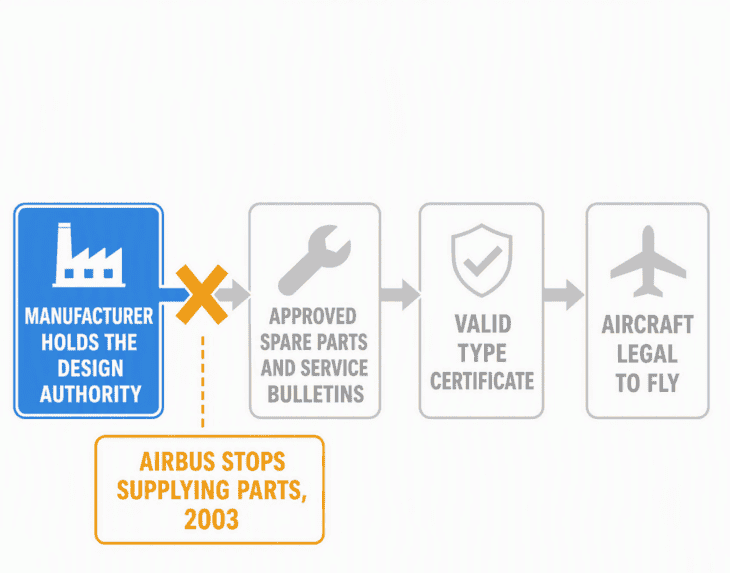
Concorde stopped flying because Airbus, which had inherited responsibility for the design, decided in 2003 to stop supplying spare parts for it. Without the manufacturer behind the type, no airline can legally keep it airworthy for long.
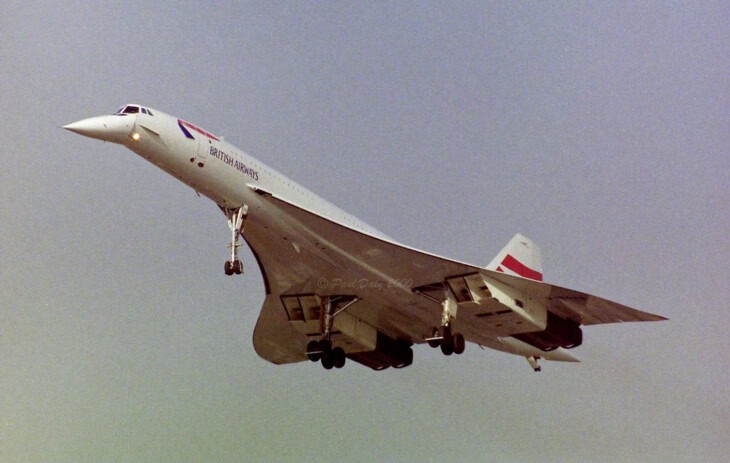
The 2000 crash and the collapse in premium travel after 11 September 2001 are the reason neither airline was willing to pay to solve that problem. Only 20 Concordes were ever built, so every part was bespoke, and the bill for keeping a 1960s airframe supported was landing at the exact moment the revenue disappeared.
The answer in one paragraph
The Paris crash was the trigger, not the cause. Concorde flew commercially again from November 2001. It was retired in 2003 because Airbus stopped supplying parts for a fleet of only 20 aircraft, and because post-9/11 premium traffic had fallen far enough that British Airways and Air France would not fund the heavier maintenance needed to carry on.
The crash grounded it. Then it came back.
Air France Flight 4590 crashed at Gonesse on 25 July 2000, shortly after takeoff from Charles de Gaulle. All 109 people on board died, along with four on the ground. It was the only fatal accident in Concorde’s history.
Investigators found the aircraft had run over a metal strip shed by a departing DC-10. The strip burst a tire, debris from the tire ruptured a fuel tank, and the resulting fire cost the crew two engines while the aircraft was already too fast to stop.
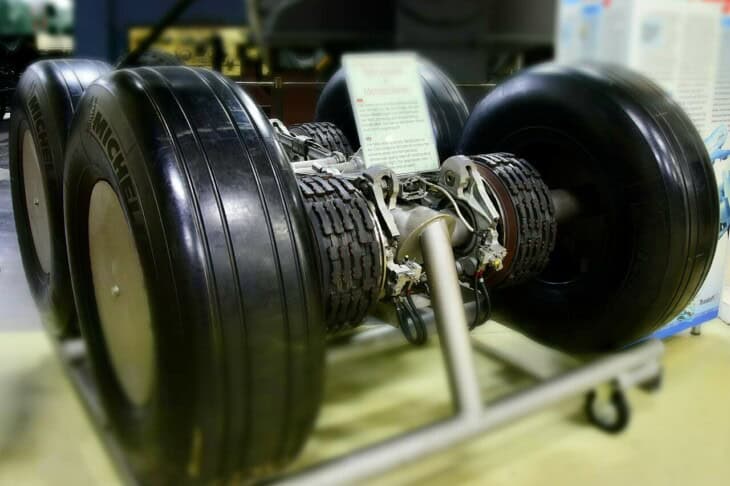
Both fleets were grounded and Concorde lost its clearance to carry passengers. What happened next is the part that gets left out of the story.
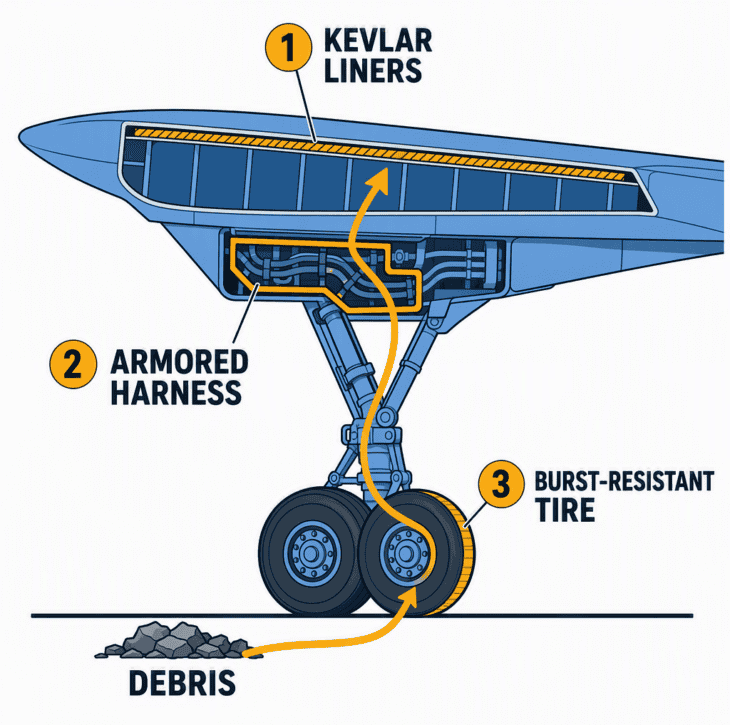
Neither airline wanted to retire the aircraft. They rebuilt it instead, with Kevlar linings inside the fuel tanks, armor around the critical electrical and hydraulic runs, and newly developed burst-resistant tires.
British Airways flew the first modified aircraft, G-BOAF, out of Heathrow on 17 July 2001, turned it around near Iceland and landed at RAF Brize Norton, having reached Mach 2.02 at 60,000 feet. Air France flew its own test aircraft on 24 August.
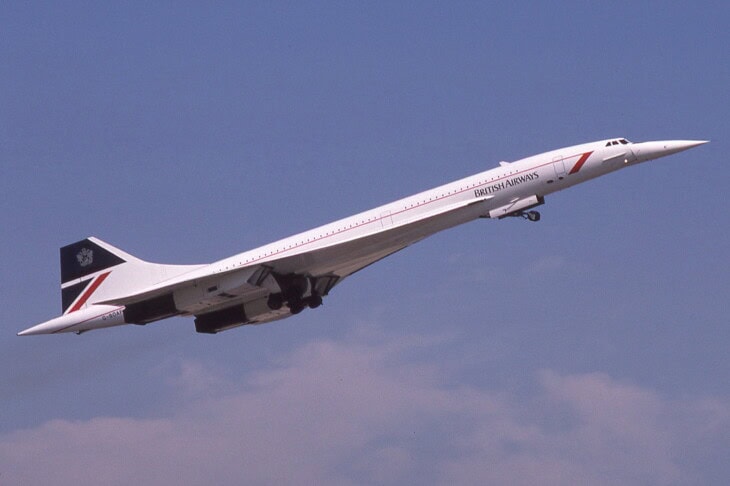
The British and French regulators cleared the modified aircraft to return to passenger service on 5 September 2001. Six days later, British Airways ran a full dress rehearsal with its own employees on board.
That flight landed back at Heathrow at about 13:50, almost exactly the moment American Airlines Flight 11 hit the North Tower of the World Trade Center. Concorde had won its certificate back on the worst possible morning.
25 July 2000
Air France 4590 crashes at Gonesse. 109 people on board and four on the ground are killed. Both fleets are grounded.
17 July 2001
The modified aircraft flies. G-BOAF reaches Mach 2.02 at 60,000 feet with Kevlar tank liners, shielded harnesses and stronger tires.
5 September 2001
Regulators clear the return. The UK and French authorities issue airworthiness directives allowing modified Concordes back into passenger service.
7 November 2001
Commercial service resumes. Air France and British Airways both fly to New York JFK, where the passengers are met by Mayor Rudy Giuliani.
10 April 2003
Both airlines announce retirement. Airbus has decided to stop supplying parts, and neither carrier will fund the heavier maintenance required to continue.
26 November 2003
The last flight. G-BOAF flies from Heathrow to Bristol Filton in front of a crowd of more than 20,000 people.
Commercial service resumed on 7 November 2001. Air France and British Airways both flew to New York that day, where Mayor Rudy Giuliani met the passengers at JFK.
An aircraft killed by its own accident record does not get a year of re-engineering and a public relaunch. Concorde was flying again, on schedule, at the same Mach 2.04 cruise it had always used. The problem that actually ended it had not arrived yet.
The manufacturer switched off the supply chain
Every airliner in service depends on a manufacturer that still owns its design. That company issues the service bulletins, approves the repairs, and supplies or approves the parts that keep the type’s certification valid.
For Concorde, that role passed to Airbus when it absorbed Aérospatiale in 2000. In 2003, Airbus decided it would no longer supply replacement parts for the Anglo-French supersonic airliner it had inherited.
That decision is hard to argue with commercially. Twenty aircraft were built in total, seven each ending up with British Airways and Air France, so there was no aftermarket and no volume in it.
British Airways had spent months in discussion with Airbus about what carrying on would involve. The conclusion was that Concorde would need a much heavier maintenance effort to stay in service.
The airline’s own statement on 10 April 2003 was blunt about the arithmetic: “BA has decided that such an investment cannot be justified in the face of falling revenue caused by a global downturn in demand for all forms of premium travel in the airline industry.”
The aircraft was also getting expensive in visible ways. Across 2002 alone Concorde suffered a string of technical problems, including cracked windows in October, a piece of tail rudder detaching in November, and repeated engine failures.
Richard Branson tried to buy the fleet
The day after the retirement announcement, Richard Branson offered to buy British Airways’ Concordes “for the same price that they were given them for, one pound.” BA refused. Virgin raised the offer to a million pounds each, and Branson later wrote in The Economist that his final bid was over five million. It made no difference: without a manufacturer supporting the type, a new operator would have faced the same wall.
Concorde only had one market left, and 2001 broke it
Concorde’s route map had been shrinking for 30 years. In 1973 the US banned civil supersonic flight over American land, a rule that still sits in the federal regulations today, which meant Concorde could only go supersonic over water.
Bahrain, Singapore, Rio de Janeiro, Caracas and Washington all came and went. By the end, the North Atlantic was effectively the only route where a supersonic airliner made commercial sense at all.
That single market was also the most exposed market in aviation to what happened in September 2001. Corporate travel budgets were cut, transatlantic premium demand fell, and the passengers who paid Concorde fares were exactly the ones who stopped flying.
Air France was explicit that it was retiring Concorde because of “the deterioration of business results from the transatlantic service,” the aircraft’s only scheduled route by then. British Airways booked £84 million in write-off costs for the financial year ending March 2003.
Even then the decision was framed as an acceleration rather than an inevitability. Reports before the announcement had suggested British Airways would keep flying Concorde until as late as 2007.
Chief executive Rod Eddington described the move as “bringing forward Concorde’s retirement,” calling it “a prudent business decision at a time when we are having to make difficult decisions right across the airline.”
The myth: Concorde was always a money pit
The myth
That Concorde never made money, bled its airlines dry for 27 years, and was finally put out of everyone’s misery after a crash proved it unsafe.
The development program genuinely was a financial disaster, and British and French taxpayers absorbed it. But that is a separate question from whether flying the finished aircraft made money, and for British Airways it did.
The turning point was 1982, when Concorde was put into its own operating division under captains Brian Walpole and Jock Lowe. Their market research found that regular passengers guessed the fare was higher than it actually was.
So British Airways raised the price to match what its customers already believed they were paying. The fare settled at roughly 10 to 15 percent above subsonic first class, and load factors ran near 80 percent.
In 1983, BA’s managing director Sir John King persuaded the government to sell the fleet outright to the airline for £16.5 million plus the first year’s profits. Over the following two decades those aircraft earned British Airways more than half a billion pounds in profit.
Michael Heseltine, the minister responsible, later conceded on BBC radio that the aircraft had been sold for “next to nothing” and agreed it ranked among the worst deals a government minister had ever done.
By 2003 that had reversed, and the profitable years were over. But a fleet retired because the economics had turned is a different thing from a fleet that never worked.
Air France flew its last commercial Concorde service on 30 May 2003 and its final flight of any kind on 27 June. British Airways carried its last fare-paying passengers on 24 October.
The type’s final American service ran to Seattle on 5 November. On 26 November, G-BOAF flew from Heathrow to Bristol Filton in front of more than 20,000 people.
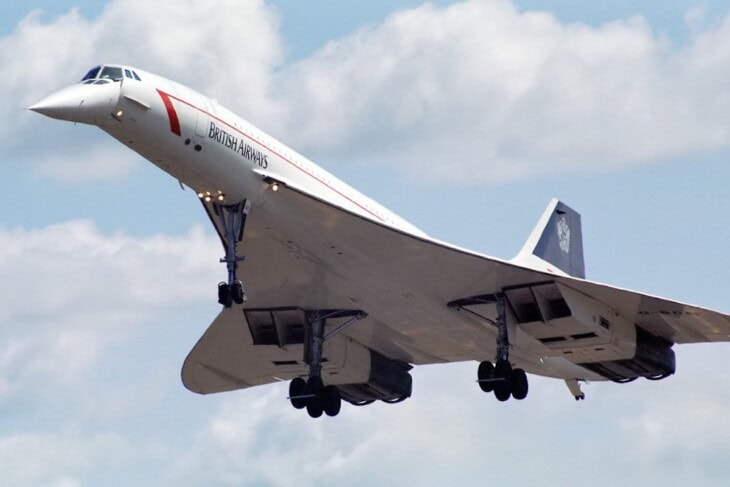

Eighteen of the twenty Concordes built are preserved, most of them on public display. Not one has flown since.
The constraint that shrank Concorde to a single ocean is finally being looked at again. In July 2026 the FAA proposed repealing that 1973 overland supersonic ban and replacing it with a noise limit, capping the sonic boom that reaches the ground at 0.11 pounds per square foot.
It is a proposal, not a rule: the comment period closed in August 2026 and nothing is final yet. But it is the first serious move on the regulation that decided Concorde’s route map, and the airliners now being designed to fly supersonic would be the ones to use it.
So the next time someone tells you the crash killed Concorde, the honest answer is that it did not. A bespoke fleet of twenty aircraft outlived its manufacturer’s patience, in the same year its one remaining market fell apart.
Sources and references used for research and fact-checking.
- BBC News, Concorde grounded for good
- Wikipedia, Concorde
- Wikipedia, Concorde operational history
- Heritage Concorde, Concorde Retirement 2003
- Federal Register, Federal Aviation Administration, Enabling Supersonic Overland Flight (notice of proposed rulemaking)
- DLA Piper, Proposed FAA rule would allow civil supersonic flight over the United States
- Federal Aviation Administration, Special Flight Authorization for Supersonic Aircraft (final rule)
Get the Newsletter
The latest aviation news and stories sent to your inbox.
About the Author

Tim is the owner and lead editor of AeroCorner since 2019, overseeing aviation content covering aircraft, airlines, airports, and the broader aviation industry. Through years of researching, writing, editing, and publishing aviation-focused content, he has developed extensive practical knowledge of commercial aviation and air travel. Based in Asia and a frequent traveler himself, Tim also brings firsthand passenger experience to AeroCorner’s coverage. Outside of publishing, he has also explored aviation firsthand through hands-on flight training in New Zealand.