

Table of Contents
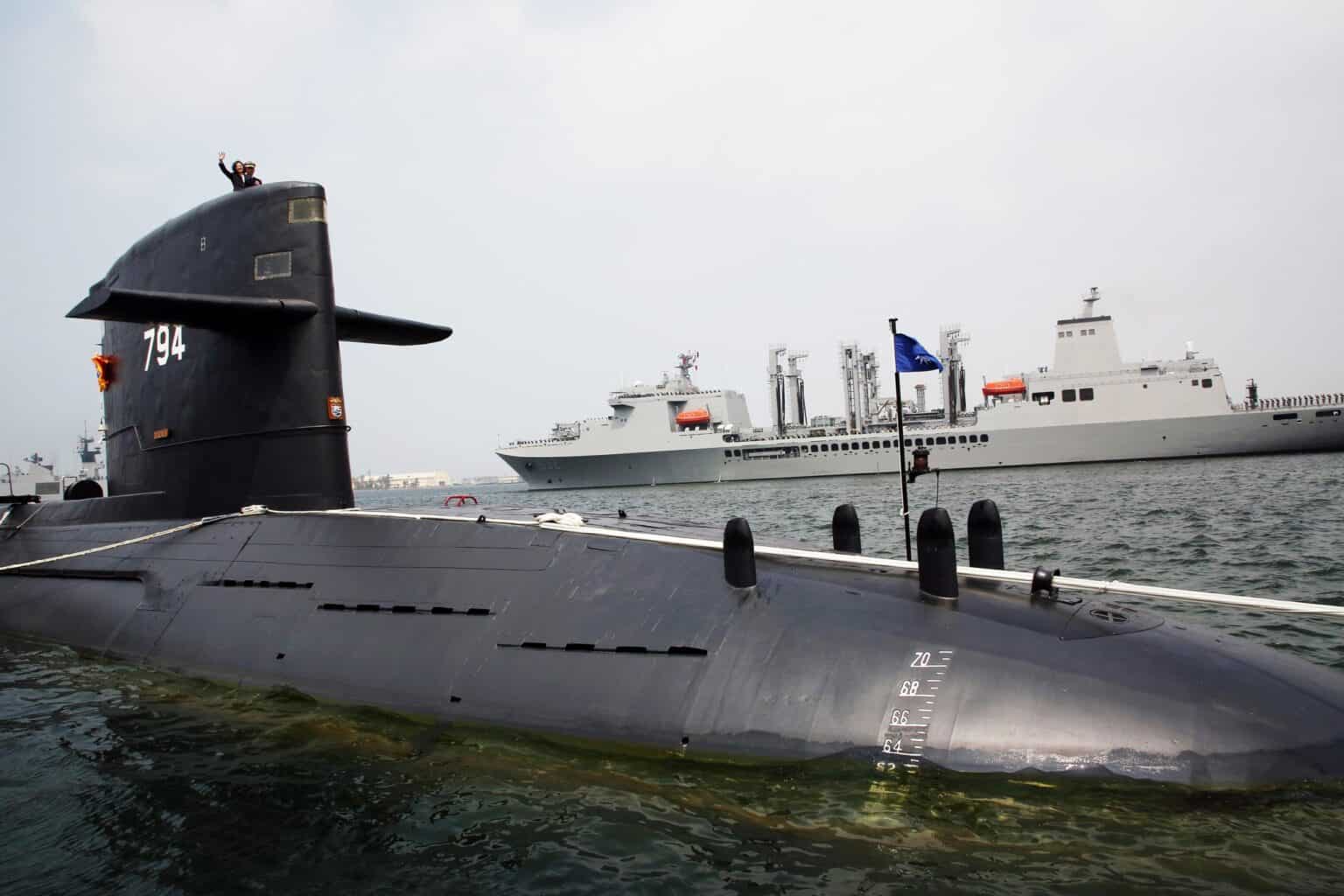
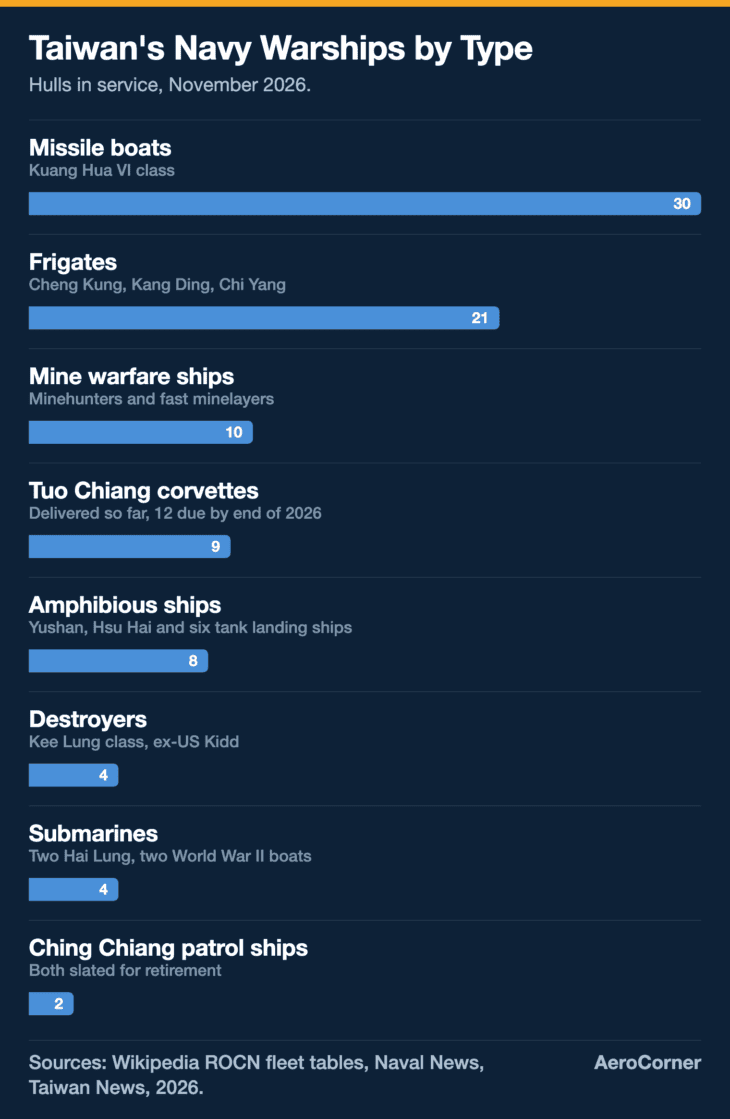
Taiwan’s navy, officially the Republic of China Navy (ROCN), is led by four Kee Lung-class destroyers that were ordered by the Shah of Iran in the 1970s and sold to Taiwan by the US in a deal approved in 2001. Behind them sail 21 frigates, a fleet of new stealth catamaran corvettes and 30 missile boats.
Its job is narrow and urgent: to defend Taiwan’s waters against a blockade or invasion by China’s People’s Liberation Army Navy, the largest navy in the world. GlobalFirepower’s 2026 index counts 91 naval assets for Taiwan, including four submarines and no aircraft carriers.
This guide ranks every class Taiwan sails by fighting value as of November 2026, with hull counts, the ships that joined this year and the one everyone is watching: the Hai Kun, Taiwan’s first homebuilt submarine.
| Rank | Class | Type | Hulls | Status, November 2026 |
|---|---|---|---|---|
| 1 | Kee Lung (ex-Kidd) | Guided-missile destroyer | 4 | In service since 2005 and 2006 |
| 2 | Kang Ding (La Fayette) | Frigate | 6 | First upgraded ship delivered February 2026 |
| 3 | Cheng Kung (Perry) | Guided-missile frigate | 10 | Active |
| 4 | Tuo Chiang | Stealth catamaran corvette | 9 delivered | Class of 12 due complete by end of 2026 |
| 5 | Hai Lung | Attack submarine | 2 | Upgrade nearly finished, August 2026 |
| 6 | Hai Kun | Attack submarine | 1 | Sea trials, not yet delivered |
| 7 | Kuang Hua VI | Missile boat | 30 | Prototype retired 2025 |
| 8 | Chi Yang (ex-Knox) | Frigate | 5 | Slated for retirement in batches |
| 9 | Yushan and amphibious fleet | Landing dock and landing ships | 8 | Yushan commissioned 2023 |
| 10 | Mine warfare force | Minehunters and minelayers | 10 | Active |
| 11 | Pan Shi and Wu Yi | Fast combat support ships | 2 | Active |
| 12 | Hai Shih and Hai Bao | World War II-era submarines | 2 | Training |
| 13 | Ching Chiang | Patrol ship | 2 | Being replaced by Tuo Chiang |
How this ranking works
Classes are ranked by fighting value in November 2026: how modern each one is, what it carries, and how much it matters to holding off a much larger navy. Hull counts come from open-source fleet tables checked against 2026 delivery and decommissioning reports. Survey ships, tugs, salvage ships and small patrol craft are left out of the ranking. Taiwan’s P-3C Orion submarine hunters are flown by the air force and covered in the aircraft section.
1. Kee Lung Class: The Destroyers Built for Iran
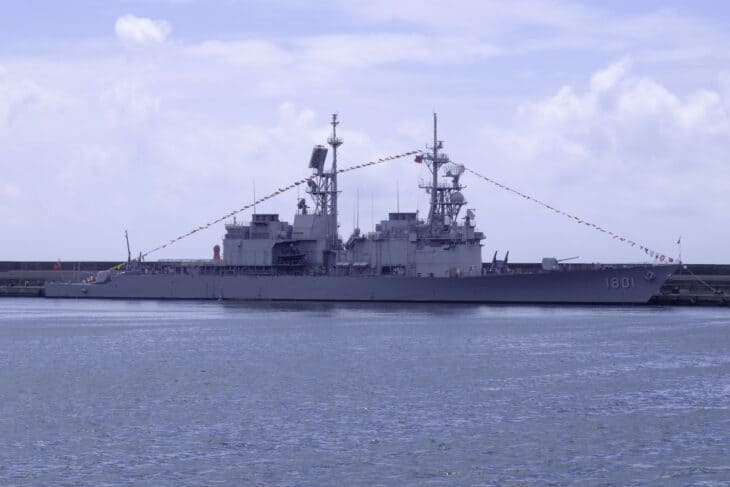

The four Kee Lung-class ships are the largest combatants in Taiwan’s navy, at 9,574 metric tons each. They began life as the US Navy’s Kidd class, a version of the Spruance-class destroyer ordered by the Shah of Iran around 1973 and taken over by the US after the 1979 revolution.
The US Navy retired them in the late 1990s, and in 2001 Washington approved selling all four to Taiwan for $732 million, including overhaul, training, 148 SM-2 Block IIIA air-defense missiles and 32 Harpoon anti-ship missiles. Kee Lung and Su Ao were commissioned on December 17, 2005, and Tso Ying and Ma Kong on November 3, 2006.
They rank first because they carry Taiwan’s longest-reach fleet air defense. Their weakness is age: the Mark 26 launchers date from the 1970s, and the US has declined to sell Taiwan Aegis-equipped destroyers to replace them.
They still carry Iranian names in the paperwork
Each Kee Lung-class ship was assigned a Persian name before Iran canceled the order: ex-USS Kidd was to be Kourosh, ex-Callaghan Dariush, ex-Scott Nader and ex-Chandler Anoshirvan. Because they were built for the Persian Gulf, with extra air conditioning and dust separators on their engine intakes, US sailors nicknamed them the Ayatollah class.
2. Kang Ding Class: The French Frigates Getting Vertical Launchers
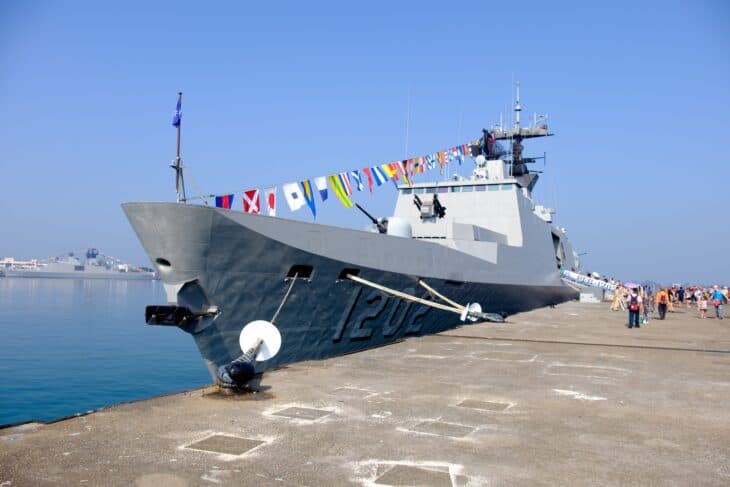

Taiwan bought six frigates based on France’s La Fayette class under a $1.75 billion deal in the early 1990s. They carry Taiwan’s own Hsiung Feng II anti-ship missiles in place of the French Exocet, a 76 mm gun and an S-70C(M) anti-submarine helicopter.
Their original Sea Chaparral air defense was never good enough, so Taiwan budgeted NT$43.16 billion from 2021 to 2029 to rebuild all six. Each gets a BAE Type 997 Artisan radar and the locally built Hua Yang vertical launcher, which holds up to 32 TC-2N surface-to-air missiles.
The first rebuilt ship, Chen De, was handed back to the navy on February 3, 2026, and the lead ship, Kang Ding, entered dry dock in Kaohsiung on January 3, 2026, with roughly one ship a year to follow. Once the six are done, they will be the best-armed frigates in the fleet, which is why they rank above the larger Perrys.
The deal itself is still infamous. Taiwan’s navy sued to recover about $590 million in alleged kickbacks paid to French and Taiwanese officials, and in February 2021 Switzerland agreed to return nearly $266 million in frozen funds to Taiwan.
3. Cheng Kung Class: Taiwan’s Homebuilt Perrys
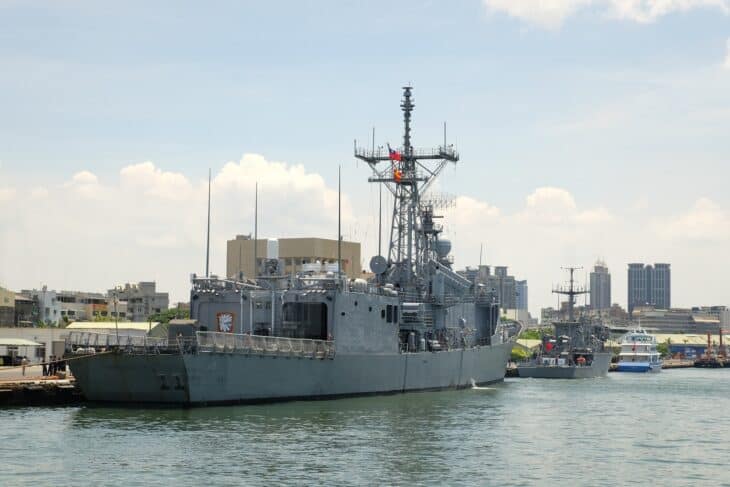

The Cheng Kung class is Taiwan’s largest group of major warships: eight Oliver Hazard Perry-class frigates built under license in Kaohsiung in the 1990s, plus two ex-US Navy Perrys commissioned on November 8, 2018. Each is 455 feet (139 m) long, makes 29 knots and carries a crew of about 206.
They carry a mix of subsonic Hsiung Feng II and supersonic Hsiung Feng III anti-ship missiles, SM-1 air-defense missiles, a Phalanx close-in gun and one S-70C(M) helicopter. Until the Kee Lungs arrived in 2005, they were the navy’s main air-defense ships.
The two ex-US ships came with the AN/SQR-19 towed sonar array, a system Taiwan had previously been blocked from buying. That made them some of the navy’s best submarine hunters overnight.
4. Tuo Chiang Class: The Stealth Catamarans
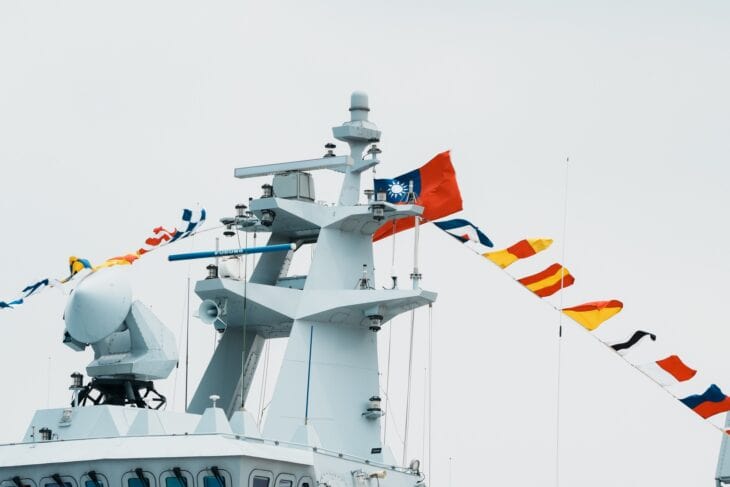

The Tuo Chiang is the ship Taiwan built for the fight it actually expects. It is a 198-foot (60.4 m) wave-piercing catamaran that can reach 45 knots (52 mph), with a crew of 41, a low radar signature and eight Hsiung Feng II plus eight Hsiung Feng III missiles.
The prototype was delivered on December 23, 2014. Six improved ships followed by March 2024, adding TC-2N air-defense missiles, and the follow-on ships displace 685 tons against the prototype’s 600.
The second batch of five is arriving this year. Tan Chiang was delivered on March 11, 2026 and commissioned by President Lai Ching-te on July 24, Liu Chiang followed in May, and the 12th and final hull was completed in late May.
All 12 are scheduled to be delivered by the end of 2026. Their idea is hit-and-run: fast, hard-to-see ships that fire supersonic missiles at an invasion fleet and then disappear among Taiwan’s coastal clutter.
5. Hai Lung Class: The Only Modern Submarines in Service
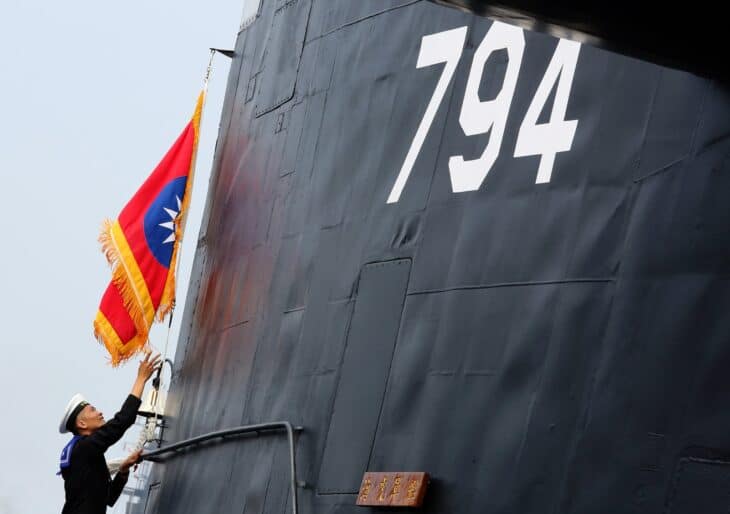

Taiwan’s two Hai Lung-class boats, Hai Lung and Hai Hu, were built in the Netherlands on the Zwaardvis design and commissioned in 1987 and 1988. More were planned, but Beijing’s pressure on the Dutch government killed every follow-on order.
They are now armed with submarine-launched Harpoon missiles, delivered from 2013 to 2016, and their upgrade adds Mark 48 heavyweight torpedoes. In August 2026 a $234.2 million modernization that replaced their Dutch combat systems was reported as nearly finished, meant to keep both boats running into the late 2030s.
6. Hai Kun: The Submarine Taiwan Built Itself
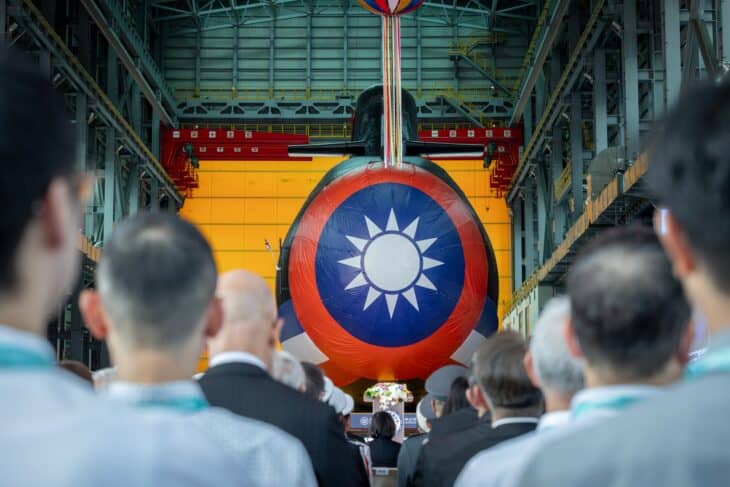

The Hai Kun (SS-711) is Taiwan’s first homebuilt submarine, a diesel-electric attack boat of roughly 2,500 tons built by CSBC Corporation in Kaohsiung. It was unveiled in September 2023, and the first boat is estimated to have cost about $1.54 billion.
It was due to be handed over in November 2025 and missed that date. In June 2025 a hydraulic failure jammed its rudder on a sea trial, and crew had to steer it back to port by hand from the stern steering room while tugs held the bow.
On October 2, 2026 it sailed on its 23rd sea trial and 17th submerged test, with CSBC paying about NT$190,000 a day in late-delivery fines, roughly NT$57 million by then. The navy said no delivery date had been set, and we found no report of a handover through mid-November 2026.
Eight boats are planned, and money for the rest has waited on how this one performs. It ranks below the Hai Lungs only because it is not yet in service.
7. Kuang Hua VI Class: The Missile Boat Swarm
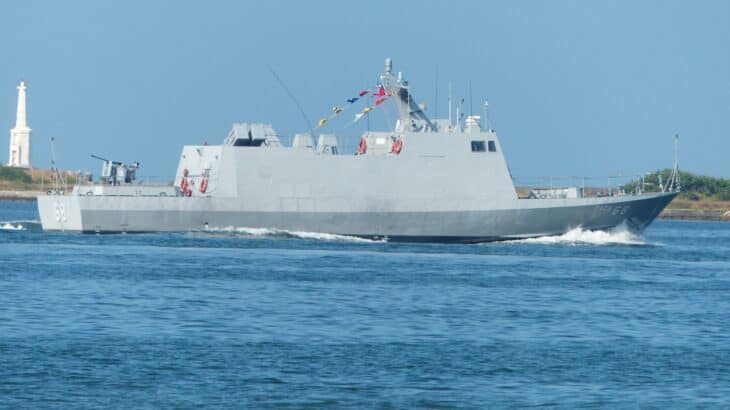

Thirty-one Kuang Hua VI missile boats were built to replace the old Hai Ou boats, with deliveries running from 2009 to 2011. Each displaces about 186 tons and carries no search radar of its own: it gets targeting data by datalink from shore and from larger ships, so it gives nothing away until it fires.
The prototype, FACG-60, was retired on September 1, 2025, leaving 30. They are the largest single class in the fleet by number of hulls.
There is no boat number 67
Taiwan’s navy avoids hull numbers that end in or add up to 4, because the Chinese word for four sounds like the word for death. The missile boats skipped 67 and 76 too, because their digits add up to 13.
8. Chi Yang Class: The Last Knox Frigates
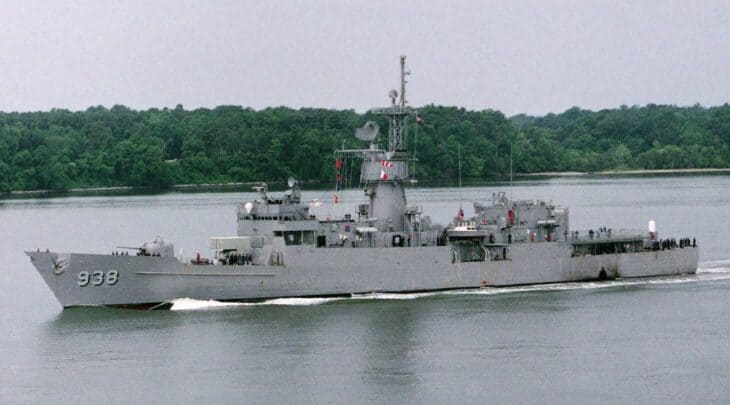

Eight ex-US Navy Knox-class frigates came to Taiwan in the 1990s as the Chi Yang class. Two were retired in 2015 and Lan Yang on January 23, 2025, leaving five. Most carry SM-1 missile box launchers taken from retired destroyers.
In June 2026 the defense ministry told the legislature that all five will be retired in batches as new homebuilt ships arrive. Their replacements, 12 new light frigates, are covered below.
9. Yushan and the Amphibious Fleet
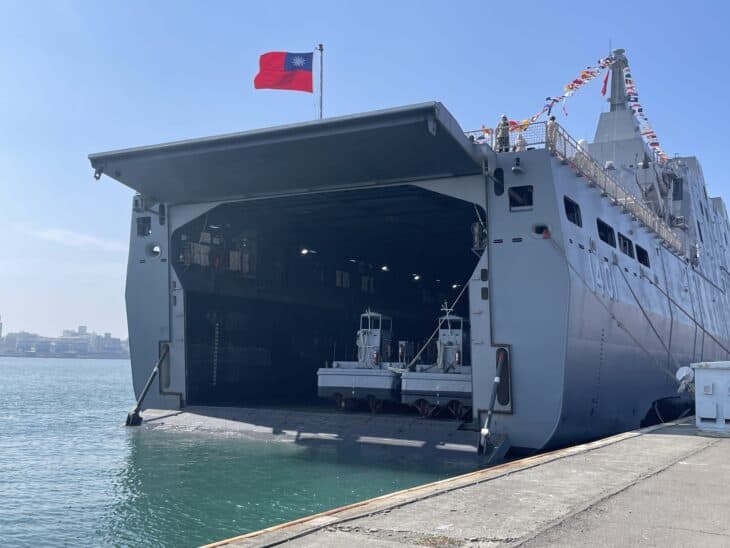

Yushan, Taiwan’s first homebuilt landing platform dock, is 502 feet (153 m) long and displaces 10,000 tons standard. It can carry 673 troops plus amphibious armored vehicles, was delivered on September 30, 2022 and was commissioned in June 2023.
It sails alongside the ex-US dock landing ship Hsu Hai, two ex-US Newport-class tank landing ships and four World War II-era tank landing ships. Yushan was also designed as a transport that can supply islands without harbors.
10. The Mine Warfare Force
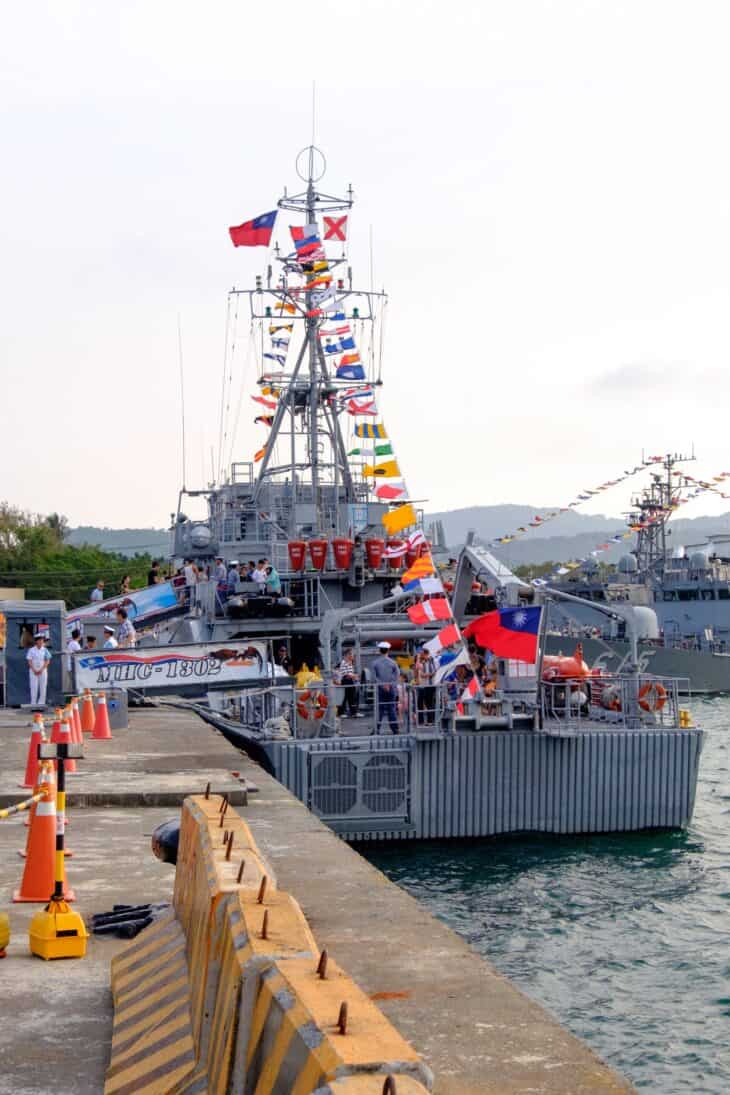

Taiwan keeps 10 mine warfare ships: four German-built Yung Feng minehunters from the early 1990s, two ex-US Osprey-class minehunters and four Min Jiang fast minelayers built in Taiwan in 2020 and 2021.
The minelayers matter more than their size suggests. Mining the few beaches suitable for a landing is one of the cheapest ways to make an invasion harder.
11. Pan Shi and Wu Yi: The Supply Ships
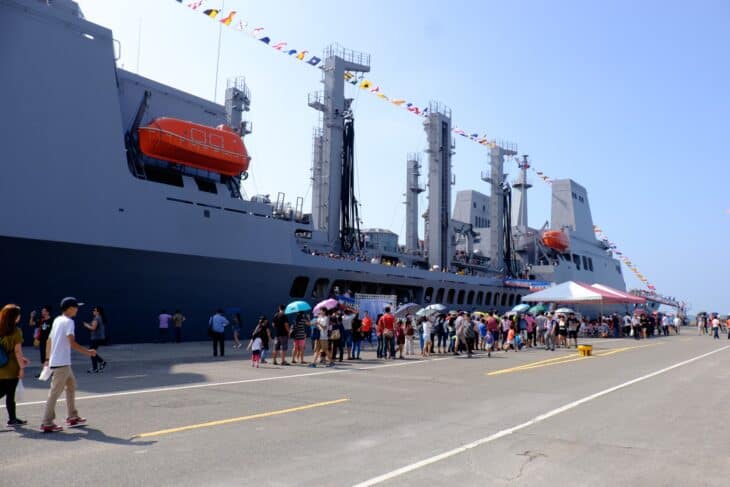

Pan Shi, at 20,895 metric tons, is the heaviest ship in the navy. Built by CSBC and launched in November 2013, it can refuel two ships at once and carries an operating room and hospital wards; the older Wu Yi does the same supply job.
12. Hai Shih and Hai Bao: The World War II Submarines
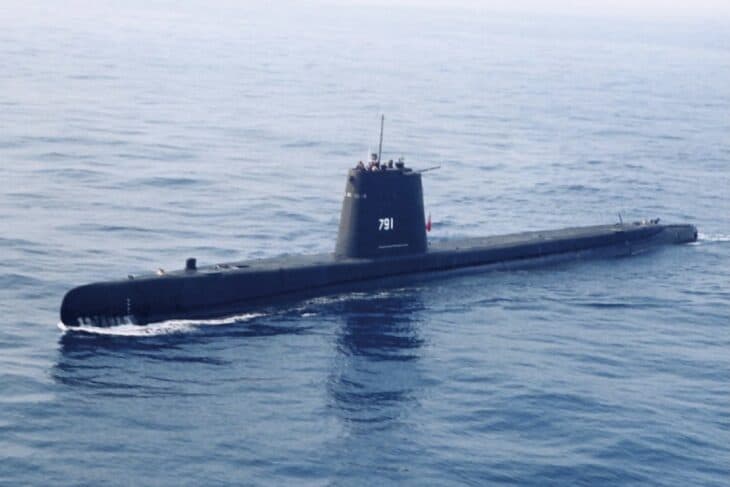

Two of Taiwan’s four submarines date from World War II. Hai Shih, the former USS Cutlass, was launched in 1944, and Hai Bao is the former USS Tusk; both came to Taiwan in 1973.
They are used for training, not combat. Hai Shih is generally described as the last US-built World War II submarine still in commission with any navy.
13. Ching Chiang Class: On the Way Out
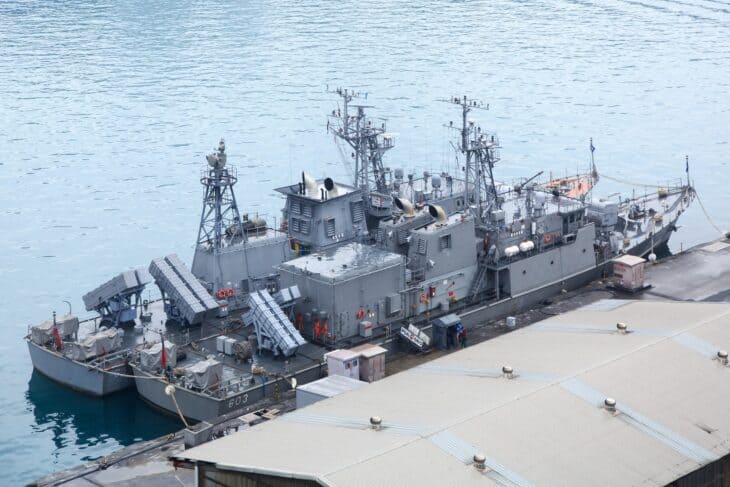

Twelve Ching Chiang-class patrol ships were built in Taiwan, and the Tuo Chiangs are replacing them one for one. By the time Chu Chiang left service on June 1, 2026, only two were left, and both are on the ministry’s retirement list.
What Comes Next: Light Frigates and 1,500 Drone Boats
Taiwan is building two prototype light frigates, one for air defense and one for anti-submarine warfare. Both were due in 2026, but in March 2026 the navy pushed delivery to 2027, blaming a global shortage of main engines.
Ten more are planned. The air-defense version is about 315 feet (96 m) long with 32 Sea Sword II missiles in vertical launchers, and the anti-submarine version is stretched to about 381 feet (116 m), with torpedoes and a towed sonar.
Smaller and cheaper still, the navy said in December 2025 that it wants 1,500 uncrewed surface vessels that can operate up to 27 miles (44 km) offshore and attack in swarms.
The Aircraft of Taiwan’s Navy
The navy’s own aviation is small. It flies 17 surviving S-70C(M) Thunderhawk anti-submarine helicopters, bought between 1990 and 2001, which operate from the Cheng Kung and Kang Ding frigates, plus a handful of 500MD/ASW Defenders.
Its long-range submarine hunters, 12 P-3C Orions, are flown by the air force from Pingtung. For the rest of Taiwan’s military aircraft, see our guide to Taiwan’s air force in 2026.
A replacement is moving slowly. On October 9, 2026, it was reported that the US had accepted Taiwan’s request for price and availability on up to 20 MH-60R Seahawks, but no sale had been approved and no delivery date set.
Ashore, the navy also runs Taiwan’s coastal anti-ship missile force, the Hai Feng groups, with fixed Hsiung Feng II batteries and mobile Hsiung Feng II and III launchers.
Is Taiwan's navy strong enough to stop China?
Not on its own, and it is not built to try. GlobalFirepower ranks Taiwan’s 91 naval assets 39th in the world, against the world’s largest navy across the strait. The fleet is shaped for denial instead: missile boats, stealth corvettes, mines, submarines and shore missiles meant to make crossing the Taiwan Strait too costly, not to win a fleet battle at sea.
For the fleet on the other side, see our guide to China’s navy in 2026, and for how both compare worldwide, our ranking of the largest navies in the world. If the class names are new to you, start with our explainer on the types of navy ships.
FAQ
Sources and references used for research and fact-checking.
- Wikipedia, Republic of China Navy
- Wikipedia, List of ships of the Republic of China Navy
- GlobalFirepower, Taiwan Military Strength (2026)
- Wikipedia, Kidd-class destroyer
- Wikipedia, Kang Ding-class frigate
- Wikipedia, ROCS Chen De
- Army Recognition, Taiwan Navy Kang Ding frigate enters dry dock for major missile upgrade
- Swissinfo (Reuters), Taiwan air force shows off its sub-hunting, early warning prowess
- Wikipedia, Cheng Kung-class frigate
- Wikipedia, Tuo Chiang-class corvette
- Naval News, Taiwan Navy Takes Delivery of the First Tuo Chiang-class Batch 2 Catamaran Corvette
- Naval News, Taiwan Navy Commissions First Batch 2 Tuo Chiang-Class Corvette
- Taiwan News, Taiwan completes final Tuo Chiang-class corvette
- Wikipedia, Hai Lung-class submarine
- Wikipedia, Hai Kun-class submarine
- United Daily News, 海鯤艦交艦期未定台船挨罰5700萬 今17次潛航乘風破浪出海
- Taipei Times, Taiwan-built sub could reach navy next month
- 19FortyFive, Two of Taiwan's Four Submarines Were Built During World War II
- Wikipedia, Tench-class submarine
- Wikipedia, Kuang Hua VI-class missile boat
- Taiwan News, Taiwan Navy plans to retire 5 frigates, 2 patrol ships
- Wikipedia, Ching Chiang-class patrol ship
- Wikipedia, Yushan-class landing platform dock
- Wikipedia, Panshih-class fast combat support ship
- Taiwan News, Taiwan delays light frigate delivery to 2027
- Army Recognition, US accepts Taiwan's preliminary request for up to 20 MH-60R Seahawk helicopters
Get the Newsletter
The latest aviation news and stories sent to your inbox.
About the Author

Tim is the owner and lead editor of AeroCorner since 2019, overseeing aviation content covering aircraft, airlines, airports, and the broader aviation industry. Through years of researching, writing, editing, and publishing aviation-focused content, he has developed extensive practical knowledge of commercial aviation and air travel. Based in Asia and a frequent traveler himself, Tim also brings firsthand passenger experience to AeroCorner’s coverage. Outside of publishing, he has also explored aviation firsthand through hands-on flight training in New Zealand.