

Table of Contents
The safest seat on a plane is an aisle seat within five rows of an emergency exit, ideally in the back third of the cabin. That combines the two things crash data actually measures: where people survived the impact, and who got out before the smoke did.
Two seating-chart studies put the rear of the cabin ahead. Popular Mechanics found a 69% survival rate behind the wing against 49% at the front, and TIME found the lowest fatality rate of all, 28%, in rear middle seats.
Evacuation research then adds the part most “safest seat” articles skip. Survivors of real accidents typically moved five rows or fewer to get out, so distance to an exit matters more than which third of the plane you sit in.
| Rank | Seat zone | What the data shows |
|---|---|---|
| 1 | Aisle seat within 5 rows of an exit | Survivors usually moved 5 rows or fewer; aisle beats middle beats window (Galea, 105 accidents) |
| 2 | Middle seat, rear third | 28% fatality rate, the lowest of any seat position (TIME, 17 accidents) |
| 3 | Anywhere behind the wing | 69% survival (Popular Mechanics); 32% fatality rate (TIME) |
| 4 | Over the wing | 56% survival (Popular Mechanics); 39% fatality rate for the middle third (TIME) |
| 5 | Front of the cabin and first class | 49% survival, the lowest section (Popular Mechanics); 38% fatality rate (TIME) |
| 6 | Aisle seat, middle third | 44% fatality rate, the worst seat position (TIME) |
How this ranking works
We ranked cabin zones by survival odds in a survivable accident, the only kind where your seat can make a difference. Three datasets feed it: Popular Mechanics’ 2007 study of 20 U.S. jet crashes since 1971, TIME’s 2015 study of 17 accidents from 1985 to 2000, and University of Greenwich research on how 1,917 passengers actually evacuated 105 accidents. Impact data sets the order of the cabin sections. Evacuation data decides first place, because it measures what kills people after a crash that the airframe survived.
First, the number that matters more than any seat
Most people in airline accidents survive them. The NTSB reviewed all 568 accidents involving U.S. Part 121 airlines from 1983 through 2000, and 95.7% of the 53,487 people aboard lived.
Even in the worst category, accidents with fire, serious injury and a wrecked airplane that were still judged survivable, 76.6% of occupants made it out. That is why seat choice is a real question at all. If crashes were all-or-nothing, where you sat would never matter.
Crashes are also rare in the first place. Our breakdown of how often planes actually crash shows how small the airline share of U.S. aviation deaths is.
96% walk away
In the NTSB’s review of 568 U.S. airline accidents from 1983 to 2000, more than 80% of the occupants survived in 528 of them. Only 34 accidents left fewer than one in five people alive.
1. An aisle seat within five rows of an exit
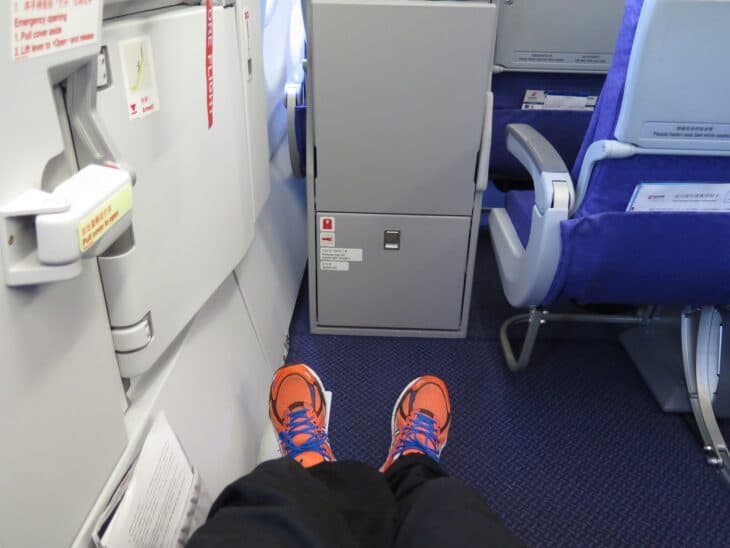

The best seat is defined by distance, not by section. Ed Galea, a professor of fire safety engineering at the University of Greenwich, built a database for the UK Civil Aviation Authority from 1,917 passengers and 155 crew in 105 accidents between 1977 and 1999.
His finding: passengers seated within five rows of any exit, in any part of the plane, had the best chance of getting out alive. Aisle seats beat middle seats, and middle seats beat window seats, simply because there are fewer people to climb past.
This beats every impact statistic because most accidents are survivable, and the deaths in survivable accidents often come after the airplane stops. Galea calls smoke “one of the main killers” in modern crashes, and he advises counting the rows to your nearest exit in both directions so you can find it by touch.
The certification standard shows why seconds matter. An airliner must prove every passenger can be evacuated in 90 seconds, but real evacuations run slower when people panic or grab their bags.
Japan Airlines flight 516 is the model case. When the Airbus A350 hit a coast guard aircraft at Tokyo Haneda in January 2024, only three of its eight evacuation slides were usable, and all 379 people aboard still got out.
2. A middle seat in the rear third
_(02).jpg)
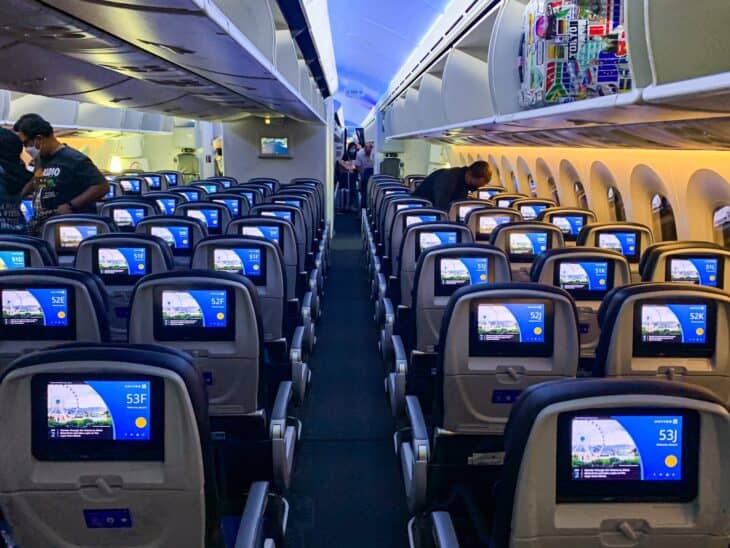
If you are looking for a single seat position, this is the one the numbers favor. TIME’s 2015 analysis used the FAA’s accident database and pulled the 17 accidents from 1985 to 2000 that had both survivors and fatalities plus a usable seating chart.
Middle seats in the back third had a 28% fatality rate, the lowest of any seat position in the study. It is the least popular seat on most flights, which makes it one of the few safety upgrades that costs nothing.
Why the middle seat would beat the aisle next to it is not clear from the data, and TIME did not claim a mechanism. With 17 accidents behind it, treat this as a tiebreaker inside the rear section, not a rule.
3. Anywhere behind the wing
.jpg)
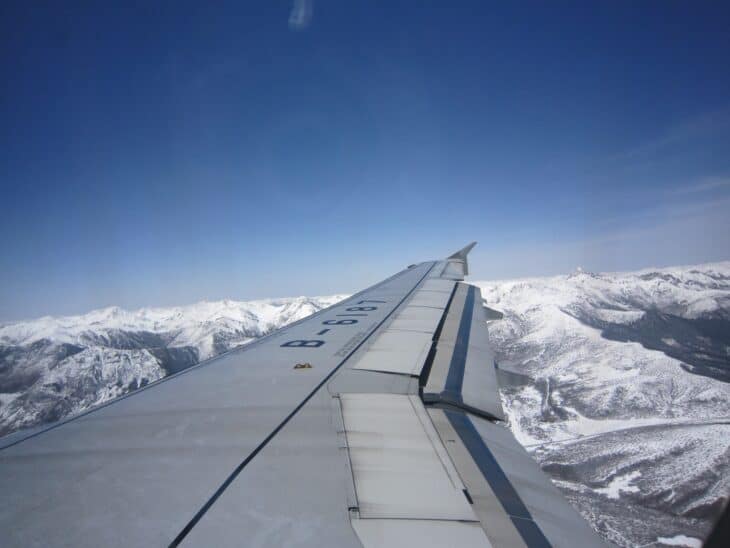
Both seating-chart studies put the back of the cabin first. Popular Mechanics’ 2007 study, by David Noland, went through NTSB files for every U.S. commercial jet crash since 1971 that had both fatalities and survivors, 20 accidents in all.
Seats behind the trailing edge of the wing had a 69% average survival rate, the highest of any section. Passengers near the tail were about 40% more likely to survive than those in the first few rows.
TIME reached the same order with different accidents. The back third had a 32% fatality rate, against 38% for the front third and 39% for the middle.
Recent crashes fit the pattern. All 29 survivors of Azerbaijan Airlines flight 8243 in December 2024 were in the back of the plane, which split in two, and the only survivors of Jeju Air flight 2216 that same month were two flight attendants in jumpseats in the tail.
4. Over the wing
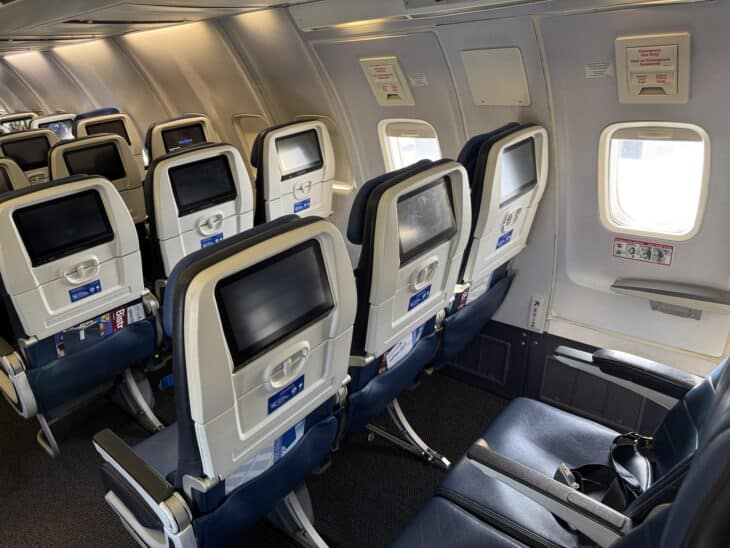

The overwing section had a 56% survival rate in Popular Mechanics’ data, the same as the coach rows ahead of the wing. TIME’s middle third came in at a 39% fatality rate, a point worse than the front.
The wing section has a real structural argument. The wing box is one of the strongest parts of the airframe, and when a fuselage breaks apart, it typically breaks ahead of and behind the wings.
The case against it is what the wings carry: fuel. That trade-off is why the section lands mid-table on crash data, and it still wins on two other counts, since it holds the overwing exits and is the smoothest ride in turbulence.
5. The front of the cabin and first class
_(03).jpg)
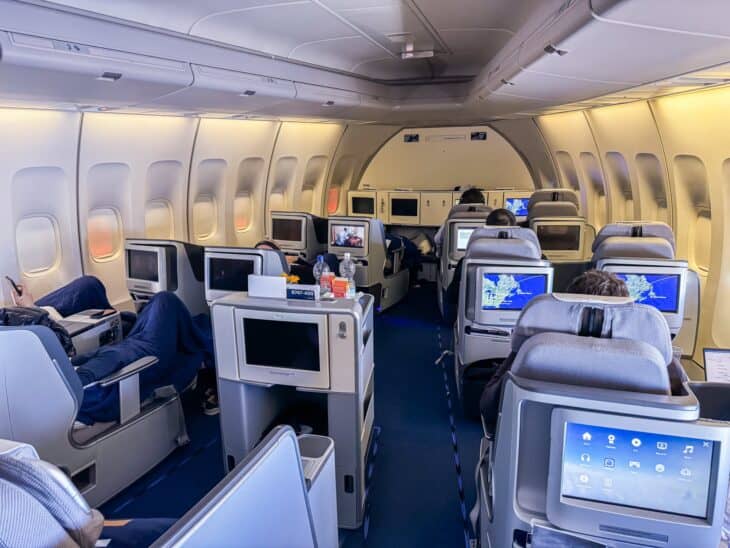
The expensive seats rank near the bottom. In Popular Mechanics’ study, first and business class, or the front 15% of an all-coach plane, averaged a 49% survival rate, the worst of the four sections it measured.
The reason is geometry: in most survivable crashes the nose meets the ground or an obstacle first. In the 1972 Eastern 727 crash at New York’s JFK and the 1982 Air Florida crash in Washington, D.C., the handful of survivors all sat in the last few rows.
The front does win some crashes. Five of Popular Mechanics’ 20 accidents favored forward passengers, and in the 1989 United 232 crash at Sioux City, most survivors sat ahead of the wing.
6. An aisle seat in the middle third
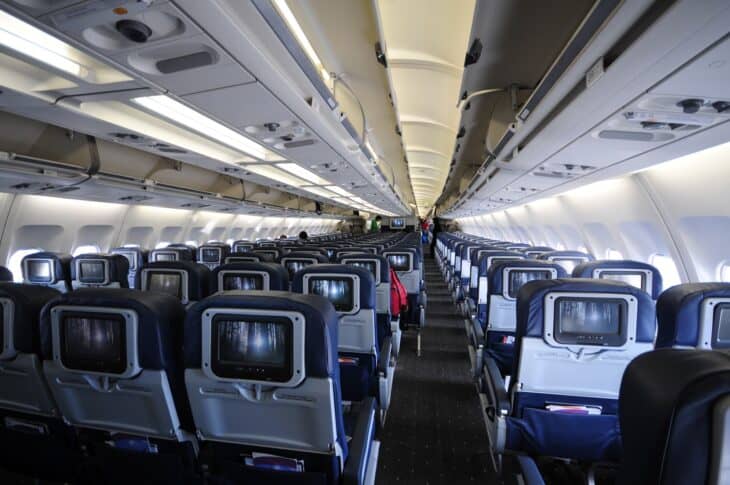

This was the worst seat position in TIME’s study, with a 44% fatality rate. It sits right next to the second-best result in the same dataset, which shows how much a single accident can swing a small sample.
It also seems to contradict first place, where aisle seats win. The two measure different things: TIME sorted seats by position in the row and the cabin, while Galea measured distance to a usable exit.
An aisle seat helps you move once you are out of your belt. Being in the middle of the fuselage, far from the doors on a long cabin, is what hurts.
Is seat 11A the safest seat?
No. The only survivor of Air India flight 171 in June 2025 sat in 11A, the first economy row of the Boeing 787-8, directly behind an emergency exit, and his side of the plane did not hit the building it struck. A Thai singer then said he had also sat in 11A when he survived the 1998 Thai Airways 261 crash, but he has no boarding pass and cannot verify it. Seat numbers mean different places on different aircraft: on that Airbus A310, 11A was a few rows ahead of the exit. The lesson from 11A is the one from first place: sit near an exit.
The honest caveat: every crash is different
The FAA and most safety experts say there is no safest seat, and they have a point. “It depends on the nature of the accident you’re in,” Galea told CNN. “Sometimes it’s better at the front, sometimes at the back.”
Popular Mechanics found that in 11 of its 20 crashes the rear clearly fared better, five favored the front, and three showed no pattern. In a 1989 USAir runway accident at LaGuardia, the only two people who died sat in row 21 of a 25-row Boeing 737-400.
TIME also noted that survival was random in several accidents, with the dead scattered among survivors. So treat the rankings as odds that shift in your favor, not a guarantee.
Some of the most famous survivals had nothing to do with seat choice. Everyone lived through the Hudson River landing of US Airways 1549, and all 80 people aboard Delta Connection flight 4819 escaped after the CRJ-900 flipped upside down at Toronto in February 2025.
The airline you fly matters more than the row you pick. Our ranking of the safest airlines in the world is a better first filter than any seat map.
Where to sit for turbulence
For turbulence the answer flips toward the wing. “The best seats to experience the least amount of turbulence are close to the wings,” 737 captain Maria Fagerström told Afar, because that is closest to the airplane’s center of gravity.
The tail moves the most in rough air, so the rear rows that rank well for crashes are the bumpiest ride. But comfort is not safety, and the NTSB’s injury data shows exactly who turbulence actually hurts.
Turbulence was involved in 38% of U.S. airline accidents from 2009 to 2018. Flight attendants were 79% of the seriously injured, and nearly all of the injured passengers were unbelted.
That makes the seat belt the single biggest safety choice on any flight. Keep it fastened whenever you are seated, wherever that seat is.
FAQ
Sources and references used for research and fact-checking.
- National Transportation Safety Board, Survivability of Accidents Involving Part 121 U.S. Air Carrier Operations, 1983 Through 2000 (NTSB/SR-01/01)
- Popular Mechanics (archived), Safest Seat on a Plane: PM Investigates How to Survive a Crash
- TIME, Where's the Safest Place to Sit on a Plane?
- CNN, The survivors of recent crashes were sitting at the back of the plane. What does that tell us about airplane safety?
- CBC News, 2 different plane crash survivors say they sat in seat 11A: does where you sit actually matter?
- CNN, Landing gear support broke as Delta regional jet landed and flipped at Toronto airport, preliminary report says
- NTSB Safety Compass, Flight Attendants Continue to Be Seriously Injured in Turbulence
- Afar, I Hate Turbulence. Where Should I Sit on the Plane?
Get the Newsletter
The latest aviation news and stories sent to your inbox.
About the Author

Tim is the owner and lead editor of AeroCorner since 2019, overseeing aviation content covering aircraft, airlines, airports, and the broader aviation industry. Through years of researching, writing, editing, and publishing aviation-focused content, he has developed extensive practical knowledge of commercial aviation and air travel. Based in Asia and a frequent traveler himself, Tim also brings firsthand passenger experience to AeroCorner’s coverage. Outside of publishing, he has also explored aviation firsthand through hands-on flight training in New Zealand.