

Table of Contents
Pick Economy Plus if you are tall, the flight is long, or you get it free with Premier status. Stay in Economy if you are paying and the flight is short: in our September 2026 check, Economy Plus added $99 to a $59 San Francisco to Los Angeles fare.
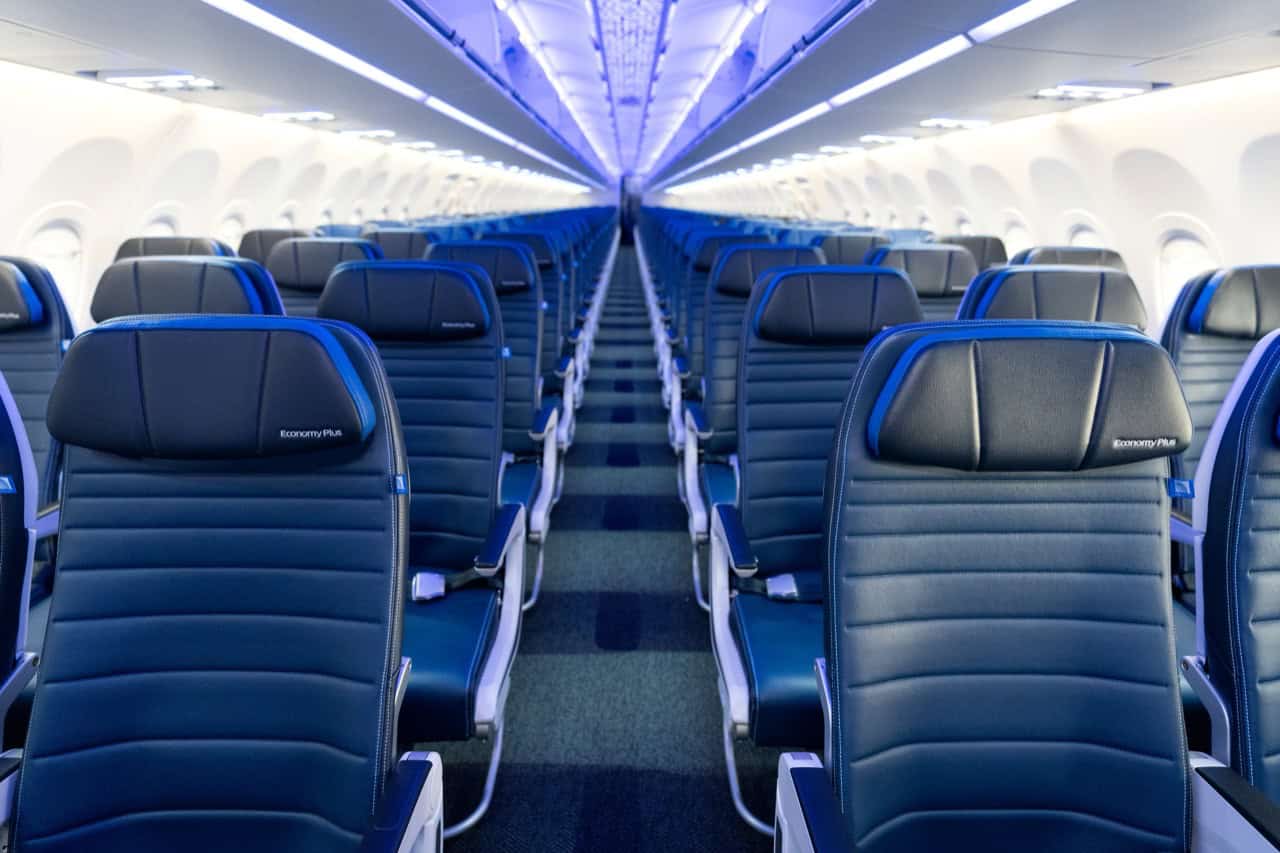
Economy Plus is the same seat as Economy, with 3 to 5 inches more legroom on most United jets and about 1 inch more recline, and United lists no other benefit.
Below, the two are compared on legroom, the seat itself, where the rows are, how many exist, the price and who gets them free, using United’s own cabin tables for 11 aircraft types as of September 2026. For how United’s fare codes and cabins fit together, see our guide to flight classes and their codes.
| Criterion | Economy Plus | Economy | Edge |
|---|---|---|---|
| Seat pitch (legroom) | 33 to 40 in; 34 in on most jets | 30 to 31 in | Economy Plus |
| Extra legroom | +3 in (787-9, 777-300ER, E175, A321XLR) to +5 in (A320); up to +10 in in select rows | None | Economy Plus |
| Seat width | Same seat: matching figures on 8 of 11 jets, inside Economy’s range on the other 3 | Same seat | Even |
| Recline | 3 to 5 in | 2 to 3 in | Economy Plus (+1 in; +2 in on the A320) |
| Location | Front of the Economy cabin, including exit rows 20 and 21 on 737s and A320s | Behind Economy Plus | Economy Plus |
| Share of economy-cabin seats | 21% (787-9) to 55% (E175) | 45% to 79% | Economy |
| Price | $71 to $441 more than Economy one way in our check, or a subscription from $799 a year | Included in the fare | Economy |
| Free with status | Premier Silver at check-in; Gold, Platinum and 1K at booking | Not applicable | Economy Plus |
| Other perks | None listed by United | None | Even |
How we compared
Seat pitch, width, recline and seat counts come from United’s own interior specification tables for 11 aircraft types, opened on September 25, 2026. Where United lists several versions of a type, we used version 1. Seat share divides Economy Plus seats by all seats in the Economy Plus and Economy sections, so the 787-9’s 39 of 188 is 20.7% and the E175’s 32 of 58 is 55.2%. Prices are the lowest one-way fares united.com showed on September 26, 2026 for nonstop flights on November 10, 2026, in the United Economy and Economy Plus columns; the cost of Economy Plus is the gap between the two. Fares change constantly, so treat them as a snapshot. The subscription break-even divides United’s $799 starting price by that gap: $799 / $71 = 11.3, or 12 flights.
How much more legroom you get
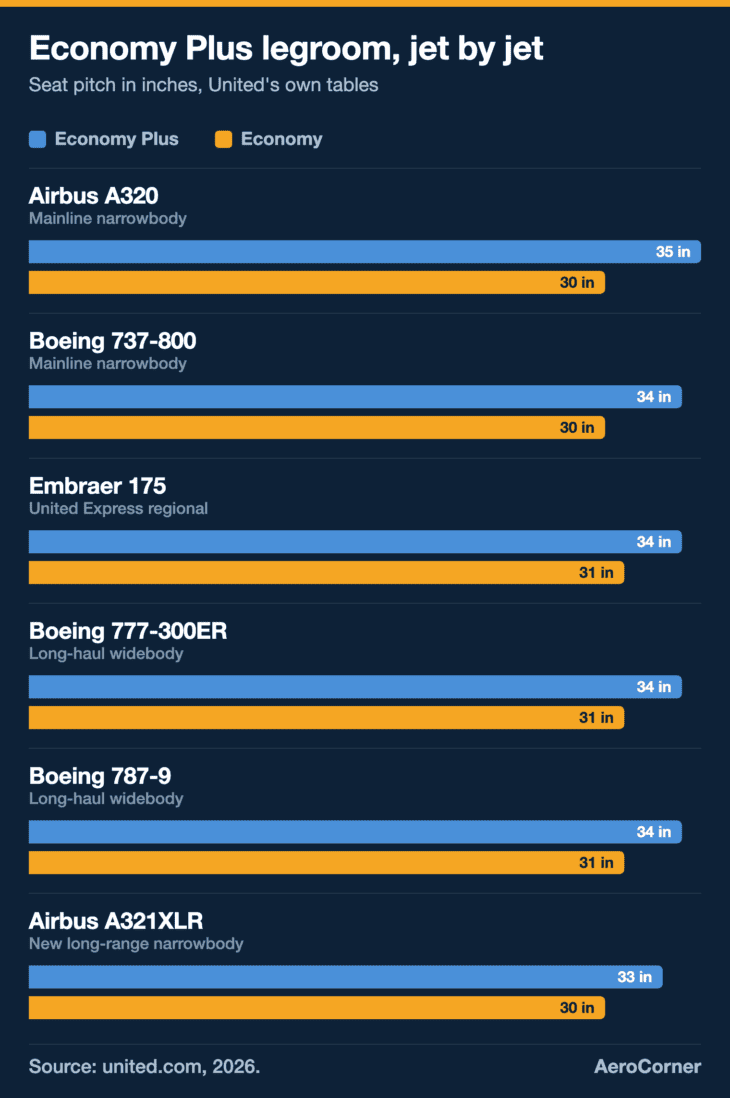
On most United jets, Economy Plus has 34 inches (86 cm) of seat pitch and Economy has 30 or 31 inches (76 to 79 cm). So the typical gain is 3 or 4 inches (8 to 10 cm).
It varies by aircraft, and United publishes it per type. The long-haul Boeing 787-9 and 777-300ER give 34 inches against 31, so 3 extra. The older Airbus A320 gives the most on a single figure: 35 inches against 30.
| Aircraft | Economy Plus pitch | Economy pitch | Extra legroom |
|---|---|---|---|
| Airbus A320 | 35 in | 30 in | +5 in |
| Airbus A321neo | 33 to 38 in | 30 in | +3 to +8 in |
| Airbus A321XLR | 33 in | 30 in | +3 in |
| Boeing 737-800 | 34 in | 30 in | +4 in |
| Boeing 737-900 | 34 in | 30 to 31 in | +3 to +4 in |
| Boeing 737 MAX 8 | 33 to 34 in | 30 in | +3 to +4 in |
| Boeing 737 MAX 9 | 35 to 40 in | 30 to 31 in | +4 to +10 in |
| Boeing 757-200 | 36 to 40 in | 30 to 31 in | +5 to +10 in |
| Boeing 777-300ER | 34 in | 31 in | +3 in |
| Boeing 787-9 | 34 in | 31 in | +3 in |
| Embraer 175 | 34 in | 31 in | +3 in |
The top of each range is a specific row. On version 2 of the 737 MAX 8, for example, United lists rows 7 to 10 at 34 inches, rows 11 to 15 at 33 inches and exit row 20 at 38 inches.
Edge: Economy Plus. It adds 3 to 5 inches of legroom on almost every United jet, and up to 10 inches in the best rows.
Is the Economy Plus seat bigger?
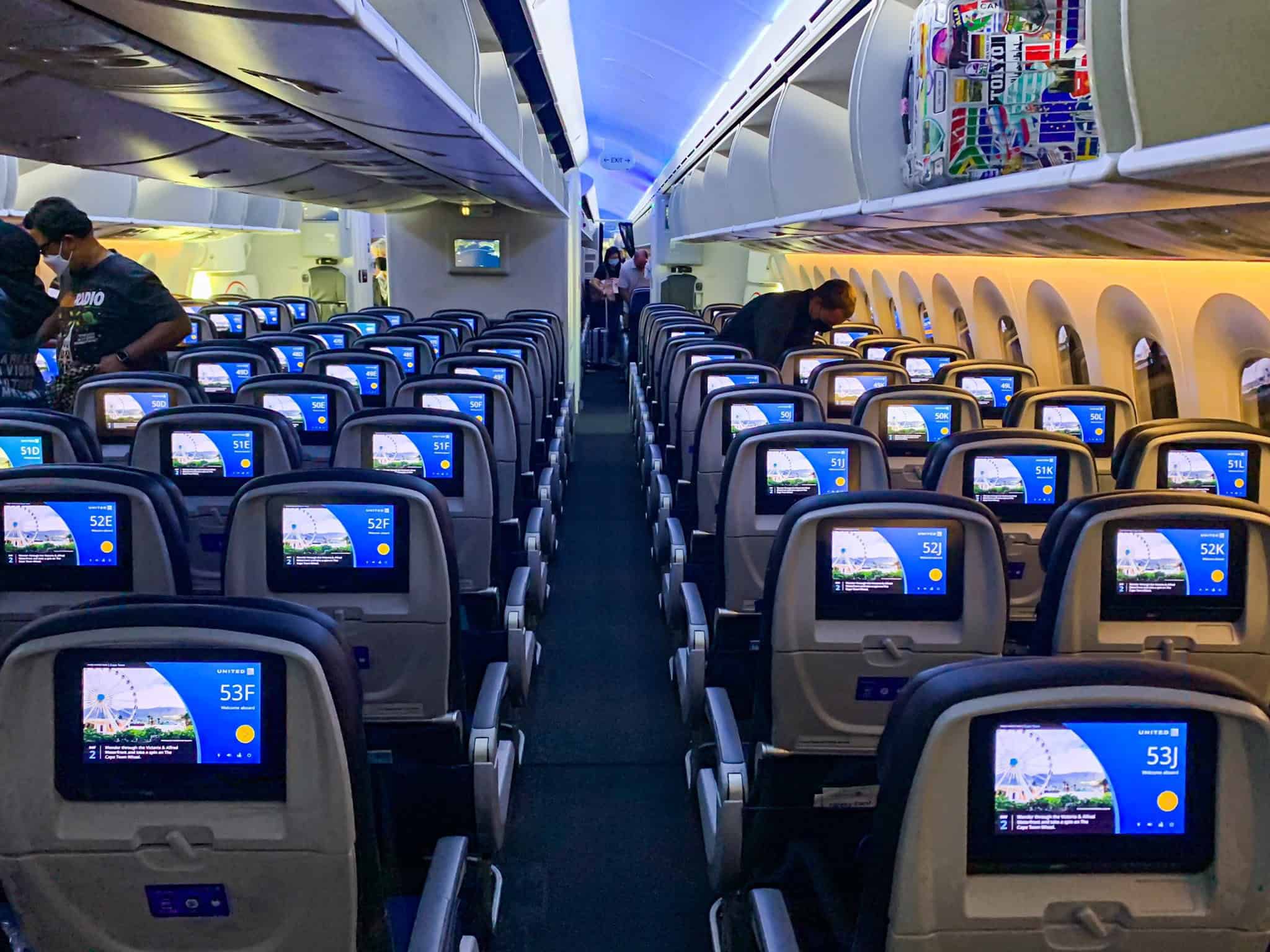
No. Economy Plus is a row position, not a different seat. On 8 of the 11 jets we checked, United lists the exact same seat width for both, such as 17.3 inches (44 cm) on the 787-9 and 18.4 inches (47 cm) on the A321neo.
_(02).jpg)
On the other three, the 737-900, 737 MAX 8 and 757-200, Economy is listed as a range and the Economy Plus figure falls inside it. The row layout never changes either: six across on the 737s and A320 family, nine across on the 787-9 and ten across on the 777-300ER.
Recline is the one small seat difference. Economy Plus reclines 1 inch more than Economy on 10 of the 11 types, and 2 inches more on the A320 (5 inches against 3).
Myth: Economy Plus is a bigger, better seat
It is the same seat, in the same row layout, closer to the front. United’s own tables give identical seat widths for Economy Plus and Economy on 8 of 11 aircraft types, and United’s Economy Plus page lists one benefit: extra legroom. A wider seat with a leg rest is United Premium Plus, a separate cabin that United lists on select long-haul flights.
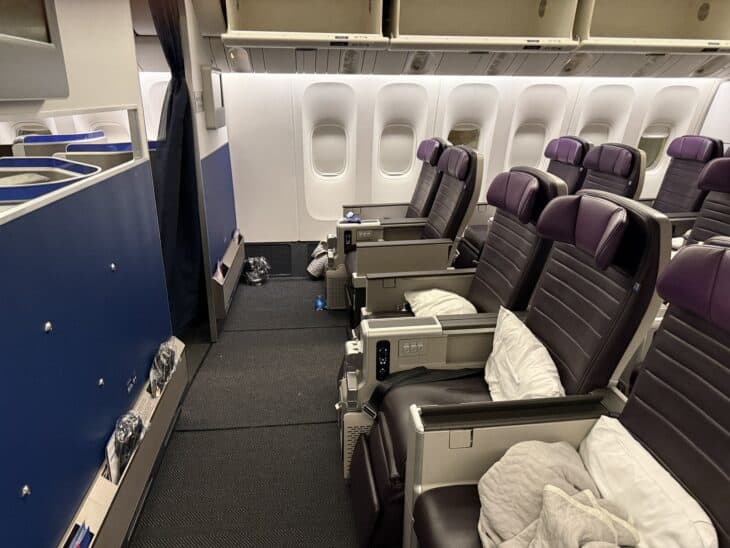

That is the line between Economy Plus and Premium Plus. On the 787-9, Economy Plus buys about 10% more personal space than Economy (17.3 x 34 inches against 17.3 x 31), while Premium Plus buys about 35%. Our premium economy vs economy comparison covers that cabin.
Edge: Economy Plus, only just. The width is the same, and the extra inch of recline is the only change to the seat itself.
Where the Economy Plus rows are
United describes Economy Plus as a seat at the front of the Economy section. On version 1 of the 737-800, for instance, it covers rows 7 to 14 and rows 20 and 21, and Economy fills row 15 and rows 22 to 38.
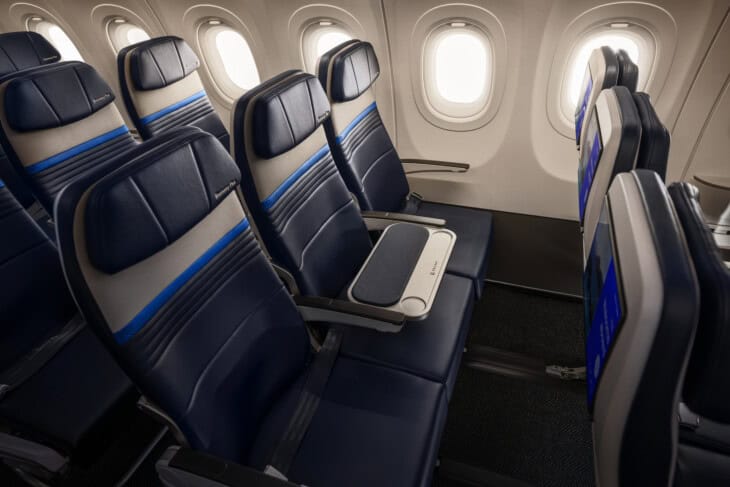
Sitting forward has a practical upside: you are off the aircraft sooner, which matters on a tight connection. On United’s 737s, A320 and A321neo, exit rows 20 and 21 are Economy Plus too.
Not every row is equal. Economy Plus row 20 does not recline at all on the 737-800, 737-900, 737 MAX 8, 737 MAX 9, A320 and 757-200. Check the seat map before paying for a specific seat.
Edge: Economy Plus. Front-of-cabin rows get you off the plane faster, and the exit rows give you the longest legroom in the back.
How many Economy Plus seats there are
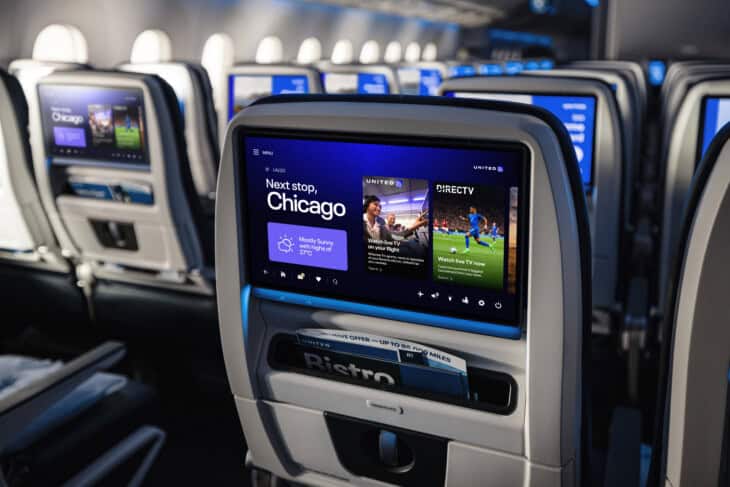
Economy Plus is a minority of the back of the plane on every mainline jet. On the 787-9, it is 39 of 188 seats in the two economy sections, or 21%, so free seats go fast on a busy long-haul flight.
| Aircraft | Economy Plus seats | Economy Plus + Economy seats | Economy Plus share |
|---|---|---|---|
| Embraer 175 | 32 | 58 | 55% |
| Boeing 737 MAX 8 | 54 | 150 | 36% |
| Boeing 737-800 | 48 | 150 | 32% |
| Airbus A321neo | 57 | 180 | 32% |
| Airbus A320 | 42 | 138 | 30% |
| Boeing 737 MAX 9 | 48 | 159 | 30% |
| Airbus A321XLR | 34 | 118 | 29% |
| Boeing 737-900 | 42 | 159 | 26% |
| Boeing 757-200 | 42 | 160 | 26% |
| Boeing 777-300ER | 62 | 266 | 23% |
| Boeing 787-9 | 39 | 188 | 21% |
Narrowbodies have more of it. On the Boeing 737 MAX 8, 54 of the 150 seats behind first class are Economy Plus, a little over a third.
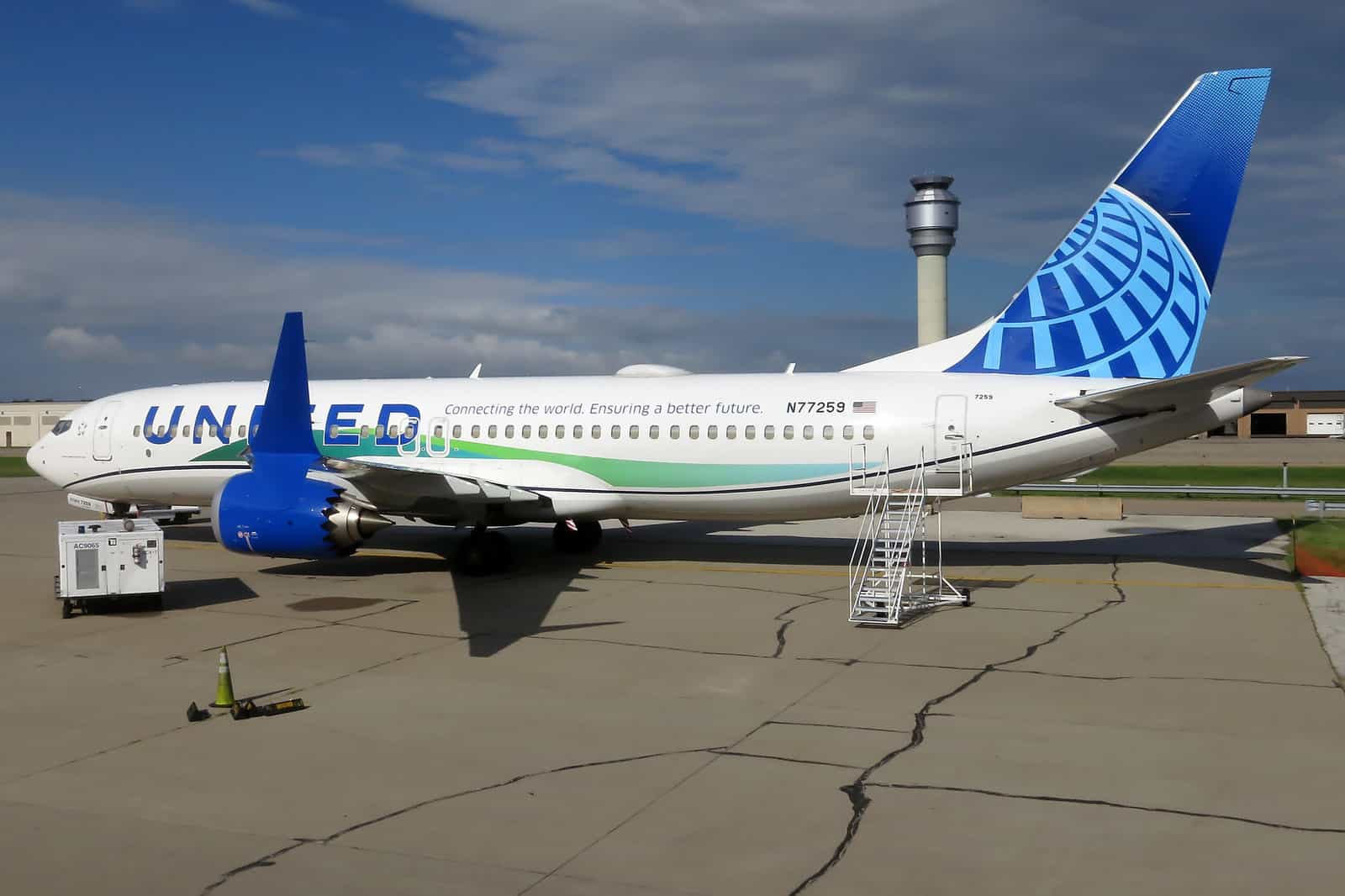
The outlier is regional flying. On version 1 of United’s Embraer 175, Economy Plus has 32 seats and Economy only 26, so the “upgrade” is the majority of the cabin.
On some United Express jets, Economy Plus is the majority
Version 1 of United’s Embraer 175 has 32 Economy Plus seats and 26 Economy seats: 55% of the cabin behind first class. On the long-haul 787-9, the share is 21%. The same upgrade is easy to find on a regional hop and scarce on an overnight flight, where it matters most.
Edge: Economy. Economy has from 1.8 to 3.8 times as many seats on every mainline jet, so it is the cabin you can always get.
What Economy Plus costs
At booking, united.com now shows Economy Plus as its own fare column next to United Economy, and the gap between the two is what the extra legroom costs. We searched eight routes on September 26, 2026 for one-way flights on November 10, and the gap ran from $71 to $441.
| Route (nonstop) | Aircraft | Economy | Economy Plus | Extra for Economy Plus |
|---|---|---|---|---|
| Chicago to Madison | CRJ550, E175 | $259 | $330 | $71 |
| San Francisco to Los Angeles | 737-800, 737 MAX 8 | $59 | $158 | $99 |
| Chicago to Newark | 737-900, 737 MAX 9, A321 | $139 | $273 | $134 |
| Denver to Honolulu | 777-200 | $553 | $739 | $186 |
| Houston to Honolulu | 777-200 | $603 | $806 | $203 |
| Newark to San Francisco | 757-200, 777-200, 777-300ER | $219 to $273 | $480 to $534 | $261 |
| Newark to London Heathrow | 767-300, 787-9 | $295 | $597 | $302 |
| San Francisco to Singapore | 787-9 | $510 to $846 | $948 to $1,287 | $438 to $441 |
On each route, the gap was identical on every nonstop we saw, whatever the aircraft. Distance is not the whole story: Newark to San Francisco cost $261 extra, more than the $186 to $203 on the longer flights to Honolulu.
Connections cost more. A one-stop Houston to Honolulu trip cost $278 to $346 extra, against $203 on the nonstop.
Prices have also climbed. In February 2024, One Mile at a Time reported seat prices of $43 to $45 on San Francisco to Los Angeles, where we saw $99, and $299 to $329 on San Francisco to Singapore, where we saw $438 to $441.
You can add it any time from booking to check-in. The money also counts toward status: United gives 1 Premier qualifying point per dollar spent on the seat, excluding taxes and fees.
Frequent flyers can subscribe instead. United’s Economy Plus subscription starts at $799 plus tax a year for yourself, with options for one companion or up to eight, and by region. In One Mile at a Time’s 2024 guide, the cheapest tier was $599.
The break-even is simple division. At the $71 to $134 we saw on short domestic routes, $799 pays for itself after 6 to 12 one-way flights. At $261 on Newark to San Francisco, it takes 4. A subscription also carries an initiation fee for new members, per United’s terms.
Edge: Economy. Economy Plus cost $71 to $441 more one way in our check, with no other perks, so it only pays off for the frequent or the tall.
Who gets it free, and the Basic Economy catch
MileagePlus Premier members book Economy Plus for free when seats are open. Premier Silver can take it at check-in for themselves and one companion, Premier Gold at booking for themselves and one companion, and Premier Platinum and 1K at booking for up to eight companions.
Basic Economy is the exception to everything. United lets Basic Economy passengers buy an Economy Plus seat, but only at check-in, and its subscription terms say Basic Economy tickets get no subscription benefit at all.
Economy Plus also exists only on United metal. United says it is on all United flights and most United Express flights, and not on Star Alliance or codeshare flights operated by other airlines.
Edge: Economy Plus. For Premier members it costs nothing, which makes it an easy yes whenever a seat is open.
New in 2026: the table row and the Relax Row
On July 14, 2026, United announced a new Economy Plus row for its Airbus A321XLR. In one row on each jet, the middle seats are replaced by a fixed, armrest-to-armrest table, so the window and aisle passengers get elbow room on top of the 3 extra inches of legroom.
“The XLR is our newest aircraft and not only offers all-aisle access lie-flat seats in United Polaris but now also includes seats in Economy Plus with extra leg and elbow room.”
Andrew Nocella, United executive vice president and chief commercial officer, United Airlines, July 2026
United plans it for all 50 of its XLRs and said pricing would come before sales open later in 2026. The jet itself starts transatlantic flying on December 1 from Washington Dulles.
The other 2026 headline is not Economy Plus at all. United’s Relax Row, announced March 24, 2026, is a row of three United Economy seats whose leg rests fold up into a couch, due in 2027 on its 787 and 777 fleet, with up to 12 per plane.
Edge: even. The XLR table row makes Economy Plus better on one jet, while the Relax Row gives Economy its own long-haul upgrade from 2027.
Who should pick which
| If you… | Pick | Because |
|---|---|---|
| Have Premier status | Economy Plus | It is free when seats are open |
| Are tall, or need to work on a laptop | Economy Plus | 3 to 5 more inches of legroom, more in exit rows |
| Fly long haul in the back | Economy Plus, if the price is right | More legroom plus an extra inch of recline for hours |
| Take a dozen or more short United flights a year without status | An Economy Plus subscription | At the $71 to $134 we saw per flight, $799 breaks even in 6 to 12 flights |
| Fly a short hop and are of average height | Economy | The seat is identical; only the legroom changes |
| Booked Basic Economy | Economy, or pay at check-in | You cannot pick Economy Plus earlier, and subscriptions do not apply |
| Want a wider seat or a leg rest | Neither | That is Premium Plus, a separate cabin |
In short, Economy Plus sells legroom and a forward seat, nothing else. Pay for it when those inches decide whether the flight is bearable, and skip it when they do not.
FAQ
Sources and references used for research and fact-checking.
- United Airlines, Economy Plus
- United Airlines, Economy Plus subscriptions
- United Airlines, Boeing 787-9 Dreamliner seat map
- United Airlines, Boeing 777-300ER seat map
- United Airlines, Boeing 737 MAX 8 seat map
- United Airlines, Boeing 737 MAX 9 seat map
- United Airlines, Boeing 737-800 seat map
- United Airlines, Boeing 737-900 seat map
- United Airlines, Boeing 757-200 seat map
- United Airlines, Airbus A320 seat map
- United Airlines, Airbus A321neo seat map
- United Airlines, Airbus A321XLR seat map
- United Airlines, Embraer E-175 seat map
- United Airlines via PR Newswire, United Launches Another Economy Class Innovation: Economy Plus Seats With Extra Elbow Room
- United Airlines via PR Newswire, Introducing the United Relax Row
- United Airlines, Flight search results, eight routes, November 10, 2026
- One Mile at a Time, Guide To United Airlines Economy Plus: Is It Worth It?
Get the Newsletter
The latest aviation news and stories sent to your inbox.
About the Author

Tim is the owner and lead editor of AeroCorner since 2019, overseeing aviation content covering aircraft, airlines, airports, and the broader aviation industry. Through years of researching, writing, editing, and publishing aviation-focused content, he has developed extensive practical knowledge of commercial aviation and air travel. Based in Asia and a frequent traveler himself, Tim also brings firsthand passenger experience to AeroCorner’s coverage. Outside of publishing, he has also explored aviation firsthand through hands-on flight training in New Zealand.