

Table of Contents
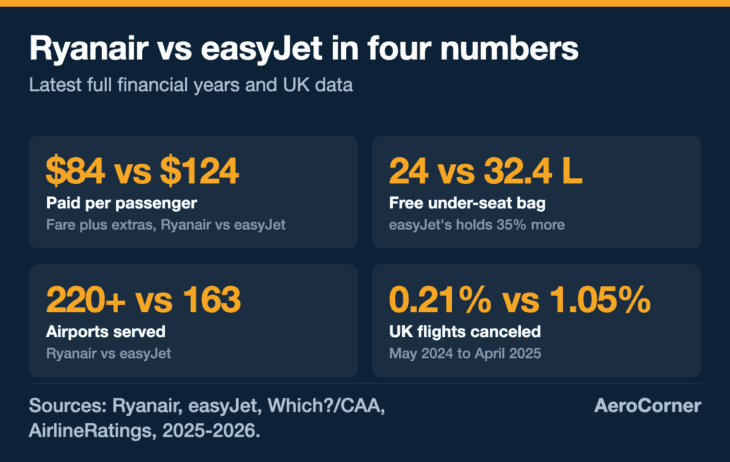
Pick Ryanair if you can travel with one small under-seat bag, check in online and want the most destinations for the least money. Its average passenger paid about $84 per flight, fare and extras combined, against about $124 on easyJet.
Pick easyJet if you want a bigger free bag, a slightly wider seat, no airport check-in fee and main city airports. It also scored 12 points higher than Ryanair in the Which? 2026 airline survey.
This comparison uses both airlines’ latest annual results, the Which? 2026 airline survey, Which?’s analysis of UK Civil Aviation Authority punctuality data and AirlineRatings, as of November 2026. For the wider field, see our ranking of the best low-cost airlines in the world.
| Criterion | Ryanair | easyJet | Edge |
|---|---|---|---|
| Average paid per passenger, fare plus extras | €74.59 (about $84), year to March 2026 | £92.75 (about $124), year to September 2025 | Ryanair |
| Free under-seat bag | 15.7 x 11.8 x 7.9 in (40 x 30 x 20 cm), 24 liters | 17.7 x 14.2 x 7.9 in (45 x 36 x 20 cm), 32.4 liters | easyJet |
| No online check-in | €55 or £55 airport check-in fee; app boarding pass only | No check-in desks; free bag drop | easyJet |
| Seat width | 17 in (43 cm) | 18 in (46 cm) | easyJet |
| Airports served | Over 220 in 36 countries | 163 | Ryanair |
| UK on-time departures, May 2024 to April 2025 | 66.5% | 67.8% | Even |
| UK cancellations, same period | 0.21% | 1.05% | Ryanair |
| Which? customer score, 2026 | 55%, last of short-haul airlines | 67% | easyJet |
| Fleet | 621 Boeing 737s and 26 Airbus A320s (647) | 356 Airbus A319, A320, A320neo and A321neo | Even |
| Fatal accidents | None | None | Even |
How we compared
Average paid per passenger is each airline’s total airline revenue divided by passengers carried. Ryanair: €15,544.3 million over 208.4 million passengers in the year to March 31, 2026, so €74.59 (€50.65 in fares, €23.94 in extras). easyJet airline only, holidays excluded: £6,072 million in passenger revenue plus £2,594 million in ancillary revenue over 93.4 million passengers in the year to September 30, 2025, so £92.75. Dollars use the ECB reference rates for November 10, 2026 (€1 = $1.1214, £1 = $1.3423). The two financial years overlap by six months, and the figure is per flight, not per mile. Bag volumes are length x width x depth. Punctuality counts UK departures within 15 minutes of schedule.
Price: what passengers actually pay
Headline fares are a poor guide, because both airlines earn about a third of their money from extras, the core of the ultra-low-cost airline model. The better measure is what the average passenger paid in total, and that comes straight out of each airline’s annual results.
Ryanair carried 208.4 million passengers in the year to March 2026 and took in €15.54 billion. That is €74.59 a head, about $84: a fare of about €51 plus €24 in bags, seats and other extras.
easyJet’s airline carried 93.4 million passengers in the year to September 2025, with £8.67 billion in fares and extras. That is £92.75 a head, about $124, of which £27.76 was extras.
The $41 gap
On these figures the average easyJet passenger paid about $41 more per flight than the average Ryanair passenger, roughly 49% more. Part of that is route mix and the busier, pricier airports easyJet chooses, so on any single route the gap can be smaller or reversed.
Ryanair also warned in November 2026 that European fares could rise by 10% to 20% in 2027 as its fuel bill climbs, which we covered in our report on Ryanair’s half-year results. Check both airlines for your own dates before you assume either is cheaper.
Edge: Ryanair. Its average passenger pays less, by a wide margin.
Bags: the free bag and the gate sizer
Every fare on both airlines includes one small bag that must fit under the seat in front of you. Ryanair’s is 15.7 x 11.8 x 7.9 inches (40 x 30 x 20 cm), about 24 liters. easyJet’s is 17.7 x 14.2 x 7.9 inches (45 x 36 x 20 cm), about 32 liters, or 35% more room.
Measure before you book. A bag that fits easyJet’s allowance can still fail Ryanair’s by 2 inches in length and 2.4 inches in width, which pushes you into paying for a bigger bag.
A full-size overhead bin bag costs extra on both. Ryanair sells it as Priority with a second 22 lb (10 kg) bag; easyJet sells a large cabin bag of up to 22 x 17.7 x 9.8 inches (56 x 45 x 25 cm).
In Which? price checks reported by AirlineRatings, that bigger bag cost €23.65 on average with Ryanair and €34.60 with easyJet, about $27 and $39.
Ryanair checks bags against sizers at the boarding gate. Bags that fail are tagged and sent to the hold for a gate bag fee, which costs more than adding a bag online in advance.
Edge: easyJet. Its free bag is 35% bigger, so fewer travelers need to pay for a second one.
Check-in, boarding passes and the bag-drop deadline
Ryanair went fully digital on November 12, 2025: you check in online and show the boarding pass in its app. If you turn up without checking in, the airport check-in fee is £55 in the UK and €55 in most of Europe, per passenger.
From November 10, 2026, Ryanair’s bag drop closes 60 minutes before departure, up from 40 minutes. Ryanair says the extra 20 minutes is meant to get passengers through security and passport queues before boarding starts.
easyJet runs no traditional check-in desks. Passengers who cannot check in online can use its bag drop for free, according to AirlineRatings, so there is no penalty for forgetting.
Edge: easyJet. Forgetting to check in costs nothing on easyJet and about $62 to $74 per person on Ryanair.
Seats and comfort
Ryanair flies the Boeing 737-800 and the denser 737-8200, a 737 MAX 8 version with 4% more seats. easyJet flies the A320 family, whose cabin is wider than the 737’s.
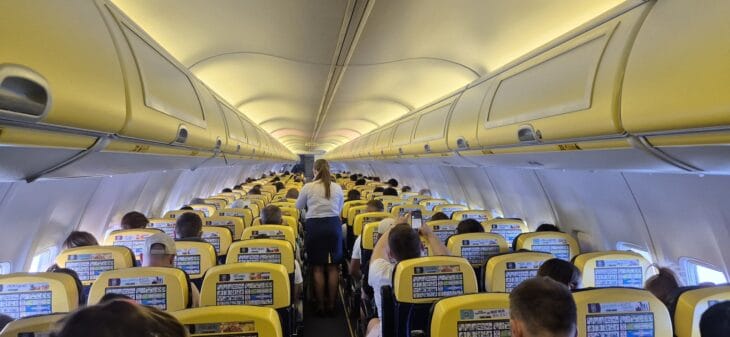

AirlineRatings lists 17-inch seats on every Ryanair aircraft and 18-inch seats on every easyJet aircraft. Legroom is close to a wash: it lists 28 to 29 inches of seat pitch on both airlines, depending on the aircraft.
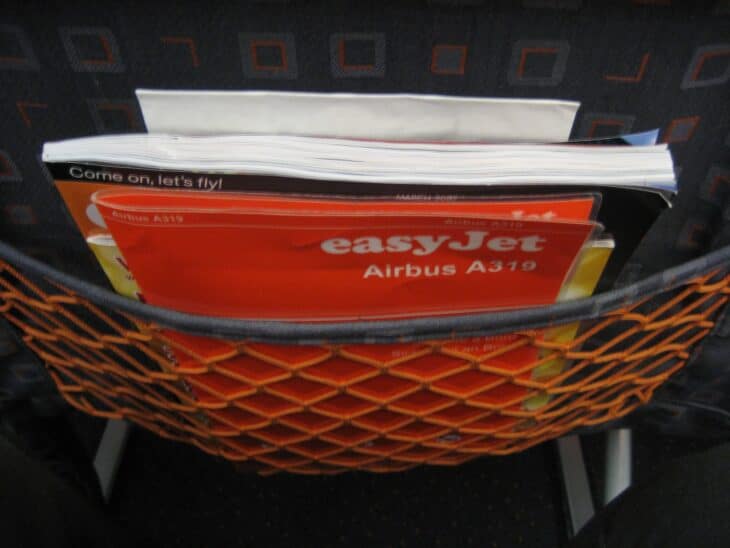

Which? members agreed. In its 2026 survey Ryanair got one star out of five for seat comfort and easyJet got two.
Edge: easyJet. An extra inch of width is the one comfort difference you will notice.
Where they fly
Ryanair is more than twice easyJet’s size. Its group carried 208.4 million passengers last year and connects over 220 airports in 36 countries from 95 bases.
It also moves aircraft toward airports and countries that cut aviation taxes. Its FY26 results name Austria, Belgium, Germany and regional Spain as markets it is pulling capacity away from.
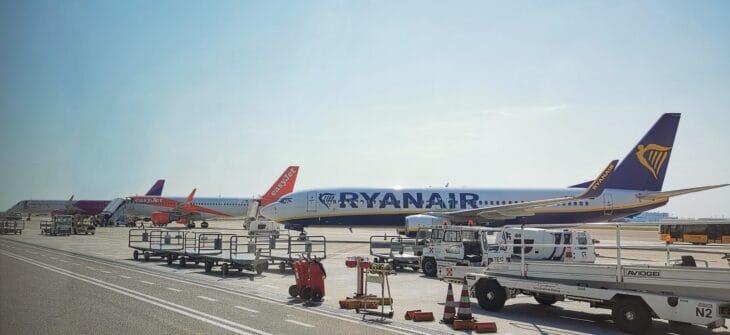

easyJet served 163 airports on 1,202 routes in its last financial year. It says it prioritizes primary, slot-constrained airports, and in 2025 it opened bases at Milan Linate and Rome Fiumicino.
Check where you actually land. The cheaper fare can lose its edge once you add a long bus ride from an outlying airport, while a main-airport flight can save the transfer cost and time.
Edge: Ryanair. It flies to more places, even if easyJet aims for the main city airports.
Delays and cancellations
Which? analyzed UK Civil Aviation Authority data for departures between May 2024 and April 2025. easyJet left on time, within 15 minutes, on 67.8% of flights; Ryanair managed 66.5%. In 2019 Ryanair was well ahead, at 77.8% against easyJet’s 70.6%.
Cancellations split the two clearly. Ryanair canceled 0.21% of those UK flights and easyJet canceled 1.05%, about five times as often.
easyJet says its own on-time performance improved by 3 points to 72% in its 2025 financial year. That is the airline’s own measure across its network, so it does not compare directly with the UK figures.
When things go wrong, the rules are the same for both. On flights covered by the EU’s air passenger rules (EU261), a delay of 3 hours or more at your destination can earn €250 to €600 in compensation, depending on distance, unless extraordinary circumstances caused it.
Edge: Ryanair. Punctuality is even, but your flight is far less likely to be canceled.
What passengers say
Which? surveyed 5,518 people about economy flights in October and November 2025. easyJet scored 67% and Ryanair 55%, the lowest of the short-haul airlines in the table. Jet2 led at 76%. Neither budget carrier comes close to the leaders in our ranking of the best airlines in Europe.
Ryanair rejects the survey. It told Which? that neither it nor its passengers pay attention to what it called made-up surveys.
The star ratings are closer than the totals. Both airlines got two stars for boarding and customer service and three for value for money; seat comfort was the one rating where they differed.
Edge: easyJet. A 12-point lead in a survey of more than 5,500 travelers is hard to argue with.
Fleet, safety and who owns them
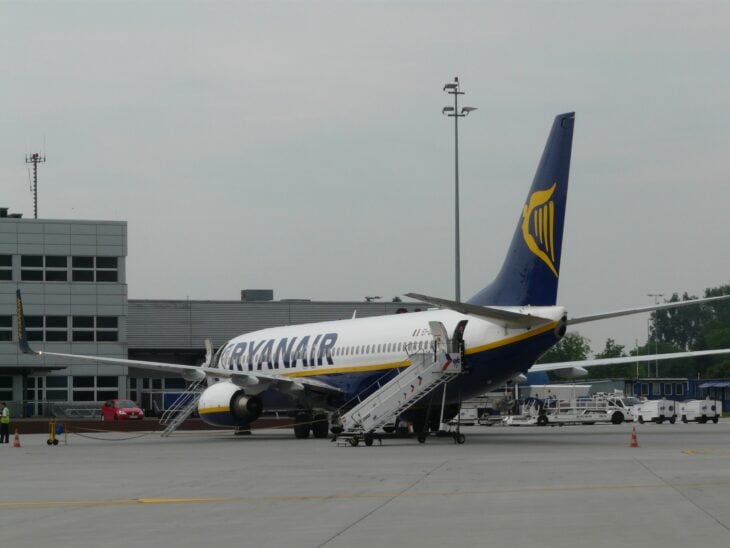
Ryanair’s group ended March 2026 with 621 Boeing 737s and 26 Airbus A320s. All 210 of its 737-8200s are delivered, and it has ordered up to 300 737 MAX 10s, with the first deliveries depending on European certification.

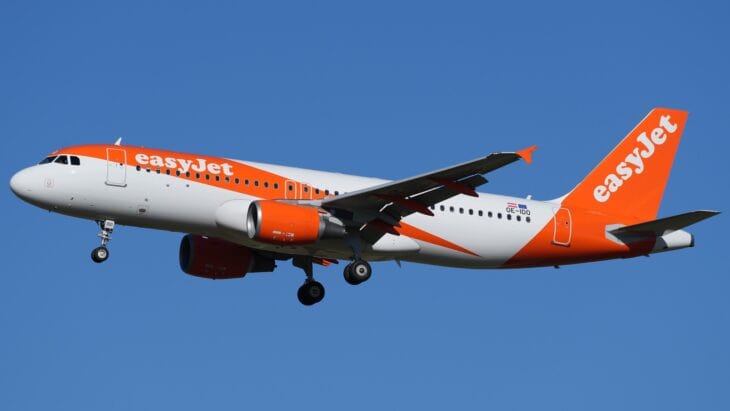
easyJet had 356 Airbus jets in September 2025: 82 A319s, 180 A320s, 75 A320neos and 19 A321neos, with an average age of 10.9 years. It has 290 more A320neo-family jets on order to replace its A319s, about half its older A320s, and to grow.

Neither airline has had a fatal accident, and AirlineRatings gives both its top seven-star safety rating. Both operate under European and UK safety regulation.
easyJet’s ownership is changing. Apollo Global Management agreed a £5.7 billion takeover in August 2026, and the deal still needs shareholder, court and regulatory approval, with completion expected by the end of March 2027. Apollo says the brand and management stay, as our report on the Apollo deal explains.
Edge: Even. Both have clean safety records on modern single-aisle jets.
Who should pick which
| If you… | Pick | Because |
|---|---|---|
| Travel with one small backpack and want the lowest price | Ryanair | Its average passenger pays about $41 less |
| Need a bag bigger than 15.7 x 11.8 x 7.9 in but no overhead bag | easyJet | Its free bag is 35% bigger |
| Are flying to a smaller city or a less-served region | Ryanair | Over 220 airports against 163 |
| Want to land at the main city airport | easyJet | It targets primary airports such as Milan Linate and Rome Fiumicino |
| Cannot risk a cancellation | Ryanair | 0.21% of UK flights canceled against 1.05% |
| Are tall or broad-shouldered | easyJet | An 18-inch seat against 17 |
| Might forget to check in or lack a smartphone | easyJet | No €55 or £55 airport check-in fee |
Myth: Ryanair is the budget one, easyJet is the nice one
Both are built on extras. Extras made up 32% of Ryanair’s revenue and 30% of easyJet’s airline revenue in their latest years, and the average easyJet passenger spent more on extras (£27.76, about $37) than the average Ryanair passenger did (€23.94, about $27). easyJet’s edge is a bigger free bag and fewer fees for mistakes, not a different business model.
FAQ
Sources and references used for research and fact-checking.
- Ryanair Holdings, FY26 Results
- easyJet plc, Full Year Results for the year ended 30 September 2025
- Which?, Best and worst airlines
- Which?, Which? reveals the UK's best and worst airlines for customer satisfaction
- Which?, Too little Tui late: major airlines' flight delays worse now than pre-pandemic
- Which?, Ryanair bans paper boarding passes from November
- AirlineRatings, Europe is dominated by low-cost carriers, but which one is better?
- Yahoo News UK / The Herald, Ryanair luggage rule change comes into force
- Aviation Business News, The easyJet private equity takeover: the full deal details
- European Union, Your Europe, Air passenger rights
- Frankfurter (European Central Bank data), Euro and pound reference rates, November 10, 2026
Get the Newsletter
The latest aviation news and stories sent to your inbox.
About the Author

Tim is the owner and lead editor of AeroCorner since 2019, overseeing aviation content covering aircraft, airlines, airports, and the broader aviation industry. Through years of researching, writing, editing, and publishing aviation-focused content, he has developed extensive practical knowledge of commercial aviation and air travel. Based in Asia and a frequent traveler himself, Tim also brings firsthand passenger experience to AeroCorner’s coverage. Outside of publishing, he has also explored aviation firsthand through hands-on flight training in New Zealand.