

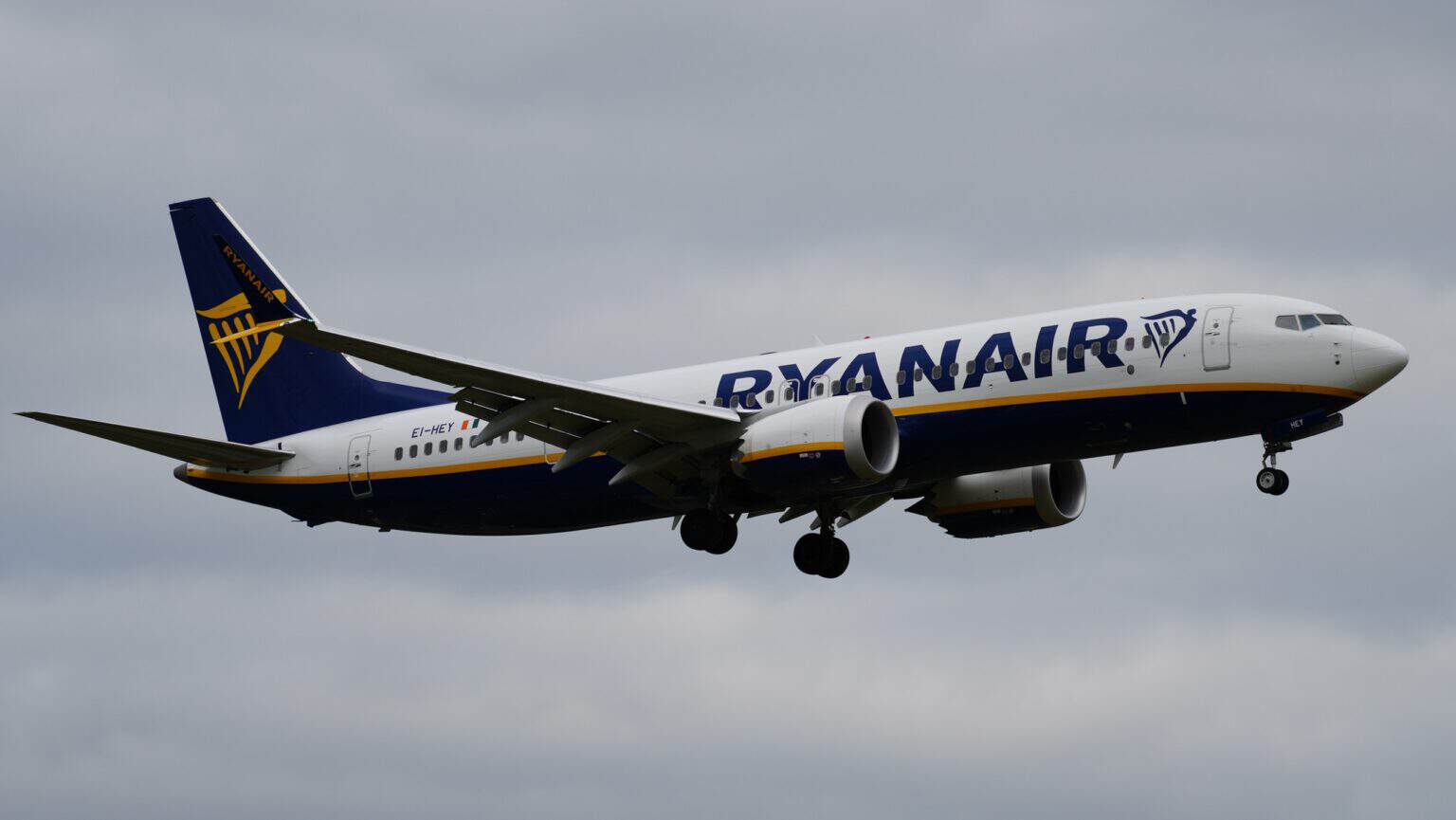
Ryanair said on November 2, 2026, that it expects European short-haul airfares to “increase materially” next year, as cheap fuel hedges run out and its fuel bill climbs by an estimated €2 billion (roughly $2.2 billion). Chief executive Michael O’Leary put a number on it in an interview with CNBC: “I believe you’re going to see airfares rise next year across Europe by 10%, maybe even 20%.”
The warning came with Ryanair’s first-half results for the six months to September 30. To help cover the fuel cost, the airline said it is reviewing costs across its group, including possible temporary pay freezes and more use of artificial intelligence.
What Ryanair reported
Profit after tax fell 15% to €2.15 billion, down from €2.54 billion a year earlier, according to Ryanair’s results release. CNBC put the new figure at about $2.3 billion.
Ryanair carried 125.8 million passengers in the half, up 6%, with 95% of seats filled. It did so at lower prices: the average fare fell 4% to €55.70, which Ryanair blamed partly on an Easter that fell only partly in April and on hesitant, later bookings during the Middle East conflict.
| Ryanair, April to September | 2025 | 2026 | Change |
|---|---|---|---|
| Passengers | 119.0 million | 125.8 million | +6% |
| Average fare | €58.00 | €55.70 | -4% |
| Revenue | €9.82 billion | €10.08 billion | +3% |
| Fuel and oil costs | €2.97 billion | €3.40 billion | +15% |
| Profit after tax | €2.54 billion | €2.15 billion | -15% |
Operating costs rose 10% to €7.69 billion. Fuel was the main driver: Ryanair said the price it paid for the 20% of its jet fuel that was not hedged doubled, to about $130 a barrel.
Why the fuel bill jumps next year
Airlines like Ryanair buy much of their fuel in advance through hedges, contracts that lock in a price months ahead. For its current financial year, which ends in March 2027, Ryanair has 80% of its jet fuel hedged at about $67 a barrel, far below today’s market.
That cover shrinks sharply from April. For the following year, Ryanair has hedged only 25%, at about $95 a barrel, so most of the fuel it burns in summer 2027 will be bought at whatever the market charges.
O’Leary told CNBC that customers “have been insulated for the last 12 months,” but that “those hedges are rolling off.” He put jet fuel at $170 a barrel and called next year “a very significant cost cliff.”


In the release, Ryanair said it expects jet fuel to stay expensive well into 2027 unless the Middle East conflict is resolved quickly, leaving every EU airline with a significantly higher fuel bill. Higher fares, it said, are still “unlikely to provide a full offset” for its own estimated €2 billion increase.
Fuel prices are hitting carriers well beyond Europe, from Delta’s lowered profit forecast in October to Alaska Air Group’s management job cuts. For a longer look at how fuel feeds into ticket prices, see our explainer on why flights are so expensive.
Pay freezes, fewer crews and AI
Ryanair listed four places it will look for savings. It will negotiate with airports as its new, more fuel-efficient jets arrive from spring 2027, and it wants lower crewing ratios.
It also flagged labor agreements coming up for renewal, “which may require temporary pay freezes,” and “increased use of AI” to raise productivity in operations and in back-office and support functions. The release does not say which jobs or countries a pay freeze would affect.
The pay freeze talk follows a period of rising wages. Staff costs rose 5% in the half, which Ryanair attributed to pre-agreed pay increases, including new multi-year collective labor agreements in several countries.
What it means for travelers
For this winter, Ryanair said demand for October to December is strong, with fares “trending modestly ahead” of the same quarter last year. It added that people are booking closer to departure, so it has little visibility, and none at all yet for January to March.
There will be fewer extra seats than usual. As it announced in September, Ryanair cut its traffic target for the year from 216 million to 214 million passengers, which keeps winter traffic broadly flat. AeroCorner covered that winter schedule cut when it was announced.
In its next financial year, from April 2027, Ryanair plans to grow to over 220 million passengers, helped by its first 16 Boeing 737 MAX 10 jets. Their spring 2027 delivery depends on European certification, which Ryanair expects before the end of this year.
Where those seats go matters. Ryanair said it will keep moving flights toward Albania, Italy, Morocco, Slovakia and Sweden, which it says are cutting aviation taxes or fees, and away from Austria, Germany and regional Spain.
It has 126 new routes and a new base in Rimini, Italy, on sale for summer 2027. Ryanair also argued that European short-haul capacity will stay tight into the early 2030s, as Boeing and Airbus run behind on production and weaker airlines struggle with fuel costs.
O’Leary’s 10% to 20% figure is a forecast, not a price list, and Ryanair gave no full-year profit guidance, calling it “too early.” The release names the risks itself: conflict in the Middle East and Ukraine, the price of its unhedged fuel, economic shocks and European air traffic control disruption.
Sources and references used for research and fact-checking.
Get the Newsletter
The latest aviation news and stories sent to your inbox.
About the Author

AeroCorner News is the aviation news desk of AeroCorner.com. It covers accidents and incidents, safety rulings, airline and airport disruption, and new aircraft. It works from primary sources such as the NTSB, FAA, EASA and the manufacturers' own announcements.