

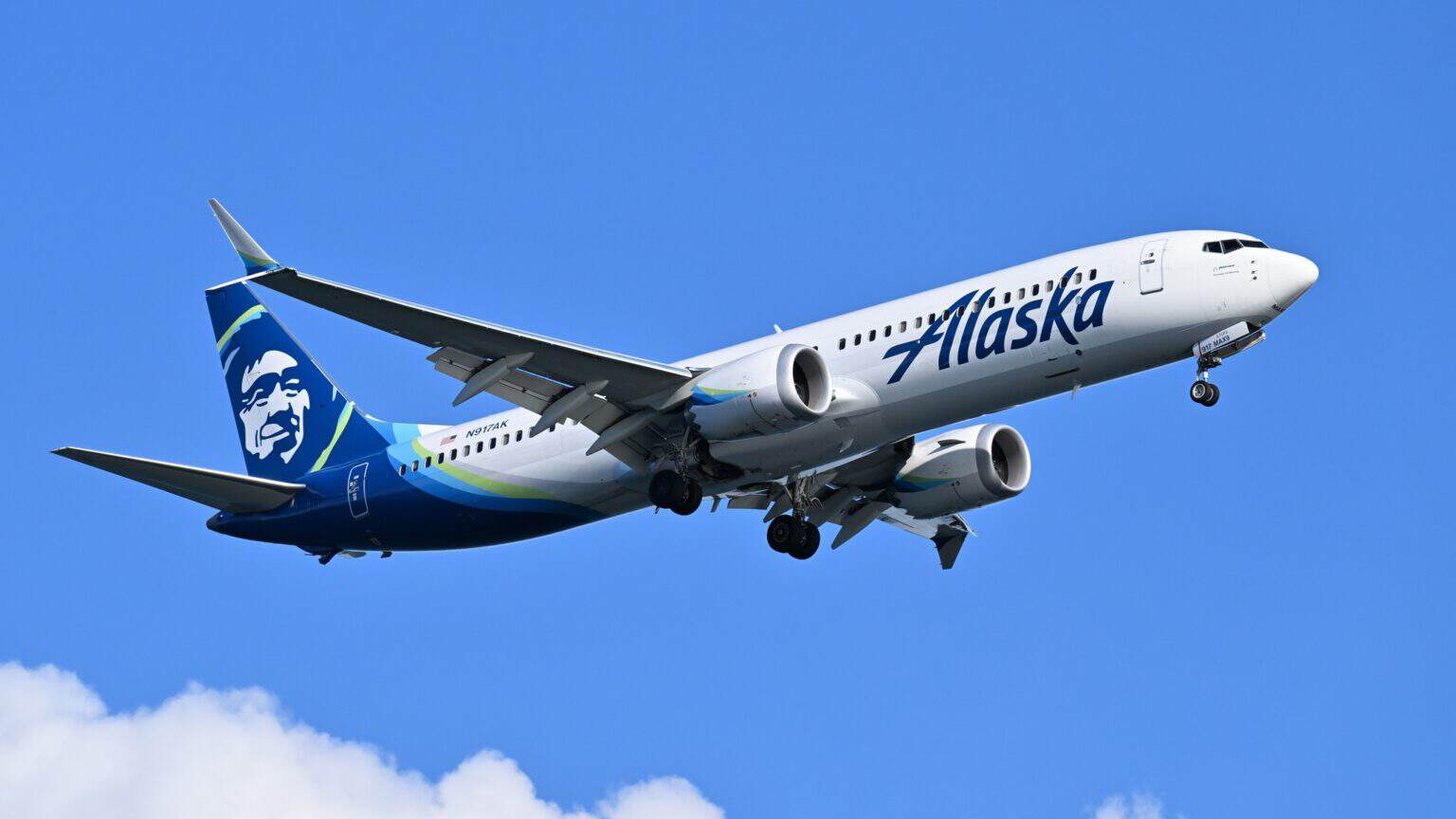
On Oct. 30, 2026, Alaska Air Group said it will eliminate about 200 positions away from the front line, including 48 in Hawaii. In an email to employees, CEO Ben Minicucci warned that the company could lose as much as $700 million this year if current conditions persist.
Minicucci blamed “fuel prices and geopolitical challenges,” according to the Honolulu Star-Advertiser, which quoted the email. A loss of that size, he wrote, “would be our first adjusted pretax loss outside of the pandemic since 2003.”
Who is losing their jobs
The Star-Advertiser describes the cuts as management jobs, while Reuters calls them non-contract positions. The Seattle Times reports that they are non-union, back-office roles, and that pilots, flight attendants, airport guest services, and maintenance and engineering staff are not affected.
Reuters puts the total at under 1% of the group’s roughly 32,500 employees. A company spokesperson told The Seattle Times that 125 of the jobs are in Washington state, where Alaska is headquartered.


Affected employees received 60-day WARN Act notices on Oct. 30, the Star-Advertiser reported. Their last working day is Nov. 13, but pay continues through Dec. 31, which covers the 60 days, and they also receive severance and transition support.
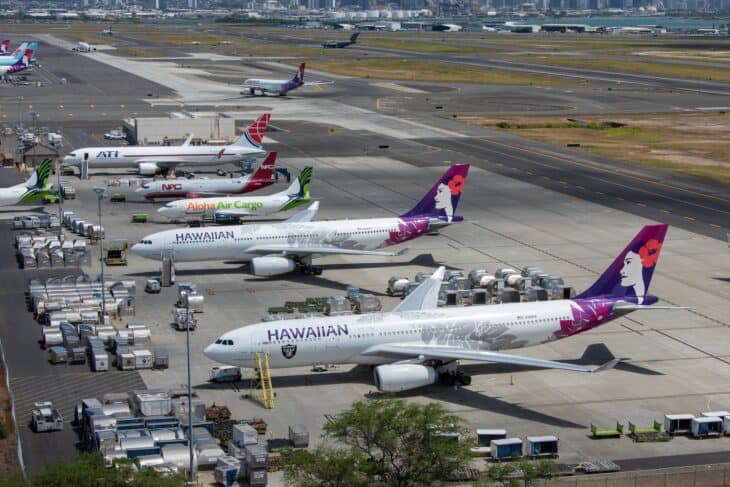
In Hawaii, Hawaiian Airlines CEO Diana Birkett Rakow told staff that 40 of the 48 jobs are being eliminated and eight people are being offered other roles. She also said Jim Landers, head of Hawaii operations, and Shelly Parker, head of Hawaii guest operations, decided to retire at year’s end, and that their positions will go in the restructuring.
Fuel is the problem, not demand
Alaska’s third-quarter earnings release, published Oct. 20, shows how sharply the fuel bill moved. Economic fuel cost $3.94 per gallon, against $2.51 a year earlier, and aircraft fuel expense rose 60% to $1.214 billion.
The current quarter looks worse. Alaska’s guidance assumes $4.65 to $4.85 per gallon, about $650 million above its initial plan, and $1.8 billion in fuel expense above plan for the full year.
Revenue, meanwhile, rose 14% to $4.3 billion on 2.4% more capacity, and unit revenue rose 11.7%. That was not enough: the adjusted pretax margin fell to 1.1% from 4.6% a year earlier.
The third-quarter net loss of $147 million overstates the operating picture, since Alaska earned $18 million before tax and then booked $165 million of tax expense. Over nine months the loss is plain: $513 million before tax and $416 million after it, against a $79 million profit a year earlier.
Alaska is not alone. Reuters reports that US airfares rose an average of nearly 23% year on year in the seven months through September, yet American and Southwest have cut their 2026 earnings forecasts, as did Delta in October.
Where the $700 million comes from
The earnings release gave its full-year forecast only per share, an adjusted loss of $5.00 to $5.50. Minicucci’s email gives a pretax dollar figure, and the two line up reasonably well.
Alaska’s adjusted pretax loss through September was $412 million. Its fourth-quarter guidance, a loss of $2.00 to $2.50 per share on about 112.5 million shares at a tax rate near 20%, works out to roughly $280 million to $350 million before tax.
That adds up to about $690 million to $765 million for the year, by AeroCorner’s arithmetic rather than any company figure. So the $700 million sits at the low end of what guidance already implied, which suggests a blunter statement of the October forecast rather than a further slide.
A warning, not a result
The $700 million is Minicucci’s conditional figure, tied to current conditions persisting. Alaska has not reported its fourth quarter, and fuel prices could move the outcome either way.
Minicucci also pointed at overhead, which he wrote “has grown at a disproportionate rate to revenue over the last few years.”
None of the sources AeroCorner read puts a dollar figure on the savings. A cut touching under 1% of staff looks aimed at overhead rather than at closing a $1.8 billion fuel gap, and Minicucci wrote that the company “must continue investing in our fleet, guest experience, capacity and network.” Alaska and Hawaiian unveiled their Aurora and Leihōkū suites in September.
Hawaii’s second 48 this year
Executives told the Star-Advertiser the new cuts are not tied to the $1.9 billion acquisition of Hawaiian Holdings, which closed in September 2024. Hawaiian staff have been through several merger-related rounds, though, and the same number has come up before.
In March, a separate group of 48 nonunion employees was told their jobs would end in May and June, mostly because of the move to a single passenger service system, according to a Star-Advertiser report carried by The Garden Island. A spokesperson said then that 418 noncontract employees had received WARN letters since the merger and 302 had left, and that a smaller number of duplicative roles would still end.
Another 13 non-union positions on Oahu were reported on Oct. 12, ending around December or January. The reports do not say whether those 13 overlap with the new 48.
Birkett Rakow told Hawaiian employees the decision carried “great weight,” and said the merged airline is “much stronger and better equipped to face financial headwinds.” The company also said in March that it had hired more than 1,200 people since September 2024, mainly in unionized Hawaii roles.
Sources and references used for research and fact-checking.
Get the Newsletter
The latest aviation news and stories sent to your inbox.
About the Author

AeroCorner News is the aviation news desk of AeroCorner.com. It covers accidents and incidents, safety rulings, airline and airport disruption, and new aircraft. It works from primary sources such as the NTSB, FAA, EASA and the manufacturers' own announcements.