

Table of Contents
A ground stop can keep new flights on the ramp. It cannot do anything about the airplanes already cruising at 35,000 feet, and for those, federal rules already spell out what a crew does if the voice on the radio goes quiet.
When the FAA’s nationwide ground stop of Nov. 13, 2026 began, Flightradar24 counted about 3,100 aircraft in the air and bound for US airports, CBS News reported. None were ordered to land at once. They kept flying to their destinations.
Officials said at a Homeland Security briefing that no aircraft in the air was without communications. If one had been, its crew would have flown by 14 CFR 91.185, the lost communication procedures: keep to the last cleared route, fly the highest of three altitudes and start down at the time the flight plan said it would arrive.
The Failure Hit the Centers That Talk to Cruising Jets
Transportation Secretary Sean Duffy said the stop followed “a communication issue impacting all Air Route Traffic Control Centers.” Those are the facilities that work airliners at cruise, before they are handed to approach and then tower controllers.
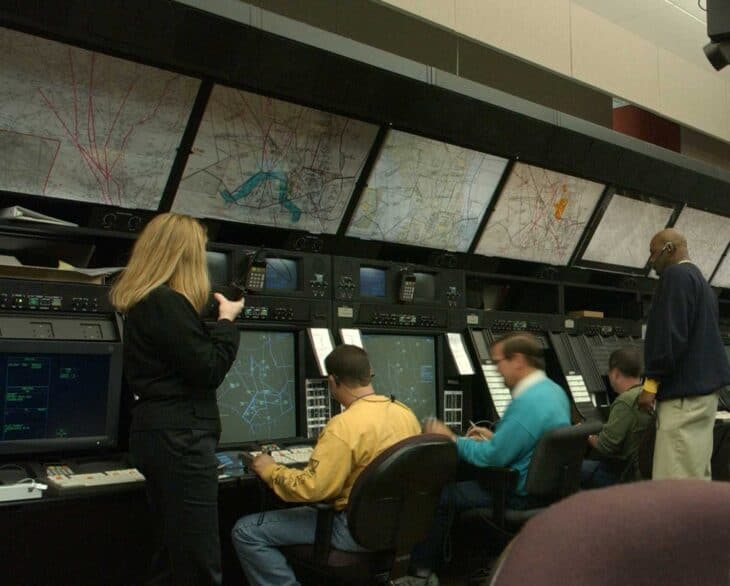

Jeff Guzzetti, an aviation safety expert who previously worked for the FAA, made that point on NBC News: the en route center is “the one that’s having the problem.” That made the airborne side of the day the open question, because a jet at cruise cannot be held at a gate.
The official answer was reassuring but loose. Homeland Security Secretary Markwayne Mullin said, “My understanding is that we can still communicate,” and noted that planes were still landing, so communications were still going on.
He also said communications came “at different levels and clarity.” The FAA said every flight had been accounted for, and airborne flights were handled case by case.
There were signs of trouble on the frequencies. Wikipedia’s running account of the outage says problems with radio frequencies were noticed in the hours before the advisory, and an American Airlines passenger told NBC the pilot had announced “some kind of radio issue.”
No report we have seen says any crew actually lost two-way contact with ATC that afternoon. That is why the rule matters: it is written so nobody on the ground has to guess what a silent airplane will do.
What 14 CFR 91.185 Tells a Silent Crew to Do
The regulation applies to any flight under instrument flight rules that loses two-way radio communication, which covers airline flights. If the crew is in clear weather, or reaches it, the rule says to continue visually and land “as soon as practicable.”
In cloud, the crew picks a route in a fixed order. First comes the route in the last clearance. If ATC was giving radar vectors, they fly direct to the fix or airway the vector was leading to, then any route ATC said to expect, and only then the route they filed.
Altitude is the highest of three: the last assigned altitude, the minimum IFR altitude for that stretch of route, and any altitude ATC said to expect later. Picking the highest keeps the airplane above the minimum safe altitude and at a level ATC already knows about.
The rule in three lines
Route: last clearance, then the vector’s target, then the expected route, then the filed route. Altitude: the highest of assigned, minimum IFR and expected. Timing: start the descent and approach as close as possible to the planned arrival time.
Timing closes the loop. The crew starts the descent and approach as close as possible to the “expect further clearance” time, or, without one, the arrival time worked out from the flight plan. ATC can then predict where and when a silent jet will descend.
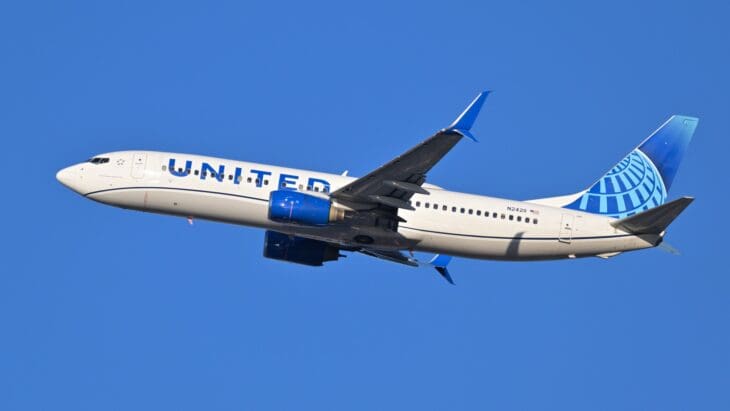
Take a Boeing 737-800 cleared to Denver at 35,000 feet that loses its radios over Nebraska. It keeps flying its cleared route at 35,000 feet and begins its arrival close to its planned time, while controllers move other traffic out of its way.

Two cockpit actions go with the rule. The crew sets the transponder to 7600, the lost-communications code, which tells controllers on radar what has happened. They also try every other station they can reach, including 121.5 MHz, the emergency frequency known as guard.
Code 7600 is the quieter sibling of 7700, the general emergency squawk covered in our guide to what happens when a pilot declares an emergency. The goal, as Pilot Institute’s training notes put it, is to fly in a predictable way that lets ATC vector traffic around you.
A Rule Built for One Broken Radio Now Faces Whole Facilities
Section 91.185 imagines one airplane with a dead radio in a working system. The failures of the last two years have run the other way: a working airplane in a system that briefly cannot hear anyone.
On May 9, 2025, controllers handling Newark traffic lost communications and radar for about 90 seconds, FLYING reported. It was the second time in as many weeks that they were left unable to see or talk to the aircraft they were working.
Airline pilot Chip Wright argued in a 2025 AOPA column that the industry is “totally unprepared for a ground failure that could lead to a massive lost com situation.” He noted that the FAA has never defined when a crew should decide it is truly without radio.
Bigger outages followed. On Aug. 6, 2026, a failure at the Minneapolis center knocked out radar and voice communications for about two hours. Aircraft already in its airspace leaned on onboard collision avoidance and relayed, where they could, through other centers or their airline’s operations centers.
The FAA’s term for that state is ATC Zero: a facility that cannot safely provide its published air traffic services. Aircraft inside keep their last clearance as far as they can, work with nearby traffic to stay apart and land or head out of the affected airspace.
The hardest version came in 2014, when a deliberately set fire knocked out radar and communications at the Chicago center in Aurora, Illinois. Its traffic moved to nearby approach facilities whose radar and radios did not reach cruise altitudes, which pinned flights to lower, less efficient levels until the center came back on Oct. 13.
What Crews Had to Work With on Nov. 13
A modern airliner has more than one way to talk. Guzzetti said on NBC that pilots are trained for radio outages and that information “can be communicated digitally on a screen in the cockpit,” through datalink rather than voice.
Mullin said there was “redundancy in most communications.” Officials also described the outage as hitting the en route centers, not the approach and tower controllers who work the last part of every flight in the layered air traffic control system.
The pressure showed up on the ground instead. At least 600 flights had diverted by early evening, PBS NewsHour reported, as gates at major airports filled with arrivals that had nowhere to go.
The FAA has not said whether any crew squawked 7600 or flew a 91.185 profile that afternoon. If one did, the rule did its job quietly: an airplane nobody could hear still went exactly where everybody expected it to.
Sources and references used for research and fact-checking.
- Cornell Law School Legal Information Institute, 14 CFR 91.185: IFR operations: two-way radio communications failure
- CBS News, FAA issues nationwide ground stop due to "extraordinary circumstances," White House says no indication of "nefarious act"
- NBC News, Live updates: FAA grounds flights nationwide because of communication issue
- The Weather Channel, FAA orders nationwide ground stop amid communication outage
- PBS NewsHour, FAA grounds all flights at U.S. airports due to air traffic control communications problems
- Wikipedia, 2026 FAA communication outage
- Pilot Institute, What to Do If Your Radios Fail on an IFR Flight
- AOPA, Perspectives: The problem with lost com procedures
- FLYING Magazine, Newark Airport Suffers Another 90-Second Radar Outage
- Wikipedia, ATC Zero
- Wikipedia, 2014 Chicago Air Route Traffic Control Center fire
Get the Newsletter
The latest aviation news and stories sent to your inbox.
About the Author

Tim is the owner and lead editor of AeroCorner since 2019, overseeing aviation content covering aircraft, airlines, airports, and the broader aviation industry. Through years of researching, writing, editing, and publishing aviation-focused content, he has developed extensive practical knowledge of commercial aviation and air travel. Based in Asia and a frequent traveler himself, Tim also brings firsthand passenger experience to AeroCorner’s coverage. Outside of publishing, he has also explored aviation firsthand through hands-on flight training in New Zealand.