

Table of Contents
FedEx has 700 aircraft. That is the count in its annual report for the year ended May 31, 2026, and the company calls it the world’s largest all-cargo air fleet.
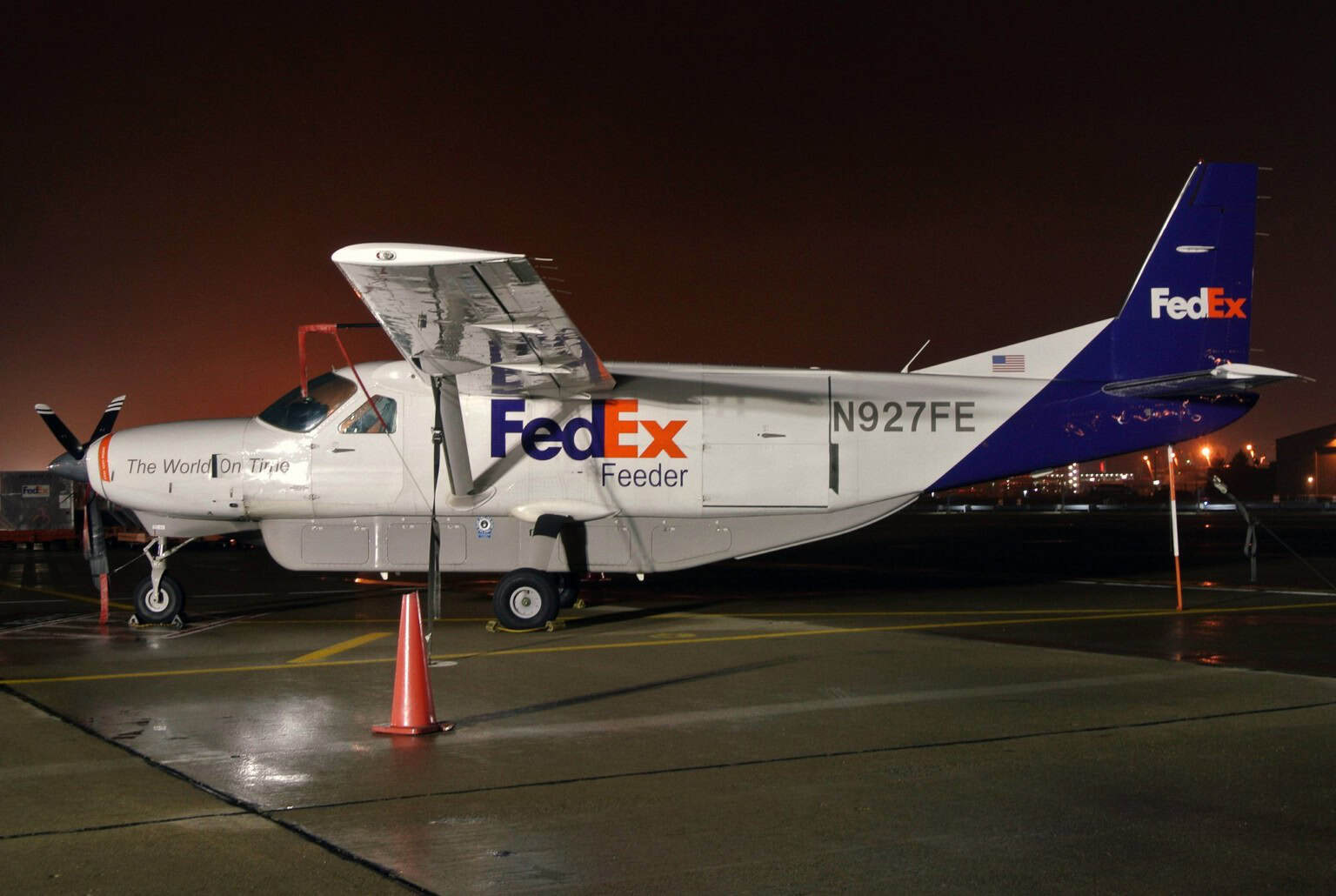
The surprise is what sits inside it. The single most common FedEx plane is not a widebody jet but the Cessna 208B Grand Caravan, a single-engine turboprop, and FedEx has 216 of them.
How Many Planes Does FedEx Have?
700 aircraft, as of May 31, 2026: 697 owned and three leased. They split into two very different fleets: 383 jets that fly the long trunk routes, and 317 smaller “feeder” planes that carry packages to and from towns the jets do not serve.
FedEx owns the feeder planes but does not fly them itself. Its annual report says it contracts with other companies to fly them, while FedEx’s own pilots fly the jets.
The count at a glance
700 FedEx aircraft on May 31, 2026: 383 jets (Boeing 777F, 767F, 757-200, MD-11 and Airbus A300-600) and 317 feeder aircraft (Cessna Caravans and SkyCouriers, ATR 72s and ATR 42s). Five of the 700 were still being modified before entering service. 36 more are on order for delivery from 2027 to 2030. Source: FedEx Form 10-K for the year ended May 31, 2026.
The FedEx fleet, type by type
FedEx flies ten aircraft types. The table follows each one across its last three annual reports, so you can see what is growing and what is being phased out.
| Aircraft | June 7, 2024 | May 31, 2025 | May 31, 2026 |
|---|---|---|---|
| Boeing 777F | 57 | 59 | 59 |
| Boeing MD-11 | 37 | 34 | 29 |
| Boeing 767F | 138 | 145 | 152 |
| Airbus A300-600 | 65 | 58 | 57 |
| Boeing 757-200 | 92 | 90 | 86 |
| Jets | 389 | 386 | 383 |
| ATR 72-600F | 20 | 24 | 27 |
| ATR 72 | 19 | 19 | 19 |
| ATR 42 | 18 | 16 | 16 |
| Cessna 408 SkyCourier | 19 | 27 | 39 |
| Cessna 208B Caravan | 233 | 226 | 216 |
| Feeder aircraft | 309 | 312 | 317 |
| Total | 698 | 698 | 700 |
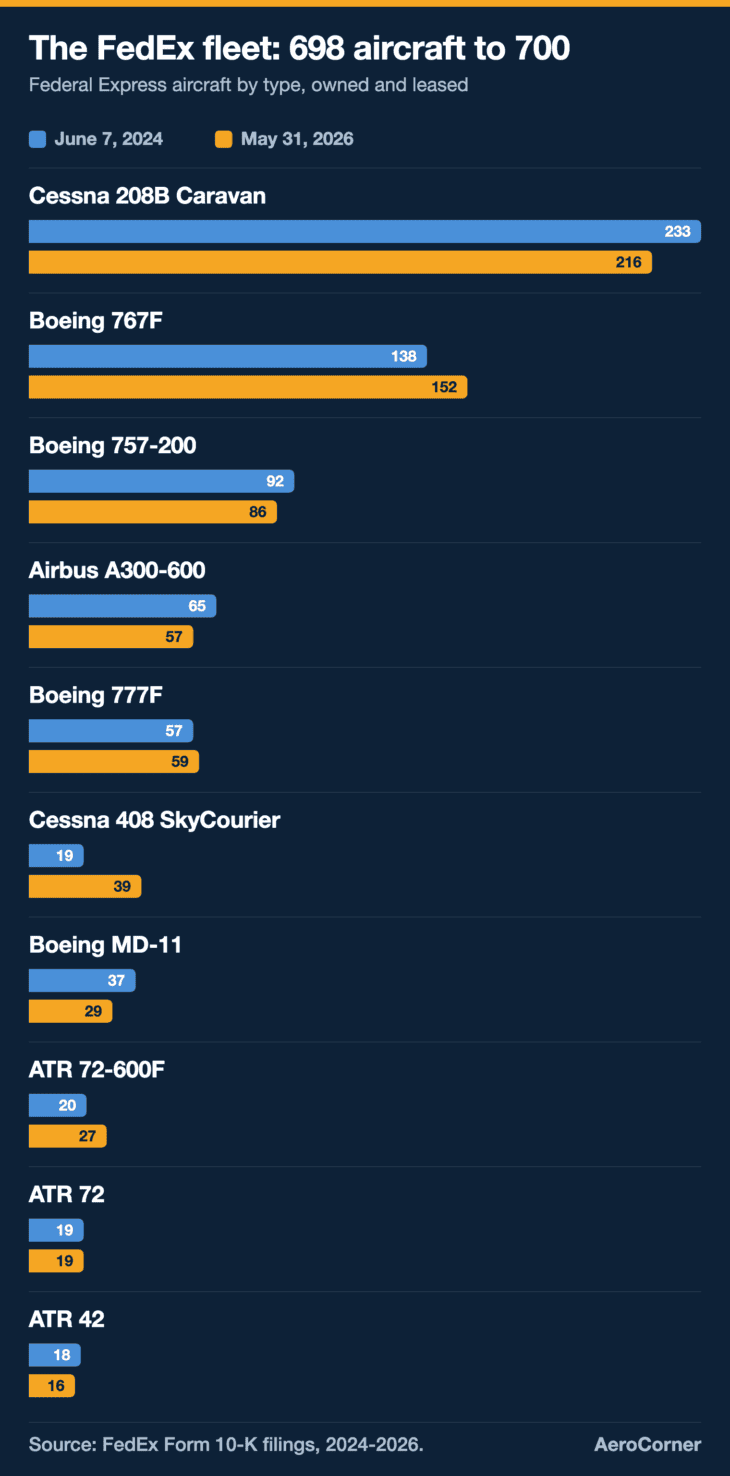
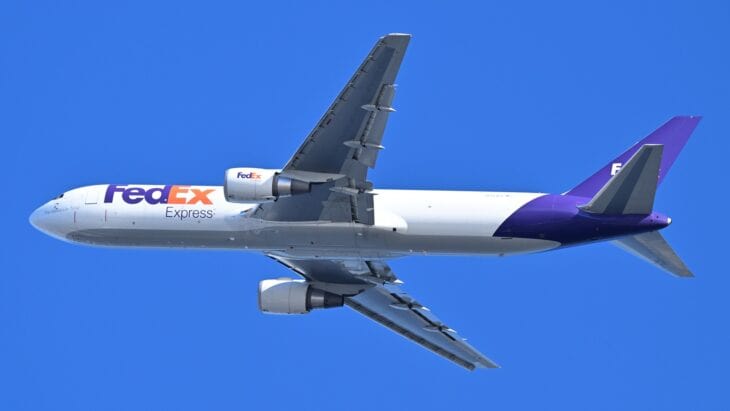
Among the jets, the Boeing 767 freighter is the workhorse, with 152, and it is the only jet type FedEx is still adding. The 777F is the long-haul flagship: 59 of them, each rated for up to 233,300 pounds of payload.

The 757-200 and the A300-600 are older types on the way down. FedEx decided to retire 22 of its 757s in 2024, and has trimmed A300s every year since.
The feeder side is where the real change is. The 216 Caravans are slowly giving way to the twin-engine Cessna 408 SkyCourier, which went from 19 to 39 in two years. The ATR 72-600F is growing too.
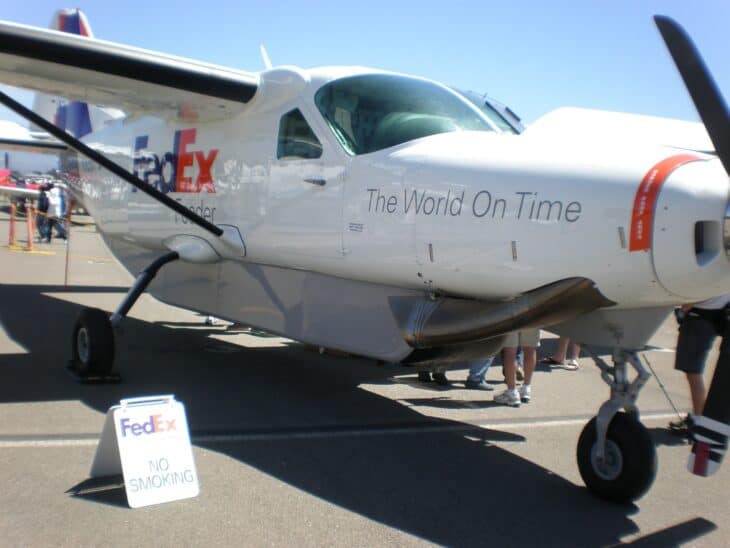

The two halves of the fleet are different worlds. FedEx rates a Caravan for 2,830 pounds of payload and a 777F for 233,300, so one 777F lifts as much as about 82 Caravans.
That is why the numbers mislead. The 317 feeder planes are 45% of the fleet by count, but under 4% of the fleet’s combined payload rating: they exist to reach the towns a jet cannot serve, not to move volume.
The MD-11s are flying again
In November 2025 the FAA grounded every MD-11 with an emergency airworthiness directive, after a UPS MD-11 crashed on takeoff at Louisville. FedEx’s 10-K says the grounding hurt its results for the year.
UPS retired its MD-11s for good. FedEx did the opposite: in May 2026, once the FAA approved Boeing’s inspection and return-to-service steps, it started bringing its fleet back, and by September 30, 2026 most of it was flying again.
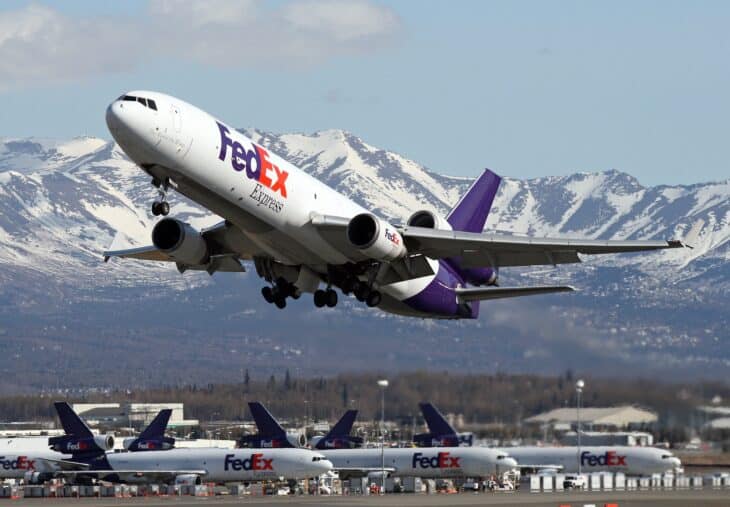
FedEx does plan to phase the type out, just not yet. In its 2025 annual report it pushed the retirement of the whole MD-11 fleet from 2028 to the end of 2032. Why the trijet hangs on is the subject of our piece on how many MD-11s are still flying.
Why the numbers differ
Search this question and you will see anything from about 380 to more than 760. Each figure counts something slightly different.
About 380: jets only
Fleet comparisons that look only at jets put FedEx in the high 300s. That is the 383-jet half of the table, with the 317 turboprops and Caravans left out.
703: the flight trackers
Flightradar24’s FedEx fleet page lists 703 aircraft. Trackers count the airframes they see flying under the FedEx name, so their totals drift a few planes either side of the company’s own count as jets arrive and leave.
769: the FAA registry
The FAA’s aircraft registry, in its November 3, 2026 file, lists 769 aircraft registered to Federal Express. That is more than FedEx flies, because a registration stays until the owner cancels or sells it.
The registry still holds 61 MD-11 freighters, about twice the 29 in service, and 13 MD-10s, a type FedEx no longer lists at all. It also includes 11 Bombardier business jets that are not part of the cargo fleet.
The myth: FedEx retired the MD-11 after the Louisville crash
That was UPS. FedEx grounded its MD-11s in November 2025 like every operator, then began returning them to service in May 2026 and had most of them flying again by September 30, 2026. Its current plan keeps the type until the end of 2032.
How the fleet got here, and where it is going
1973
Federal Express starts flying. Its 10-K says it pioneered the express transportation industry that year.
June 2024
698 aircraft. FedEx decides to retire 22 Boeing 757s.
May 2025
698 aircraft. Twelve more are retired, and the end of the MD-11 is pushed from 2028 to the end of 2032.
November 2025
MD-11 grounding. An FAA emergency directive stops every MD-11 until inspected.
May 2026
700 aircraft. MD-11s start returning to service; ten aircraft are retired during the year, five of them MD-11s.
2027 to 2030
36 aircraft on order. 10 Boeing 777Fs, 15 ATR 72-600Fs and 11 SkyCouriers, 19 of them due in 2027.
The pattern is a fleet that stays near 700 while it modernises. Each year FedEx retires a handful of older A300s, 757s and MD-11s and takes new 767s, 777Fs, ATRs and SkyCouriers in their place.
Its 10-K ties this to fuel: FedEx says its fleet modernisation, including retiring less efficient three-engine jets, saved 120 million gallons of jet fuel in 2025. The next fleet count will come in FedEx’s first annual report since it moved its year-end to December 31, 2026.
How FedEx compares with UPS and the airlines
UPS, the other big US parcel airline, had 274 jets of its own on June 30, 2026, after retiring its MD-11s. Count jets only and FedEx is still about 40% bigger, and UPS has no feeder fleet under its own name.
Passenger airlines still dwarf it. American Airlines has 1,609 aircraft counting its regional jets, and our ranking of the largest airlines in the world shows where FedEx sits among them.
Most of the 700 meet at night in Memphis, FedEx’s main hub, with a second national hub in Indianapolis. That is why Memphis sits near the top of our list of the busiest cargo airports in the US.
FAQ
Sources and references used for research and fact-checking.
- FedEx Corporation, via SEC EDGAR, FedEx Corporation Form 10-K for the year ended May 31, 2026
- FedEx Corporation, via SEC EDGAR, FedEx Corporation Form 10-K for the year ended May 31, 2025
- FedEx Corporation, via SEC EDGAR, FedEx Corporation Form 10-K for the year ended May 31, 2024
- FedEx Corporation, via SEC EDGAR, FedEx Corporation Form 10-Q for the period ended September 30, 2026
- Federal Aviation Administration, Releasable Aircraft Database
- National Transportation Safety Board, DCA26MA024: UPS Airlines Flight 2976
- Flightradar24, FedEx (FX/FDX) Fleet
- United Parcel Service, via SEC EDGAR, United Parcel Service Form 10-K for the year ended December 31, 2025
- United Parcel Service, via SEC EDGAR, United Parcel Service Form 10-Q for the quarter ended June 30, 2026
Get the Newsletter
The latest aviation news and stories sent to your inbox.
About the Author

Tim is the owner and lead editor of AeroCorner since 2019, overseeing aviation content covering aircraft, airlines, airports, and the broader aviation industry. Through years of researching, writing, editing, and publishing aviation-focused content, he has developed extensive practical knowledge of commercial aviation and air travel. Based in Asia and a frequent traveler himself, Tim also brings firsthand passenger experience to AeroCorner’s coverage. Outside of publishing, he has also explored aviation firsthand through hands-on flight training in New Zealand.