

Table of Contents
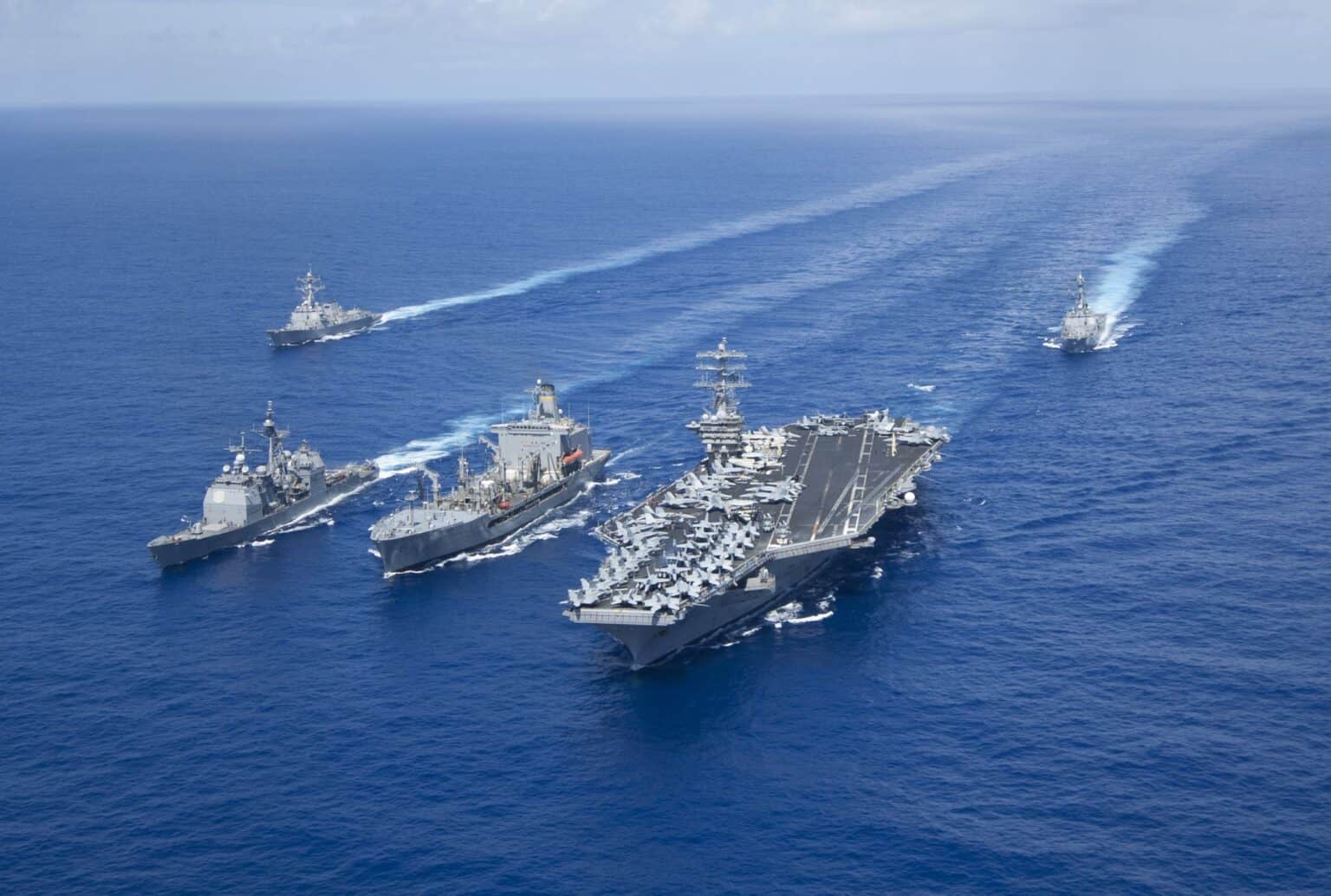
There are 21 aircraft carriers in the world built to fly fixed-wing jets, operated by seven navies, as of November 2026. The US Navy has 11 of them, which leaves 10 for everyone else combined.
Count every commissioned warship with a full-length flight deck whose main job is aircraft, including amphibious assault ships and helicopter carriers, and the total rises to 53 ships in 16 navies. That wider figure comes from the public register of carriers in service kept on Wikipedia, checked ship by ship against navy and press reports for this article.
How Many Aircraft Carriers Are in the World?
The answer depends on one line: does a ship have to fly jets from a deck built for them? Draw it there and the world has 21 carriers. They belong to the United States (11), China (3), the United Kingdom (2), India (2), France (1), Italy (1) and Russia (1).
Move the line to “any flat-top ship built around its aircraft” and 32 more hulls join. They include nine US Marine Corps assault ships that fly F-35B jump jets and 19 ships that carry only helicopters or drones. Ships still on sea trials, in construction or in reserve are left out of both numbers.
The count at a glance (November 2026)
Aircraft carriers built for jets: 21, in 7 navies. Other flat decks that fly or are being converted to fly jets: 13. Helicopter and drone carriers: 19. All commissioned flat-deck aviation ships: 53, in 16 navies. Nuclear-powered carriers: 12, all American except France’s Charles de Gaulle.
Every Country’s Aircraft Carriers, Counted
The table splits the 53 ships into three tiers: the dedicated aircraft carriers first, then the jet-capable amphibious ships and Japan’s two converting destroyers, then the ships that fly helicopters or drones only.
| Country | Aircraft carriers | Other jet-capable flat decks | Helicopter and drone carriers | Total flat decks |
|---|---|---|---|---|
| United States | 11 | 9 | 0 | 20 |
| China | 3 | 0 | 4 | 7 |
| France | 1 | 0 | 3 | 4 |
| Japan | 0 | 2 | 2 | 4 |
| United Kingdom | 2 | 0 | 0 | 2 |
| India | 2 | 0 | 0 | 2 |
| Italy | 1 | 1 | 0 | 2 |
| Russia | 1 | 0 | 0 | 1 |
| Spain | 0 | 1 | 0 | 1 |
| Australia | 0 | 0 | 2 | 2 |
| Egypt | 0 | 0 | 2 | 2 |
| South Korea | 0 | 0 | 2 | 2 |
| Brazil | 0 | 0 | 1 | 1 |
| Indonesia | 0 | 0 | 1 | 1 |
| Thailand | 0 | 0 | 1 | 1 |
| Turkey | 0 | 0 | 1 | 1 |
| World | 21 | 13 | 19 | 53 |
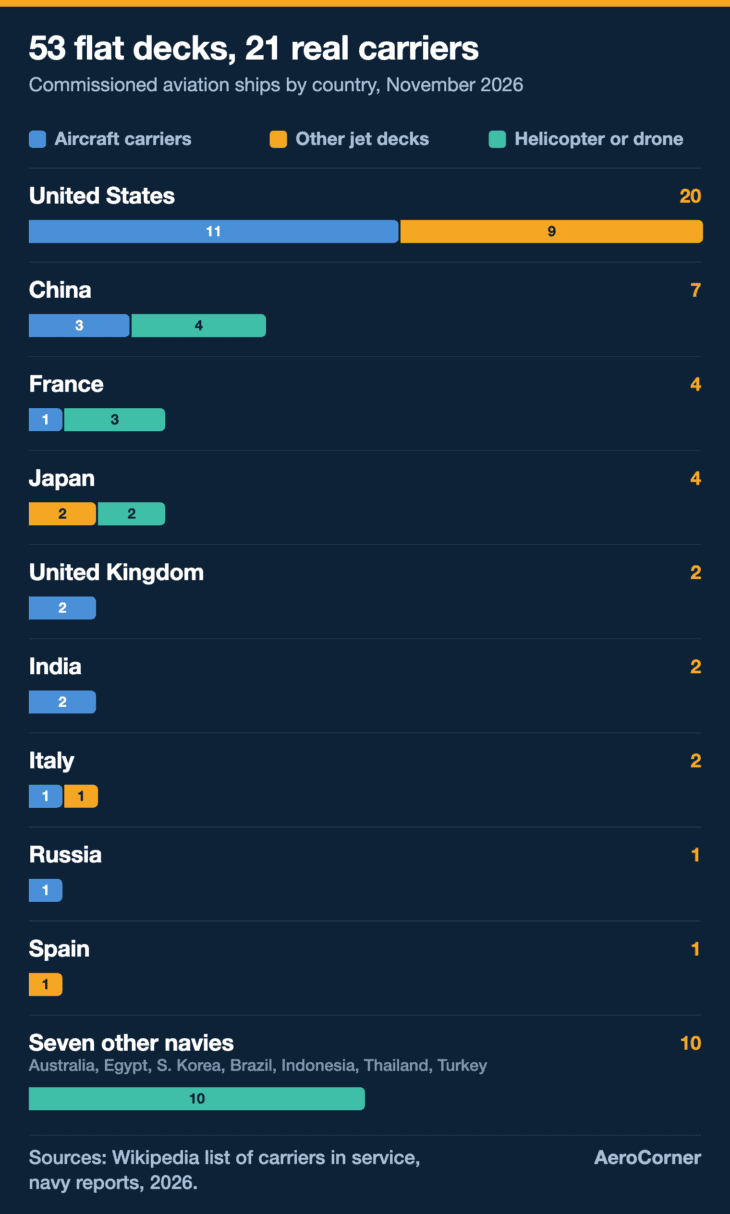
The US column is the whole story of carrier aviation in one row. Its 10 Nimitz-class ships and USS Gerald R. Ford are all nuclear-powered supercarriers, and federal law requires the Navy to keep “not less than 11 operational aircraft carriers.” The US carrier count has a page of its own, including where the ships are on a typical day.
China is the fastest-growing column. It commissioned Fujian, its first carrier with catapults, on Nov. 5, 2025, joining Liaoning and Shandong, and it has four Type 075 helicopter assault ships. Our count of China’s carriers covers the Pentagon’s estimate of where that goes next.
Below the top two, most navies hold one or two hulls. The United Kingdom’s two Queen Elizabeth-class carriers fly short-takeoff jump jets, and India’s two carriers, Vikramaditya and Vikrant, launch conventional fighters off a ski jump. France’s Charles de Gaulle is the only nuclear-powered carrier outside the US Navy.
Why Other Sites Quote 23, 39 or 47 Carriers
Search for this question and you will meet at least four numbers. Almost none of them are wrong. They count different ships, on different dates.
The definition. A navy calls a ship whatever suits its politics and its budget. The US Navy files America and Tripoli as amphibious assault ships, though both fly F-35B jump jets.
Japan still classes Izumo and Kaga as helicopter destroyers while it rebuilds them to fly F-35Bs. Counts in the low 20s keep to real carriers, and counts in the 40s and 50s take in every flat deck.
The date. The widely quoted “47 active carriers in 14 navies” is a count dated February 2022. Since then China has commissioned Fujian and two more Type 075s, Turkey has commissioned Anadolu, and Italy has commissioned Trieste. Indonesia became a carrier navy on Sept. 24, 2026, when Italy’s retired Giuseppe Garibaldi was recommissioned as KRI Sriwijaya.
The ships that never go to sea. Russia’s only carrier, Admiral Kuznetsov, is still on the books but has been out of service since March 2017. In July 2025 its shipyard suspended the refit and said scrapping was being discussed with the defense ministry.
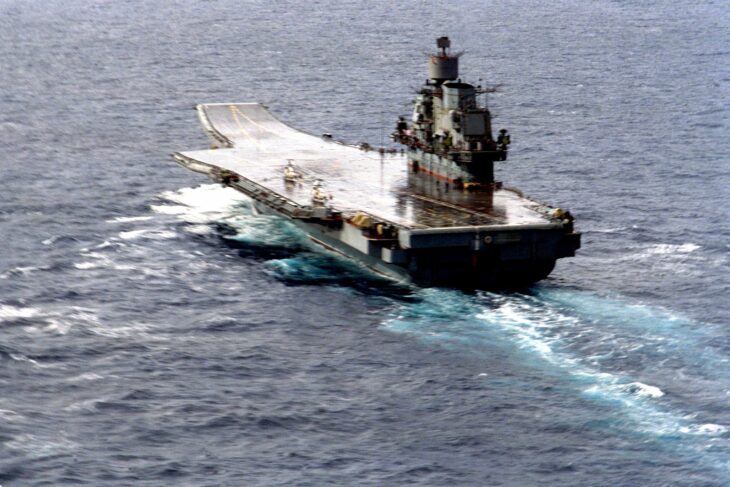

Keep it and the world has 21 carriers, drop it and only 20 can actually sail. The Russian carrier page tells the whole sorry story.
The most repeated claim, checked
“The US has more aircraft carriers than the rest of the world combined.” True for real carriers: 11 against 10. False for flat decks: the US has 20 of the 53, and the other 15 navies have 33. Both numbers are honest. They answer different questions.
The ships on trials. China’s Type 076 assault ship Sichuan began sea trials in November 2025 and has since launched drones from its catapult, but it had not been commissioned as of November 2026. The second Ford-class carrier, John F. Kennedy, is in the same position. Neither is in this count, and both will change it.
The Carriers That Do Not Fly Jets
Nineteen of the 53 ships carry helicopters, troops and, in Turkey’s case, drones. Several look like carriers from the air. Thailand’s Chakri Naruebet even has a ski jump, but its Harrier jump jets were struck off the books in 2006 and were never replaced.
Australia’s two Canberra-class ships, modified copies of Spain’s Juan Carlos I, fly helicopters. Turkey’s Anadolu was meant for F-35Bs and is now described as a drone carrier built for Bayraktar TB3s. Indonesia says its new Sriwijaya can carry up to 18 helicopters and will handle disaster relief across the archipelago, and combat if needed.
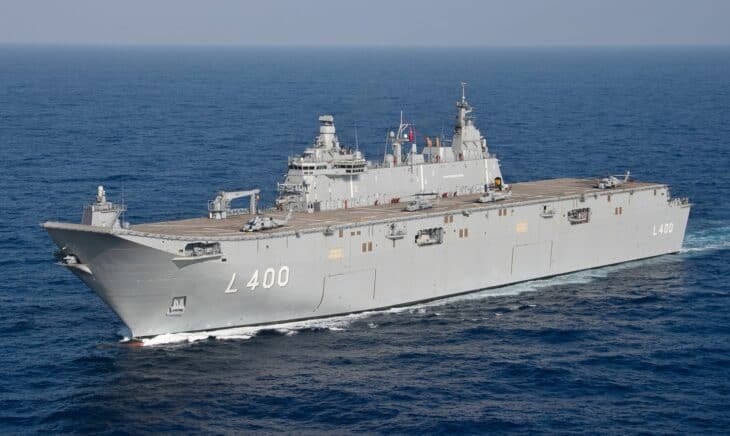

These ships are the reason a flat-deck count runs so high. The world’s amphibious assault ships are ranked by size in their own list.
Where the Number Goes Next
The US count is set to hold at 11 through a handover. The Navy took preliminary acceptance of John F. Kennedy on Sept. 29, 2026, and has kept USS Nimitz in service until about March 2027 so the fleet stays at 11 while Kennedy arrives.
Japan’s number moves later. Kaga hosted US Marine Corps F-35B landing drills in June 2026, but the second and final stage of its conversion is due to finish around March 2029. Once Izumo and Kaga operate their own jets, Japan joins the seven carrier navies in all but name.
The biggest change is still China. Sichuan’s commissioning will add an amphibious assault ship with an electromagnetic catapult, and China has another flat deck under construction. For how these ships compare in a fight rather than on a list, see the best aircraft carriers in the world.
FAQ
Sources and references used for research and fact-checking.
- Wikipedia, List of aircraft carriers in service
- Cornell Law School Legal Information Institute, 10 U.S. Code § 8062: Policy; composition; aircraft authorization
- The Maritime Executive, U.S. Navy Completes Preliminary Acceptance of Future USS John F. Kennedy
- Wikipedia, USS Nimitz
- Wikipedia, Chinese aircraft carrier Fujian
- Al Jazeera, Indonesia acquires first aircraft carrier amid military upgrade
- Wikipedia, Italian aircraft carrier Giuseppe Garibaldi
- Wikipedia, Russian aircraft carrier Admiral Kuznetsov
- Migflug, Japan's Kaga Is a Carrier Again
- Wikipedia, HTMS Chakri Naruebet
- Wikipedia, TCG Anadolu
- Wikipedia, Wasp-class amphibious assault ship
- Wikipedia, Spanish ship Juan Carlos I
- Wikipedia, Italian landing helicopter dock Trieste
Get the Newsletter
The latest aviation news and stories sent to your inbox.
About the Author

Tim is the owner and lead editor of AeroCorner since 2019, overseeing aviation content covering aircraft, airlines, airports, and the broader aviation industry. Through years of researching, writing, editing, and publishing aviation-focused content, he has developed extensive practical knowledge of commercial aviation and air travel. Based in Asia and a frequent traveler himself, Tim also brings firsthand passenger experience to AeroCorner’s coverage. Outside of publishing, he has also explored aviation firsthand through hands-on flight training in New Zealand.