

Table of Contents
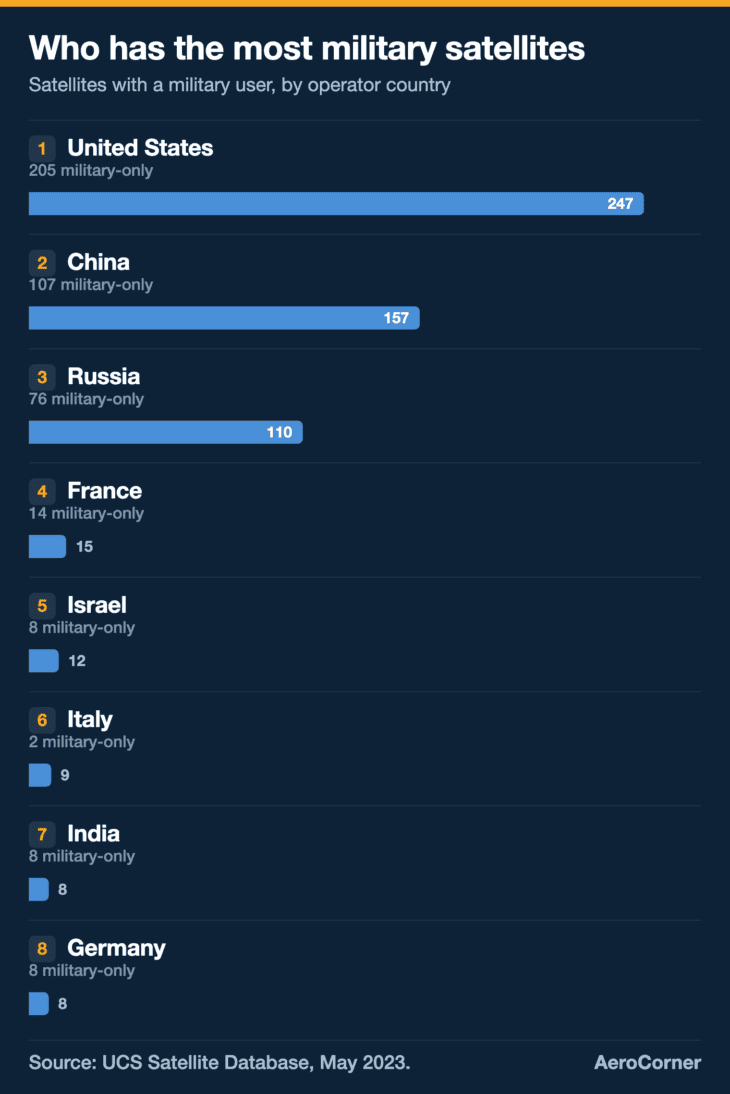
The United States operates more military satellites than any other country: 247, against 157 for China and 110 for Russia. Those three nations hold 514 of the 613 operational satellites with a military user, more than eight in ten.
The figures come from the Union of Concerned Scientists (UCS) Satellite Database, the last public census of every working satellite, current to May 1, 2023. It counts any satellite whose users include the armed forces, from spy satellites to navigation constellations that also serve civilians.
The ranking below uses that census, because no newer source counts every country the same way. Each entry then says what has gone up since, as of November 2026. The top two are pulling further away from everyone else.
| Rank | Country | Military satellites | Military-only | Best-known systems |
|---|---|---|---|---|
| 1 | United States | 247 | 205 | GPS, SBIRS, AEHF, WGS, KH-11 |
| 2 | China | 157 | 107 | Yaogan, BeiDou |
| 3 | Russia | 110 | 76 | GLONASS, EKS (Kupol) |
| 4 | France | 15 | 14 | CSO, Syracuse 4 |
| 5 | Israel | 12 | 8 | Ofeq |
| 6 | Italy | 9 | 2 | COSMO-SkyMed |
| 7 (tie) | India | 8 | 8 | GSAT-7, GSAT-7A, RISAT |
| 7 (tie) | Germany | 8 | 8 | SAR-Lupe, SARah |
| 9 | United Kingdom | 6 | 6 | Skynet |
| 10 (tie) | Spain | 4 | 1 | Spainsat, Paz |
| 10 (tie) | Australia | 4 | 0 | Optus and Defence C1 |
How this ranking works
Countries are ranked by the number of operational satellites the UCS Satellite Database lists with Military among their users, credited to the country of the operator. Military-only counts the satellites whose sole user is the military; the rest are shared with government, civil or commercial users. The database stopped updating after its May 1, 2023 release, so newer launches are covered in the text, not the table. Classified satellites the public catalog cannot see are not counted by anyone.
The types of military satellites
Almost every military satellite does one of four jobs. Earth observation covers imaging and radar spy satellites, the largest group with 247 of the 613. Communications satellites carry secure links and number 139, and navigation satellites like GPS add 114.
The fourth group is missile warning: infrared satellites that spot the heat of a rocket launch, the first warning against the ballistic missiles they were built to catch. Technology test satellites, 72 of them, fill out the rest of the census.
1. United States: 247 military satellites
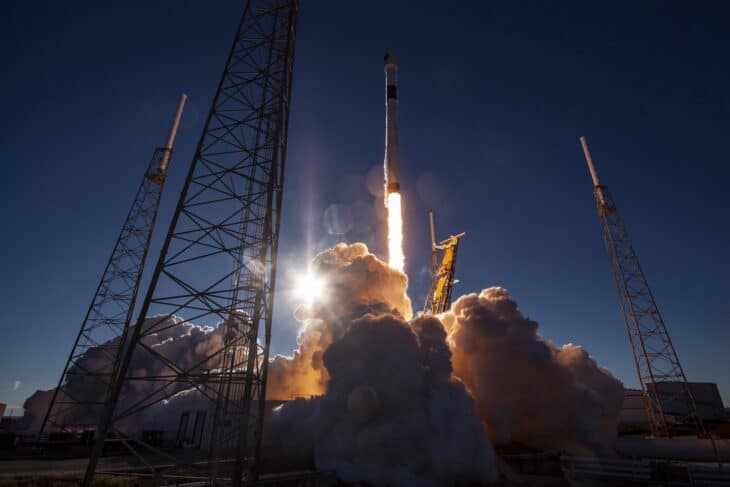

The US fleet is the only one that covers every mission at scale. The census lists 69 US observation satellites, 54 for communications and 35 for navigation, plus 69 technology and demonstration spacecraft.
The National Reconnaissance Office (NRO) runs the spy satellites, alone on 48 entries and jointly with the Air Force or Navy on 26 more. Its KH-11 line, first launched in December 1976, was the first US spy satellite to use digital electro-optical imaging. It is the space-age counterpart to the spy planes that photograph from the edge of the atmosphere.
The best-known US constellation is GPS, owned by the US Space Force: 31 operational satellites against a design baseline of 24, orbiting about 12,540 miles (20,180 km) up. Six SBIRS satellites in geostationary orbit watch for missile launches, the last of them launched on August 4, 2022.
Secure communications ride on six AEHF satellites, finished in March 2020 and shared with the UK, Canada, the Netherlands and Australia. Ten Wideband Global SATCOM (WGS) satellites have been launched for high-capacity links.
84 new satellites in 14 months
The Space Development Agency launched its first operational Tranche 1 satellites on September 10, 2025. By October 31, 2026 it had 84 in orbit after four launches, all of them data-relay satellites. Tranche 1 alone calls for 126 transport and 28 missile-tracking satellites, and the agency expects about 474 by the end of Tranche 3.
That build-out is why the 2023 count understates the US lead. The American Enterprise Institute counts 643 operational US surveillance and weather satellites today, up from 298 in 2018. That is a different measure, counting surveillance and weather satellites rather than military users.
2. China: 157 military satellites
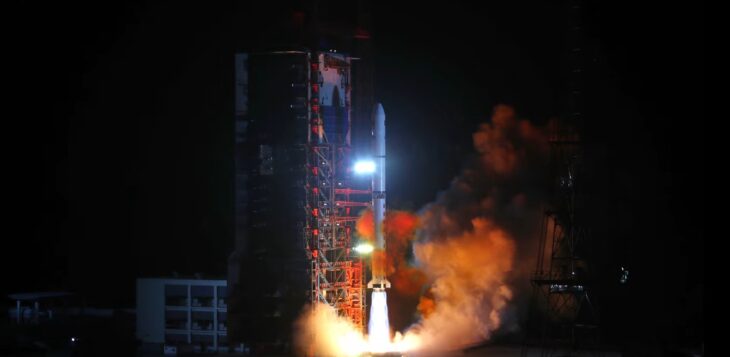

China’s fleet is built to watch. Of its 157 military satellites in the census, 102 are Earth observation, and 49 are BeiDou navigation satellites, China’s answer to GPS.
Most of the observation satellites fly under the Yaogan name, China’s designation for military reconnaissance satellites since 2006. The series mixes optical cameras, radar imagers and electronic-intelligence satellites that fly in groups of three to locate ships by their radio emissions.
China is also the fastest-growing fleet. The US Defense Intelligence Agency’s 2026 Challenges to Space Security report, released in October, says China had more than 510 intelligence, surveillance and reconnaissance (ISR) satellites in orbit as of July 2026, triple its 2018 fleet.
That DIA figure includes Chinese commercial satellites, so it is not comparable with the 157 in the table. On the AEI count, China’s surveillance and weather fleet grew from 141 in 2018 to 541 in 2026.
China has also shown it can destroy a satellite. On January 11, 2007, a Chinese missile smashed China’s own FY-1C weather satellite about 534 miles (860 km) up, creating more than 3,000 pieces of trackable debris.
3. Russia: 110 military satellites
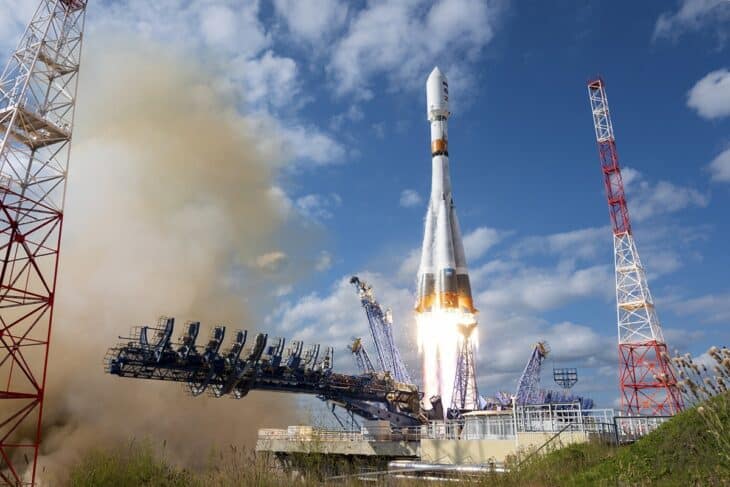

Russia’s fleet is the odd one out among the big three: it leans on communications, not cameras. The census lists 47 Russian military communications satellites, 30 for navigation and only 20 for Earth observation.
The navigation share is the GLONASS constellation, designed for 24 satellites. Missile warning comes from the EKS system, also called Kupol: six satellites launched between November 2015 and November 2022.
Most Russian military satellites fly under the generic Kosmos name, which hides their role. That makes Russia’s count the hardest of the three to read from the outside.
4. France: 15 military satellites
France runs Europe’s largest military space fleet by this count, and 14 of its 15 satellites in the census serve the military alone. Its spy satellites are the three-satellite CSO optical system, launched in December 2018, December 2020 and March 2025.
Secure communications come from the Syracuse 4 satellites. Syracuse 4A launched on October 24, 2021, and 4B followed on July 5, 2023, on the final flight of the Ariane 5 rocket.
5. Israel: 12 military satellites
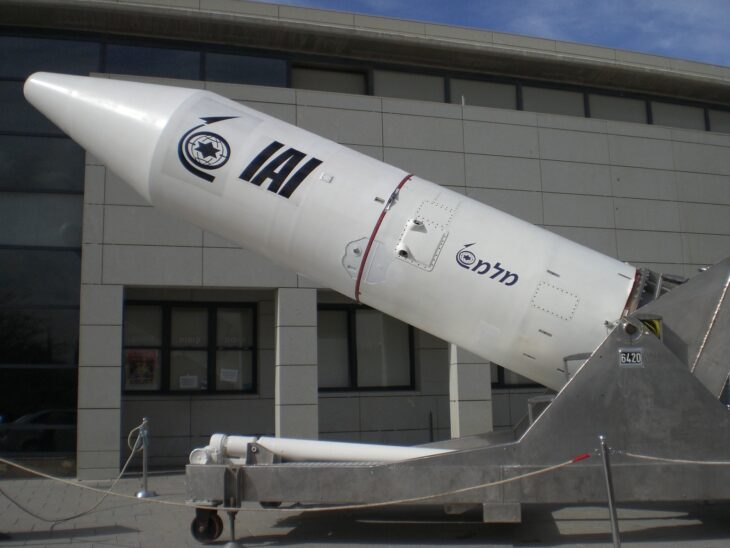

Israel builds its own spy satellites and launches them on its own Shavit rocket. The Ofeq series covers optical and radar imaging, and the newest, Ofeq-19, launched on September 2, 2025.
Israel launches backward
Ofeq satellites are launched westward over the Mediterranean, against the Earth’s spin, so spent rocket stages never fall on populated land. Most launches go east to borrow speed from the planet’s rotation. Israel pays for its geography in payload.
6. Italy: 9 military satellites
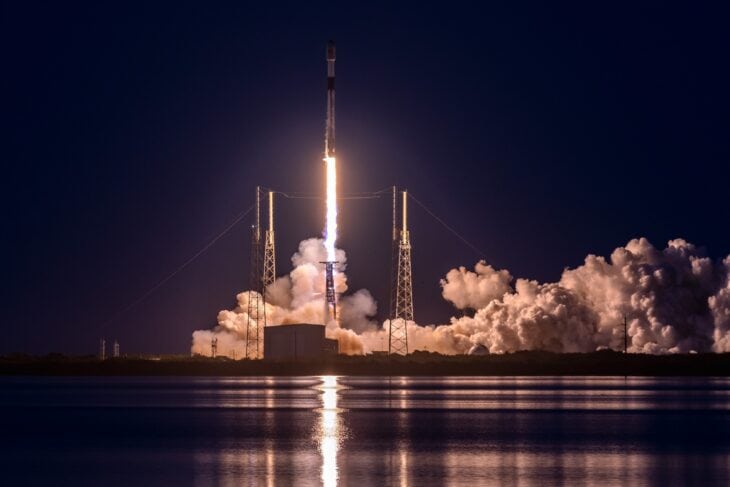

Italy ranks sixth with a mostly shared fleet: only 2 of its 9 satellites are military-only. The core is COSMO-SkyMed, a dual-use radar constellation that sees through cloud and darkness for both the armed forces and civilian agencies.
Four first-generation COSMO-SkyMed satellites launched from 2007 to 2010. The second generation added satellites in December 2019, January 2022 and January 2026.
7. India: 8 military satellites
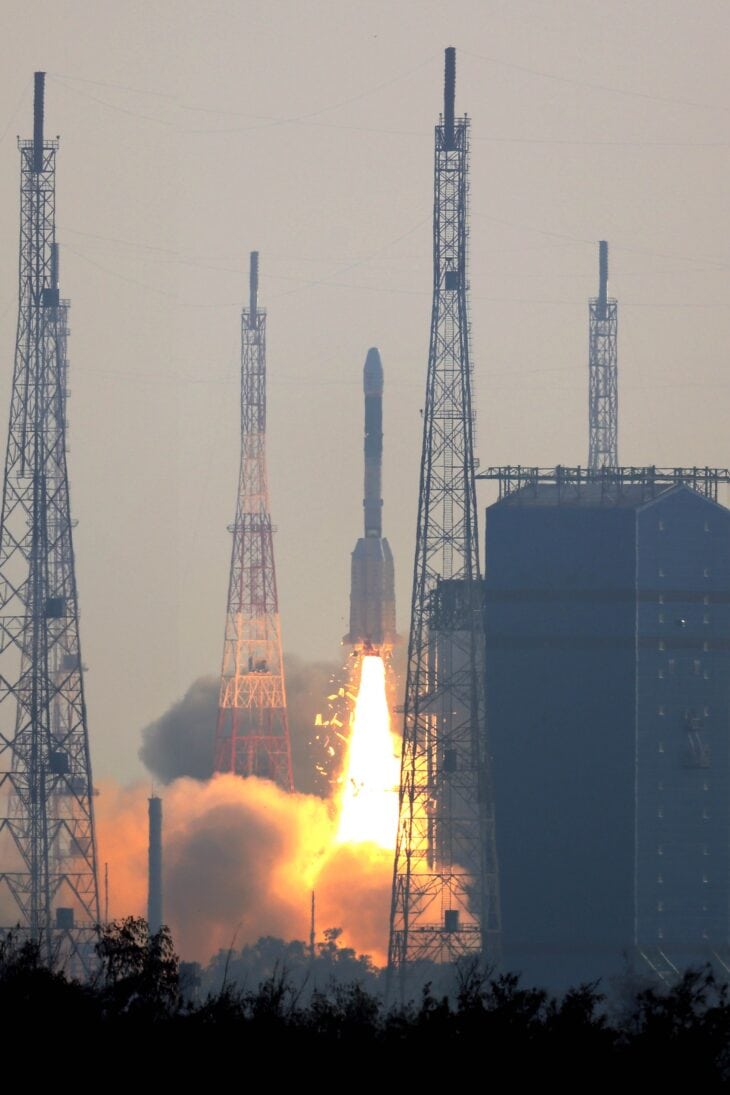

India ties Germany on 8, all of them military-only. GSAT-7, named Rukmini, launched in August 2013 as India’s first dedicated military communications satellite, built for the Indian Navy.
GSAT-7A followed for the Indian Air Force on December 19, 2018. Three RISAT radar satellites, two imaging satellites and the defense research agency’s EMISat make up the rest.
India is also one of the few countries to shoot down a satellite. Mission Shakti, on March 27, 2019, destroyed the Microsat-R test satellite about 176 miles (283 km) up, low enough that the last catalogued debris fell back by June 2022.
7. Germany: 8 military satellites
Germany’s military space program is built around radar. Five SAR-Lupe satellites, launched from 2006 to 2008, gave the Bundeswehr its first own spy satellites.
Their replacement, SARah, has three radar satellites. SARah-1 launched in June 2022, and SARah-2 and SARah-3 followed together on December 24, 2023.
9. United Kingdom: 6 military satellites
Every one of Britain’s six military satellites in the census is a Skynet communications satellite. Four Skynet 5 satellites launched from 2007 to 2012, joined by two older Skynet 4 spacecraft.
The next one, Skynet 6A, slipped past 2025 and is now listed for a 2027 launch. Britain has no imaging spy satellite of its own in the census.
10. Spain and Australia: 4 military satellites each

Spain ties Australia for 10th. Spain’s four include Spainsat and XTAR-EUR for communications and Paz, a radar satellite shared with commercial users.
Australia’s four are all shared: a defense payload on the Optus C1 commercial satellite and three small research satellites built with the University of New South Wales. None of them is a dedicated military spacecraft.
What about Japan?
Japan flies a full spy satellite fleet, the Information Gathering Satellites, launched on H-IIA rockets since March 2003. The UCS census lists all 11 of them as government satellites rather than military ones, so Japan scores only 2. Count them and Japan has 13, enough for 5th place ahead of Israel. It is the clearest example of why satellite counts depend on who is drawing the line.
Why the counts disagree
Search for military satellites by country and you will see 247, 510, 541 and 643 used for different countries, all from respectable sources. They are measuring different things.
The UCS figure counts satellites with a named military user, in May 2023. The DIA’s 510 counts every Chinese ISR satellite, state or commercial. The AEI figures count surveillance and weather satellites of any owner, in 2026.
All of them are snapshots of a fast-moving number. Military satellites are still a small share of the thousands in orbit, as our count of how many satellites are in space shows, but they are the share both superpowers are now launching fastest.
FAQ
Sources and references used for research and fact-checking.
- Union of Concerned Scientists, UCS Satellite Database (release current to May 1, 2023)
- Breaking Defense, China has tripled its satellite fleet since 2018 as expansion continues: DIA
- SatNews, SDA's first tracking satellites slip to spring, Sandhoo says
- Spaceflight Now, SpaceX to make another attempt to launch 21 data satellites for Space Development Agency
- Wikipedia, Global Positioning System
- Wikipedia, Space-Based Infrared System
- Wikipedia, Advanced Extremely High Frequency
- Wikipedia, Wideband Global SATCOM
- Wikipedia, KH-11 KENNEN
- Wikipedia, Yaogan
- Wikipedia, 2007 Chinese anti-satellite missile test
- Wikipedia, GLONASS
- Wikipedia, EKS (satellite system)
- Wikipedia, Composante Spatiale Optique
- Wikipedia, Syracuse (satellite)
- Wikipedia, Ofeq
- Wikipedia, COSMO-SkyMed
- Wikipedia, GSAT-7
- Wikipedia, Mission Shakti
- Wikipedia, SAR-Lupe
- Wikipedia, Skynet (satellite)
- Wikipedia, Information Gathering Satellite
Get the Newsletter
The latest aviation news and stories sent to your inbox.
About the Author

Tim is the owner and lead editor of AeroCorner since 2019, overseeing aviation content covering aircraft, airlines, airports, and the broader aviation industry. Through years of researching, writing, editing, and publishing aviation-focused content, he has developed extensive practical knowledge of commercial aviation and air travel. Based in Asia and a frequent traveler himself, Tim also brings firsthand passenger experience to AeroCorner’s coverage. Outside of publishing, he has also explored aviation firsthand through hands-on flight training in New Zealand.